.jpeg)



College basketball’s 20 best freshmen, ranked for men’s 2025-26 season


It’s been a minute since men’s college basketball’s last “Year of the Freshman.” Getting older was the top priority for most programs in recent years with every player enrolled during the pandemic getting a bonus Covid season, plus the advent of the transfer portal allowing teams to rebuild the roster in veteran free agency rather than putting all of their resources into recruiting high schoolers. It takes a special class to swing college basketball back to freshmen, and this year’s group is exactly that.
The high school class of 2025 was always going to be loaded, and that remained the case even after Cooper Flagg skipped his senior year to enroll at Duke at just 17 years old. Cameron Boozer, A.J. Dybantsa, and Darryn Peterson remained, and forged their reputations as future superstars by dominating a national schedule in the high school ranks before making their college decisions. The ‘big three’ has gotten most of the publicity during this college basketball season, but they’ve been joined by so many other impact freshmen who are making huge contributions throughout the country.
This has become one of the deepest and most talented freshmen colleges in the modern history of college hoops. With March finally here, let’s rank the best freshmen for the men’s 2025-26 college hoops season before the NCAA tournament arrives.
20. Braden Frager, F, Nebraska
Frager is the lone redshirt freshman on this list, but we won’t hold that against him. The 6’7 forward enrolled at Nebraska at just 17 years old as an under-the-radar recruit who ranked just No. 191 in his class. He used the extra year to gain strength and improve as a shooter, and now he’s a key piece for one of the most surprising teams in the country. Frager has taken more threes than twos this season, but that’s okay because he’s knocked them down at a solid 35 percent clip. He’s been a super efficient scorer when he does get to the rim (79 percent), and that’s helped him post excellent 62.6 percent true shooting. He’s not much of a playmaker on either end yet, but having a big forward who can space the floor and make the most of his possessions has been crucial for the upstart Cornhuskers.
19. Ivan Kharchenkov, G, Arizona
The 6’7 German has been a defensive stopper on the wing for an elite Arizona defense all season. Kharchenkov’s strong 230-pound frame lets him defend up in the lineup, and he’s able to shoot the gap and get into the passing lanes with a fantastic 3.1 percent steal rate for the freshman. He shows strong feel for the game, but still needs to work on his outside shooting and scoring punch. Expect an even bigger impact next season if Arizona gets him back.

18. David Mirkovic, F, Illinois
Illinois built a European pro team over the offseason, and their biggest move was getting Mirkovic to leave his club SC Derby in the Adriatic League to chase American NIL dollars. The bruising 6’9, 240-pound forward has an enviable combination of skill and motor, and it shows up in his big-time rebounding numbers and 37 percent three-point stroke on good volume. Mirkovic flies around the court setting screens, moving the ball to open teammates, and crashing the glass on both ends. Another freshman might be getting most of the attention for the Illini’s success (more on him later), but having an instant impact 20-year-old in Mirkovic (who somehow has three more years of eligibility left) has stabilized the team’s floor and given them realistic dreams of a Final Four run.
17. Malachi Moreno, C, Kentucky
Kentucky has been a major disappointment this season, but their freshman center has been a bright spot. Moreno is a slick passer, a very good rebounder, a solid rim protector, and someone who constantly gets to the foul line. He can have trouble finishing when he doesn’t have a clear opening to dunk the ball, but he impacts the game in so many areas that he still comes out as a clear plus.
16. Chance Mallory, G, Virginia
Virginia teammates Thijs de Ridder and Johann Grunloh also could have made this list, but Mallory gets the nod because he’s actually a normal age for a freshman (de Ridder is already 23!). Small guards aren’t exactly en vogue these days, but the 5’10 Mallory has shown the value of a true floor general who avoids turnovers, finds passing windows for open teammates, and forces transition opportunities by getting steals. His +2.9 assist-to-turnover ratio is top-10 among all freshmen in DI, and his 4.2 percent steal rate is a massive number that shows his feel and athleticism. The NBA probably won’t want him given his lack of size, and that’s just fine for Virginia, who could have an awesome point guard on the roster for another three years.
15. Braylon Mullins, G, UConn
Mullins seemed like he was going to be a perfect fit in Danny Hurley’s whirling offense, but an early season ankle injury and then a concussion slowed his momentum somewhat. He’s still been a very good off-ball shooter this year by canning 38.2 percent of 14.1 threes per 100 possessions and showing great touch (57.7 percent) on non-rim twos. He’s not going to attack the defense much with the ball in his hands, but Mullins’ high-volume movement shooting and feisty defense is a vital combination for a veteran Huskies team.
14. Koa Peat, G, Arizona
Peat won four consecutive state championships in Arizona before walking onto campus at his state school and immediately being a key role player on an elite team. The 6’7 forward plays a bully-ball game on both ends as a stout defender, a good offensive rebounder, and a scoring threat as he rolls downhill. Peat is also an impressive passer for someone with his size. His outside shot remains a major question mark, but his ability to impact winning on the margins from day one at the college level bodes well for his professional future.
13. Nate Ament, F, Tennessee
Ament was touted as the best freshmen in the class after the ‘big three’ entering the year, and after a slow start, he’s shown what made him such a prized recruit. A lanky 6’10 forward, Ament has the outline of a dribble-pass-shoot wing but still needs to flush out his skill set. His plus positional size helps him make plays defensively and contribute on the glass, but he still has plenty of room to grow as a shooter and finisher. Tennessee is always a defense-first team that crashes the offensive glass, and that’s a bit of a tough context even for a super talented freshman. Ament isn’t close to a finished product yet, but it feels like he’s getting better by the week, and he’s a critical piece if the Vols are ever going to break through to a Final Four.

12. Allen Graves, F, Santa Clara
Graves flew completely under the radar as a recruit before landing at Santa Clara and immediately morphing into one of the country’s best per-minute freshmen in a bench role. He has a great mix of size, strength, and feel, and he uses it to wreck havoc on defense, clean the glass, and score efficiently inside. Graves’ outstanding hands show up both in his defensive playmaking numbers — his 10.2 percent stock rate is among the best in the class — and his knack for piling up offensive rebounds. He’s even hitting 40 percent of his threes on low volume. If he’s not a first-round pick come June, he should be one of the best available players in the transfer portal entering his sophomore year.
11. Brayden Burries, G, Arizona
Burries was a McDonald’s All-American who felt well-positioned to make an instant impact as an older freshman turning 20 years old during Final Four weekend. After a tough opening five games to the season, he’s turned it on and has given the Wildcats a three-level scorer to complement their fantastic defense. Burries has a little bit of everything offensively: he’s has some burst with the ball in his hands, a solid shooting stroke, and a mid-range game when other options break down. He’s not elite in any one area, but his well-rounded game has been a huge piece of Arizona’s ascension into a national title contender.
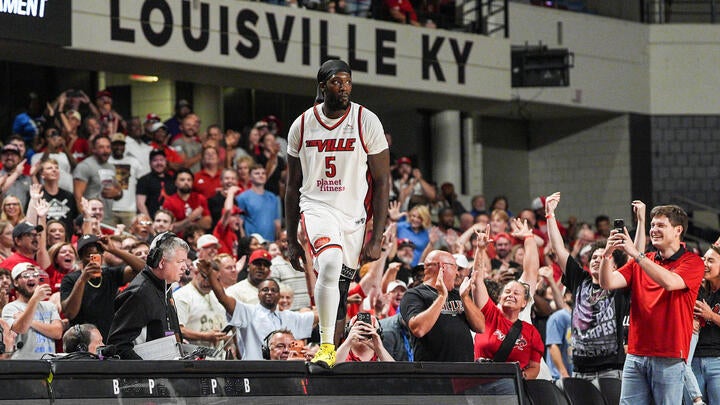
10. Mikel Brown Jr., G, Louisville
Brown has been slowed down by a back injury, but when he’s been healthy he’s shined as a creative playmaker and deadly pull-up shooter. The 6’5 guard can get downhill off the dribble and force his way to the free throw line, where he’s about 85 percent on freebies. He’s an excellent live dribble passer who finds delivery angles other guards wouldn’t see. The shot selection can be frustrating and the shooting runs hot-and-cold, but when he’s on, Brown can takeover a game by lighting it up from deep. If Brown is at his best, Louisville can still dream about making a deep NCAA tournament run even in an up-and-down season.
9. Ebuka Okorie, G, Stanford
Okorie was outside of the top-100 in the recruiting rankings, but he proved he was immediately one of the best point guards in college basketball once he stepped onto campus at Stanford. The 6’2 guard is a classic floor general with a tight handle, stocky frame, and tons of speed. He can split traps to get downhill, find teammates as a facilitator without turning the ball over, and knock down open shots. He’s not the biggest and most explosive lead guard, but the 6’2 Okorie can hound the ball at the point of attack and help turn defense into offense. If he’s not a first-round pick this year, he could be the single most coveted player in the transfer portal.
8. Hannes Steinbach, F, Washington
Steinbach’s Washington team hasn’t won much this year, but he’s still shown his special gifts as a rebounder and play-finisher in a rough team context. The 6’11 German feels a little stuck between positions at the four and the five without proven shooting or shot-blocking ability, but he’s still had a massive impact on games by crushing the glass and finishing everything inside. Steinbach has fantastic hands which is he uses to gobble up rebounds and catch and finish passes on the move going to the basket. He’s going to be perfect in the suddenly trendy two-big lineups at the next level as a possession-maxxer with some elite strengths in his skill set.
7. Keaton Wagler, G, Illinois
Wagler is one of the most inspiring stories in the recent history of college basketball, going from the No. 150 recruit in his class to a certain top-10 draft pick after a freshman season for the ages at Illinois. The 6’6 guard exploded once he was moved to an on-ball role, proving he had not only the scoring chops but also the playmaking ability to lead an Illinois team with Final Four aspirations. Wagler makes up for his lack of athleticism with nuclear shooting off-the-dribble and a high feel for the game. He loves to cook opposing bigs on switches where he’s always looking to get into his step-back three. Surrounded by former European pros in the lineup, Wagler has shown he can carry the creation burden on a loaded team. The Illini will go as far as he can take them.

6. Kingston Flemings, G, Houston
Flemings is a shifty and explosive point guard who won over head coach Kelvin Sampson with his two-way tenacity from early in the season. The 6’3 guard has a quick first step and the ability to slam on the breaks and change direction to open to paths to the rim. He’s a talented playmaker off the live dribble, using his ability to generate paint touches to open up passing windows to his teammates. Flemings has the type of quick-twitch athleticism scouts dream about, and you see it on the defensive end as much as his drives to the rim. His mid-range game will be a deadly weapon when Houston needs a tough bucket in the halfcourt come tournament time.
5. Darryn Peterson, G, Kansas
Peterson was perhaps the leading candidate to be No. 1 on this list at the start of the season, but his bizarre injury issues have limited his effectiveness and caused mass consternation among the Jayhawks fanbase. Peterson has routinely pulled himself out of games late with cramping and his explosiveness has been sapped by soft tissue injuries, but he’s still been among college basketball’s best per-minute scorers. While his burst and defensive playmaking hasn’t looked as spellbinding as it did in high school, Peterson’s shot-making has far exceeded expectations. He’s able to zoom around screens and knockdown shots from NBA range, and he can takeover a game when he gets hot. Kansas hasn’t gotten the best version of Peterson yet, but if he can get healthier over the next few weeks, he still has the ability to be one of the very best players in the March Madness field.
4. Caleb Wilson, F, North Carolina
Wilson’s electric freshman season deserves to be remembered even after ending on a bummer note with a broken hand and broken thumb that will keep him out of March Madness. The 6’10 forward shined as a high-motor defender and play-finisher who got into the passing lanes and crushed dunks at every opportunity. Wilson hounded opposing offenses 94-feet with his long arms and quick feet, and it felt like he was always making multiple efforts on every possession. His offense was able to overcome his lack of shooting by dominating at the rim, showing off surprising mid-range shot-making touch, and being a gifted passer and offensive rebounder. Wilson’s highlight reel might be the best in the country this year. March Madness won’t be the same without him.
3. Darius Acuff, G, Arkansas
Don’t let Acuff’s polarizing NBA stock distract you from one of the greatest freshman point guard seasons we’ve ever seen in college basketball. The stocky 6’2 guard blended scoring and playmaking at an elite level all season, showing his ability to finish through contact on drives, rip self-created three-pointers from deep, and find open teammates with impressive playmaking vision. Dare to go under a screen and Acuff is hitting a jump shot in your face. Try to guard him in isolation and he can score from awkward angles in mid-range or find open cutters at the rim. His poor defense contributes to Arkansas’ fatal flaw on that end, but it’s impossible to scoff at Acuff’s absurd production all season.
2. A.J. Dybantsa, F, BYU
Dybantsa has all the tools to be a future All-NBA selection. The 6’9 freshmen combines length, strength, athletic explosion, and scoring touch to form one of the best wing scoring prospects in recent memory. Dybantsa attacks the basket at will with long, coordinated strides, and he can finish over the top or through his defender from anywhere inside the paint. He’s an impossible cover one-on-one, and he can space the floor too by hitting a three if he’s left open from the outside. Dybantsa’s playmaking has also looked better than advertised this year as he’s used his scoring gravity to set up his teammates for buckets. It would be nice if Dybantsa used his huge frame to make a bigger defensive impact, but he’s been an efficient high-volume scorer all year, and it’s hard to ask for more than that.
1. Cameron Boozer, F, Duke
Boozer’s impact on winning was proven during a highly decorated high school career, and it translated right away at the college level. Giving the ball to the 6’9 forward is a one-way ticket to a great look for the offense. Boozer can beat you in so many ways: he’s an overpowering driver, a fantastic passer on the move, and a really good shooter at his size. It feels like he always makes the right basketball play while also maximizing the number of possessions by cleaning the glass, getting to the foul line, and limiting turnovers. Boozer might not have dunk-on-your-head hops or a trusty mid-range game, but his versatile brilliance has almost single-handedly turned Duke into a national championship favorite. There are players with more exciting highlight reels, but no one impacts winning like Boozer, and that’s why he’s not only the country’s best freshman, but also its best overall player.
What's Your Reaction?
 Like
0
Like
0
 Dislike
0
Dislike
0
 Love
0
Love
0
 Funny
0
Funny
0
 Angry
0
Angry
0
 Sad
0
Sad
0
 Wow
0
Wow
0