

.jpeg)
.jpeg)









Exclusive: Cal men’s soccer coach reveals how USMNT can improve after World Cup
It’s been a month since the U.S. men’s national team (USMNT) lost 4-1 to Belgium in Seattle during the World Cup Round of 16, and there’s been plenty of talk about why the game was so lopsided. Figures such as former USMNT player Landon Donovan have discussed how U.S. soccer is plagued by the pay-to-play system, which prevents talented kids from developing into professional players.
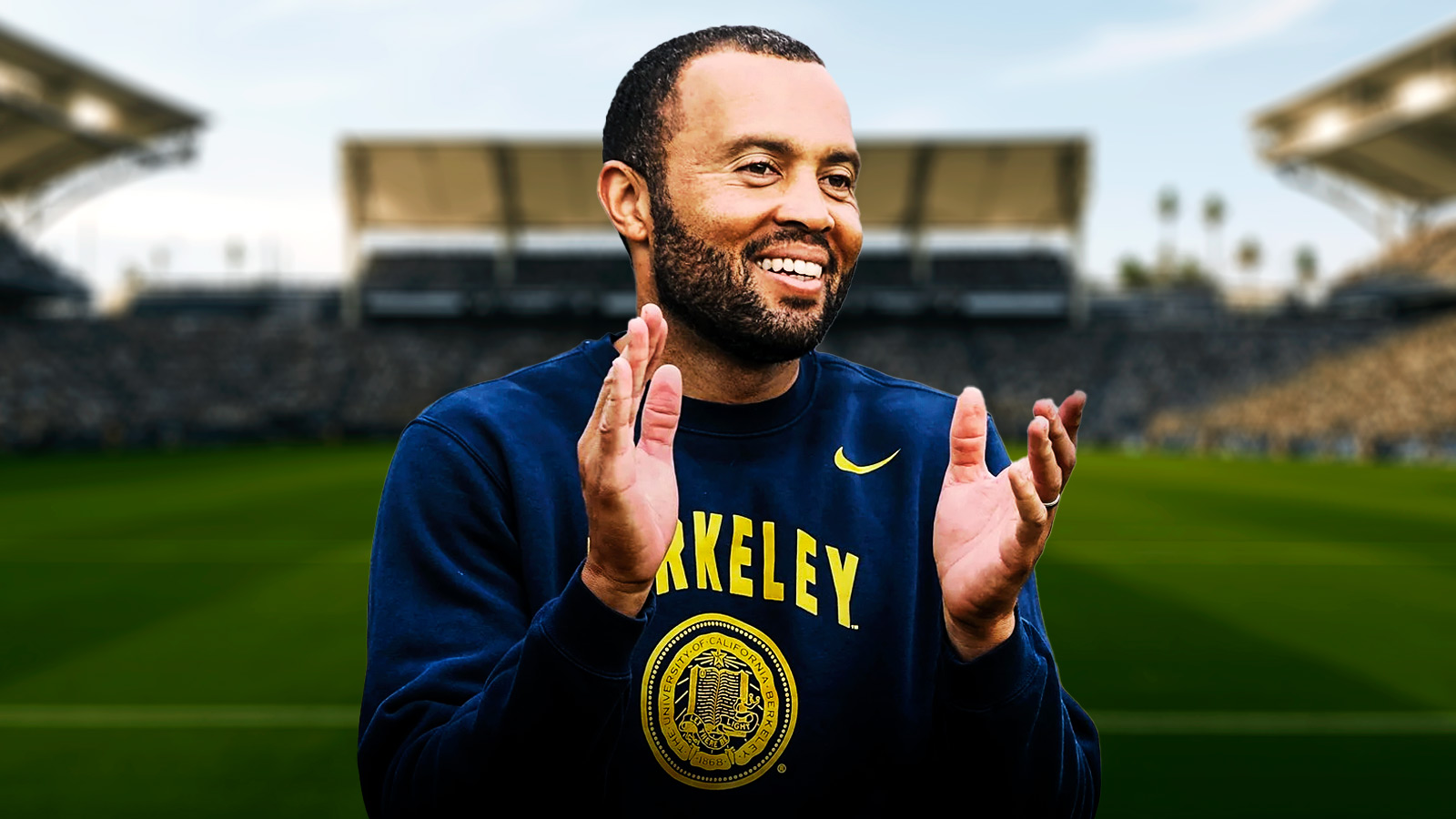
The United States is undoubtedly still behind countries like Belgium, Spain, Argentina, and France, but Leonard Griffin exemplifies the growth of its soccer program. Griffin currently coaches the men’s team at UC Berkeley (Cal) and works with U.S. Sports Camps, the country’s largest sports camp network. Plus, the California native played professionally in the U.S. from 2003 to 2011 and has coached in the NCAA since 2008.
In an exclusive interview with ClutchPoints, Griffin explained that while U.S. soccer has room for improvement, he’s confident that the USMNT can reach the World Cup quarterfinal and beyond over the next 15 years. The squad’s only modern quarterfinal appearance was in 2002, but he thinks that the growth in the country’s talent and coaching tactics will spearhead continued improvement.
Leonard Griffin Q&A

Joshua Valdez: I’m sure you’ve seen a lot of talk about U.S. soccer since the men’s team lost to Belgium in the World Cup. The consensus is that kids have to pay to play in this country, which isn’t the case in the superior soccer nations. Do you think that’s why the USMNT is still behind?
Leonard Griffin: You know, I think this could be the topic of the whole interview. I think it’s definitely a part of the reason. This country is so large, and it has a lot of areas that get overlooked, whether it be because of location or being underresourced. We need to continue to bridge those gaps.
At the same time, I think when we look at those other countries, we’re still a growing soccer nation comparatively. Technically and tactically, our talent continues to improve year after year. Coaching education is also a big part of it, which has also improved year after year. If we continue to fight pay-to-play, I absolutely think we’ll continue to succeed.
Joshua Valdez: Do you think U.S. Sports Camps have better soccer instruction than a lot of what this country has had historically? How do you think that they foster that year-over-year improvement?
Leonard Griffin: Yeah … It’s because U.S. Sports Camps has been doing this so long, and especially in the soccer space. They have a unique position where they’re able to focus on the level of coaching that each camp is getting, and they’re able to tap into university coaches such as myself, who have been working camps and working with young kids for 20-plus years. To have that sort of resource and ability to make sure they’re bringing in coaches that are actually teaching the game from a technical and tactical level [is invaluable].
They also focus on the holistic development of young soccer players who are trying to grow in the game and making sure it’s fun, making sure they’re growing both as players and people, and fostering an environment where kids continue to fall in love with the game. I think that’s the unique thing that U.S. Sports Camps has over a lot of just normal summer camps or camps in general.
Joshua Valdez: So you would say it’s more about the love of the game than just winning or trying to be the best?
Leonard Griffin: Absolutely. So many kids in sports now are specializing at a far younger age than when I grew up. I think what U.S. Sports Camps has done, and what we’re able to do with Cal and San Francisco soccer camps, is foster that love of the game from a young age, while still developing the technical ability of our players. We also focus on character development, which we very much pay attention to at the highest levels, especially at the college level.
Joshua Valdez: Speaking of the NCAA, do you think it is at the point where it could develop players for the top European leagues within a few years?
Leonard Griffin: Great question. I’d like to think so, but a lot of things need to happen. One, I think that college soccer needs to continue to recruit elite players here in the United States and develop them so that they’re ready to take their game to the professional level, whether it’s MLS or in Europe. And I think the NCAA needs to change its soccer calendar.
The NCAA and a lot of its partners have been pushing for a year-round model, which would extend our season from not just the fall, but into the spring as well. If we’re able to align with that calendar and able to develop players and play competitively over the course of a year, I think there’s a far larger place in the development pyramid in the United States. I think if all those things start to align, we could start to produce players that we could see in Europe and hopefully the World Cup.
Joshua Valdez: So you think it’s more about having a 12-month schedule for the players? Is that what you see in the top soccer nations?
Leonard Griffin: Yeah. Again, what we’re seeing now is that the talent level is growing tremendously in our country, and there is a lot more opportunity to play professional soccer, whether that’s at the MLS Next Pro level, the USL Championship, or USL League One. Some of these young players out of high school are taking opportunities that weren’t there when I was a kid … A lot of these kids that were going to college 10, 15, 20 years ago are now taking unique opportunities to play professionally at a far younger age and trying to develop to potentially get to Europe or MLS earlier than before.
In order to bridge that gap, under-19 and U23 are almost perfect ages for college soccer to fit. If young potential student-athletes can see us as a more viable part of their development for a longer part of the year, [the NCAA could gain an advantage] … If they go into a professional environment at 16 through 18, they’re getting very good training at a very high level for longer periods of time. I’m not saying that’s the only reason, but I think it’s very much a big reason why college soccer can get overlooked a little bit in the development pyramid here in the United States.
Joshua Valdez: Right, and many other countries aren’t as big on college sports as the United States is. Would you say that’s part of the reason why U.S. soccer is behind?
Leonard Griffin: I think it’s definitely part of it. I think the training environments from a very young age are a lot different. We’re a unique country where there is a high emphasis on the value of education and college education, to be specific, and I think the kids that we see in the spotlight are the exceptions. The majority of kids are going to have to fall back on and work outside of the game of soccer at some point, so I think still going to college and giving yourself far more of an advantage after your soccer career is a very positive thing.
I think once we start to bridge that gap in development and use that year-round model in the NCAA to align with the rest of the world … Having education and being able to train like a professional will go a long, long way in terms of the type of athletes that we’re able to develop on the soccer side.
Joshua Valdez: Can you name examples of how you’ve seen young soccer players get better over time in the United States?
Leonard Griffin: Yeah, yeah. Gosh, I think part of it is just a lot of the resources and infrastructure that have been built up, starting with U.S. Soccer Development Academy into now MLS Next and what they have been able to do through their youth academies. When we show up to some of these facilities and see what these kids have to work with in terms of not just the level of the fields and the strength and conditioning rooms that they have, but the access to the physios, the nutritionists, all the things that we didn’t have growing up [Griffin’s generation].
The attention to that holistic part of what it’s like to be a pro, these kids have at a far younger age, and I think it’s aiding in their development. Now, it’s less of a shock once they become professionals, because they’ve been in those professional environments a lot earlier than I was.
Joshua Valdez: In addition to strength and conditioning, do you think players have improved their skills within the game, like dribbling and passing?
Leonard Griffin: I think both, and it comes from the coaching. Coaching has improved, so naturally, player talent is going to improve. I also think the world is so much more connected now. For you to go and emulate your favorite players, it’s so easy to go and find a video and train on your own. There are also so many personal one-on-one trainers now that are developing talent. But I think just that connectedness of the world has aided a bit in development, and that’s kind of cool to see. Before, we had to just go watch the Premier League, Bundesliga, or Serie A on a weekend and try to emulate our favorite players then.
Joshua Valdez: Do you think the USMNT will reach either the quarterfinal or semifinal of the World Cup within the next 10 to 15 years?
Leonard Griffin: Absolutely, absolutely. I think that we could have done it this year. If I’m honest, I think there were a lot of factors that we won’t get into going into that last game that held them back a little bit. I think if we get past Belgium this year and we take that confidence into the Spain match, who knows what could have happened?
I think we’re very close. I think we were close this summer. I think we saw a team before that Belgium game that everybody stood behind, and they had an awesome mix of the grit that U.S. teams in the past have had, but with a talent level that we haven’t seen before. If we can continue to build on those two aspects of our game as a country, the sky’s the limit. I can’t wait to see us in 2030 and beyond.
The post Exclusive: Cal men’s soccer coach reveals how USMNT can improve after World Cup appeared first on ClutchPoints.
What's Your Reaction?
 Like
0
Like
0
 Dislike
0
Dislike
0
 Love
0
Love
0
 Funny
0
Funny
0
 Angry
0
Angry
0
 Sad
0
Sad
0
 Wow
0
Wow
0