












2 reasons Makai Lemon would be perfect Rams fit in 2026 NFL Draft
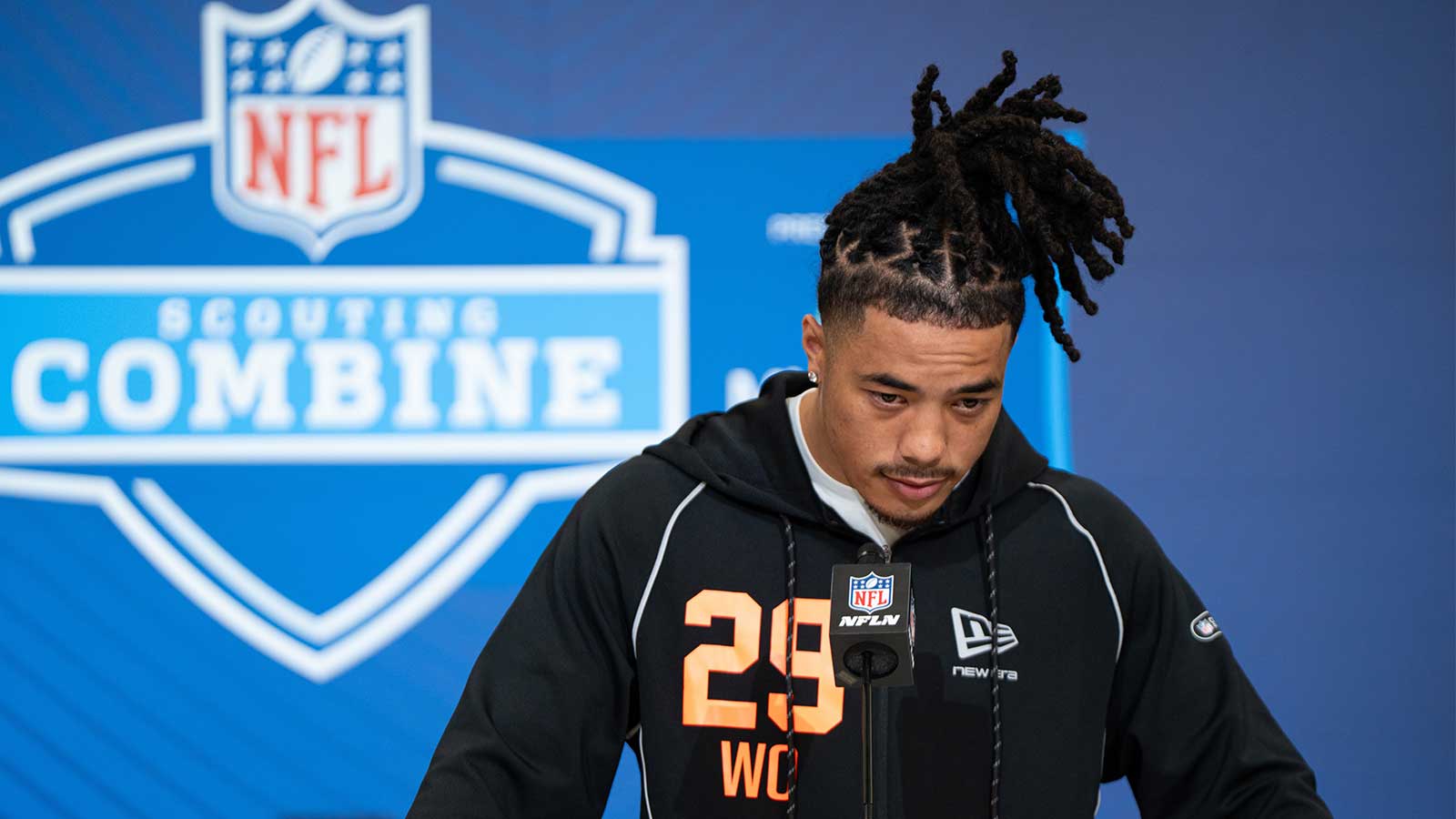
The draft season becomes chaotic when a prospect starts to become difficult to evaluate. Makai Lemon initially appeared to be one of the more direct receiver assessments in the class, but the pre-draft process introduced some complications. Reports of challenging interviews and questions about his performance in team meetings have made him more polarizing than his tape might suggest. However, several projected landing spots still make sense on paper, with Pittsburgh, Baltimore, and New Orleans all being reasonable options, but Los Angeles stands out as the most fitting choice.
This isn’t merely due to a hometown connection or the common USC-to-Rams narrative, but the football rationale is more compelling.
The Los Angeles Rams hold the 13th pick, and their official draft coverage has frequently highlighted wide receiver as one of the primary needs around that spot.
Their own prospect preview on Lemon outlined the rationale for this persistent fit, noting his Biletnikoff-winning 2025 season, his versatility in lining up across the formation, his ability to leverage coverage against both man and zone defenses, the opening created at WR3 after Tutu Atwell’s departure, and the long-term view with Davante Adams entering the final year of his contract.
This framework is more important than the noise surrounding his interviews because fit is about more than just talent, and it’s about whether a team can utilize a player’s strengths without forcing them into an unfamiliar role. In this respect, Lemon and the Rams align exceptionally well.
He fills a crucial receiver role that the Rams need

Many discussions about receiver fits are too broad. Team X needs a weapon, and player Y is a weapon, and that’s where the conversation often ends. However, constructing a successful offense, especially in Sean McVay’s system, requires more specificity.
The Rams need a third option capable of fitting seamlessly into the offensive structure, winning with route discipline rather than sheer speed, and maintaining efficiency without requiring an overwhelming number of touches, and Lemon is well-suited for this type of role.
Puka Nacua provides the Rams with a physical, high-volume target who thrives in traffic, while Davante Adams is a veteran route runner adept at separation and exploiting defensive mistakes.
What the Rams currently lack is another receiver who can move fluidly around the formation, quickly uncover, navigate the middle of the field confidently, and sustain drives when coverage shifts away from the primary options.
His college strengths are great to identify too, as he understands spacing, doesn’t need extensive time to become productive, runs organized routes, handles contact better than his size suggests, and has clean catch-point timing. After securing the ball, he possesses the balance and short-area strength necessary to turn ordinary completions into first downs.
While he may not have the traditional WR1 ceiling that some larger or faster prospects do, in the Rams, this is not a drawback at all.
McVay’s offense has consistently welcomed receivers who can read the field well and don’t require the playbook to be simplified.
Lemon’s style aligns well with this, rather than fitting into a system that demands him to be the standout receiver from Day 1, and with the Rams, he wouldn’t be brought in to save the receiving corps but to enhance it.
Many teams associated with Lemon might expect him to assume an immediate, substantial role. A thinner receiver room can turn a first-round pick into an instant solution, leading to disappointment if the rookie struggles to handle the volume, coverage attention, and professional adjustments all at once.
In contrast, Los Angeles offers a supportive environment, as Lemon could enter as a third option, learn within a stable passing structure, and provide Matthew Stafford, or whoever comes next, with a polished target who doesn’t require extensive scheme adjustments to be effective.
This is why the concerns about his interviews, while valid, should be viewed differently by the Rams than by other teams.
A prospect with inconsistent pre-draft meetings becomes more concerning when a team needs him to quickly become a cornerstone of the locker room.
The Rams wouldn’t impose that pressure, of course. McVay could bring him in, clearly define his role, and allow him to develop within an offense that already has veterans managing the heavier responsibilities.
In essence, the Rams represent one of the few realistic first-round options where Lemon wouldn’t have to be over-drafted into a role that exceeds what he should realistically handle in his first year.
He matches the Rams’ two-year roster plan
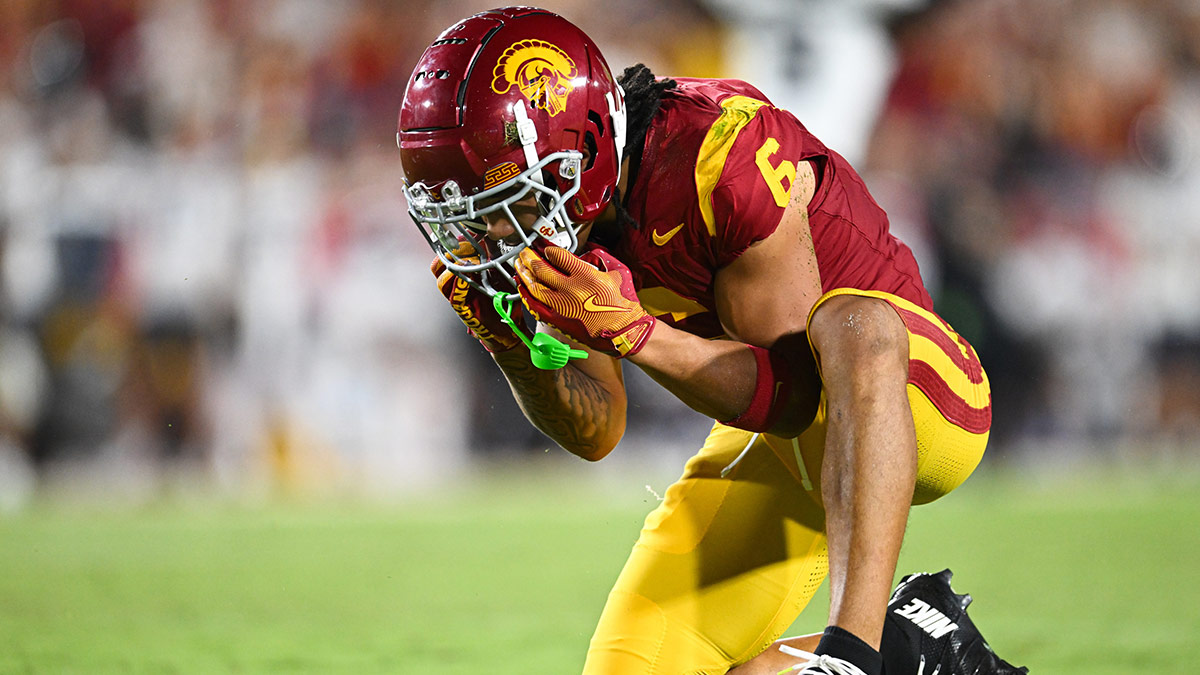
Much of the draft analysis often gets caught up in immediate depth-chart considerations.
Questions like ”Can he start right away? How many targets will he get?” These are all valid inquiries.
However, a better first-round question generally focuses on a broader perspective: What problem are you solving over the next two seasons, not just the next two months?
Well, they are not drafting as a rebuilding team. The roster still has enough proven talent to warrant serious consideration of the present, and this usually pushes front offices toward “win-now” picks, which may sound aggressive but can be shortsighted if not handled well.
Older contenders often find themselves in trouble by drafting solely for the upcoming September while ignoring the evident gaps that will appear a year later.
Receiver is one of the few positions where the Rams can address both immediate and long-term needs with the same pick.
While Adams remains a significant name and a valuable player, there’s no need to pretend he is still in his prime at 28. His contract situation indicates that Los Angeles should consider the future at that position as well, and Nacua serves as the centerpiece of the receiving room.
After him, the long-term outlook is less certain, and Lemon would fulfill an immediate role without being limited to it.
If drafted now, Lemon can contribute as WR3 while the veteran room is intact, and then compete for a much larger workload as the roster naturally transitions.
This approach is a more effective use of a first-round pick compared to selecting someone who replicates what Nacua already provides or someone whose game relies heavily on immediate isolation opportunities.
Lemon’s skill set appears more adaptable in this offense than others, as he can succeed as a complementary player initially and transition to a featured role later if his development continues positively.
They should appreciate this perspective because first-round picks on competitive teams should not be limited to a one-season mindset, and the strongest selections are those that make sense both before and after the next contract decision.
Additionally, there’s another aspect of the fit that should be considered for the Rams specifically.
Lemon doesn’t need to be the most explosive athlete to contribute effectively to the offense, and although this may seem obvious, it’s crucial to remember.
They have enough evidence regarding what McVay values in receivers: pace, toughness, and a willingness to operate in tough areas are just as important as straight-line speed. Lemon checks more of these boxes than many players with flashier statistics.
That’s why the Rams should not overly react to pre-draft criticism if their evaluations still trust the tape.
Every draft class has prospects whose evaluations are influenced late in the process by factors beyond their performance on the field. Sometimes, these warning signs are significant enough to change a player’s grade.
Other times, the process simply overcorrects for a player who may be more subtle than flashy, and Lemon feels more akin to the second category. While we shouldn’t ignore the significance of interview reports, front offices would be unwise to dismiss them entirely, but still, the Rams is one of the best places to navigate that uncertainty because the football fit is evident and the potential for development is reasonable.
This combination is what differentiates the Rams from other teams linked to him, and in contrast with all the other teams interested in him, Los Angeles provides a clearer middle ground: a real role now.
For a first-round receiver, this is typically what teams should be seeking.
The post 2 reasons Makai Lemon would be perfect Rams fit in 2026 NFL Draft appeared first on ClutchPoints.
What's Your Reaction?
 Like
0
Like
0
 Dislike
0
Dislike
0
 Love
0
Love
0
 Funny
0
Funny
0
 Angry
0
Angry
0
 Sad
0
Sad
0
 Wow
0
Wow
0