





-(1).jpeg)

2 key Raiders struggling early during 2026 NFL training camp
Star player Maxx Crosby has alleviated concerns regarding his surgically repaired knee. The Raiders’ pass rusher has returned to team activities, displaying his usual intensity during practice and looking capable of causing disruptions on the field. After a proposed trade to Baltimore fell through due to medical issues, Crosby has entered training camp with an added motivation to play with intensity.
Fernando Mendoza, the No. 1 overall pick, has also shown promise. He delivered several accurate throws during an effective practice session but emphasized that he doesn’t view a single good day as evidence that he’s ready for a starting role. Mendoza acknowledged that he still has much to learn before mastering the playbook, while Kirk Cousins continues to serve as the starting quarterback for Las Vegas.
These developments have helped set a positive tone under the leadership of Klint Kubiak. However, training camp is also revealing players who need to improve quickly. Two Raiders, in particular, have yet to generate the early momentum their situations require.
Wide receiver Dont’e Thornton Jr.

Thornton entered his second NFL training camp with a crucial mission: to demonstrate that his physical tools can translate into dependable production. Standing at 6-foot-5 and possessing genuine vertical speed, he has an attractive combination of attributes that cannot be taught. The Raiders selected him in the fourth round in 2025 due to his potential as a dangerous outside target. Unfortunately, that promise did not result in consistent production during his rookie season. Thornton finished the year with just 10 receptions for 135 yards, despite having opportunities in an offense that needed help at wide receiver. While his size and speed remained intriguing, his limited output left him entering 2026 without the security typically associated with a recent draft pick.
Training camp was expected to provide an immediate response, but early practices have only intensified the uncertainty around his role. The Raiders’ wide receiver group struggled on the second day, with issues such as drops and a general lack of separation from tight ends and running backs becoming topics of discussion. While Thornton didn’t account for every mistake, it would be unfair to place the entire group’s shortcomings on him, and the concern is that he has not provided enough visible answers while competing for a roster spot. Thornton’s struggles stem from the fact that a player in his position cannot afford to blend into a disorganized group. Las Vegas lacks a clearly established hierarchy at receiver, which should create an ideal opportunity for a young player with rare skills.
However, the initial wave of positive camp reports has concentrated elsewhere, while Thornton remains more associated with potential than actual results.
The pressure intensified when the receiving corps performed better during the third practice. Other players became more involved in red-zone and seven-on-seven drills, but Thornton still did not emerge as a primary focus of the offense. Coaches evaluate assignments, blocking details, and route execution in ways that public reports cannot capture. Nevertheless, a receiver on the roster bubble needs to make catches, run clean routes, and show quarterbacks that they can rely on him, and his fit within Kubiak’s offense is crucial.
The system requires receivers to contribute within a structured passing game, execute assignments precisely, and support the run with solid blocking. While Thornton’s ability to threaten defenses vertically has always been an asset, it cannot be his sole argument for securing a roster spot when Las Vegas is evaluating several young receivers and building an offense centered on timing and versatility. Questions about Thornton’s contested catches and consistency emerged from his rookie tape. Although he cannot control every target, he can control whether he finishes his routes, secures catchable passes, and makes himself impossible to overlook. So far, he has not generated the momentum needed.
There is still time for his situation to improve. The Raiders have yet to reach their first fully padded practice, and Thornton’s size could become more advantageous as contact levels increase. Preseason games will also provide him with opportunities to turn limited targets into explosive plays. However, his margin for error is smaller than it was a year ago, and Thornton is no longer a rookie being protected for future development; he is a second-year player competing against new additions and other recent draft picks. If his quiet performance continues, the Raiders may conclude that potential alone is insufficient to justify a spot on the final roster.
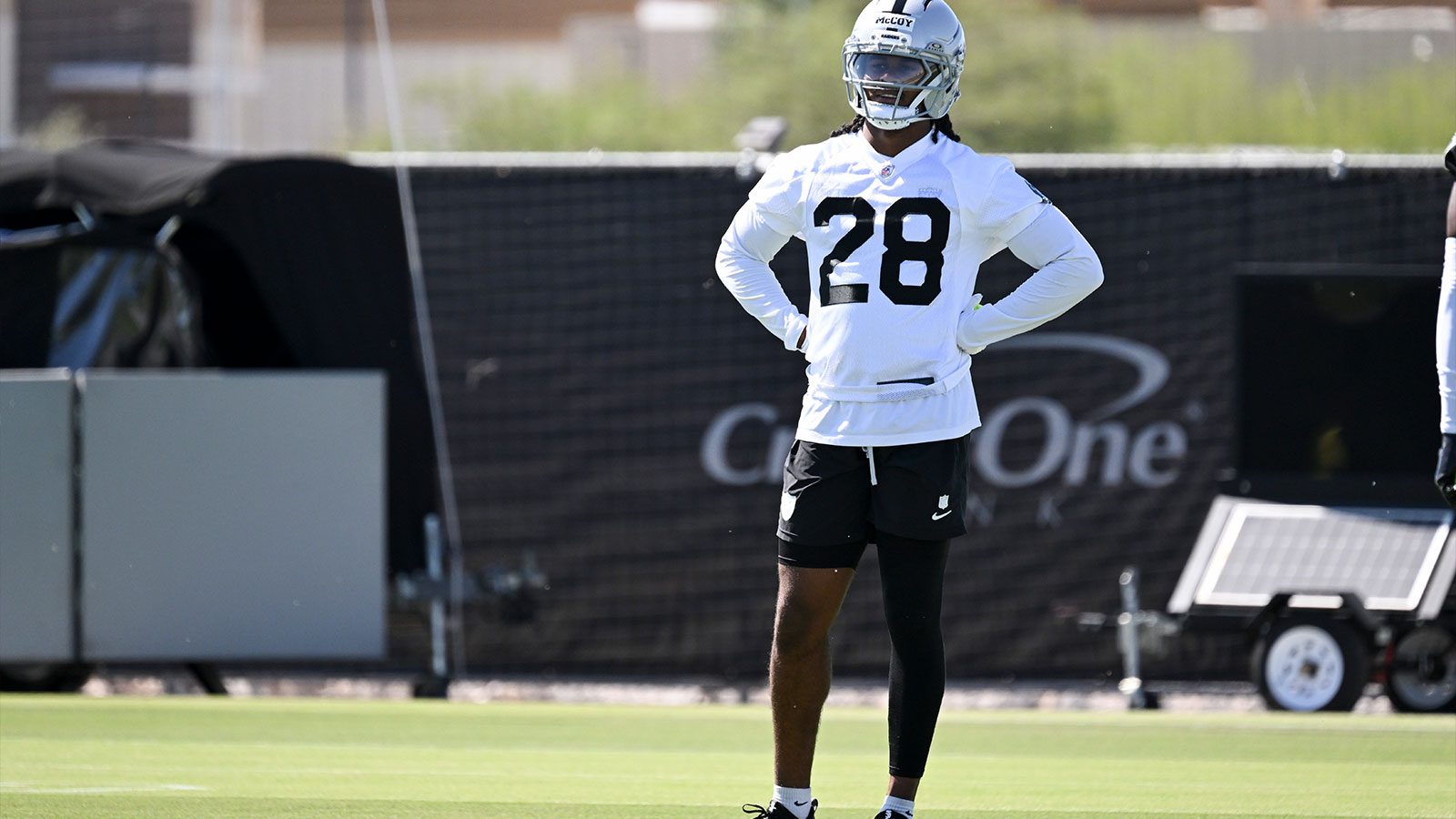
Cornerback Jermod McCoy
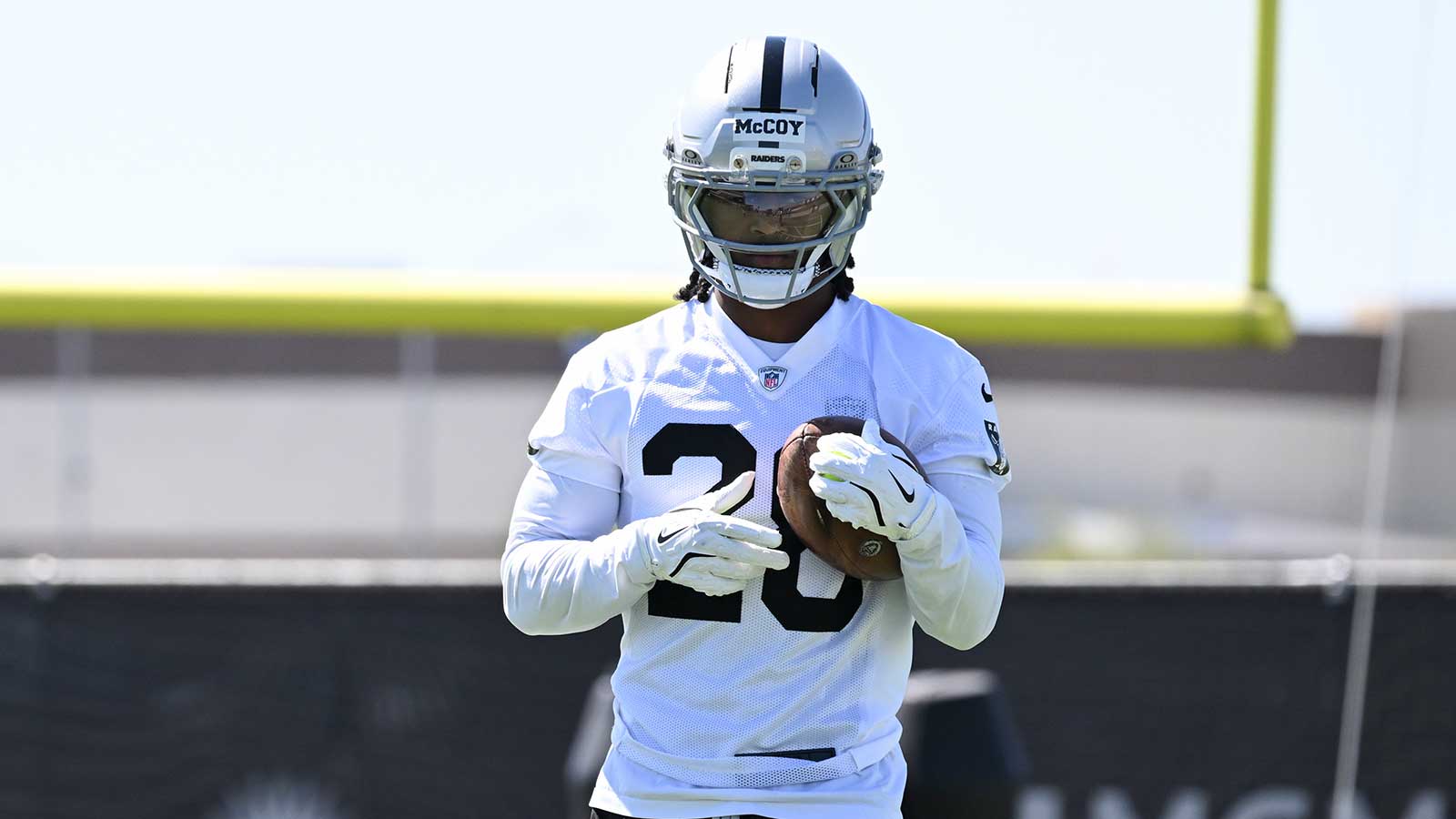
McCoy’s early challenges are distinct. The Raiders are not questioning his NFL potential. Before his knee injury, the Tennessee cornerback was regarded as having first-round talent. Las Vegas traded up to select him with the 101st overall pick in the fourth round, betting that with patience in his recovery, he could become a starting-caliber defensive back at a more affordable draft price, and the complication is that McCoy missed the entire 2025 college season due to a torn ACL. Even after receiving medical clearance, returning to practice is different from regaining the timing, confidence, and reaction speed needed to play cornerback in the NFL. Each route places stress on the knee and demands instant responses to a receiver’s movements, and a player may be physically able to participate while still working to regain their football rhythm.
McCoy has been participating in camp, which is a positive sign. However, his initial placement indicates how much progress he still needs to make. He has primarily rotated with the second and third-team defenses, while fifth-round rookie Hezekiah Masses has received significant work with the starting unit. For a player once considered a possible first-round selection, starting behind a later draft pick is an early setback, even if understandable given the injury context. Masses’ rise does not imply that McCoy has failed, of course; it simply means that competition will continue unabated as he works to recover. Coaches must prepare the players who are consistently executing well, and early first-team repetitions are crucial. They foster familiarity with play calls, communication with safeties, and experience against the top receivers on the roster. Every day that Masses successfully handles those critical snaps makes McCoy’s path to the first team more challenging.
The Raiders also have reason to be cautious. Rushing a rookie cornerback after a lost season poses unnecessary risks, especially before padded practices and preseason games allow for a better assessment of his readiness. McCoy’s long-term value is more important than winning a depth-chart battle. Still, the team drafted him because they believed his potential could enhance a secondary where competition is open.
For McCoy, the early struggle is related to recovery and opportunity rather than significant mistakes. He must rebuild trust in his knee, sharpen his transitions, and prove he can handle increased repetitions without losing technique. Cornerbacks returning from major injuries often require time before they stop thinking about their movements and begin reacting instinctively.
His performance in the next several practices will be critical. If McCoy earns more work with the second team and eventually works his way into the first-team rotation, the beginning of the season will seem like a sensible ramp-up, but if he remains overshadowed while another rookie continues to excel, Las Vegas may need to lower expectations for his immediate role.
The post 2 key Raiders struggling early during 2026 NFL training camp appeared first on ClutchPoints.
What's Your Reaction?
 Like
0
Like
0
 Dislike
0
Dislike
0
 Love
0
Love
0
 Funny
0
Funny
0
 Angry
0
Angry
0
 Sad
0
Sad
0
 Wow
0
Wow
0