





Why Zion Williamson holds key to Pelicans’ 2026-27 contingency plans if things go south again
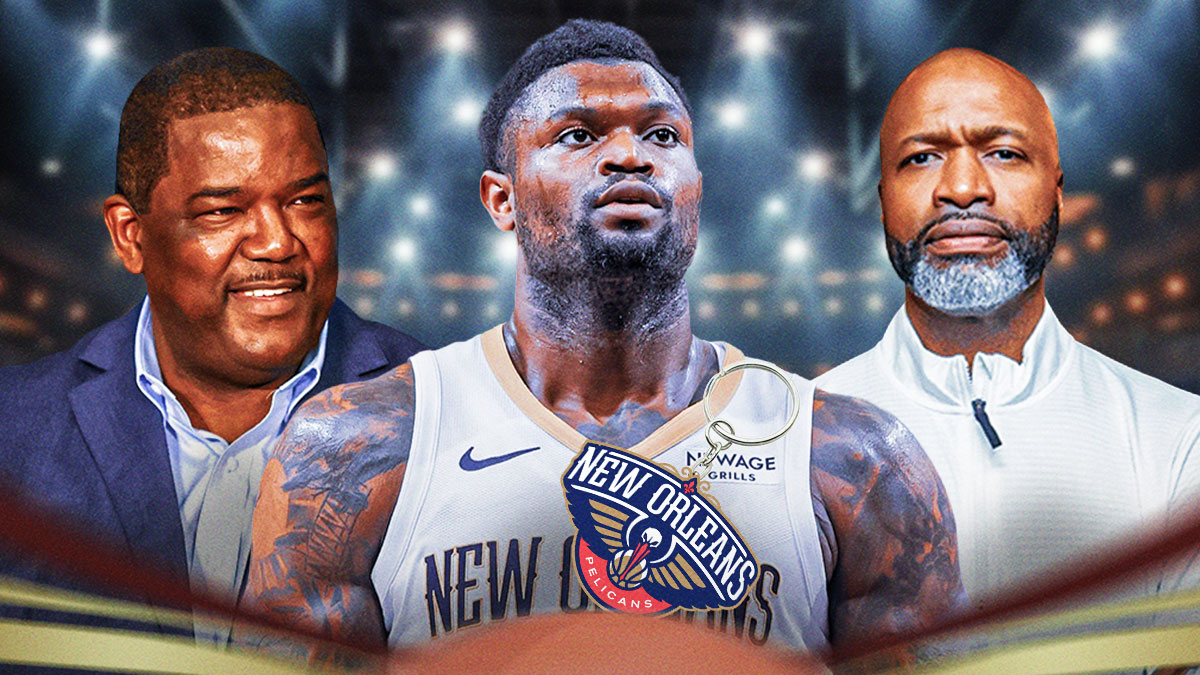
The Zion Williamson-led New Orleans Pelicans can talk about internal growth, better health, and the defensive identity Jamahl Mosley intends to establish. EVP Joe Dumars and GM Troy Weaver can point to Trey Murphy III’s All-Star potential, Dejounte Murray getting a healthy offseason, and Herb Jones returning to form. Fans might even get excited about the hype around Jeremiah Fears and Derik Queen after All-Rookie debuts.
Saddiq Bey has been sensational in a short Crescent City stint. After months of offseason inactivity, the front office can even point to the late addition of a legit bench bucket-getter in Bennedict Mathurin (17.6 points, rebounds, assists). Still, almost every realistic version of the 2026-27 and beyond contingency plans start with the same questions about what Williamson will actually provide and how much it matters to winning postseason games.
Williamson appeared in 62 games, averaging 21 points, 5.7 rebounds, and 3.2 assists while shooting around 60% from the field. It marked only the third time he has played more than 60 games since 2019 though, and the Pelicans won only 26 games. However, Dumars did not budge when asked about the organizational confidence in the 26-year-old star.
“We have no intentions [of trading Williamson],” Dumars said during exit interviews. “We’re going into the offseason looking forward to Zion coming back next year and playing great again next year.”
Despite the increased availability, the NBA media ecosphere’s loudest voices are unconvinced. Sportsbooks remain skeptical for this season as well. The Pelicans are pegged to finish with the fewest number of wins and therefore start with the longest championship odds. Those numbers are not hard to understand.
A lack of outside optimism is expected but ultimately does not mean anything going into training camp. Everyone understands what is on the line. Negative narratives and tarnished reputations are hard to shake. So are certain team trends, like the slow starts to the season and lazy third quarters that span several coaching staffs. That’s something the roster can tackle in the first 40 games, thankfully.
It is also where the three-pronged planning for the best, worst, and most likely scenarios starts.
Zion Williamson works wonders
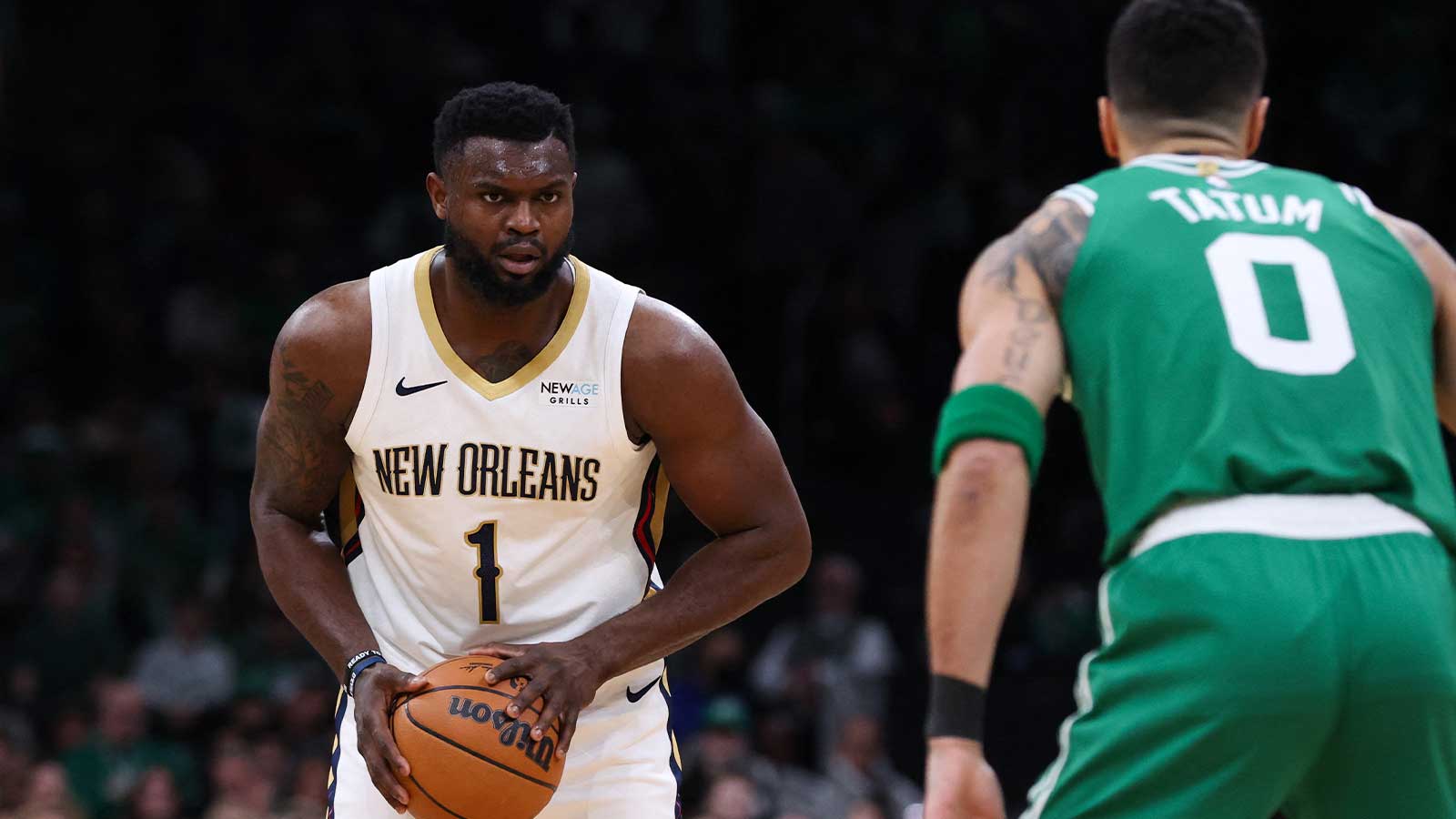
The ideal scenario starts with Williamson delivering the most consistent basketball of his career. He positions the Pelicans for a top-six seed, earns his third All-Star selection, and carries that momentum into the postseason with a series victory or two. But what will Zion actually bring to the table?
That answer determines whether Dumars is discussing an extension with Williamson next summer, shopping established veterans before the trade deadline, or overseeing another uncomfortable offseason in which nearly everyone is available but the player who was supposed to define the franchise remains exceedingly difficult to value.
Essentially, there are three routes the Pelicans can fly. One leads back to the NBA Playoffs and possibly to a long-term commitment with Williamson. Another keeps the organization trapped in the league’s least appealing neighborhood. Languishing around the Play-In cutoff line with this roster, too competitive to concede but too flawed to matter, is not going to sell tickets. The third could bring about the roster teardown two separate front offices have spent years trying to avoid.
Pelicans praying for best
The front office heard everyone out in searching for a new head coach, but the defensive-minded Jamahl Mosley was hired to prevent another season from becoming irrelevant so quickly. Williamson’s ability was no longer a problem last season under Willie Green and James Borrego. The issue was the lack of wins after posting 25-5-5 nights.
New Orleans went just 22-40 in games Williamson played, something the former first overall pick acknowledged was unflattering. Zion all but dismissed the notion that efficiency alone constituted a successful year when the Pelicans had not even qualified for the play-in tournament. That is why the best-case version of 2026-27 requires something different.
Imagine Williamson averaging 25-plus points while again converting around 60% of his shots, but with New Orleans winning enough that those numbers matter. Murphy stretches defenses. Murray helps organize possessions. Jones makes Mosley’s defensive scheme work. Get through the first 40 games in contention for sixth place and everything about the organization changes.
The trade deadline becomes about reinforcement rather than liquidation. Dumars can shop for another big man or shooter rather than field calls on Murphy and Jones. Mosley gets organizational proof that his system works. Win a playoff series, or even win multiple postseason games while Williamson looks like the best player on the floor, and the entire conversation surrounding his future gets flipped.
At that point, a two-year extension that adds the 2028-29 and 2029-30 seasons becomes far easier for both sides to justify. Two additional seasons would protect without requiring another enormous five-year leap of faith. Williamson would receive substantial security while retaining an opportunity to negotiate another major contract before his early 30s.
If the Pelicans decide this core has hit a first- or second-round ceiling, at least everyone’s trade value will have gone up instead of into the tank.
NOLA gets lottery favor
The worst-case scenario is not a slow start. Getting only 10-12 wins before Christmas might seem like coal in the Smoothie King Center-shaped stocking, but it would actually do fans and the front office a favor. There would be no doubt as to which direction to go next. Blow it up before Mardi Gras. Let the new core chase wins while scouting the next top-five pick. At that point, pivot to asset recovery before the NBA Trade Deadline.
Murphy III, Murray, and Jones, all players other franchises have inquired about in trade rumors over the past year, would become the most obvious trade chips. Yves Missi would be practically untouchable, but not completely off the table. The Pelicans could be forced to move some or all of them for modest returns given a thin, top-heavy market and their own uneven track records with injuries.
A soft Williamson market would almost force an awkward choice between negotiating an extension with a player whose availability remains an open question, or run it back again and risk another round of trade speculation heading into next summer…a cycle the Pelicans have now lived through for the better part of Williamson’s career.
Middle ground no good
The toughest position for Dumars is if Williamson and the Pelicans are both mediocre. The toughest decision comes if Williamson is wonderful, but the team is still struggling to clear the NBA Play-In Tournament’s 10th-seed hurdle.
Suppose Williamson is healthy and statistically dominant, but the Pelicans are sitting in 11th or 12th at the end of January. The trade deadline is February 11; the All-Star break is the next week. Will they trade away their only representative, or hold tight to the hopes that one day it’ll all work out? Either way, the rumors would outrun any truth.
A healthy, functional, but unimpressive Williamson keeping the Pelicans around 10th place would leave Dumars to again ask if the roster around Zion is the problem, or is Zion-centered roster construction itself what needs addressing? There is no easy deadline deal that answers it.
Williamson could be averaging 25 points on absurd efficiency. He might be producing viral highlights and overpowering individual defenders just as he has done throughout his career. But if this core is once again four or five games below .500, what exactly has changed? The uncomfortable phrase will be empty stats.
That may be the most difficult outcome of all. Though apt, that description would be overly simplistic for a player whose ability to generate efficient offense at the rim remains rare. Yet at some point the Pelicans have to determine whether Williamson’s dominance can serve as the foundation of a winning team rather than merely making a losing team more entertaining.
There is history supporting both sides of the argument. Whichever version plays out, this season will be defined by what the team’s record says about Williamson and about how much longer the Pelicans are willing to build around him. In most cases, the fans should have clarity before Endymion rolls down Carrolton. As for the rest of the world, it’s all wait-and-see.
So forget arguing over schemes and putting rotations under a microscope. This is a big-picture evaluation in Mosley’s first go-round in the Gulf South. Nothing else matters unless Williamson can stay on the floor, win games, and convince a front office that has every reason to be skeptical that he is worth the investment.
Dumars and the Pelicans have drawn a line in the sand. They are not making trade calls or operating under mandate now. But the clock is ticking. Two years remain on the deal, with next season unguaranteed. The extension conversations will come, and they will be uncomfortable if the wins don’t follow. Williamson holds the key. The Pelicans are simply waiting to see which door is opened over the next six months.
The post Why Zion Williamson holds key to Pelicans’ 2026-27 contingency plans if things go south again appeared first on ClutchPoints.
What's Your Reaction?
 Like
0
Like
0
 Dislike
0
Dislike
0
 Love
0
Love
0
 Funny
0
Funny
0
 Angry
0
Angry
0
 Sad
0
Sad
0
 Wow
0
Wow
0