

![Coventry vs Hull bet builder [23/10 odds]](https://s.w.org/images/core/emoji/17.0.2/72x72/26bd.png)
-(1).jpeg)

-(1).jpeg)



Texans’ most agonizing roster decision looming on 2026 cutdown day

Cutdown day rarely arrives with a clean depth chart, but the Houston Texans have been handed an especially difficult puzzle at wide receiver. That creates a particularly uncomfortable problem for general manager Nick Caserio and head coach DeMeco Ryans. There may simply not be enough roster spots for every receiver who has earned consideration. With Nico Collins anchoring the group and a combination of many others competing for complementary roles, Houston must decide how much proven depth it can afford to carry. The answer could leave one deserving player on the outside when the 53-man roster becomes official.
Bigger priorities
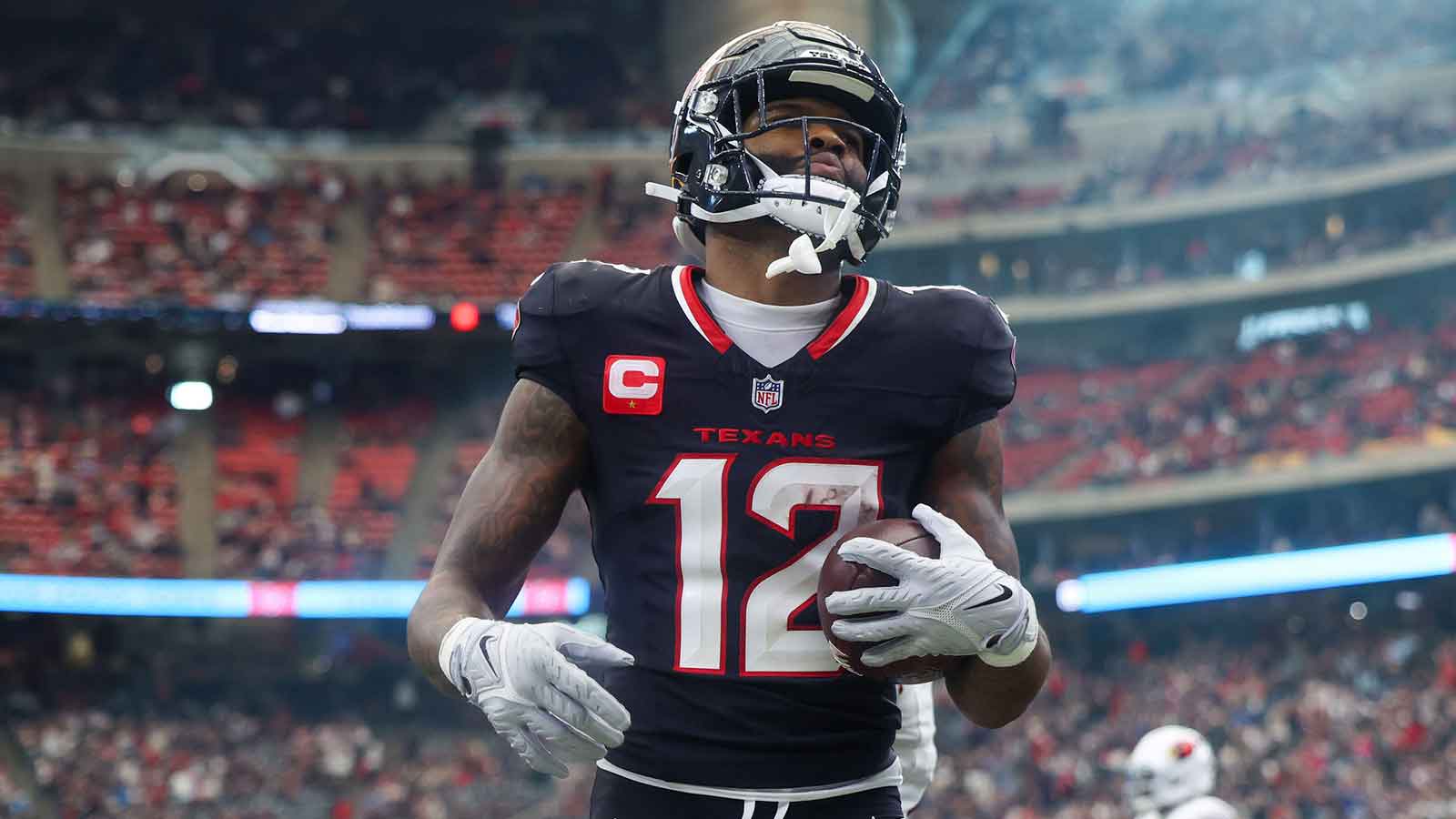
While the Texans dropped all three preseason contests, the scoreboards were secondary to evaluating depth. However, the summer was abruptly complicated by brutal injury setbacks, most notably losing dynamic wideout Jayden Higgins to a torn ACL. That was alongside defensive end Dylan Horton’s torn Achilles. Caserio reacted with trademark aggression. He executed a bold trade to acquire Kayshon Boutte from New England while also signing experienced veterans Zay Jones and Sterling Shepard. Those moves have completely transformed the wide receiver room. Now though, it presents the coaching staff with its most agonizing cutdown dilemma.
Wide receiver logjam
The single most agonizing roster decision facing Ryans and Caserio on cutdown day centers directly on how to configure the final spots in the wide receiver room. Should they part ways with trusted contributor Xavier Hutchinson, or sacrifice newly acquired veteran insurance in Jones and Shepard?
Collins remains the obvious centerpiece. Dell brings explosive ability when healthy. Noel provides route-running precision and return-game versatility. The acquisition of Boutte adds another intriguing perimeter option. The Texans’ own roster currently lists Hutchinson, Boutte, Jones, and Shepard among the active receivers. It underscores just how dramatically the room has changed in a short period.
Hutchinson has spent the early portion of his career establishing himself as a physical, dependable target. He understands the offense and knows what Stroud expects from his supporting cast. Jones and Shepard offer something different. Their value is rooted in experience. Between them, they bring hundreds of NFL games. Jones has accumulated more than 3,000 career receiving yards, while Shepard entered Houston after a 2025 season in which he caught 39 passes for 371 yards.
Weighing special teams utility
This is where the decision becomes genuinely painful. Keeping Hutchinson gives Houston a player who can contribute in multiple phases. That familiarity and reliability matter. The Texans know precisely what they are getting from him.
However, the argument for Jones and Shepard is equally compelling. The entire point of veteran depth is to prevent one injury from becoming a systemic problem. Higgins is already gone for the season. Dell’s availability has been an ongoing consideration during the summer. Houston therefore cannot afford to assume its preferred receiving combination will remain intact for 17 games. A veteran who can immediately step into a regular-season game plan is valuable precisely because there is no developmental runway when an injury strikes.
That creates a fascinating contradiction. Hutchinson may offer greater roster continuity and special-teams utility. Meanwhile, the veterans provide Houston with an insurance policy.
Waiver wire
If Houston exposes Hutchinson to waivers, another team could view him as worth pursuing. The same principle applies to younger receivers who have flashed during camp. Once a player is released, Houston loses control of where his development continues.
That is particularly important because the Texans have already demonstrated how aggressively Caserio is willing to reshape the room. The Boutte trade and the additions of Jones and Shepard were direct responses to Higgins’ injury.
The final roster, therefore, is unlikely to be determined solely by who caught the most passes in August. Special teams, versatility, health, experience, and projected regular-season usage will all carry significant weight.
Choose insurance policy

Ultimately, the Texans’ most agonizing cutdown decision is a philosophical one. Do they reward a trusted contributor, or do they prioritize veteran insurance?
There is a strong argument for both approaches. Keeping Hutchinson preserves continuity and physicality. Keeping Jones and Shepard protects Houston against the unpredictability of a long NFL season. Carrying all of them, meanwhile, could force the Texans to sacrifice valuable depth somewhere else on the roster.
Caserio and Ryans have spent the summer trying to build a roster capable of competing deep into January. The unfortunate consequence of that ambition is that some NFL-caliber players will inevitably become casualties of the numbers.
For Houston, the receiver room is where that reality has become impossible to ignore. Higgins’ injury created the problem. Caserio’s aggressive response may have made the final decision even harder. As things stand, though, the wiser but still painful choice is to keep Jones and Shepard.
The post Texans’ most agonizing roster decision looming on 2026 cutdown day appeared first on ClutchPoints.
What's Your Reaction?
 Like
0
Like
0
 Dislike
0
Dislike
0
 Love
0
Love
0
 Funny
0
Funny
0
 Angry
0
Angry
0
 Sad
0
Sad
0
 Wow
0
Wow
0