


EXCLUSIVE: Giants legend Tom Coughlin on David Tyree catch: ‘Greatest in Super Bowl History’
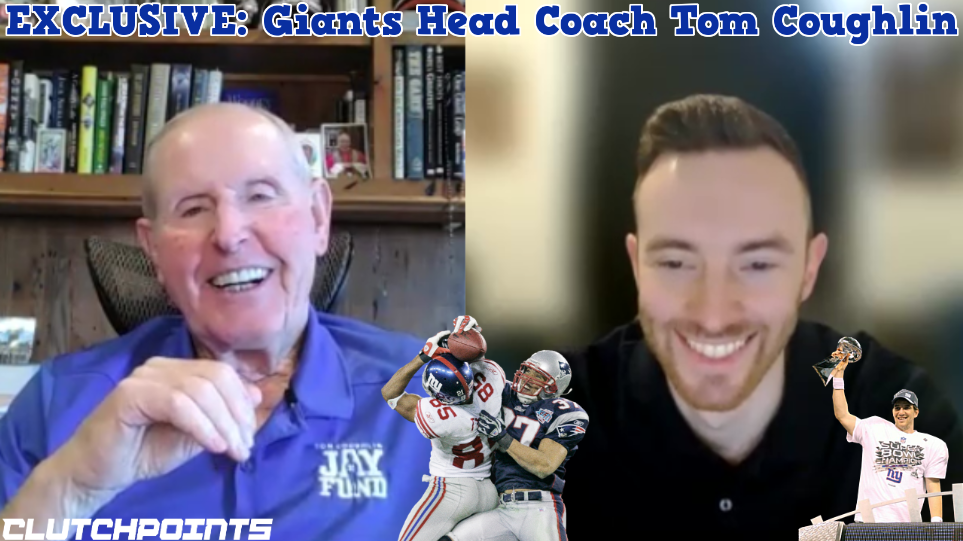
Long before he became synonymous with two of the greatest upsets in NFL history, legendary coach Tom Coughlin built his reputation on discipline, detail, and an unrelenting standard of excellence. Whether it was shaping locker rooms, developing players, or preparing for the biggest stages in football, Coughlin’s approach has always been rooted in accountability, a mindset that ultimately defined his championship success with the New York Giants.
Those principles carried him to the pinnacle of the sport, including two victories over New England Patriots teams led by Tom Brady and Bill Belichick in Super Bowl XLII and XLVI. But while those moments cemented his legacy in football history, they represent only part of Coughlin’s broader impact: one that extends far beyond the sidelines.
In 1996, Coughlin founded the Tom Coughlin Jay Fund Foundation in honor of former Boston College player Jay McGillis, with a mission to support families battling childhood cancer. Nearly three decades later, the organization has provided life-changing assistance to thousands of families, helping ease the financial and emotional burden that comes with a diagnosis no parent ever wants to hear.
The Jay Fund also recently announced its inaugural celebrity ambassador class, including 2x Super Bowl Champion Chris Snee and Ross Matiscik, All-Pro Long Snapper for the Jacksonville Jaguars.
In this exclusive conversation with Rob Lepelstat, Coughlin reflects on the origins and continued growth of the Jay Fund, the powerful stories that have shaped his perspective, and the responsibility that comes with using your platform to give back. He also discusses the foundation’s inaugural ambassador class, including leaders from across the sports community, and how that next chapter will help expand its reach, while also revisiting his iconic Super Bowl runs with the Giants and the mindset behind them.
This interview has been edited for clarity and length.
—–
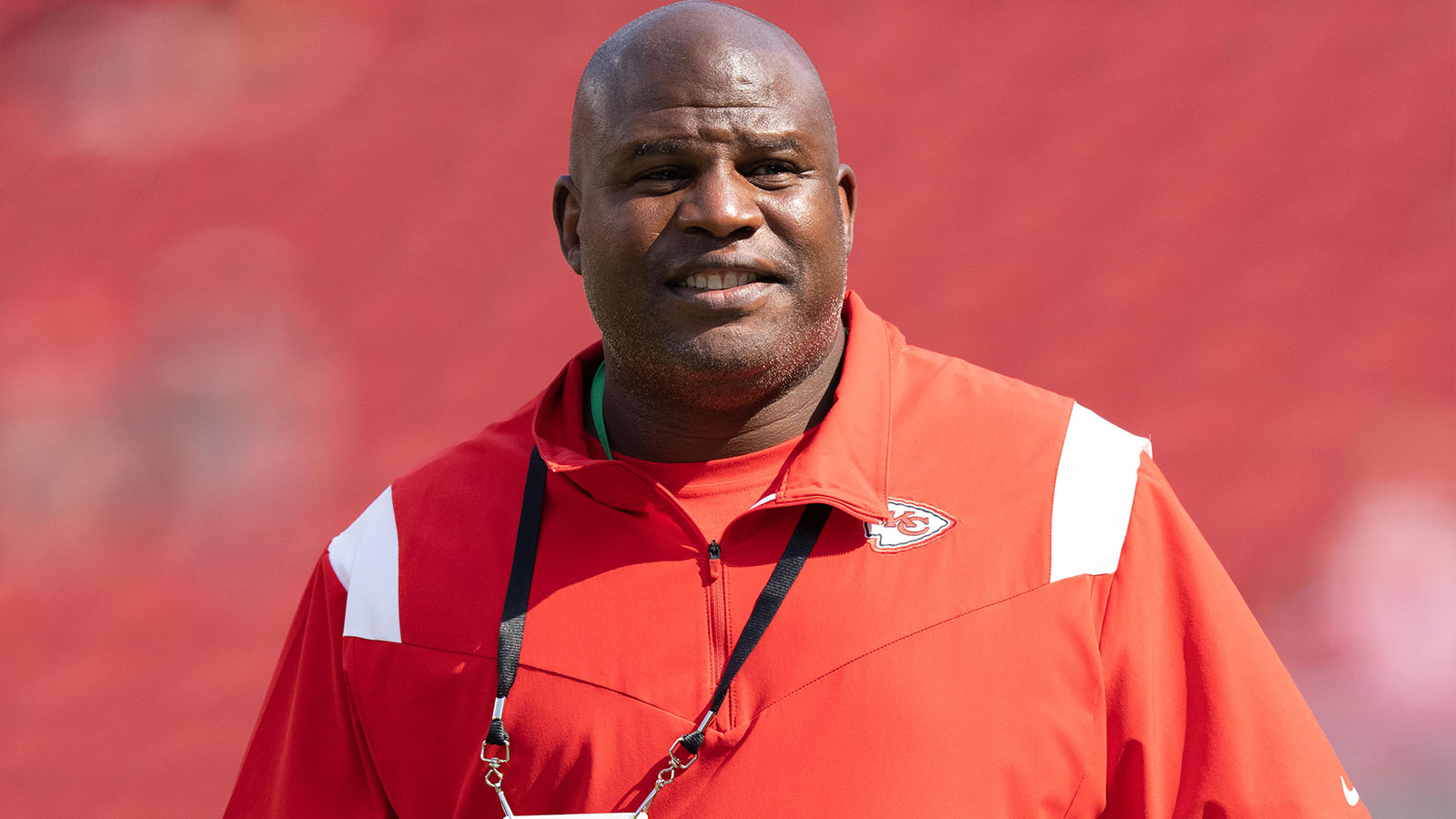
Rob Lepelstat: I could not be more excited to be joined by New York Giants royalty here – one of my favorite coaches of all time. Of course, the two-time Super Bowl champion and former head coach of the Giants, the one and only Tom Coughlin.
Tom, how are you doing today? Such a pleasure to speak with you.
Tom Coughlin: Nice to see you, Rob. Thank you for having me on.
RL: My pleasure! First off, for anyone that might not know, what is the Tom Coughlin Jay Fund, and why did you decide to start it all those years ago?
TC: The Jay Fund Foundation was established in 1996. We are 31 years in operation, and our whole mission is to help families who have a child with cancer, and we’ve been doing it since the very beginning.
When I was at Boston College as the head coach, my starting strong safety was a young man by the name of Jay McGillis. Jay McGillis played 10 games in 1991, and we found out that he was not feeling well. He couldn’t play the last game of the year. It became leukemia, and it was a ravaging form of leukemia, and Jay passed away on July 3, 1992.
What the family went through, and what my wife Judy and I observed in going through this with the McGillis family, made such an impact on us emotionally and mentally that we knew if we ever had a chance to give back, it would be in the name, the image, and the likeness of Jay McGillis.
So in 1996, in Jacksonville, Florida, as the head coach of the Jacksonville Jaguars, we established our first Jay Fund Foundation event, which was a golf tournament in the land of golf. We had a golf tournament, and we humbly began—I think we raised about $36,000. We thought we were doing really well.
But from there, the Jay Fund has evolved over the years to where we have now helped over 6,700 families directly, with over $39 million.
RL: That’s amazing! The Jay Fund has this exciting announcement about your upcoming inaugural ambassador class. Who’s involved and what will their roles be specifically?
TC: Yes, well, this is a way of showing gratitude. This is a way of recognizing individuals in the community who have contributed to the Jay Fund, but in other ways, okay, have shown that they’re there—their service is there. If someone needs help in your neighborhood or your community, these people are there, okay?
Juan Carlos Amorós, the head coach of Gotham FC Soccer Club; Logan Cooke, the punter for the Jacksonville Jaguars; Ross Matiscik, the All-Pro special teams long snapper for the Jaguars; and Chris Snee, my right guard, two-time Super Bowl champion and All-Pro guard—those four individuals, if you ask them to help, they say, “When and what time? When, where, and what time do you want me to be there?” That’s just the type of people they are, and they help in the best of ways. They are incredibly supportive.
We’ve had them all at Jay Fund functions. They’ve handled events—they’ve even done their own. I mean, Chris Snee has been doing this for over 20 years. He and my daughter Kate do it on their own. They provide Christmas presents at Christmas time for the kids at St. Joe’s in Paterson. So it’s all of that.
Coach Juan—you ask Juan to help, and he jumps in full speed ahead. And with Logan and Ross, those guys are tremendous with hospital visits. You’ll walk into a hospital room, and there’ll be a little guy there—a sick little guy who doesn’t feel good—and these guys will start talking about games and music and things like that, and the kid just thrives on that kind of conversation.
So those four guys are the inaugural ambassador program for the Jay Fund, and we’ll ask them to bring others into the Jay Fund as well. That’ll be part of what they do. They’re very, very worthy, and we have great gratitude toward those four people for the way in which they’ve supported our great cause.
RL: When you think about 2026 with the ambassador program and just the foundation overall, what are the goals and vision that you have for the rest of the year?
TC: Most people hear the name, all right? But what they really become compassionate about is our purpose, our mission. And that’s what I’m most proud of.
We have over 80 events in the course of the year. They’re not all money-raisers. Obviously, there are many things we do. We do it for mothers, for fathers, for caregivers, for siblings. You name it, we do it. And we function because we listen.
We listen to what social workers tell us. Kelly is great at that. My daughter Kelly is tremendous at that. She listens, and all of a sudden, we create a program that meets that particular need.
So what we’re saying about the future and going forward is that we’re never going to be satisfied because there’s more and more work to be done. And I’ll give you an example. You can imagine what it would be like in New York. In both areas, in New York and in Jacksonville, we have provided over $2 million to each of those entities in support of families who have a child with cancer.
Could you imagine how much more we could do in New York if we had more money? Or how much more we could do here?
What’s happened here is, with COVID, more people have come to North Florida, to Jacksonville. And the estimation of the number of kids who will have cancer going forward went from 100 a year to 115 a year, okay?
And we carry people through from the onset of the disease to the cure and beyond. So our work is cumulative. We might help 35, 40 kids one year, and still, four years later, we’re still helping that same family.
So that’s what the goal would be: to make an even greater impact going forward.
RL: Absolutely amazing. Let’s transition here. We’ll talk a little bit of football, of course, with you, Coach. It’s probably the game you get asked about the most, which is Super Bowl 42. You’re going against an undefeated 18-0 Patriots team. The whole world says there’s no way you guys can win.
Your 12-point underdogs, facing Tom Brady, Bill Belichick, Randy Moss, etc. How did you guys do it? How did you defeat the undefeated Patriots?
TC: Well, you know, Week 17 of that year was a 38-35 loss to the Patriots, and people forget that. It was a heck of a game — a totally different Super Bowl than what happened later.
We actually had a breakdown in coverage, which gave Randy Moss that deep throw for the winning touchdown.
But Eli Manning had a great game. Tom Brady had a great game.
When you look at that New England Patriots team, they were No. 1 in offense in the history of the league — almost 37 points a game. On defense, they were fourth. They were giving up 17 points a game. They were 10th on special teams.
They punted 44 times during the year. Can you imagine that?
RL: Insane.
TC: The punter slept on the sideline. They decided not to issue him a uniform. You know, it was one of those deals. So, and the thing that I like about it when I look back is I have great memories.
RL: As you should! (laughing)
TC: Yeah, the FOX Sports studio team never picked the New York Giants. Not one game. Not in Tampa. Certainly not in Dallas — Dallas had beaten us twice. Not in Green Bay. No way.
And then certainly not in the Super Bowl XLII.
All you had to do was look at it. The game was in Glendale. The New England Patriots were housed in downtown Phoenix, naturally, right? Where were the Giants? We were 14 miles out in the desert. Our hotel was in the desert. I loved it.
That was one of the greatest opportunities we had, because as you set the week up, the guys could go out earlier in the week, etc. They didn’t want to go anymore. It was too far to drive anywhere. So they all stayed in the hotel, and they talked football. When the families got there, they were all together.
Troy Aikman said in the production meeting, “This looks like a Tom Coughlin hotel.” It was perfect. It was a Tom Coughlin hotel.
So the whole thing — never given a chance, none whatsoever. But we knew what the theme was going to be.
Steve Spagnuolo was our defensive coordinator. Steve was great at coming up with different kinds of blitzes and so on. But in the 38-35 game, Tom Brady was too comfortable. He stood on his spot and had a great game against us.
Well, you couldn’t allow Tom Brady to be comfortable. He couldn’t be allowed to stay on his spot.
We sacked him five times, knocked him down 17 times. He’s a tough son of a gun now. We drilled him, and he’d get back up. Even on the last drive with 35 seconds to go, Jay Alford hit him right in the gut, full speed, knocked him down. He was tough, but we got the message across.
And then we did a lot of very good things throughout the course of the game.
At the start of the second half, they drove to the 44-yard line and pulled one of those Bill Belichick moves — keeping the offense on the field. So we sent the defense out there with the punt returner. Then they put the punt team out. We tried to run our punt team on, boom, and we got called for 12 men on the field by about a yard.
Michael Strahan was standing beside me and said, “Coach, we’ve been in a lot tougher situations than this.”
Defense goes back out there. They make it third-and-13 in that drive. They’re on our 25-yard line. Third down, Michael Strahan sacks Brady. They’re backed up now — it would have been a 49-yard field goal.
They don’t punt. They don’t kick the field goal. We get pressure. Osi Umenyiora gets pressure on Brady. Brady throws the ball out of the end zone.
Final score: 17-14.
They scored no points when they were on our 25-yard line. That was huge.
RL: Amazing. Take me through the David Tyree catch. What was the play call in the huddle? Why was he even on the field? Just take me through it all
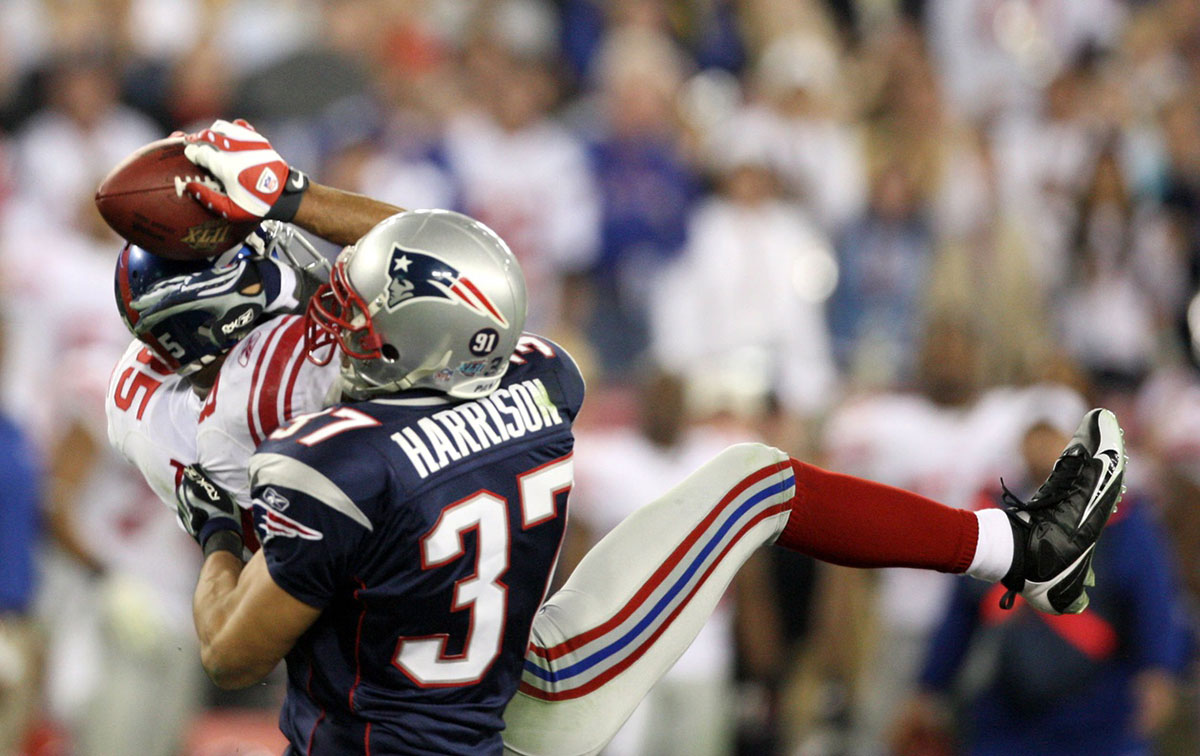
TC: I won’t give you the play call, but it was third-and-five. The ball was almost at midfield.
It was a play that sent David Tyree to the post. So he’s going to the post, we’ve got a post, we’ve got a flag, we’ve got a flat, and we’ve got an in-cut on the backside with Plaxico Burress.
On the snap of the ball, they penetrate right off the bat. It’s like we’ve got nobody blocking anybody.
And it looks like Eli Manning lies down. It looks like he’s done. It certainly did. He got his shirt grabbed. And Mike Carey was standing right beside me, literally, the referee. And I’m yelling, “No, Mike, don’t blow it dead,” because it looked like he might blow the thing dead.
Well, Eli steps up. David Tyree had gone to the post. He comes back seeing the quarterback in trouble, and he comes back toward the quarterback, which he’s supposed to do.
Eli sees him and launches the ball in the air.
Now right away I go from, “Oh my God, oh my God.” If this is an overthrown ball, it’s intercepted, and we’re out of business. Let’s face it, the drive started with 2:29 left in the game.
So now David Tyree, with Rodney Harrison — the big safety from New England Patriots, All-Pro, 220 pounds, great football player — goes up with two hands on the football.
Harrison takes the left hand and knocks one hand down. So now David’s got the ball in one hand. He pins it to the side of his helmet. Took me a long time to teach him that catch.
Now Harrison falls down, goes behind his knees. You’re thinking he’s going to give the ball up. But he hangs on miraculously, really. The other hand comes back in.
But it’s not done. We had another third-and-11 in that drive, too.
That gave us a play, and it was a great play. I get so upset when people talk about that being hokey or something like that. That’s the greatest catch in the history of the Super Bowl, and probably the greatest game, although nobody’s going to give us any credit.
We had one turnover. That was the only turnover Eli had in that whole playoff run — the ball a little behind Steve Smith, tipped. We were going in for a score there.
Now we get to third-and-11, and we ended up calling the same play, I think, two or three times in a row.
On this play, if you remember it, we’re lined up in a bunch set. Ball snapped. Amani Toomer releases off the ball and, not on purpose, but Steve Smith’s guy bumps into him just enough.
Steve looks like he’s all alone in the flat. So Eli — we need 11 yards — throws it to Steve Smith. Steve catches it and dances down the sideline, ducks out of bounds, 12-yard gain.
The next play, Eli is in the huddle. He says to Plaxico Burress, “If they all-out blitz and single cover, I’m coming to you.”
They go to the line of scrimmage. Sure enough, he reads blitz. They bring the blitz.
Plaxico goes down, makes his little slant move, sits the corner down, goes behind him.
Now I’m in my spot yelling, “Is the ball ever going to come down?”
You remember it — the thing is in the air, in the air, in the air — and the catch is made.
There were still 35 seconds left with Tom Brady.
But that’s the greatest upset, the greatest game, in my opinion. It was a colossal defensive game, unbelievable defensive play on both sides of the ball.
They drove to score and left us 2:35, and by the time we got the ball after the kickoff, 2:29 to play. We were down 14-10. We had to have a touchdown.
That’s what made the third-and-five and the third-and-11 so important. Nobody wants to be facing fourth-and-11. No matter where it is on the field, even if it’s the 25-yard line going in.
RL: It’s obviously amazing to beat Tom Brady and Belichick in the Super Bowl once, but you guys did it twice! So Super Bowl 46, just what is the mindset going into the rematch? Because from their perspective, Brady and Belichick are thinking, no way we are gonna let them beat us again!
TC: Well, it was literally the same issue, okay? Nobody gave us a chance.
We were 9-7. We beat the New York Jets, and we beat the Dallas Cowboys to ensure we were in the playoffs. Dallas was a very good football team, and we had to beat them to get in.
Each step along the way, nobody believed in us. Green Bay Packers were 15-1. We beat them.
And the big play was right before the half. Ahmad Bradshaw made a really nice play and ran out of bounds, saved us time. We threw the Hail Mary up, and Hakeem Nicks jumped up and caught the ball.
That killed them, just like the week before against Dallas. Back in 2007, when we beat Dallas, the touchdown right before halftime to Amani Toomer made it 10-10. Dallas sunk a little bit after that score, after we drove the ball like that.
But anyway, nobody gave us a chance.
The greatest learning experience or coaching experience for a coach was in San Francisco.
First of all, Eli Manning proved how tough he was because he must have gotten hit 15 times.
But listen to this: we kicked two field goals based on a fumble and a muffed punt return. So when you talk about the importance of special teams, I could talk about that game for the rest of my career.
That game in the rain, in San Francisco, in the cold, when it didn’t look like anybody could score against each other.
They had a great offensive line and a great defensive line. We had a great offensive line and a great defensive line. Some of the names changed, that’s all.
But when we got to the Super Bowl XLVI, it was Mario Manningham instead of David Tyree.
And again, probably the greatest throw of Eli Manning’s career.
RL: No doubt!
TC: Unbelievable throw, okay?
And the amazing thing about it is, where I’m standing, I’m looking right across the field at Bill Belichick. That play goes right in front of Bill — right there, boom.
And if you watch the tape over the years, the story goes that he was yelling to the defensive backs on the sideline, “No — make them throw it to Mario Manningham. Make them throw it to Manningham.”
Okay, we’ll throw it to Manningham.
But they played us two-deep almost the whole game. They really challenged us. You can’t beat us running the ball, blah, blah, blah.
The safety shaded over a little bit while they were in that two-deep look. Eli Manning saw it and fit the ball in there.
Then we went right down the field at the end of the game.
And then our defense made the plays necessary at the end.
RL: It seems like a silly question to ask you Coach, but why is Eli Manning a Hall of Famer?
TC: He’s the best big-play quarterback I’ve ever been around. Big-game quarterback.His eyes, his focus, his calmness in those kinds of situations — it was uncanny. Now you say, why wasn’t it like that all the time? Well, he’s a human being.
But he stood up against Tom Brady — maybe the greatest in the game, maybe the greatest in history — and he was the MVP of both of those Super Bowl XLII and Super Bowl XLVI, and deservedly so.
RL: Absolutely. Take me back to you as an assistant on Bill Parcells’ staff for the Giants. Bill Belichick was defensive coordinator. You were the wide receivers coach. Just what did you learn about a championship mentality Super Bowls from being under Bill Parcells?
TC: Well, Bill Parcells was no-nonsense, you know. He had a good football team. He knew exactly how he wanted to play.
I’d be at the board on a Tuesday putting stuff up, and Ron Erhardt and all the coaches would be there. Bill would open the door, take all that crap off the board — boom — and slam the door.
He wanted it controlled, completely controlled his way: run the ball, play-action pass, great defense, rush the passer.
Obviously, with Lawrence Taylor, Carl Banks, and that whole great unit, it was a good football team.
You remember, I went in there in 1988, and in the last game of the year, the New York Jets beat us to knock us out of the playoffs.
Then the next year we went a little ways — not far enough, obviously.
And then in 1990, even though Phil Simms and we were 10-0, Sims got hurt. From that point on, with Jeff Hostetler, we went 3-3. Buffalo Bills beat us at home.
Then we marched through the playoffs.
And of course, the great game against Buffalo — Whitney Houston singing “America the Beautiful” and the national anthem. I still get goosebumps over that.
That was the Gulf War / Desert Storm game, with helicopters hovering near the stadium.
It makes you wonder, “Should my family even be in the stands?” One of those kinds of things.
But all great memories.
RL: What was it like watching Lawrence Taylor play in person?
TC: Unbelievable. I always go back to the game in New Orleans when we were, I think, 9-1, and they were really good too. They had a good team.
Lawrence Taylor separated his shoulder right off the bat. It didn’t matter. He’d go off the field all cocked over to one side.
They’d get the ball back, and he’d come right back out on the field.
He hit their quarterback so many times in that game that he didn’t even look downfield anymore. He just looked to see where No. 56 was.
Amazing.
He was the whole deal. Mentally tough. He played with injuries. It didn’t matter. He played.
RL: I’ll get you out of here on this, Coach. Really appreciate the time. I attended the University at Albany. Of course, you guys spent so many summers for training camp at UAlbany. Just what’s your fondest memory of upstate New York, UAlbany for Giants training camp for all those years?
TC: Yeah, we had great experiences there. We really did. And the fans were terrific.
We did not have an indoor facility, which was a little bit of a problem.
The most important thing was that I had a guy meet me at six o’clock in the morning in the office to give me the weather report. And if he told me it was going to rain, I told him I was going to fire him if we got caught in the rain.
But we had really good, significant time together.
It wasn’t pretty, and it wasn’t supposed to be. The players came together under those circumstances, which was good — which was always good.
Enjoyable.
RL: I can’t believe you guys are in those dorm rooms!
TC: Oh, yeah. Oh, yeah.
RL: Coach, really appreciate your time and absolute pleasure. Tom Coughlin, Jay Fund, all the amazing work you guys are doing. Really appreciate the time. Thank you so much, Coach.
TC: Thank you, Rob. Have a great day.
Rob Lepelstat is an experienced sports media professional with over 7+ years in content creation, editorial, social media, reporting/interviewing, etc. His work has been featured in USA Today, Yahoo Sports, Bleacher Report, and more. Check out more of his interviews, including Jay-Z, Kareem Abdul-Jabbar, Lawrence Taylor, Derek Jeter, Ice Cube, “Dr. J” Julius Erving, Drew Brees, and Livvy Dunne here.
The post EXCLUSIVE: Giants legend Tom Coughlin on David Tyree catch: ‘Greatest in Super Bowl History’ appeared first on ClutchPoints.
What's Your Reaction?
 Like
0
Like
0
 Dislike
0
Dislike
0
 Love
0
Love
0
 Funny
0
Funny
0
 Angry
0
Angry
0
 Sad
0
Sad
0
 Wow
0
Wow
0