






Angels’ biggest 2026 MLB trade deadline mistake

The Los Angeles Angels finally embraced reality at the 2026 deadline, dealing away seven big leaguers under interim general manager John Mozeliak in the club’s first true sell-off in years. Most of the return was defensible, headlined by acquiring Top 100 shortstop prospect Arjun Nimmala from Toronto for Jose Soriano. But the Angels’ biggest mistake of the deadline came days earlier, when they sent catcher Logan O’Hoppe and reliever Chase Silseth to the Texas Rangers for a single third-base prospect who wasn’t even ranked among Texas’s top 30 prospects.
Selling Two Controllable Assets for a Fringe Prospect
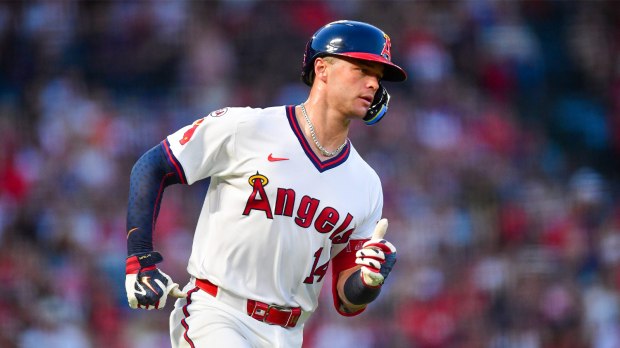
O’Hoppe and Silseth for Angel Arredondo is a deal that looked lopsided the moment it was announced, and it hasn’t aged any better. Silseth was pitching some of the best baseball of his career, carrying a 2.98 ERA with 51 strikeouts in 42.1 innings, making him exactly the kind of cost-controlled, high-leverage arm most rebuilding front offices try to keep rather than sell for spare parts.
O’Hoppe, meanwhile, is a former top prospect in his own right who had already established himself as a productive big-league catcher, giving Los Angeles a controllable option behind the plate for the next several seasons.
In exchange, the Angels received Arredondo, a prospect who sat outside Texas’s top 30 and only projects to slot in around No. 28 in an admittedly thin Angels farm system. That’s a light return for two players still years away from free agency, and it set an uneven tone for everything that followed.
A Bullpen Mistake Compounded by the Rest of the Deadline
The Arredondo trade becomes an even bigger miscalculation when viewed alongside the rest of Los Angeles’s deadline activity. The Angels went on to also move Ryan Zeferjahn, Kirby Yates, and Brent Suter out of the bullpen, stripping a relief corps that, unlike most other areas of a 42-69 roster, had actually been a relative strength.
One or two of those later moves made sense as pure rental sell-offs, since Yates and Suter were both on minimal, expiring contracts that offered little value to a non-contender. Losing Silseth in the earlier, lower-return trade is what turned a sensible bullpen purge into a compounding problem, subtracting a young, affordable arm from the only unit on the roster performing well, all for a mid-level prospect.
Beat writers flagged this exact dynamic afterward, explicitly labeling the bullpen the deadline’s biggest loser and criticizing the light Arredondo return as a bad precedent that colored perception of the entire sell-off.
Why the Timing Made It Worse
What compounds the error further is that the Angels didn’t need to move fast on O’Hoppe. As a rebuilding team with a 41-loss-plus roster and years before it needed to contend again, Los Angeles had leverage to wait for a better offer or package O’Hoppe with another piece to extract more value, rather than trading him nearly a week before the deadline for a player outside a rival’s top 30.
Mozeliak’s later moves show the front office understood how to extract real value under pressure, landing a legitimate Top 100 prospect for Soriano and a former top-100 catching prospect in Moisés Ballesteros for Zeferjahn just days after the O’Hoppe deal. That contrast makes the early Rangers trade look even more like a missed opportunity: the front office proved it could negotiate stronger returns once it had more comparable trade chips on the table, which only underscores how much value the Angels left on the table by moving early and light on O’Hoppe and Silseth.
For a franchise finally committing to a real rebuild, undervaluing two of its most tradable, controllable assets in the deal that kicked off the sell-off is the mistake most likely to be second-guessed once the farm system’s progress is measured a year or two down the line.
The post Angels’ biggest 2026 MLB trade deadline mistake appeared first on ClutchPoints.
What's Your Reaction?
 Like
0
Like
0
 Dislike
0
Dislike
0
 Love
0
Love
0
 Funny
0
Funny
0
 Angry
0
Angry
0
 Sad
0
Sad
0
 Wow
0
Wow
0