





We’re having the wrong conversations about Angel Reese


When Angel Reese and Caitlin Clark entered the WNBA, many saw a potential rivalry that would carry the next generation of the league’s fans in the same way Bird and Magic once did for the NBA.
Instead, we are at an impasse, where both players are no longer the most obsessed-about stars, and neither has an argument for being the best player in the league.
In a way, Angel Reese should be having the inverse arc. She left the dreadful Chicago Sky and is now flourishing on the Atlanta Dream’s top-ranked defense in the W, while continuing to be the best rebounder in league history and yet, instead of catapulting her into stardom, her growth and improvement in circumstances feel like they have gone under the radar.
Given what the consequences of attention for her have been, maybe that is better. Her records have long been invalidated by people claiming that her offensive rebounds were “Me-Bounds” — as if that makes them any less valuable — and undercut by social media compilations of her struggling to score in isolation.
There is an undeniable discriminatory aspect to this. Sexism and racism are alive and well, and targeting an outspoken black woman as one of the faces of a league built by largely black, queer women in a time when all of those groups are under attack is unfortunately par for the course.
But the reality is that a lot of fans fundamentally still do not understand Angel Reese’s value. Even worse, they’re no longer trying to, if they ever were in the first place.
On a surface level, a player like Clark is far easier to engage with as a casual fan. The eye test has become such a massive element of the league’s online growth to the point that on-ball creators get all the flattery when forwards do not. It’s just one of many ways that the highlightification of sports has stripped fairness from conversations, something that has almost inarguably happened to Reese.
Part of this question of surface-level aesthetics comes from the way that MNBA fans have started to make the jump to following the WNBA. But assuming that teams should be built the same across both leagues is a false standard.
For those new adopters, there should be one obvious truth that makes that expectation impossible.
The first thing anyone who watches the W for the first time will realize is that games are far, far shorter.
Pace, contrary to popular belief, is not a measure of how “fast” teams play. Instead, it estimates the amount of possessions per game. The league leader in the WNBA, through 11 games, is the Indiana Fever at 82.2, while the NBA leader, the Miami Heat, were at 107. If we divide by their total minutes, we’d get 2.1 for both.
The relative pace of the two leagues at their peaks is certainly similar, so the important number here is not just the obvious 40-minute-long games, a massive 20% less than the NBA’s 48, but the statistical impact that so much less gametime carries.
What do I mean by this? Well, in the NBA, where you’re guaranteed 100 possessions a game, your games rely less on the uncertainty of what comes within those opportunities. In the WNBA, a single extra possession out of the average 80.1 is worth 25% more than that in an NBA game.
Which brings us back to Angel Reese. Her offensive rebounding, which nets an additional seven (!!!!) possessions a game for her team — along with the extra possessions that her defensive boards prevent — is far more valuable than it would initially seem.
The Dream as a team have fully committed to the possession battle as their winning formula. They led the league in rebounding last year, were fourth in blocks per game, and were the best team in the league at protecting the ball, giving up only 11.2 turnovers per game.
For what it’s worth, six of last year’s eight playoff teams were the league’s six best in those stats. If you turn over the ball in the WNBA, you will not win. It is really that simple.
That’s part of what makes Reese such an enigma. She is simultaneously the perfect acquisition for this vision – the league’s best defensive possession ender is also its best offensive possession extender – while also being its antithesis; Reese is second in the WNBA in turnovers per game this year (of players with over 200 minutes played). That — not her shooting — is the actual weak point in her game. Angel’s job is to push the possession margin in the favor of her team and to allow the other four members to pay off those opportunities. Not being a 20-point-per-game scorer does little to diminish her central identity.
It’s strange to see a team with a top MVP candidate and the reigning Sixth Player of the Year spend multiple first-round picks on a player that specializes in the things the Dream already do well. Those types of trades are usually made to shore up issues, not ignore them entirely. But that’s what the Dream did: go all in on their identity of “we will shoot more than you, much, much more.”
If that’s the case, then let’s get back to that focus.
Why is so much of the conversation around Reese so focused on her inadequacies as a scorer and not on her strengths as a player? Or even just an even-keeled approach of both?
The unfortunate truth surrounding so much of Angel’s career, college and pro, is that the interactions that fuel online conversations have always come first, at nuance’s expense. HaterReport, Brick Central, and other troll accounts have been fixated on Reese for years.
Anyone in sports knows that narrative is king, and the Angel Reese narrative was written by Dave Portnoy and grifters of his ilk as a way to prop up Clark. But there’s no reason to continue to validate what was a false equivalency from the beginning.
Neither player will be what they were promised to be – or so it seems to this point. Angel has proven to be a better complementary star than she is a load-bearing keystone, and Clark is struggling to fit back into a team she was absent from the postseason for last year due to injury.
But as the mostly manufactured drama between the two 2024 draftees reaches its quiet end, isn’t it better to discuss who they are in the context of their own league?
What the Dream have turned Angel into is not yet a completed product, but they have clearly used her to galvanize the identity of the team around her. In being asked to do less, Angel is paradoxically doing more.
Angel Reese has taken the next step in her development. She is posting better and better numbers each week while pushing the Dream into conversation for the best team in the league.
She is already the best rebounder in league history, just three short years into her career, as well as being an early favorite for Defensive Player of the Year. In a league that has different values for skillsets, Reese possesses perhaps the most treasured and rare. She is a unicorn, both in her uniqueness, and her seeming unreality.
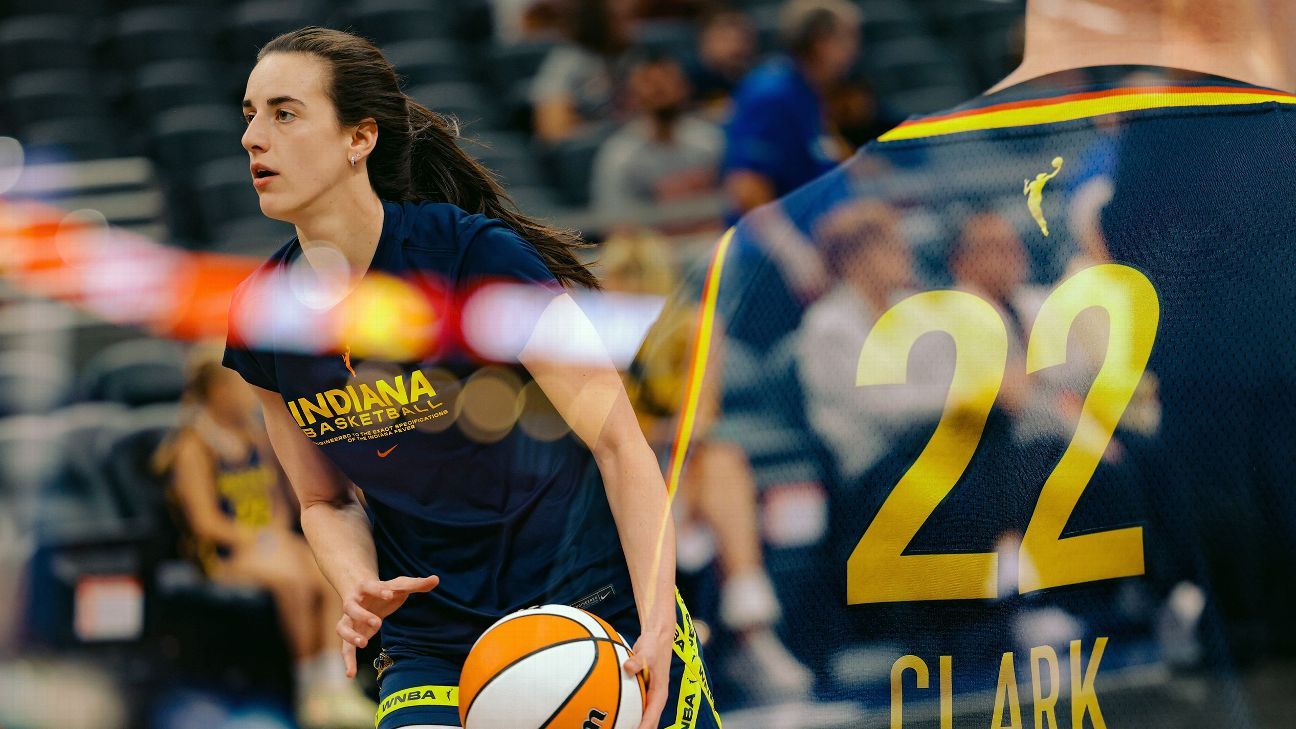
It’s sad that so much of the conversation surrounding Reese has spent so much time being about how she’s not Caitlin Clark. She does not take threes from distance. She does not score at an elite clip. Her highlights are not posted on social media.
But maybe it’s time for us to remove the spotlight that a 2023 college game created. Angel Reese is no longer just one party of the beef that was supposed to ignite the WNBA. And the player she’s turning into is worthy of attention on her own merits.
What's Your Reaction?
 Like
0
Like
0
 Dislike
0
Dislike
0
 Love
0
Love
0
 Funny
0
Funny
0
 Angry
0
Angry
0
 Sad
0
Sad
0
 Wow
0
Wow
0