





![[WATCH] 'Look at their facial expressions' - Sonal Dinusha's fun moment after batting whole day to draw Colombo Test](https://media.crictracker.com/media/attachments/1787832228918_Sonal-Dinusha.jpeg)
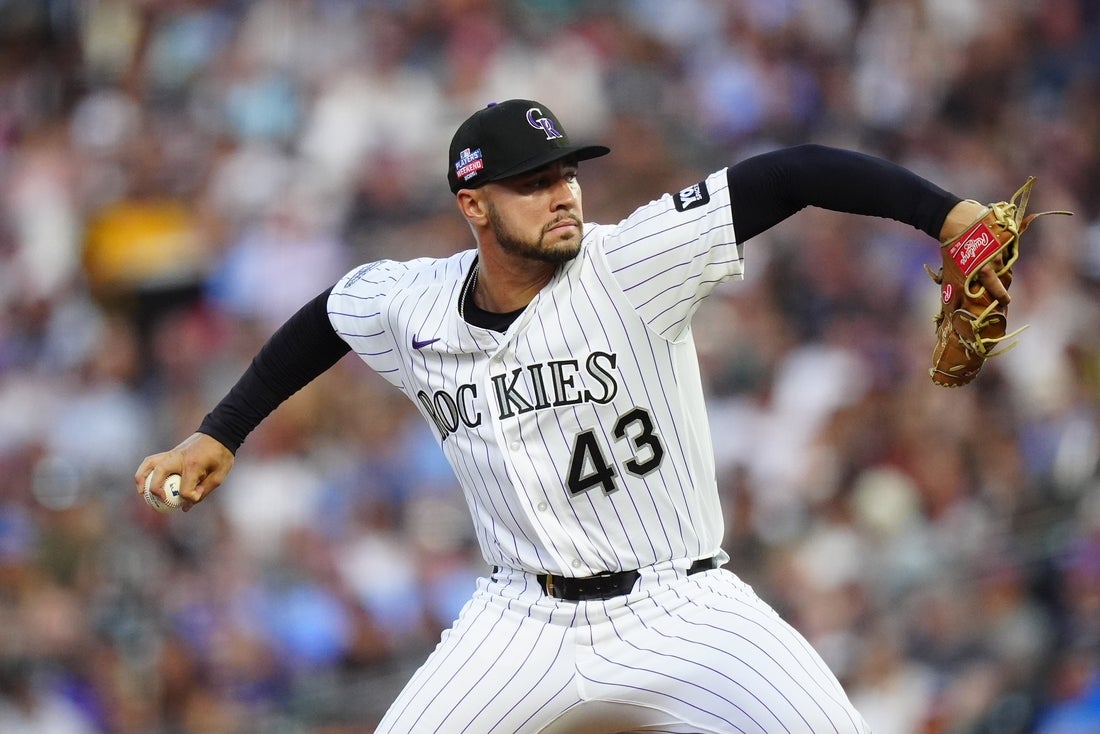





How the Valkyries’ routines, self-talk, and mantras help them find mental balance

The doldrums of the WNBA season come for everybody. Practices begin to feel prolonged, sore muscles last a day or two longer, and the mental fog of burnout creeps in.
That’s why Valkyries star Gabby Williams works to sharpen her mind just as much as she does for the rest of her game.
“I work with someone. Treating my brain like a muscle,” Williams said after an intense afternoon practice in late July. “When you talk it out with someone, [in] their specialty, it’s really nice. It’s exercising, and it’s like your shot. Your shot doesn’t become perfect. You have to rep it out. You have to rep it out, and it’s the same thing with these kinds of exercises for your mental.”
The WNBA didn’t used to be like this. It was “taboo,” Williams told ClutchPoints. Teams didn’t have mental health professionals for players to turn to, and the league was not as open about talking about what was going on above the shoulders. As a result, Williams struggled with leaving the basketball on the hardwood early in her career.
“It was like when I was home – I’m just gonna go home and try to think about something else,” Williams explained. “I’m just gonna do whatever. But your brain actually doesn’t shut off, even if you try to force it to.”
Now, nine years into her professional career both in the WNBA and overseas, Williams has found helpful methods to keep a healthy separation between her life on-court and her life off of it.
Writing, she says, is one of the techniques she uses to help find balance. It can be of whatever. Williams says she writes down goals, gratitudes, observations, thoughts, thoughts she wants to get rid of, as long as it’s on paper. Because the content doesn’t matter; it’s the act. An exercise in letting go.
That same Zen-like philosophy helps Williams support teammates when the anxieties of competition set in.
“I always tell my teammates that it’s okay to feel things,” Williams said. “You don’t have to pretend like everything’s okay. You don’t have to pretend like this doesn’t bother you. It’s all right. Let’s acknowledge it and then let’s move past it. I always say this is a profession. This is a job. We play in front of all these people, but at the end of the day, everyone has a bad day at work sometimes, and then you come back, and maybe you have a better day the next day.”
It’s a mindset that helps Williams maintain a healthy work-life balance. And it can apply to anyone’s profession.
“[It’s the] same thing. I’m sure you don’t want to go home and ask more people questions, right?” Williams laughed.
“Everyone’s different, but me personally, I don’t want to go home and make basketball my hobby. When I go home, I watch film; I watch the game with my work brain on. And then as soon as it’s time to shut it off, I’ll go and do something completely different.”
Kaila Charles and the power of self-talk
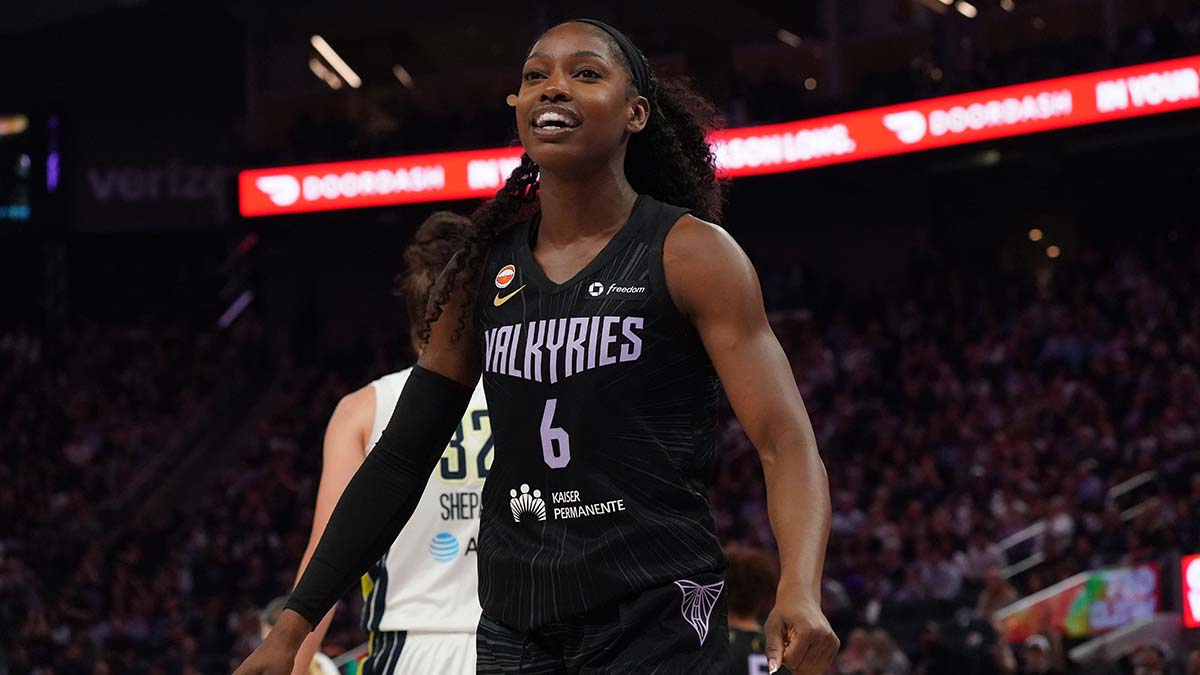
For Kaila Charles, who may understand the anxiety and stresses of the WNBA after spending years on the fringes of the league, bouncing from hardship contract to hardship contract before finding a home in Golden State, her approach is a little different.
Like Williams, Charles has her routines. On game days, she gets into the facilities at the break of dawn for an early breakfast, a lift session, and some film work before getting into a full team shootaround. Afterwards, Charles heads home, takes a shower, and then a nap (the nap she says is her most important routine). Once she’s up, Charles gets dressed up for her arena entrance walk – to set the tone for herself as she heads into work.
But within her routine, and within the game, Charles takes special care in how she talks to herself, something she learned from her father.
“My dad was always big on reading books. And one book that I read and stuck with me was the power of self-talk and the power of negative self-talk.” Charles said after one of the Valkyries’ brisk morning shootarounds.
“It kind of reshaped how I approach every day. Even in the game or even in practice, sometimes you get frustrated when you’re not making shots, and you might say, ‘Oh, I can’t shoot today.’ Your brain believes whatever you tell it, whether it’s fact or fiction.”
I had mentioned to Charles some reading I picked up recently: The Inner Game of Tennis by W. Timothy Gallwey, a well-regarded sports psychology book used by many high-profile professional athletes and coaches. Though Charles hadn’t read it before, she certainly practices Gallwey’s main teaching about observing oneself without applying judgment to an action or misstep.
Charles has keywords she uses in-game to ground herself in the moment, “little reminders,” she calls them. And Charles packages those little reminders to herself in the third person, telling herself, “All right, come on, Kai. Next shot, next play,” as if she were giving her teammates a pep talk.
“If you’re always saying, like, ‘Oh, I’m anxious, I’m nervous, and this, this, and that,’ you’re gonna feel that because your tongue speaks life and death. That’s something that I’ve been very aware of; just making sure I’m not speaking bad about myself because you internalize that whether you realize it or not.”
Tiffany Hayes’ pursuit of flow state
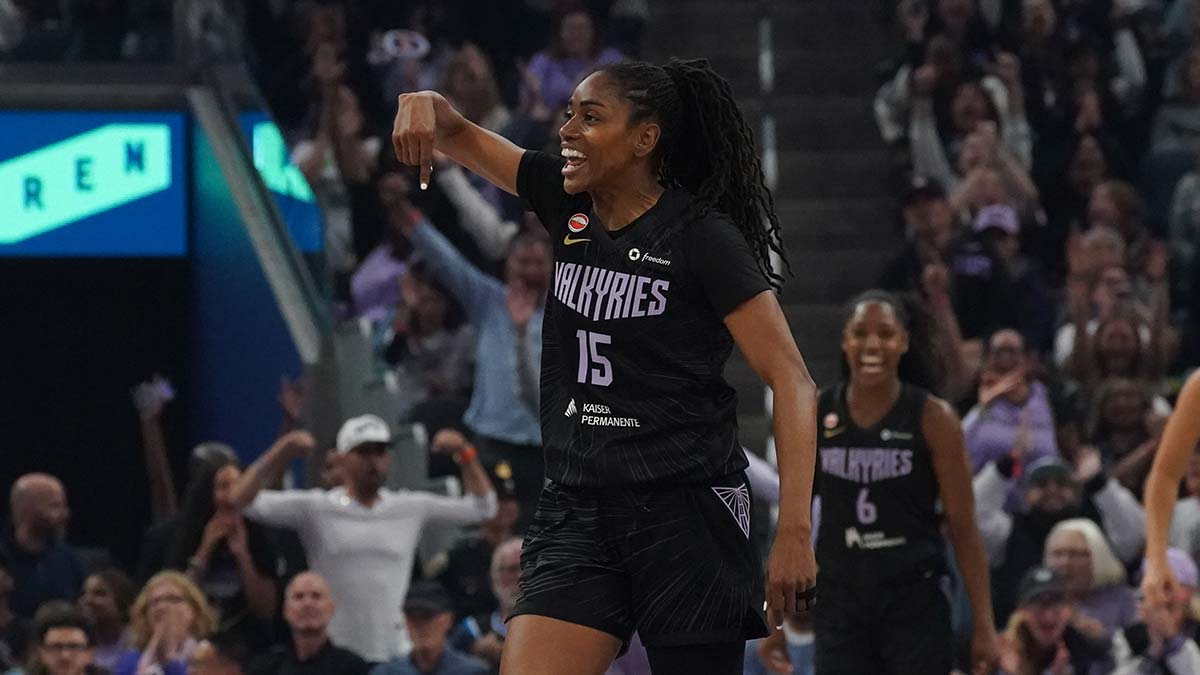
Tiffany Hayes wishes she could be in her flow state more often. Which is an odd thing for her to say given that, as of late, everything seems to be flowing the right way for her.
This past month of August, the 36-year-old is averaging 12.3 points, the eighth-most among all WNBA players during the same time span. And Hayes’ cumulative +59 plus/minus through those nine games ranks second-best in that stretch, providing the juice and the punch the Valkyries have needed from her off the bench.
But being in a flow for the entirety of August doesn’t make it any easier for her to describe that feeling of watching nearly every bucket she shoots find the bottom of the net. That sensation of the game bending to her will. For Hayes, her body and her mind just felt right.
“Shoot, me neither. I wish I was in it a lot more, but I mean, it just felt like everything I was doing was right,” Hayes told ClutchPoints a few days after posting a season-best 22 points on 8-of-11 shooting and a team-high +23 plus/minus against the Chicago Sky.
“Everything felt good. My body felt good. My decisions felt good, and I was just making sure I was spreading that to everybody else on my team, and giving everything I got. That’s pretty much what it feels like to me. I was doing everything right, and it turned out to be a pretty good game.”
What Hayes can describe is everything she’s been doing to feel right.
Her routines, though familiar and constant, are much more go-with-the-flow. Some days she takes her dogs out for a walk. Being out in nature helps Hayes take her mind off of basketball. Other times, she stays in and focuses on resting her body. It’s about listening to her body, Hayes says. And sometimes listening to her body demands taking a visit to San Francisco’s famous Alcatraz Island, which inspired Hayes to coin the nickname “Valkatraz” for the Golden State’s league-best defense.
However, the one constant in her daily life is her mantras.
“I do my best. My best is enough. I am present,” Hayes says she recites to herself every morning as soon as she wakes up.
Like Charles, Hayes believes words have power. The positive affirmations Hayes repeats every day are her way of reminding herself what she’s capable of. And like Williams, it’s the act of saying those words aloud that brings Hayes’ mind clarity. And like Charles, it’s the power of self-talk that reminds Hayes of what she’s capable of.
“Sometimes when you forget those things, like when you have a hard game, it’s tough on your mental. So when you tell yourself that every day, and it’s a constant thing, it really helps.”
The post How the Valkyries’ routines, self-talk, and mantras help them find mental balance appeared first on ClutchPoints.
What's Your Reaction?
 Like
0
Like
0
 Dislike
0
Dislike
0
 Love
0
Love
0
 Funny
0
Funny
0
 Angry
0
Angry
0
 Sad
0
Sad
0
 Wow
0
Wow
0