
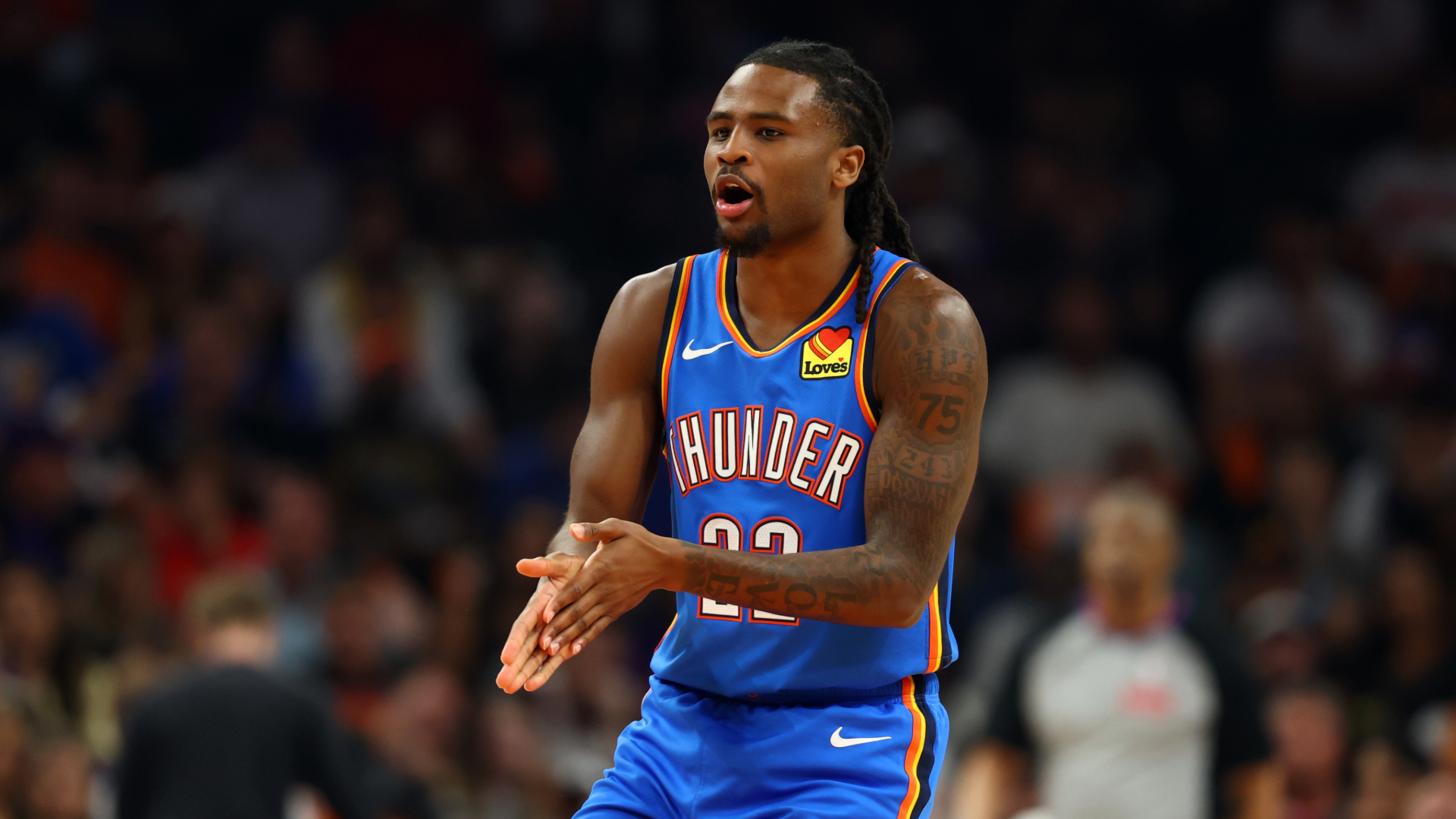
The Oklahoma City Thunder have spent this offseason shedding talent, but they're ending it by retaining some. Late Sunday, they agreed to a five-year, $139 million contract extension with Cason Wallace, according to ESPN. Re-signing Wallace before the season was essential for two reasons.
First, the entire league knows how vulnerable Oklahoma City is financially, and would have jumped at the chance to sign Wallace to an inconveniently structured offer sheet in restricted free agency next summer. Second, Wallace's value may be about to rise. For the first time this season, he is expected to take on a permanent starting role.
That starting shooting guard job previously belonged to Lu Dort, who, along with Isaiah Joe and Aaron Wiggins, was traded for the sake of dodging the second apron. The Thunder opened this offseason roughly $40 million above that line and managed to sneak below it. Considering the talent in place, though, eventually going back above the line was an inevitability. Sam Presti said as much after trading Dort: "The impression I have been given is that the savings generated this summer, and from being out of the tax the last several years, will be re-allocated to future teams."
Well, one of those future teams is the 2027-28 roster, which, at this point, is essentially as expensive as this year's group was slated to be before trading away Dort, Wiggins and Joe. Let's assume Wallace's contract starts at the lowest possible figure, which would be about $23.5 million. With 13 players under contract, the Thunder are set to be roughly $25 million above the projected second apron. That doesn't take into account their three first-round picks or the possibility that they decline their team option on Ajay Mitchell in order to sign him to a team-friendly, long-term contract. In other words, the Thunder are going to be enormously expensive next season.
Now, at least according to Presti, they're prepared for that. They're also about as well-equipped to handle an enormous payroll as a team can be. This season will be Oklahoma City's first in the luxury tax of this era, so the Thunder remain years away from repeater status and the premium that comes with it. While going into the second apron once does incur some consequences, the worst of them don't come until a team's third time above the line within a five-year span. That's when a first-round pick drops to No. 30 overall. Before then, the second apron doesn't have overwhelming basketball consequences for the Thunder.
Freezing one first-round pick doesn't hurt a team that has the sort of draft surplus that they do. Restrictions relating to player acquisition through trade and free agency mean little to the NBA's best roster. The aprons make it harder to improve your team, but do little to stop teams from retaining their own players, which is what the Thunder will largely be doing moving forward.
Still, this is a small-market team that will likely have some budgetary constraints. And besides, even if the first year in the second apron wouldn't hurt that badly, the Thunder know they're going to be expensive for quite some time. They may want to delay that clock as long as possible, so the notion of ducking back under the second apron line knowing that it looms down the line isn't crazy. It's just that the Thunder have more or less trimmed any existing fat. Everyone who's getting paid on this roster now is essential.
There are rookie contracts the Thunder could move to save money. Neither Nikola Topić nor Thomas Sorber have been able to show anything yet due to injuries, and both have since been replaced internally through future draft picks. That's $12 million or so that could be dumped if neither of those players prove essential this year. There's also the matter of those three first-round picks. Ideally, the Thunder would probably like to trade one or two of them into the future. They just don't have roster spots for that many rookies, let alone money.
Still, if Oklahoma City actually does intend to duck below the second apron next summer (which, again, is no given), that probably means moving a core player. Maybe Aday Mara proves ready for a major role early enough that Isaiah Hartenstein proves expendable. Maybe Alex Caruso finally starts to show his age. Maybe someone bowls them over in an offer for Wallace, Jalen Williams or Chet Holmgren, though such a move is certainly unlikely. Until we see the season play out, we can't say for certain who, if anyone, makes sense to move. But with a big Mitchell contract looming in a year or two, the odds would suggest that someone will be.
This is the NBA's ultimate first-world problem. We've had four champions crowned since the 2023 CBA was agreed to: the Denver Nuggets, Boston Celtics, the Thunder and the New York Knicks. All four have elected to sacrifice talent at the altar of the aprons. Accumulating the sort of talent it takes to win it all today typically means giving some of it up in the name of sustainability. You can't keep everyone anymore. For now, at least, the Thunder are keeping Wallace.
Add CBS Sports on Google