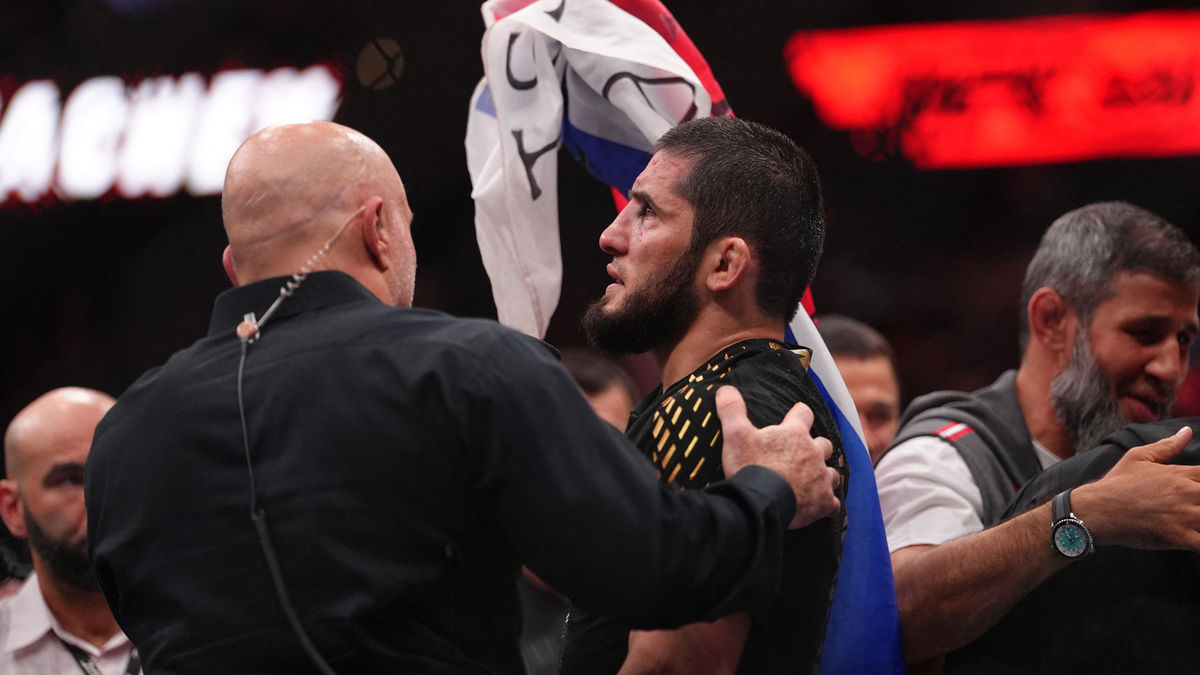
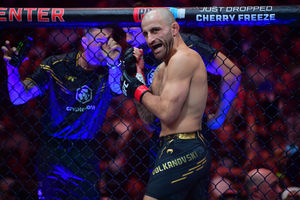
In late October 2026, the UFC booked an interim welterweight title fight between Carlos Prates and Michael Morales for UFC 336 on January 30, 2027, in Toronto after champion Islam Makhachev declined a title defense against Prates on that date. Dana White confirmed Makhachev had been slated for the card but informed the promotion he preferred to wait until after Ramadan, without offering further specifics. Prates and Morales will now fight for the interim belt, with the winner expected to unify against Makhachev later in 2027.
Makhachev explained his decision by arguing that Prates, who lost to Ian Machado Garry earlier in his UFC run, had not yet proven himself sufficiently, and that Morales (undefeated and waiting) should compete to determine the “true worthy contender.” He stated he would face the winner. Prates responded sharply, labeling the move a delay and calling out the champion’s readiness claims.
This sequence looks less like orderly matchmaking and more like calculated self-interest.
Prates has the clearest claim to the next shot. In May 2026 he stopped former champion Jack Della Maddalena in dominant fashion at UFC Perth, finishing him in the third round with knees, elbows, and ground strikes after controlling the fight. He has also finished Leon Edwards and strung together a run of finishes. That résumé, victories over two former titleholders in recent form places him ahead of an eliminator. Morales is dangerous and undefeated at 19-0 with strong recent stoppages, but his body of work does not yet match Prates’ high-level finishes against proven contenders. Forcing them to fight each other is unnecessary when one has already cleared the highest available hurdles.
Makhachev’s own timeline undercuts the delay.
After his unanimous decision over Garry at UFC 330 , he publicly stated he wanted to fight again before Ramadan, ideally in January or by the end of 2026. He emphasized his age (34), limited weight cut, and lack of major injuries, saying “100 percent” that he needed to compete before the holy month. A January date fit that window exactly. Later comments referenced minor spine issues found on MRIs and a short rib-related suspension, yet he continued to describe the problems as manageable and the pre-Ramadan return as ideal. Shifting to a post-Ramadan return only after the Prates offer arrived is inconsistent with those statements.
The practical effect benefits the champion. One of the two most credible threats is eliminated in the interim bout. The survivor then faces Makhachev months later, after a hard fight and potentially with less recovery time relative to the champion’s extended layoff. Makhachev, meanwhile, gains additional rest and preparation time while the field of dangerous contenders is thinned. This is not neutral scheduling; it tilts circumstances toward the titleholder by removing a dangerous option or presenting a more compromised one.
Champions have leverage over timing, and Ramadan is a legitimate consideration for a practicing Muslim. The issue is the selective application. When a clear, active contender with recent high-level wins is available in the exact window the champion previously requested, declining the fight and inserting an eliminator prioritizes risk reduction and favorable setup over straightforward contention. The welterweight division moves forward via the interim fight, but the path to the undisputed title has been reshaped to suit Makhachev’s preferred conditions rather than pure ranking merit. That is the core of the controversy.
Is Any College Football Team Actually Good This Season?
Five Fights the UFC Needs to Make After UFC 333
Cowboys vs. Eagles Prediction: NFL Week 7 Best Bet and Odds
Ole Miss' CFP Hopes Take a Hit After Loss to Texas
- Seahawks vs. Chiefs Betting Pick: SNF Best Bets
- WNBA Finals Game 4 Picks: Back Atlanta Dream, Angel Reese Rebounds
- Rays vs. Brewers Prediction: Why Tampa Bay Can Steal Game 2 on the Road
- UFC 333 Betting Lines Are Tightening Across a Wide-Open Fight Card
- UFC 333 Betting Splits: Where the Sharp Money Is Landing This Weekend
- NBA Best Bets Today: Pacers, Grizzlies and Trail Blazers Picks
- College Football Week 8 Best Betting Picks, Predictions