


Unfolding AJ Dybantsa-Darryn Peterson debate for Wizards’ No. 1 pick in NBA Draft
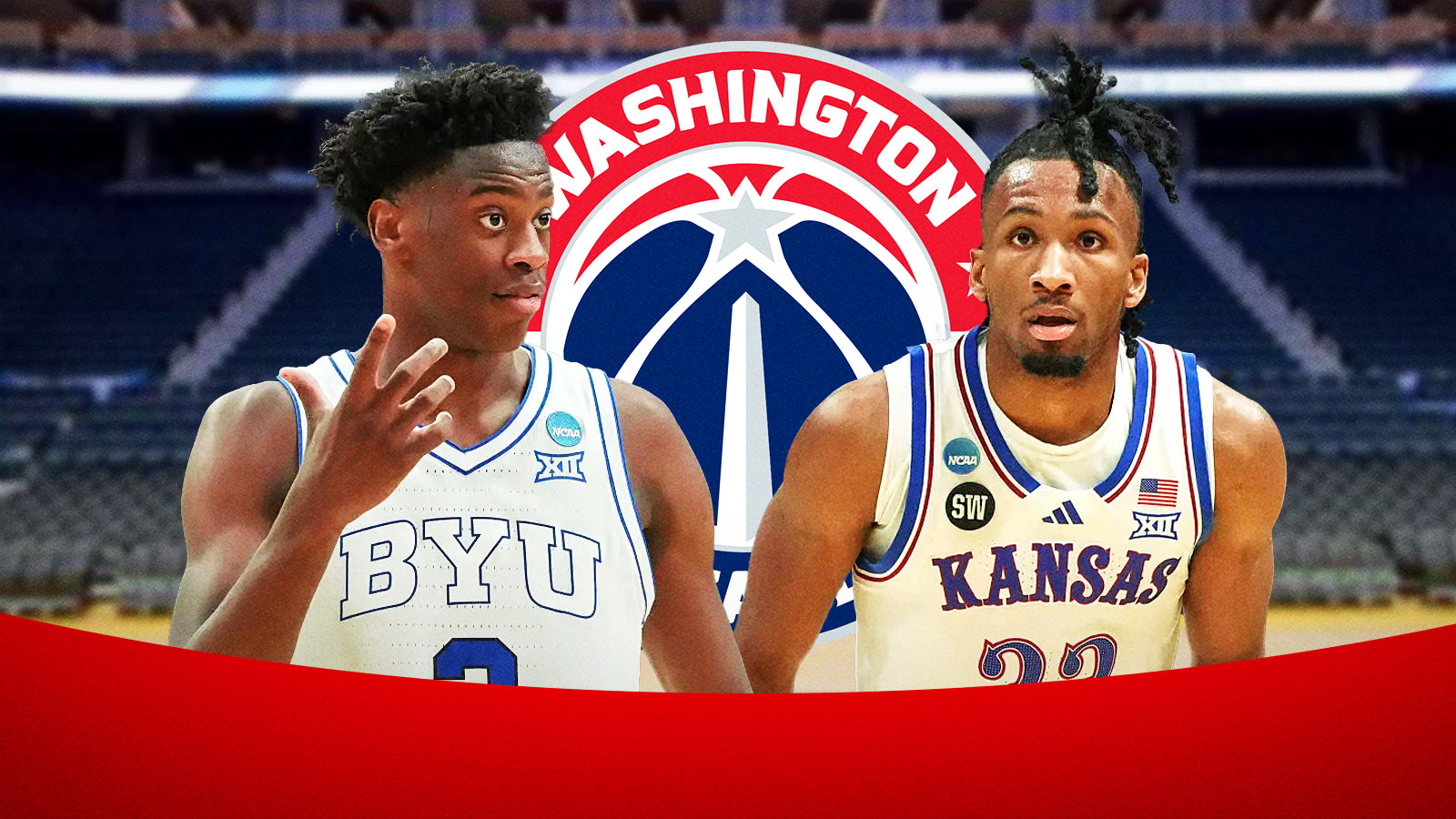
On Tuesday, the Washington Wizards will experience the day they’ve waited for since president Michael Winger and general manager Will Dawkins took over in 2023. Armed with the No. 1 overall pick in the NBA Draft, they’ll finally choose who to build the franchise around.
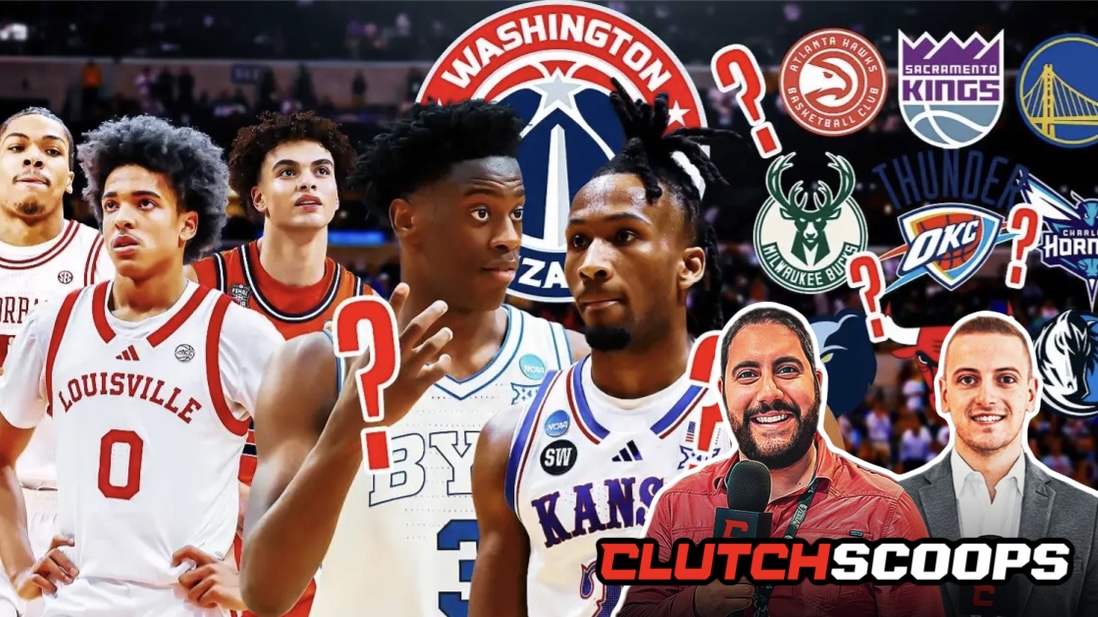
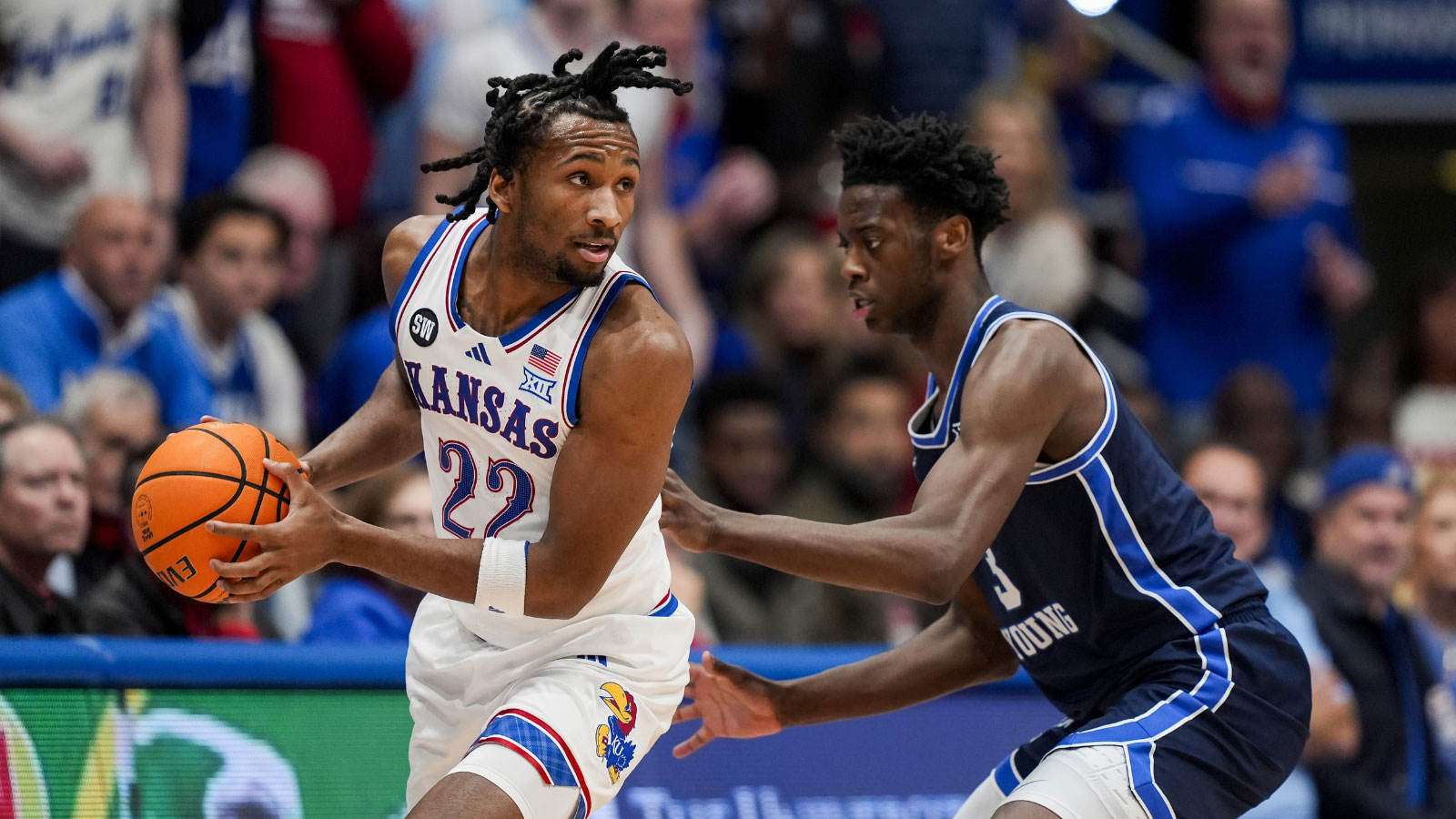
No one outside of the organization knows who they’ll select, but they’ll either pick star BYU forward AJ Dybantsa or star Kansas guard Darryn Peterson, per ClutchPoints’ Brett Siegel.
“Since the Wizards received the first pick in the 2026 NBA Draft at the lottery during the combine, Dybantsa has been the overwhelming favorite to be the first overall pick,” he wrote on Thursday. “Between his pure-scoring abilities and athleticism on the wing, Dybantsa’s fit alongside Trae Young, Anthony Davis, and the Wizards’ young core speaks for itself.”
“But Peterson’s skills can’t be overlooked either, even if injury problems and availability clouded his freshman year at Kansas,” he continued. “Teams that spoke with and met with Peterson at the combine, including the Wizards, came away with the assurances they needed and with the understanding that none of these problems would carry over to the start of his NBA career.”
Siegel also mentioned on Friday that the Wizards have “taken a very long look at Peterson multiple times throughout this pre-draft process, proving that their decision was not definitive heading into the final workouts for these prospects last week.”
Wizards have difficult choice to make
Notably, Washington isn’t considering star Duke forward Cameron Boozer at No. 1, who finished ninth in the country with 22.5 points per game on 55.6% shooting (39.1% 3-point) and 13th with 10.2 rebounds over 33.5 minutes (38 games) as a freshman last season. The 6-foot-9, 250-pounder also averaged 4.1 assists and 1.4 steals.
Boozer would be a natural fit next to Wizards center Alex Sarr long term, as he could space the floor with his shooting and facilitation while the latter player primarily works inside. However, the 2026 national college player of the year doesn’t have the athleticism, explosiveness and scoring upside of Dybantsa or Peterson.
Dybantsa is a savant around the rim and in the midrange, as he shot 56.8% from inside the arc on 13 average attempts and led the nation with 25.5 points per game as a freshman last season. On top of that, the Cougars had no other offensive threats to take pressure off the consensus first-team All-American other than sophomore guard Robin Wright III (18.1 PPG, 46.7% FG, 41% 3-point) and senior guard Richie Saunders (18 PPG, 48.9% FG, 37.6% 3-point), but he was still a force.
No game encapsulated Dybantsa’s lone collegiate season more than his last one, a 79-71 loss to Texas in the first round of the NCAA Tournament. The 19-year-old tallied 35 points (11-25 FG, 1-7 3-point) with 10 rebounds, one assist and five turnovers over 40 minutes, and BYU’s only other double-digit scorer was Wright (14 points, 7-of-17 FG).
AJ Dybantsa in his final College game vs Texas NCAA Tourney..
35 PTS (11-25, 1-7 3PT, 12-12 FTs)
10 REBS
1 ASTHow we feeling overall about his 1st and only college year??? pic.twitter.com/ISsHkUikBJ
— Frankie Vision (@Frankie_Vision) March 20, 2026
Dybantsa’s three-point shooting and assist-to-turnover ratio were nothing special, as he shot 33.1% from deep on 4.2 average attempts and averaged 3.1 turnovers against his 3.7 assists. However, playing alongside Young, Davis and Sarr in Washington could make his life easier on both fronts despite the Atlantic Ocean-sized gap in the level of competition the Massachusetts native will face in the NBA compared to the NCAA. Young, who led the league with 11.6 assists per game in the 2024-25 campaign, would help create open looks for him as the primary ballhandler, while Davis and Sarr would each attract defensive attention too.
Dybantsa consistently getting open looks from deep without having playmaking responsibilities to start his NBA career are the best conditions for him to improve on those fronts. The only way to get better at three-point shooting is with more reps, and being open enables that to happen. Plus, being on the ball less would naturally decrease his turnover rate and possibly help him focus on defense, his primary weakness thus far.
At 6-foot-9, 217 pounds, Dybantsa has the tools to shine on that end. However, the Big 12 Freshman of the Year’s steal percentage (1.7) and block percentage (1.1) were below average for his position, and his 16.9 defensive rebounding percentage was in the 45th percentile. But given that he has the size and athleticism to hold his own defensively, he could gradually step up his productivity in that regard simply by focusing on it more instead of carrying the offense at the next level.
Meanwhile, Peterson presents a classic “floor vs. upside” decision for Washington. The Ohio native showcased tantalizing scoring ability from outside the paint with the Jayhawks, as he shot 38.2% on 6.9 average three-point attempts and created 10.7 midrange attempts per 100 possessions, ranking in the 95th percentile. He also converted 42.7% of those looks, good for the 79th percentile.
However, Peterson played just 24 games (23 starts) due to severe cramping as well as hamstring, quadriceps and ankle issues. It’s one thing to be hampered by injuries, but the mystery of his situation throughout the season was a dark cloud. Few, if any people outside of the team had clarity on why he routinely missed and checked himself out of games until ESPN’s Ramona Shelburne released an exclusive interview piece on May 8 in which he claimed that high doses of creatine led to recurrent cramps.
While that baggage isn’t enough to take Peterson out of consideration at No. 1, it’s not easy to pass up on another elite scoring talent without health questions in this situation. At the same time, the 2026 second-team All-Big 12 honoree is skilled enough to deserve a hard look anyway.
Peterson hit 43% of his catch-and-shoot threes, 41% of his threes off screens or handoffs, and 36% of his off-dribble jumpers last season, which helped make up for his lack of productivity around the rim. The freshman ranked in the 49th percentile with 5.8 attempts at that range per 100 possessions, partially due to his injuries. On the other hand, his high school tape shows that he had no issue getting to the rack before his health problems, and he could slowly get back to that level in the NBA.
Additionally, Peterson ranked in the 83rd percentile with a 2.9 steal percentage and in the 79th percentile with a 2.3 block percentage. He and Boozer were two of the only three Division I players to average two stocks (steals plus blocks) last season.
Peterson, who wants to play point guard in the NBA but doesn’t view Young’s presence on the Wizards as an impediment (per ESPN’s Jeremy Woo), could develop into a nearly flawless two-way superstar if he stays healthy. The 6-foot-6, 205-pounder averaged just 1.6 assists against 1.6 turnovers over 29 minutes last season, but that was largely because of his off-ball role.
The problem is that Peterson’s health issues could continue moving forward, which would be catastrophic for Washington if it picks him. Anybody can get hurt, but the optics of him being hampered by injuries while Dybantsa shines on another team wouldn’t be good given the context.
The power of choice brings a tricky decision in this case, as it isn’t a 2023 or 2025 situation. Big man Victor Wembanyama out of France and Duke forward Cooper Flagg were the clear top choices in those years, respectively, as they were generational prospects. But the Wizards didn’t win the draft lottery until this year, and this class doesn’t have an obvious No. 1 pick.
Dybantsa is the safe choice, as Washington could build around him as the offensive engine after Young is gone. The latter player is expected to sign a three-year deal with the Wizards this summer after declining his $49 million player option, and Dybantsa could develop into a No. 1 option by the end of that contract.
The same goes for Peterson, and he fits more cleanly as an off-ball guard next to Young for the time being as well. But even if Peterson ends up a better NBA player than Dybantsa, the latter player is less likely to be derailed by injuries.
Having the No. 1 pick allows the Wizards to choose the best combination of floor and upside, which is why Dybantsa makes the most sense.
The post Unfolding AJ Dybantsa-Darryn Peterson debate for Wizards’ No. 1 pick in NBA Draft appeared first on ClutchPoints.
What's Your Reaction?
 Like
0
Like
0
 Dislike
0
Dislike
0
 Love
0
Love
0
 Funny
0
Funny
0
 Angry
0
Angry
0
 Sad
0
Sad
0
 Wow
0
Wow
0