

.jpeg)







Pablo Torre’s Dodgers bombshell reveals real threat to every American


Investigative reporter Pablo Torre teased the next topic of his podcast on Thursday night, and it didn’t disappoint when Friday morning rolled around. The hour-long deep dive into the financials of Mark Walter and the Los Angeles Dodgers was the focus of Pablo Torre Finds Out, and it revealed an alleged shell game of investments and insider deals which are now under scrutiny of the federal government, which could wind up with both Walter and Magic Johnson in prison.
The full episode, available here, features Torre and Hunterbrook Media’s Sam Koppelman explaining the convoluted spider web of cross-business dealings that have prompted the government to open an investigation into Walter for alleged investment fraud. It’s worth a full listen, but here’s the Cliff’s Notes version to understand what’s going on.
It begins with life insurance
Walter is a founder of Guggenheim Partners, an investment group holding over $330B of domestic assets and another $50B overseas. One of the primary revenue streams comes from managing numerous life insurance companies. This is how Walter made his fortune.
In the very most basic terms, there are two forms of life insurance: Policies which pay out in the event of the unforeseen death of the policyholder, and annuities, which operate more like an investment fund — which can have money withdrawn at retirement or transferred to another party.
Millions of Americans hold these policies, which pay the life insurance company in monthly premiums, who then in turn take that money and invest it. These investments when it comes to life insurance and annuities are strictly safeguarded and supposed to only apply to bonds, or other stable investment streams to protect customers paying in. In addition, there are firm rules about disclosure and compliance when it comes to investing a life insurance company’s money into other businesses owned by the same entity.
Enter the Dodgers
When the Dodgers went up for sale in 2012 there was no shortage of interested parties. Steve Cohen (now owner of the Mets) was one bidder, as was Stan Kroenke, who owns the Los Angeles Rams. Mark Walter also placed a bid, and was seen as a dark horse in the proceedings. People inside baseball had no knowledge of Walter, and initially all the offers for the team came in around the $1.75B range.
All things being equal, it was highly unlikely Walter would get the approval from MLB owners to purchase the team over Cohen or Kroenke, who were far better known in ownership circles. However, Walter quickly upped his offer to $2.15B, backed by Guggenheim Partners, and brought two sweeteners to the table to ensure the deal went through: First was having Magic Johnson in his corner, who brought L.A. sports reputation to the table to assuage fears there, but the second (and far more important) element was a staggering new TV deal set to go in effect in 2014, which would pay the Dodgers $325M a year for local broadcast rights. This came at a time most teams were struggling to get $80M to $100M a year for their rights, so the significant revenue share prompted owners to vote yes.
This mammoth TV deal came from a new company, SportsNet LA, which was founded by Walter and Guggenheim Partners, in alliance with Time Warner Cable.
So, follow this thread:
- Walter, backed by Guggenheim, makes the largest offer for the Dodgers
- To garner approval from MLB owners they announce a brokered TV deal
- The TV deal is functionally offered by Walter, to Walter using life insurance money
Time Warner operated as a financial backstop, guaranteeing money to the Dodgers in the event the newly-formed company couldn’t pay. This will play a role later.
Critically, the insurance companies divulged to customers that they were taking ownership of the Dodgers, with sports being seen as a stable investment. It did not report the broadcasting deal which was required to get the sale done.
Magic Johnson’s curious new role
It’s unclear how much money Magic paid to be a part of the Dodgers ownership group, but in 2015 he gained the “majority controlling interest” in EquiTrust Life Insurance Company from Guggenheim Partners. This was the same life insurance company that backed the creation of SportsNet LA.
Up to this point the entirety of Johnson’s holdings involved investments in the entertainment and food space: Movie theaters, team ownership, fast food restaurants — but the role with EquiTrust became the first time he became involved in investment. It came three years after becoming involved with Walter and Guggenheim on the Dodgers deal.
An insider with Guggenheim said that the sale should have come under scrutiny, but was not given to the compliance team to check.
The Time Warner TV deal
Circling back to the TV deal that made the Dodgers sale happen, the only partner in all this who made absolutely no sense was Time Warner. The idea that local sports broadcasts of Dodgers games would be worth over $300M a year meant that the SportsNet LA would need to charge exorbitant carriage rates to customers to recoup the investment. This was met with strong opposition by cable providers, and as a result of the deal Dodgers games were blacked out for a majority of fans for years.
Fox raised concerns about this deal when the Dodgers went up for sale. As the prior rights holder they asked for clarification confirming that Time Warner SportsNet LA was not part of the bidding group trying to acquire the Dodgers, because the deal was so inflated — as well as affirmation that a deal hadn’t already been organized on a new TV deal. The Dodgers told Fox that neither was the case, which allegedly was a lie to Fox.
David Rone was the Time Warner executive who brokered the deal to back SportsNet LA, which allowed the TV deal to go through, which allowed the sale of the Dodgers to go through. He left Time Warner upon its sale to Charter Communications, and is now an executive with … Guggenheim Partners.
The alleged financial impropriety
There is an alleged financial web running of investments and loans from life insurance companies owned by Guggenheim and flowing into sports teams. Many of the ancillary deals were not properly checked by compliance officers, or individuals were allegedly pressured to rubber-stamp deals without proper oversight, or divulging these business deals to customers.
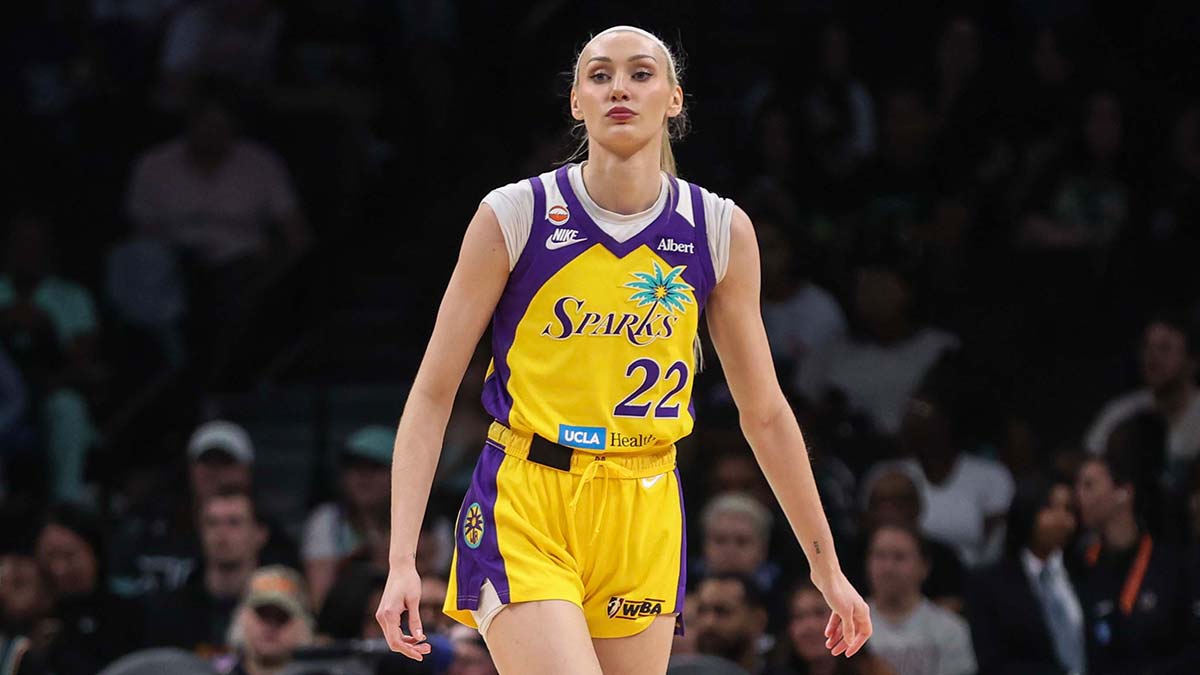
That led to the federal government opening a probe into Mark Walter for alleged fraud, seizing his personal communication devices and computer to look for a paper trail. In addition Magic Johnson, as the former primary stakeholder in EquiTrust is also under investigation for backing Walter’s purchase of the Los Angeles Lakers and Los Angeles Sparks. Magic is a “former” primary stakeholder, because the week after it was announced that he was under investigation he sold EquiTrust to his long-time friend and business partner.
Meanwhile, Mark Walter used his week after the investigation was announced to head to Washington DC for the Dodgers’ team visit to the White House. During that meeting he made the unprecedented move of gifting President Donald Trump a World Series ring, which has never been done with a sitting president before.
The Guggenheim insider adds “love him or hate him, people see Trump to kiss the ring.” Here was the Dodgers owner, under investigation by the federal government, gifting a literal ring to the man who could pressure the DOJ into squashing the investigation. It’s important to note that doesn’t appear to have happened, though the timing and extent of Walter’s overture to Trump are curious.
Why all this matters to you and Americans as a whole
The larger point in all this is that the price of sports teams have swelled to the point where it’s impossible for individuals to buy outright, unless you’re among the 0.01% with the liquidity to do so. In the case of Walter and Guggenheim they have caused the rapid inflation of sports team valuation, backed largely through retail investors.
This system should be fine in theory, but that only applies if you’re convinced that sports are bust-proof. Remember that life insurance investments are intended to be safe, stable, and managed with extreme caution. If there’s the unlikely event that sports bust, it won’t cost the billionaires managing all this anything. They will file for bankruptcy and move on with their lives. However, the millions of Americans who invested into life insurance policies will be the ones left holding the bags.
Sports might seem like an unbreakable industry with constant linear growth, but the same was said about the housing market.
What's Your Reaction?
 Like
0
Like
0
 Dislike
0
Dislike
0
 Love
0
Love
0
 Funny
0
Funny
0
 Angry
0
Angry
0
 Sad
0
Sad
0
 Wow
0
Wow
0