





Exclusive: Rashad McCants won a national title at North Carolina. Now he’s saying quiet part out loud about one of college basketball’s biggest problems

Every college basketball season, March Madness captures the hearts and minds of fans across the country. And at the end of it all, there is only one team left standing. One team hoisting the trophy, one team basking in the glory of ‘One Shining Moment.’ For Rashad McCants, he got to know that feeling well during North Carolina’s 2005 national championship run.
Coming into that year, McCants was the preseason National Player of the Year while gracing the cover of Sports Illustrated. With a strong returning core of McCants, Sean May and Raymond Felton, and a new freshman sensation in Marvin Williams, the Tar Heels were a favorite to win it all from the get-go.
Coming off a season in which North Carolina was eliminated in the round of 32 as a No. 6 seed in the NCAA Tournament, Rashad McCants recalls an offseason conversation with Tar Heels head coach Roy Williams that set the tone for the title run.
“We were preseason No. 1. The summer before when me and Coach [Roy] Williams had a meeting in his office, talking about the season and how we were definitely going to make a run for taking it all because we were that good,” McCants told ClutchPoints in an exclusive interview. “Once I graced the cover of Sports Illustrated, it was kind of an expectation at that point. It was no longer a goal, it was something that was expected of us. It was expected of my leadership, and I had to see to it that we got to the end.”
North Carolina defeated Illinois, 75-70, in the national championship game. It was the Tar Heels’ first title in over a decade, and Williams’ first of three as North Carolina head coach. McCants had 14 points in the title-clinching game, capping off what was an incredible three-year college run. He would declare for the NBA Draft after that season, and be selected by the Minnesota Timberwolves with No. 14 overall pick.
Looking back on that title run, and the group of players who made it happen, it was everyone working together towards a common goal. Nobody was concerned about the NBA or anything else. Their primary focus was bringing a trophy back to Chapel Hill.
When looking at the current college basketball landscape, McCants believes that type of buy-in is lacking. With other distractions and priorities, college players aren’t so keen anymore on developing the way he and his North Carolina teammates did.
“Players don’t stay long enough to dominate in their position to prove they’re tier-one talents to cross over to the NBA. I think everyone goes to the next level based on potential,” McCants said. “I was a firm believer in dominating your position, which I think we all did between me, Raymond, Sean, before we went to the next level. Sean led the ACC in rebounds, Raymond led the ACC in assists and I led the ACC in points throughout our three years. For us, we knew it was a no-brainer to go to the next level once we won a championship.”
The core four in McCants, May, Felton and Williams all had varying degrees of success playing professional basketball in the NBA and overseas. But the one thing that was the same for each of them was they had to change their games in the sense that none of them were go-to type players again the way they were at North Carolina. They were better equipped, however, because playing together and staying longer in school helped them develop the necessary skill-sets to transition into role players.
“I don’t think guys are even looking at winning a championship as a tier-one goal, and maximizing their talent and developing their talent to be pros at the next level,” McCants said. “At some point, not everyone is going to be the main guy. And so when you’re not gonna be the main guy, you don’t know how to fit in as a role player. You don’t have those fundamentals or skills. It’s harder for you to find a niche in the league.”
How Rashad McCants has seen college basketball change

The landscape of college basketball is vastly different from the time when Rashad McCants was dominating March Madness while lacing ‘em up at North Carolina.
One of the biggest changes has been the introduction of transfer portal. While college athletes were always able to transfer schools, the process was a little more rigorous and not as mainstream. For example, transfers were not immediately eligible to play at their new school. They had to sit out a year and redshirt before taking the court.
And players couldn’t transfer on their own. They had to receive prior approval from their current coach to reach out and contact potentially interested programs. It wasn’t until 2018, when the portal as it’s known today, was implemented. It did away with needing coaches approval. Players could submit their names to the portal database and immediately hear back from interested teams. And they didn’t have to sit out a year either.
The one area where the portal has had a major impact is high school recruiting. High school recruits are seemingly being squeezed out in favor of more experienced players in the portal. For McCants, it isn’t necessarily a bad thing, it just means younger players need to work harder than before if they are truly serious about basketball.
“There has got to be more development for the kids in high school. Guys are re-classing, guys aren’t taking the high school level seriously. The AAU is oversaturated. The overall United States development for athletics has become lazy,” McCants said. “If you want to be serious about the sport, you better be ready to deal with the consequences and repercussions of what it is and what it’s gonna take to be a college student.”
“I think that kind of goes back to the old days when you went to college,” McCants continued. “It was like a man’s league. It was like you’re changing the landscape of your life by leaving home and going to college. I think we’re getting back to that side.”
And it’s not just the portal that has changed college basketball, it’s been the introduction of NIL, or Name, Image, Likeness. To make a long story short, college athletes are now able to benefit financially from their likeness. They can make money off essentially what is an endorsement deal.
Just like with the portal, McCants doesn’t necessarily see NIL benefits as a bad thing. But what he does have an issue with is the way in which it was introduced. In his eyes, it was just thrown onto players as kind of a free-for-all without the proper teachings and guidance to make a seamless transition.
“It’s just turned into minor leagues. . .a platform to offer more money to stay longer in college to benefit universities in some way, shape or form,” McCants said. “When it comes down to performing for pay, I think when you look at it that way, the powers that be opened up the doors without really solidifying education, financial literacy and all the other things to help athletes understand why they’re staying.”
“Now guys can leave if they’re not being treated right, if they’re not getting paid enough money. They can actually take advantage of those options that other teams want to pay them more, give them more minutes,” McCants continued. “It’s a new realm, but I don’t think it’s a bad realm.”
Where does college basketball go from here
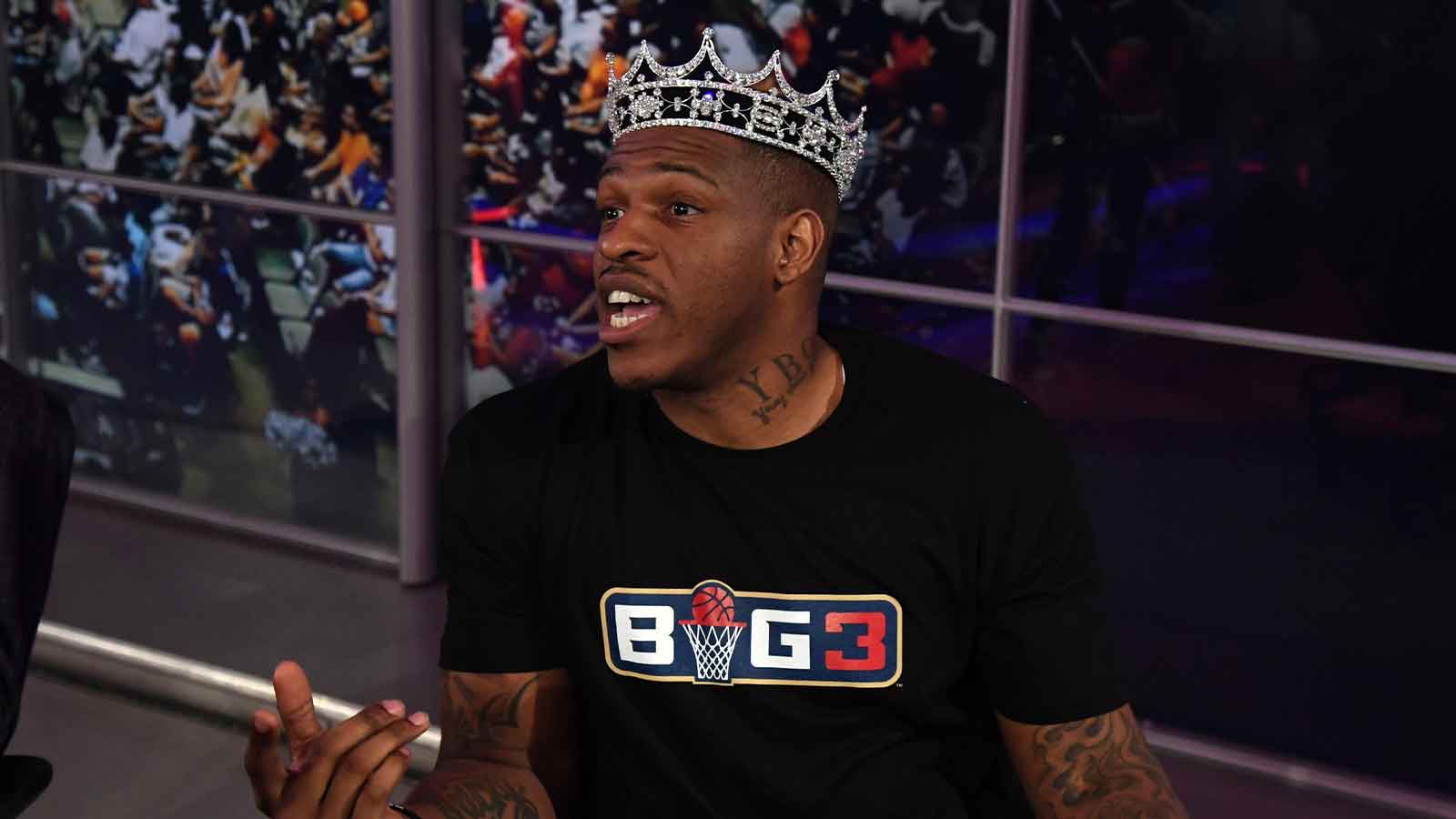
Back in 2018, Rashad McCants authored a book titled, ‘Plantation Education: The Exploitation of the Modern-Day Student Athlete.’ In it, he details his thoughts on how he feels college athletics have taken advantage of student-athletes and profited off them for generations.
The state of college sports is a hot topic right now, and debates as to where to go from here don’t seem to be dying down anytime soon. A new wrench that has been thrown into things recently is the NCAA’s decision to grant eligibility to players who have already played as, and been paid as professionals.
They may not have made it to the NBA, but they played professionally in the G League and overseas. The NCAA drew the line, however, at former Alabama big man Charles Bediako who was on the roster of the San Antonio Spurs via two-way contract albeit never suiting up in a game for them.
McCants thinks the addition of former pros just makes college basketball much more competitive. Players really need to have dotted their I’s and crossed their T’s to compete. But for him, improving the product really boils down to changes in structure. The new additions are not bad, per se, they just need a tweak here or there.
“Basically keeping the agents out and allowing the kids to learn how to become ‘thousandaires’ before they become millionaires,” McCants said. “The fact that, that hasn’t happened, these kids are now using the game for money instead of the love of the game. That’s pretty much affected how coaching is applied. Coaches are kind of giving up on kids based on kids making more money than they do. . .you just got to watch it and see where it goes.”
The post Exclusive: Rashad McCants won a national title at North Carolina. Now he’s saying quiet part out loud about one of college basketball’s biggest problems appeared first on ClutchPoints.
What's Your Reaction?
 Like
0
Like
0
 Dislike
0
Dislike
0
 Love
0
Love
0
 Funny
0
Funny
0
 Angry
0
Angry
0
 Sad
0
Sad
0
 Wow
0
Wow
0