
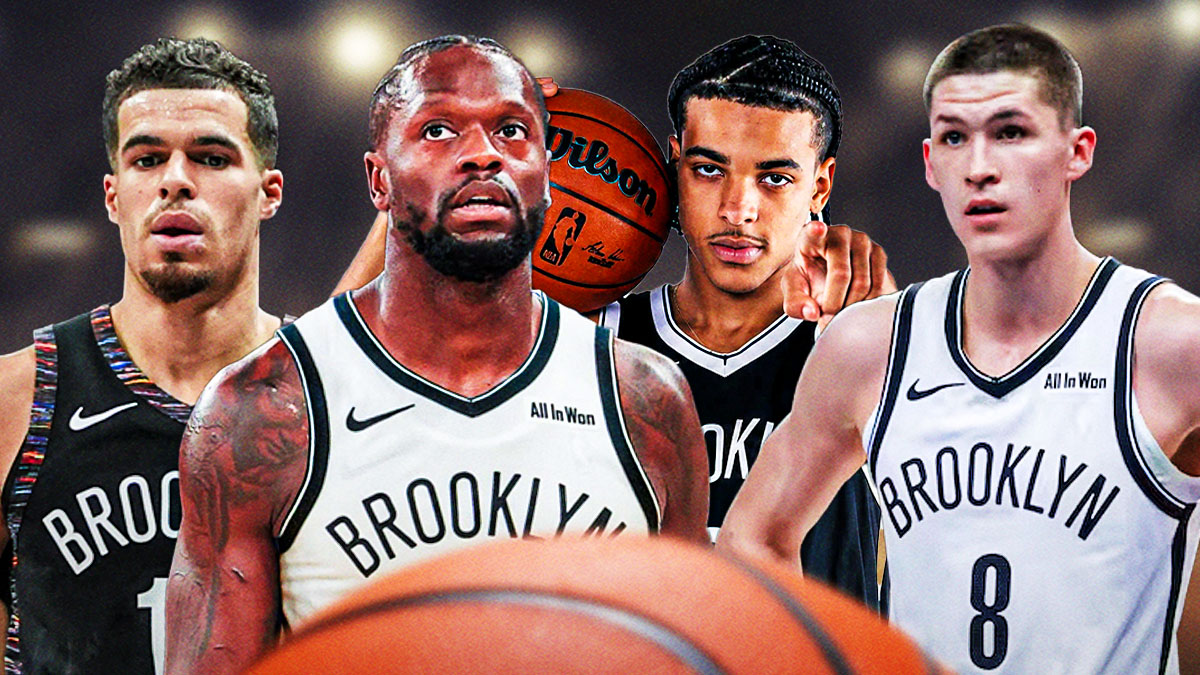
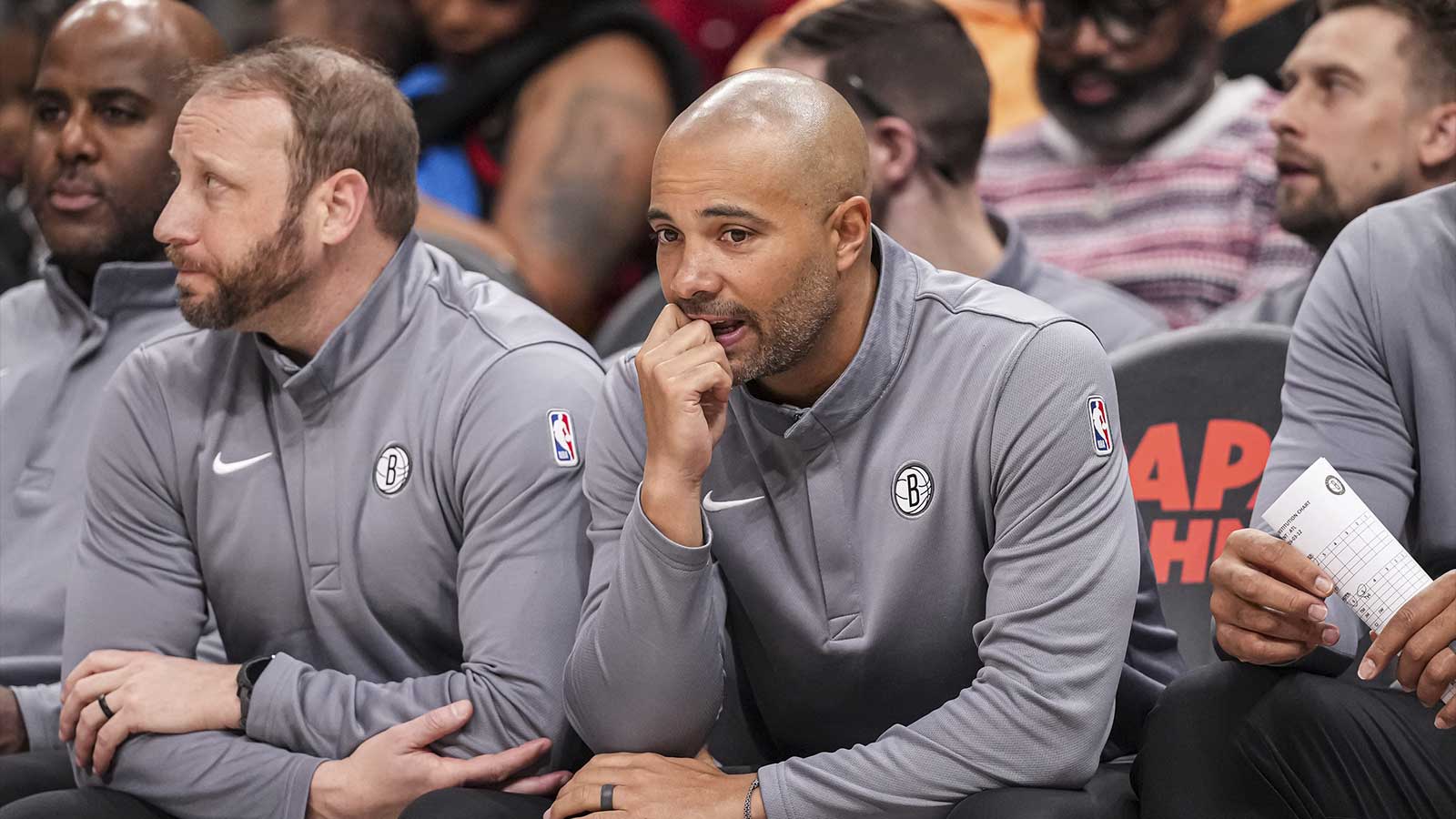
Following back-to-back tanking seasons, the Brooklyn Nets have a different objective entering 2026-27. The Nets will look to claw their way out of the NBA's basement under third-year head coach Jordi Fernandez. They'll have a new-look rotation as they attempt to do so.
While the Nets' offseason was relatively quiet, they brought in several players who should see minutes from day one.
Three-time All-Star Julius Randle will step in as Brooklyn's most accomplished player following his trade from the Minnesota Timberwolves. General Manager Sean Marks also signed Moe Wagner and Keon Ellis to two-year deals in free agency. Meanwhile, the Nets selected Mikel Brown Jr., Joshua Jefferson and Tyler Bilodeau in the draft.
With that, we project what Brooklyn's rotation will look like at the start of the season.
Projecting Nets' rotation to start 2026-27 campaign
PG: Mikel Brown Jr./Nolan Traore/Ben Saraf
Brown steps in as the Nets' most talented guard prospect in decades after Brooklyn selected him sixth overall in June's draft. He should recieve the starting nod from day one. While starting a rookie point guard typically brings growing pains, the Nets' other options — Nolan Traore and Ben Saraf — don't have much more experience.
Traore appeared in 56 games and started 31 as a rookie. However, he struggled with offensive efficiency in those opportunities. The French floor general shot 38.0 percent from the field and 31.8 percent from three while converting just 44.6 percent of his rim attempts, the worst mark among all NBA players who played over 1,000 minutes, per CleaningTheGlass. Saraf wasn't better, shooting 39.6 percent from the field and 21.1 percent from three across 44 appearances and 11 starts.
Traore has been limited this offseason after undergoing arthroscopic knee surgery but will be ready for the start of training camp. His advantage creation and superior outside shooting should have him ahead of Saraf for Brooklyn's backup point guard role.
SG: Egor Demin/Keon Ellis/Terance Mann/Drake Powell
Demin should pair with Brown in the starting lineup as the Nets' backcourt of the future. The Russian guard exceeded expectations during his rookie campaign, averaging 10.3 points and 3.3 assists while shooting 38.5 percent from three on 12.2 attempts per 100 possessions. He showed impressive growth as an interior scorer at this year's Summer League, converting 22-of-29 (75.9 percent) two-point attempts.
The Nets' minutes at shooting guard behind Demin are a question mark. Brooklyn signed veteran Keon Ellis to a two-year, $18 million deal this summer, indicating he should have a rotation role. However, Terance Mann also has a strong case for minutes after contributing positively in a starting role last season. The 29-year-old posted a +4.7 net rating swing (team points scored minus team points allowed per 100 possessions with a player on vs. off), the fourth-best mark on the team.
Meanwhile, Brooklyn will also need to find minutes for Drake Powell, the No. 22 pick in the 2025 draft. Like Traore and Saraf, Powell was inefficient during his rookie campaign. Those struggles carried over to Summer League, where he shot 8-of-44 from the field (18.2 percent) and 4-of-25 from three (16.0 percent) across six outings.
Powell could start the season in the G League, but Brooklyn will likely find him NBA minutes throughout the year to properly evaluate him.
SF: Michael Porter Jr./Josh Minott/Danny Wolf
Like their backcourt, the Nets face a minutes crunch at both forward spots. While his future with the team is up in the air, Michael Porter Jr. opens the year as the Nets' starter on the wing. The 6-foot-10 sharpshooter was a fringe All-Star last season while stepping in as Brooklyn's No. 1 offensive option. As long as he's on the team, he will fill a lead role in Fernandez's offense.
Brooklyn's backup minutes at small forward are another question mark. Josh Minott made a convincing case for a rotation role last season after joining the Nets at the trade deadline. Across 16 appearances with Brooklyn, the 6-foot-8 forward averaged 10.8 points while shooting 67.5 percent on twos and 39.5 percent on 12.2 threes per 100 possessions. His defense was equally impressive, as he averaged 2.3 steals and 1.4 blocks per 36 minutes. The Nets re-signed Minott to a two-year, $9.5 million contract this summer, suggesting he should have a rotation role at the start of the season.
Article Continues BelowMeanwhile, Wolf spent much of his rookie campaign on the wing. Like the Nets' other 2025 draft picks outside of Demin, the former Michigan star struggled offensively. He averaged 8.9 points while shooting 32.2 percent from three and 48.0 percent from two, the NBA's lowest mark among 77 players 6-foot-9 or taller who played over 1,000 minutes.
Still, Wolf boasts an intriguing skill set as a jumbo ball-handler and facilitator. The Nets will give him minutes in hopes he finds his shooting stroke and uses his size more effectively as a driver and cutter.
PF: Julius Randle/Noah Clowney/Joshua Jefferson/Tyler Bilodeau
Randle will replace Noah Clowney as Brooklyn's starting forward. The three-time All-Star and two-time All-NBA selection will immediately step in as the team's most accomplished player since Kevin Durant and Kyrie Irving.
Clowney should see minutes from day one after starting 60 games last season. However, the fourth-year forward will need to produce more consistently to solidify his place in the rotation. Clowney improved significantly as an interior scorer and foul-drawer last season. Still, 62.6 percent of his shots across his first three seasons have been three-pointers, and he's converted just 33.2 percent. Meanwhile, his rebounding and interior defense have often left much to be desired.
The Nets brought in two more power forwards in June's draft, selecting Jefferson at No. 28 and Bilodeau at No. 43. Given Brooklyn's logjam at forward, Jefferson will likely spend the beginning of his rookie season in the G League. However, given he'll turn 23 in November, the Nets should try to get him NBA minutes sooner rather than later.
Bilodeau signed a two-way contract following the draft. While he showed promise at Summer League, he'll face an uphill battle to earn NBA minutes as a rookie.
C: Day'Ron Sharpe/Moe Wagner/Chaney Johnson/Grant Nelson
The center spot is the most solidified position in Brooklyn's rotation. Day'Ron Sharpe will step into a starting role after spending the last several years backing up Nic Claxton. The soon-to-be 25-year-old emerged as one of the NBA's top backup centers over the last two years. However, he's never played more than 1,200 minutes in a season. Sharpe's ability to stay healthy and maintain his impact with a much larger workload will be one of the Nets' top storylines this season.
Wagner is penciled in as Sharpe's backup. Brooklyn inked the 29-year-old to a two-year, $19 million contract this summer. Wagner offers the Nets a floor-spacing option in the middle, something they haven't had in years. He also showed the ability to create for himself off the dribble during his time with the Orlando Magic. However, Wagner played just 11.9 minutes per game across 36 appearances last season while returning from an ACL tear. His ability to return to his pre-injury form will be critical if Brooklyn hopes to exceed expectations.
Chaney Johnson should serve as the Nets' emergency center behind Sharpe and Wagner. While he stands just 6-foot-7, Johnson performed well at center during an NBA call-up late last season. The two-way big man continued to impress at Summer League, averaging 13.5 points and 8.3 rebounds while shooting 30-of-45 from the field (66.7 percent) and 4-of-8 from three across six appearances.
Grant Nelson signed a two-way contract this offseason and will likely spend most of the year with Long Island.