

Basketball is such a popular sport, largely because of the massive numbers put up in the games on a frequent basis. The nature of the sport leads to high-scoring affairs, constant action, back-and-forth contests, and tons of last-second heroics. Of course, it is the superstars who make the biggest impact, and said players often explode for statistical performances that seem like they are out of a video game.
In the NBA, there are lots of well-known records, some of which are being broken because of how the modern game is played. For example, LeBron James just extended his NBA career scoring record with his 16,000th career point. Other famous records are truly unbreakable. Some records, meanwhile, just aren't common knowledge. So, what are the most shocking records in NBA history?
15. Most assists in a game: Scott Skiles, 30
The big three of statistics in the NBA are points, rebounds, and assists. A lot of fans know the records associated with those statistics. For example, it is common knowledge that Wilt Chamberlain scored a record-breaking 100 points in a game. Chamberlain has the record for single-game rebounds with 55, too.
The NBA's single-game assists record is relatively niche, though. Scott Skiles passed to his teammates on plays that led to scores 30 times with the Orlando Magic on Dec. 30, 1990. Not only is Skiles a little-known player, but that 30-assist threshold is jaw-dropping. After all, anything above 10 assists in a game is considered pretty elite, and Skiles had triple that while facilitating to the likes of Nick Anderson and Dennis Scott.
Skiles was a carer 6.5-assist-per-game playmaker. The 1990 season was a breakout season for the point guard that can be described as a one-season wonder. He won the Most Improved Player of the Year award after averaging 17.2 points and 8.4 assists per game. His numbers the rest of his career were not nearly as lofty.
14. Quadruple-double w/o blocks: Alvin Robertson
Triple-doubles are becoming more commonplace in the NBA. The NBA's all-time leader in triple-doubles, Russell Westbrook, had 209 throughout his career before retiring this very offseason. His former teammate, Nikola Jokic, is already at 201 and will likely surpass Westbrook in the coming months. Active players like LeBron James, Luka Doncic, James Harden, and Domantas Sabonis are all in the top 10, too.
However, quadruple-doubles still remain a rarity. There have only been four in NBA history, none of which have happened this century. Nate Thurmond had 22 points, 13 assists, 14 rebounds, and 12 blocks in 1974, Hakeem Olajuwon had 18 points, 10 assists, 16 rebounds, and 11 blocks in 1990, and David Robinson had 34 points, 10 assists, 10 rebounds, and 10 blocks in 1994.
Those three players all share a few similarities. They were all versatile centers who particularly thrived as rim protectors. The fourth quadruple-double ever came from a guard who only averaged 0.4 blocks per game for his career, though. That would be Alvin Robertson, who remains the only player ever with a quadruple-double that didn't feature blocks. He had 20 points, 10 assists, 11 rebounds, and 10 steals on Feb. 18, 1986. Getting 10 steals alone is impressive, but adding double-digit scoring, assisting, and rebounding numbers on top of that is unfathomable.
13. Technical fouls in a single season: Rasheed Wallace, 41
A lot of records are great and are something that players could only dream of accomplishing. Other records aren't so pleasant. The single-season technical fouls record fits the latter description. A technical foul is a non-contact penalty assessed to a player who is out of line when speaking or reacting to referees or fellow players.
Rasheed Wallace was notorious for getting them. The big man was skilled, but he had a temper and a poor reputation with refs. The 2000-01 season was his second making the All-Star team, but he was also T'd up 41 times. That is exactly half of the games in the regular season, and more than half that he played in, considering Wallace was active for 77 games.
It should come as no surprise that Wallace is also the all-time ejections leader, having been tossed from games 29 times. Two technicals results in an automatic disqualification.
12. Most minutes per game in a single season: Wilt Chamberlain, 48.5
There are 48 minutes in an NBA game. During that time, players do their best to put up big numbers and help their team win the game. Of course, no player has more records than Wilt Chamberlain. He has the aforementioned single-game scoring record (100), but his resume is littered with other video game-like records.
Among those is also single-season points per game (50.4), rebounds in a game (55), and times fouling out of a game (0). One record that just doesn't make any sense comes from 1961-62 when The Stilt played 48.5 minutes per game. Yes, he averaged more time on the court in each game than there is in standard play.
In order to accomplish this feat, Chamberlain's Philadelphia Warriors had to go to overtime seven times. He didn't sub out during a single game, and only had his 48 minutes cut short once, when he was ejected after receiving two technicals with eight minutes left.
11. Highest scoring game: Pistons vs. Nuggets, 370 points
Doug Moe's Denver Nuggets in the '80s were all about scoring, and they couldn't give a care about defense. A number of the highest-scoring affairs ever included the team with the skyline rainbow on their jerseys. The highest-scoring game ever occurred on Dec. 13, 1983.
In that game, the Nuggets and Detroit Pistons combined for 370 points, with the Pistons coming out victorious by a score of 186-184. It took three overtimes for the game to conclude, but amazingly, each team only made one shot from beyond the arc. Denver's Alex English and Kiki Vandeweghe combined for 98 points with 47 and 51 a piece.
10. Most 3-point misses by a player in a game: Damon Stoudamire and James Harden, 16
Three-point shooting is a powerful weapon in basketball. It is a skill set that has been popularized in the modern era, but if the shots aren’t falling from deep, it’s best to forget about it. Unfortunately, two players never got that memo.
James Harden was given the green light by the Houston Rockets to shoot. He has the highest-scoring season on a per-game basis for anyone not named Michael Jordan or Wilt Chamberlain, and his step-back jumper and ability to get to the free throw line resulted in an MVP with the Rockets. However, in six different games, Harden missed 16 3-pointers, including two games where he shot an atrocious 1-for-17.
While Harden played in the modern era, Damon Stoudamire wasn’t quite there yet, but he played like he was. In a 2005 blowout loss against the Golden State Warriors, the Blazers guard jacked up 21 shots from behind the arc but only made five of them. That much volume from deep was a rarity back in the day, but especially when the shots weren't landing.
9. Most free-throw misses by a player in a game: Andre Drummond, 23
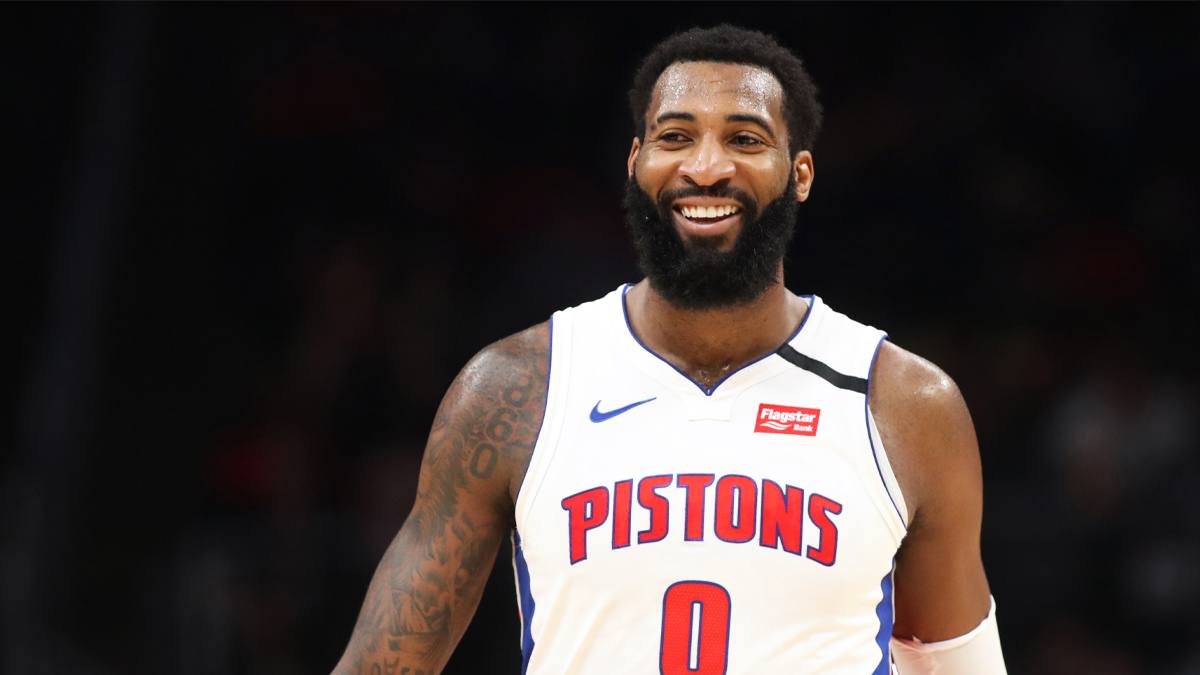
Much worse than missing 3-pointers is missing free throws. The name explains it. They are literally free points. Some players just haven't been able to figures things out from the charity stripe, though. The Hack-a-Shaq strategy was made to slow down stars who couldn’t make free throws. While Shaquille O'Neal was a terrible free-throw shooter, two-time All-Star Andre Drummond took it to another level.
In a victory over the Rockets, Drummond came away with a 17-point, 11-rebound double-double. However, the then-Pistons center also only made 13 out of 36 attempts from the charity stripe. The career 48.9% shooter from deep missed 23 free throws in a single game.
Most poor free throw shooters are big men with big hands, and they claim that the ball is so small for them that is is hard to shoot. Regardless, there is no defense contesting players shooting free throws. Those are shots that need to go in.
8. Most field-goals missed without a make by a player: Tim Hardaway Sr., 0-for-17
When you are a certified scorer, it’s a good idea to keep trying until the ball falls into the net. Dion Waiters famously said, “I'd rather go 0-for-30 than 0-for-9, because if you go 0-for-9, that means you stopped shooting. That means you lost confidence.”
However, when defenses are tight and luck isn’t on your side, you must stop attempting to score. Tim Hardaway Sr. realized that a little too late, missing all of his 17 shots from the field. Fortunately, it’s better late than never. Hardaway managed to dish out 13 assists and scored two points from the charity stripe. But more importantly, Hardaway and the Warriors escaped with the victory over the Timberwolves.
Ironically, years after Hardaway Sr.'s poor game, his son, Tim Hardaway Jr., went back-and-forth in an epic shooting clash against none other than Waiters in the Rising Stars Game.
7. Lowest-scoring game: Pistons vs. Lakers, 37 total points
When the Minneapolis Lakers’ George Mikan was dominating, the Fort Wayne Pistons’ Murray Mendenhall found a loophole in the rulebook and instructed his players to stall the game once they had the lead. This not only limited Mikan’s dominance, but it also led to a free-throw shooting exhibition in favor of the Pistons. The Pistons emerged victorious over the Lakers, 19-18.
Fortunately, Syracuse Nationals owner Freddy Biasone paved the way for the birth of the 24-second shot clock. The implementation of the 24-second shot clock prohibited teams from stalling and sped up the pace of the game. In the modern game, it isn't rare to see both teams surpass the 120-point threshold. Fans also rarely see teams below 100 points in a game. Basketball in 1950 was a very different time.
6. Most teams played for: Ish Smith, 13 teams
LeBron James and Kevin Durant were often mocked for easily changing teams. While both have played for four different teams, there are five players who have played for a mind-boggling 12 teams or more. Ish Smith currently holds the NBA record for playing for 13 different franchises.
In an NBA career that didn't end until 2024, Smith suited up for Houston Rockets, Oklahoma City Thunder, Detroit Pistons, Washington Wizards, Philadelphia 76ers, Orlando Magic, Charlotte Hornets, New Orleans Pelicans, Milwaukee Bucks, Golden State Warriors, Phoenix Suns, Memphis Grizzlies, and the Denver Nuggets. If you're talking about obscure NBA records, this is one. On top of those 13 different teams, Smith even had multiple stints in Philadelphia, Washington, and Charlotte.
Teams long trusted the point guard to provide instant leadership and quickly learn a play book with a new team. He was never a superstar, but he was always a reliable option.
5. Fastest to foul out in a game: Bubba Wells, 2:43
The Hack-a-Shaq strategy requires players to foul. Because of this, then-Dallas Mavericks coach Don Nelson instructed Mavericks reserve Bubba Wells to foul Dennis Rodman, who was a terrible free-throw shooter, every chance he got. However, six fouls in a game results in a player being disqualified.
Like a good player who listened to his coach, Wells kept fouling Rodman to send him to the free-throw line. Unfortunately, Wells fouled out fast enough for an NBA record of 2:43. Furthermore, the strategy didn't even work out, as Rodman made nine of his 12 shots from the charity stripe, which led to the Chicago Bulls emerging victorious over the Mavs.
Article Continues Below4. Worst record to qualify for the playoffs: Baltimore Bullets, 16-54
Getting into the postseason usually requires a respectable win-loss record. However, that wasn’t the case for the Baltimore Bullets, who went 16-54 for the 1952-53 season to earn the final playoff spot from the Eastern Division.
This was back in the day when eight of 10 NBA teams qualified for the playoffs. The league chose to divide its 10 teams into two divisions and have the top four in each division qualify for the playoffs.
The choice to go strictly with divisions instead of allowing the top-eight teams to make the playoffs meant the Bullets were in the playoffs and the 27-44 Milwaukee Hawks, who finished fifth in the Western Division, were left at home wondering what could have been. Nevertheless, the Bullets were swept in the Eastern Division Semifinals by the New York Knicks in two games and were outscored by 27 points in the series.
3. Biggest Comeback: Utah Jazz, 36-point deficit
Facing a deficit at any moment of the game is already a daunting task. However, getting out of a 36-point hole certainly requires a herculean effort. But because of Karl Malone and the Utah Jazz, it was made possible. The Nuggets suffered a major collapse in the second half as Utah's Malone dropped 31 points and 17 rebounds to complete the biggest comeback in NBA history on Nov. 27, 1996.
Karl Malone was nicknamed “The Mailman” because he delivered, and this is one of the best examples of that. Malone would go on to win the first of his two MVP awards later this season.
2. Longest Game: Olympians vs. Royals, 6 OTs
When it comes to the longest game in history, this one takes the cake. The contest between the Indianapolis Olympians and the Rochester Royals on Jan. 6, 1951, lasted for 78 minutes due to six extra periods being necessary to decide a winner.
The Olympians came out victorious after scoring the lone basket in the sixth overtime period to win 75-73. The Olympians were paced by Ralph Beard and Alex Groza, both of which had 17 points apiece.
One or both teams apparently went to stall tactics in a game played prior to the advent of the shot clock. Two of the overtime periods were scoreless, and the Olympians scored the only two points of the final overtime period. Of course, both of these teams have long since been defunct.
1. Most points by a player in a loss: Wilt Chamberlain, 78 points
Wilt Chamberlain holds the record for most points scored in a game with 100. However, he also holds the record for most points scored in a loss. Despite his 78-43 point-to-rebound effort, Chamberlain’s Philadelphia Warriors succumbed to the Los Angeles Lakers, 151-147 in three overtimes.
While Chamberlain exploded for 78, he also missed 15 of his 31 free-throw attempts. On the other hand, the Lakers were paced by Elgin Baylor, who dropped 63 points and 31 rebounds. Of course, this is one of the only NBA games to ever have two players score more than 60 points.
In Chamberlain's era, there were plenty of games where entire teams didn't even score 78 points. The fact that he had what was then the NBA record for scoring in a game, and still stands at fourth all-time, yet didn't come away with a W is quite crazy.