
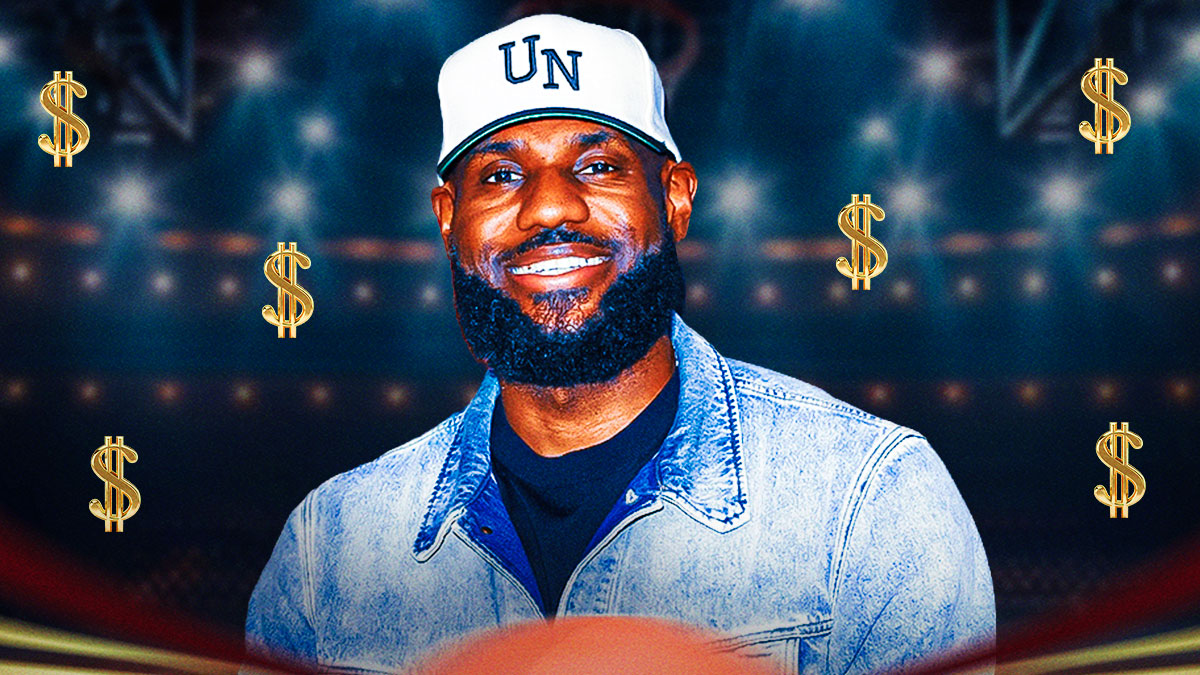
LeBron James sits atop another NBA ranking, but this one requires a closer look before anyone hands him the betting crown.
New research from Sports Illustrated ranks James as the league’s leading player for prop betting interest. The Philadelphia 76ers star generated 16,000 related social posts and 5,000 Google searches, producing an index score of 97.10. Luka Doncic finished a distant second at 72.25, while Victor Wembanyama placed third with 59.11.
Those figures unquestionably demonstrate James’ enduring pull. They do not, however, confirm that bettors wager on him more frequently than every other NBA player.
The index combines online discussion from the past year with two years of search activity. It does not include the number of bets, the amount of money wagered or sportsbook liability. In other words, the research tracks attention surrounding player props rather than documented betting action.
That difference changes the meaning of the entire list.
The “most bet-on” label stretches beyond the evidence
Calling James the NBA’s most discussed prop-betting star would accurately describe the study. Calling him its most bet-on player makes a stronger claim than the supplied information supports.
Someone searching for James’ betting line may want to place a wager. That person could also check an injury update, research a fantasy decision or simply look up his latest performance. A social media post creates even more ambiguity. It could feature a winning ticket, a complaint about a missed leg or a warning to avoid one of his props.
All of those interactions add to James’ digital footprint. None automatically equals a bet.
That does not make the index useless. It makes the language around it important.
The study offers a revealing snapshot of which players command attention whenever their individual numbers enter the conversation. Actual wagering data would answer a different question. Without that information, this ranking works best as a measurement of betting-related visibility.
James dominates that category, and it is not particularly close.
LeBron’s lead speaks to his unmatched reach
James recorded 2,000 more social conversations than Doncic, yet the gap between their final scores reached nearly 25 points. Search interest provides the clearest explanation available within the data.
James generated 5,000 searches, exactly four times Doncic’s total of 1,250. Wembanyama attracted only 870 despite reaching 12,000 conversations. James did not merely finish first in both areas. He separated himself from the field in the category where people actively sought information.
That gap says plenty about his position in basketball’s culture.
Now playing his 23rd NBA season, James remains capable of turning an ordinary game into an event. Philadelphia offers him a new setting, but his ability to dominate attention traveled with him. Bettors can discuss multiple categories connected to his production, while casual fans still have reasons to follow virtually everything he does.
His ranking therefore tells a larger story than the phrase “most bet-on.” James remains the league’s most dependable attention economy.
Sportsbooks benefit from that attention, even if this research cannot show how much of it becomes money on the counter. A player who creates searches and conversation gives prop markets greater visibility. James does that better than anyone else in the study.
The chasing group reveals the NBA’s next attraction cycle
Article Continues BelowDoncic and Wembanyama provide the ranking with its clearest generational element.
Doncic produced 14,000 betting-related discussions, placing him just behind James in that category. His lower search total kept him well behind in the overall scoring system, but the social figure shows how consistently his name appears around individual markets.
Wembanyama’s third-place finish carries a different significance. At 22, he ranks higher than every other player under 25. His unusually broad game gives people several statistical categories to monitor, which naturally expands the conversation around his props.
Anthony Edwards and Shai Gilgeous-Alexander followed with 11,000 conversations each. Joel Embiid matched that figure and finished sixth, making Philadelphia the only team with two representatives among the first six.
Together, those results show the NBA has no shortage of younger stars generating interest. They also show that none has matched James’ full combination of conversation and search demand.
The league may have several candidates waiting to inherit his place at the center of basketball culture. The data suggests that transition has not happened yet.
Search interest complicates the final order
Jalen Brunson offers the best example of why the index deserves more examination than its ranking alone provides.
Brunson placed eighth overall despite receiving 2,335 searches, the second-highest total in the top 10. That number exceeded the search demand for Doncic, Wembanyama, Edwards, Gilgeous-Alexander, Embiid, Giannis Antetokounmpo, Stephen Curry and Nikola Jokic.
His 9,300 conversations seemingly prevented him from climbing higher. Meanwhile, Jokic finished 10th with 10,000 discussions but only 890 searches.
Neither result looks inherently wrong. They simply demonstrate how a combined score can conceal compelling differences between the categories beneath it. One player may spark widespread discussion, while another motivates more people to seek specific information.
That is the real value of this research. It maps the players who occupy the betting conversation and reveals how fans interact with their names.
James deserves the top position under that formula. His advantage looks overwhelming, and it reinforces his remarkable ability to remain relevant across eras.
Just do not confuse relevance with confirmed wagers. The study proves that LeBron James drives NBA prop-betting attention. Until actual sportsbook numbers enter the equation, anything beyond that tells a story the data cannot finish.