

The Los Angeles Dodgers’ pursuit of a third consecutive World Series championship ended with a collapse. Milwaukee erased a four-run deficit to win Game 4, 6-4, completing an NLCS sweep and reversing last October’s postseason humiliation. The Brewers outscored Los Angeles 21-9 and outhomered the defending champions 7-1.
Four games should not erase two championships. They should, however, force the Dodgers to question whether their roster construction and October decision-making still provide enough margin for error. Milwaukee exposed a team that could no longer overwhelm its opponent through reputation or star power.
The response should be structural, not cosmetic. These three changes would address the weaknesses the sweep brought into focus.
Put Shohei Ohtani’s availability ahead of his preferred workload
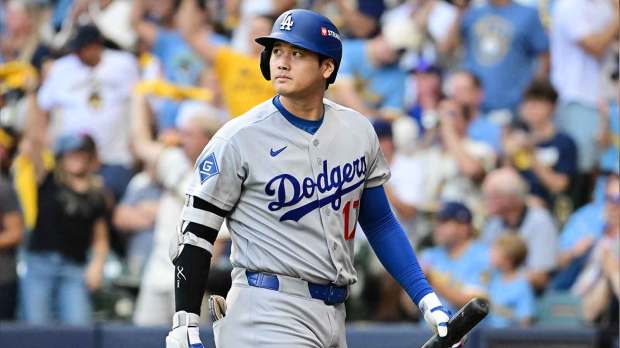
Ohtani’s three-run homer helped build the Dodgers’ early Game 4 lead, but he entered the series finale dealing with lingering right-biceps and left-knee injuries. His extraordinary talent cannot eliminate the consequences of compromised health.
Los Angeles should establish a stricter, medically driven workload plan that includes scheduled rest and clear thresholds for reducing pitching or hitting responsibilities.
That would be uncomfortable. Ohtani’s two-way ambitions are central to his appeal, and limiting either responsibility carries competitive consequences. Nevertheless, the organization must prioritize having its most influential player functional in October.
The Dodgers should also build enough depth to make those restrictions practical. A workload policy means little if every absence leaves an obvious lineup or rotation hole.
Protecting Ohtani is not conceding his limitations. It is acknowledging that a championship roster should support its greatest player rather than continually depend on him to transcend its weaknesses.
Eliminate bullpen hierarchy and rebuild around multiple closing options
Tanner Scott surrendered Garrett Mitchell’s go-ahead home run in the sixth inning of Game 4, turning an elimination-game comeback into Milwaukee’s decisive advantage. That moment should prompt a broader examination of how Los Angeles constructs and deploys its relief corps.
W Tanner Scott for gifting the Brewers the lead🥹❤️🩹 pic.twitter.com/nvkhJ9d1ju
— CodyIsKing (@35CodyIsKing) October 16, 2026
The Dodgers should enter next season without a guaranteed closer. Instead, they should build around several relievers capable of handling the opponent’s toughest hitters, regardless of inning.
The objective is flexibility, not punishment for one pitch. Scott should have to earn the most important assignments through execution, just like everyone else. Salary cannot determine who protects a season-defining lead.
Los Angeles should also prioritize a durable, multi-inning relief option. Milwaukee pushed Yoshinobu Yamamoto out after just 2 2/3 innings during the series, illustrating how quickly even elite starting plans can unravel.
A bullpen built for different workloads would give the Dodgers alternatives beyond asking individual starters or familiar late-inning names to rescue every October emergency.
Article Continues BelowSacrifice a veteran everyday role to prioritize speed and defense
The Dodgers should stop treating established hitters as automatic everyday players. Their offseason priority should be acquiring a legitimate center-field defender with speed, then creating playing time even if that requires reducing a recognizable veteran’s role.
Speed and defense among the areas demanding reconsideration after Milwaukee’s domination. The lesson is not that Los Angeles needs to imitate every Brewers tactic. It needs more ways to influence games when its biggest bats are quiet.
An athletic regular can turn singles into extra bases, close gaps defensively and give the manager meaningful late-game options. Those contributions become especially valuable when the offense cannot manufacture its usual separation.
The radical part is accepting an offensive trade-off. Los Angeles should be willing to surrender some projected power for better range, contact and baserunning. Another bat-first addition would reinforce an existing strength without necessarily fixing the roster’s limitations.
That also means making lineup decisions based on current matchups and performance, rather than contract size or past postseason contributions.