
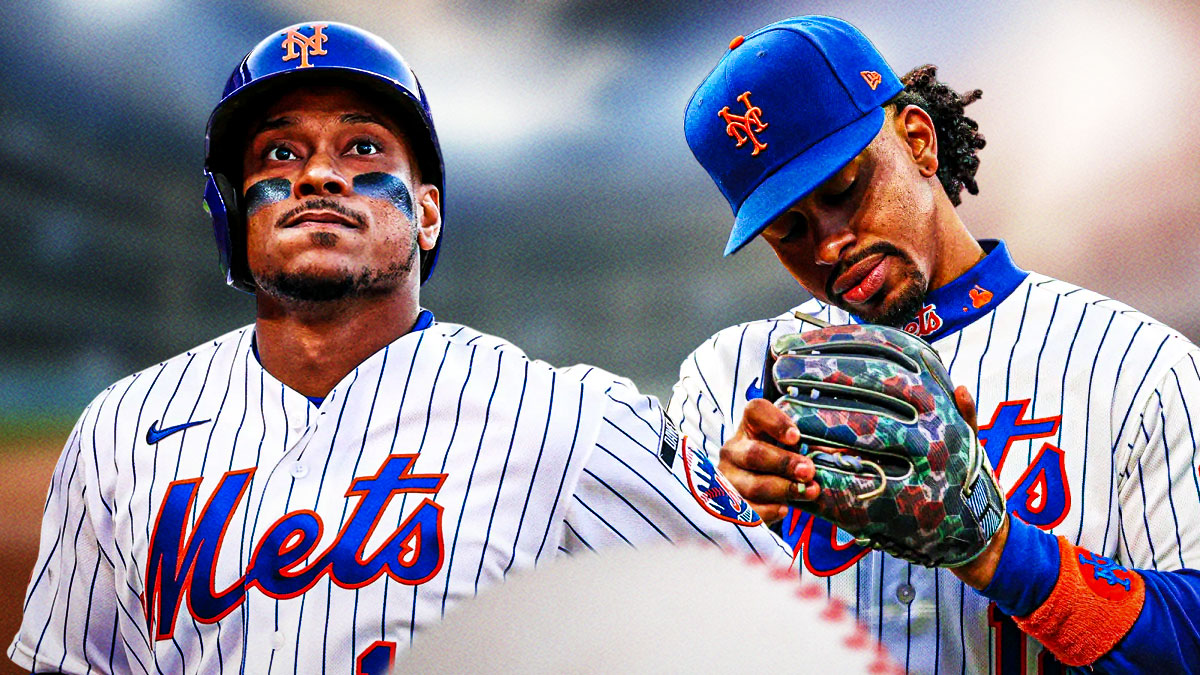
The New York Mets did not merely miss the postseason in 2026. They finished 74-88, landed last in the National League East and turned one of baseball's largest payrolls into a massive disappointment. Injuries, questionable roster construction and widespread underperformance all contributed, so no two players can carry the entire blame.
Still, accountability begins with the players expected to provide the most value. Francisco Lindor was supposed to remain the heartbeat of the club, while Jorge Polanco was signed to add a dependable veteran bat. Instead, both became symbols of a season in which expensive, established talent produced far less than the Mets needed.
Francisco Lindor failed to play like a franchise cornerstone
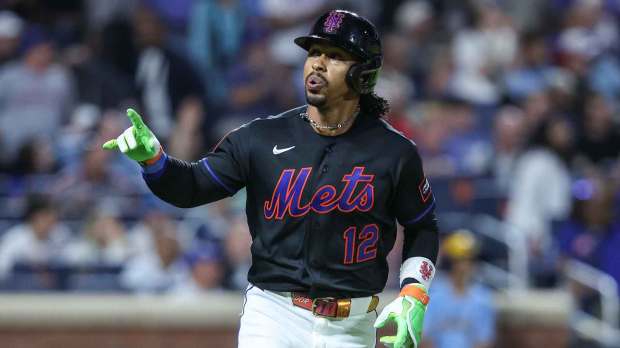
Lindor's season must be evaluated with important context. He dealt with an elbow procedure during the winter, a broken hamate bone in camp and a calf strain that sidelined him for roughly two months. Those injuries made it nearly impossible for him to establish normal timing or rhythm.
But the Mets did not need Lindor merely to be available. They needed their shortstop to perform like a star whenever he was on the field, and that never happened consistently. Lindor finished at .225 with a .309 OBP, a .423 SLG and a career-low .732 OPS. He hit 21 home runs but drove in only 49 runs across 105 games.
The decline extended beyond his bat. Lindor committed a career-high 11 errors and finished below average in Statcast's Outs Above Average metric. One analysis of the Mets' year-over-year production calculated that his value fell from 6.1 WAR in 2025 to a projected 1.9 in 2026, the largest decline among the team's prominent returning stars.
Article Continues BelowThat does not make Lindor a bad player, and the injuries clearly mattered. It does make his downturn especially damaging. When a team is built around a superstar shortstop, losing more than four wins of expected value can alter an entire season. The Mets lacked stability and two-way excellence at the position where they expected a major advantage.
Jorge Polanco became the lineup's biggest liability
If Lindor was the most disappointing Met because of expectations, Polanco was the most damaging based on performance. New York signed him to a two-year, $40 million contract after he hit 26 home runs with an .821 OPS for Seattle in 2025. The move was designed to deepen the lineup and help replace lost power.
Instead, Polanco produced one of baseball's ugliest offensive seasons. He batted .148 with a .201 OBP and a .230 SLG, totaling two homers and six RBIs in 145 plate appearances. Because he served almost exclusively as a designated hitter, there was no defensive value to offset his absent offense. FanGraphs and Baseball Reference both rated him at minus-1.4 WAR despite his limited playing time.
Polanco battled wrist, Achilles and ankle problems before undergoing season-ending ankle surgery in August. That explains some of the collapse, but it does not erase its impact. A designated hitter's job is to hit, and Polanco occupied lineup space without providing power, average or on-base ability.
The front office deserves criticism for building a fragile roster, and injuries were an unavoidable theme. Yet Lindor and Polanco stand out because their production fell dramatically below their roles. Lindor's lost star-level impact removed the Mets' foundation; Polanco's dreadful bat turned a major offseason investment into dead weight. Their failures did not cause all 88 losses, but they best represent why a roster built to contend finished at the bottom.