
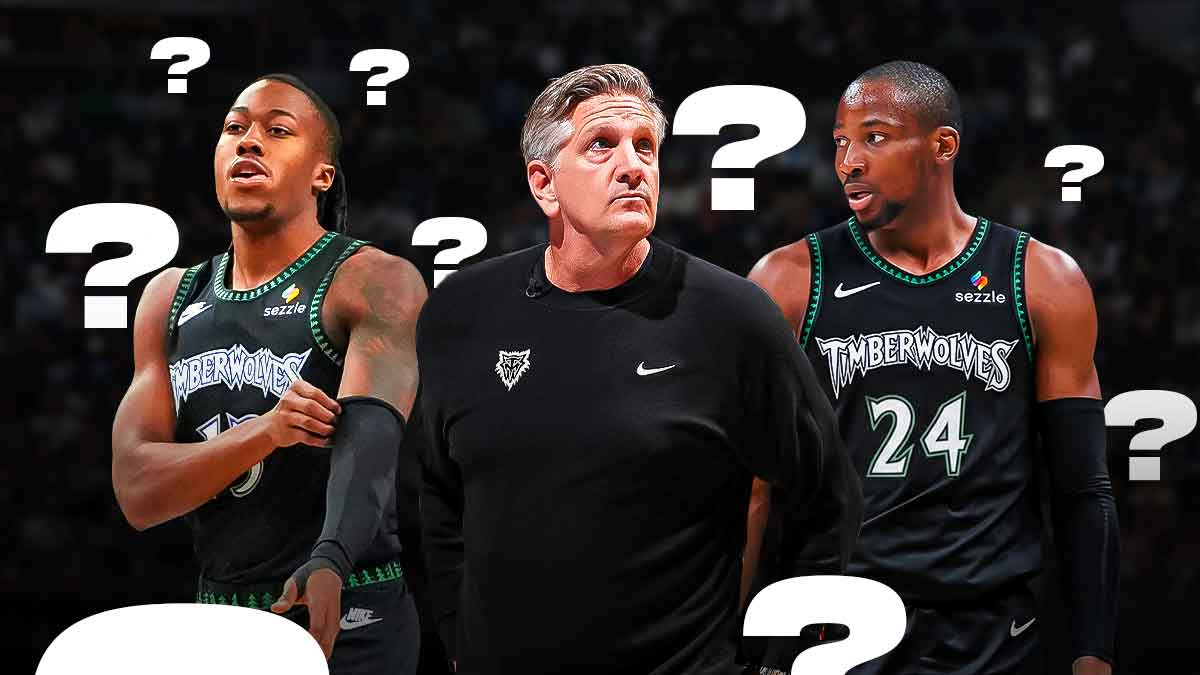
The Minnesota Timberwolves front office believed that this offseason was the perfect time to pivot from a bruising, supersized team to a run-and-gun outfit as they traded away two members of their frontcourt in Julius Randle and Naz Reid to free up the requisite space to acquire LaMelo Ball via trade with the Charlotte Hornets.
With Ball now on the roster, the Timberwolves have their coveted guard of the future. They have been looking for a long-term answer at the position ever since D'Angelo Russell proved to not be it, and Ball, coming off his healthiest season in years, just might be that guy.
Anthony Edwards and Ball should form a lethal backcourt duo, while the Timberwolves still have their frontcourt defensive spine of Jaden McDaniels and Rudy Gobert. Their depth isn't the best, especially with Donte DiVincenzo on the mend, but they at least have sufficient cover for each position, especially after pulling off a sign-and-trade for Jonathan Kuminga.
It will be interesting to see how head coach Chris Finch fills that fifth starter role. Do they at least try to get some size on that unit and start Kuminga, who is raring to prove himself as a long-term keeper in the association? Or do they go all-in on speed and shot-creation by starting Ayo Dosunmu, who impressed in his brief stint thus far with the team?
Jonathan Kuminga could start more games than Ayo Dosunmu
The Timberwolves were thoroughly amazed by what Dosunmu gave them in his 34 games thus far with the team (regular season and playoffs combined) that they signed him to a five-year, $112 million contract — signaling bigger and better things with regards to his role with the team.
He averaged 14.4 points per game on 52/41/93 splits, and that certainly warrants a big role in the team. However, Minnesota then went out and traded for Ball, which puts Dosunmu's role in a bit of doubt. Dosunmu stands at just 6-foot-4, and while he can slide over to three in spurts, a lineup with Ball, Edwards, and Dosunmu may not have the defensive resoluteness it needs to withstand the 82-game regular season grind.
Considering that Ball is an electric playmaker and the likes of Kon Knueppel and Brandon Miller thrived with Ball at the controls, suggesting that Dosunmu, and the rest of the Timberwolves' scorers, could be in for big seasons.
With Minnesota having gone all-in on playing a breakneck pace, a style of play that Dosunmu thrives in and, in fact, even enables, it makes sense to have him play the majority of minutes. The NBA doesn't really have too many bruising forwards, so they should survive even in lineups with Ball, Edwards, and Dosunmu together.
However, McDaniels is also their best point of attack defender, and it's important to have him defend quicker guards as well. He can defend anybody (he's Jaden freaking McDaniels after all), but it's his job to defend the best scorer of the opposition, which more often is a perimeter-based player.
Article Continues BelowIf McDaniels lines up at power forward, it's more likely that his height and strength become necessary tools for the Timberwolves to hold their own in the paint. He will be tasked to box out opposing forwards and help control the glass, and while he can do that (he's Jaden freaking McDaniels after all), the balance of this roster may become suboptimal if they end up starting Dosunmu.
Gobert is a monster on defense, and it's his elite awareness, positioning, and timing that allows him to anchor an elite defense year-in, year-out. But he's 34 years of age already with a ton of mileage on his body. Expecting him to hold it down in the paint by his lonesome is a huge ask, and they will need to keep him fresh, especially with the uncertainty of having Joan Beringer, their first-round pick in 2025
It's not like Dosunmu is going to be have a smaller role even if they bring him off the bench. He's still going to be the first man off the bench on most nights; he played around 29 minutes a night for the Timberwolves last season (including the postseason) even though he started fewer than half of the games he played for the team.
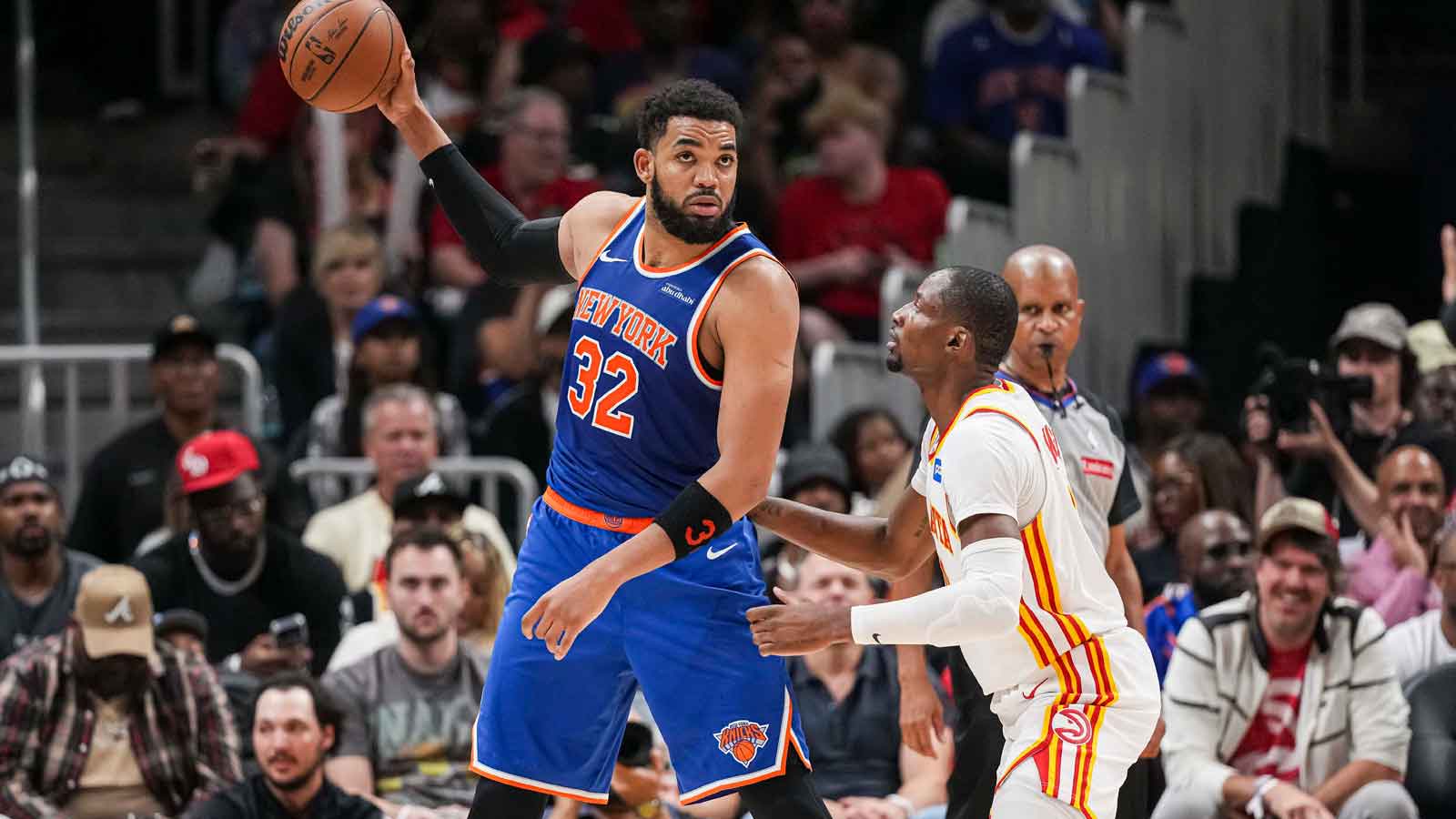
At the end of the day, the Timberwolves brought Kuminga in to fill that power forward role, giving McDaniels the freedom to wreak havoc on the perimeter. Kuminga also showed, particularly during the 2026 NBA playoffs, that he can hold his own when defending big men — with the Atlanta Hawks utilizing him to guard Karl-Anthony Towns, to solid effect.
At the four, Kuminga has the speed to keep up with the Timberwolves as they try and push the pace every single night, and considering how proficient Minnesota's backcourt is from beyond the arc, all he has to do is crash the boards, cut hard into open space, and he should rack up points and rebounds that way as he plays his way into the huge contract he so desires.
He shot 33.3% from deep last season on 2.9 attempts per contest, so it's not like he isn't totally able to space the floor. But the Timberwolves will have to tell him that his role on this team is to be a scoring threat off the ball. And perhaps after signing a discounted two-year, $12.4 million contract, he can finally understand that not every player can be “the guy” on the team. Sometimes, being a star in your role is enough.
Kuminga is going to have to learn how to play two roles on this team, basically. With the starting lineup, he can focus on his work on defense and on the boards. When he plays with the bench unit, that's when he can get his reps as a scorer who can get buckets in a hurry.
The 23-year-old is more of a power forward in today's NBA anyway. But as long as he buys into his role, Kuminga has the skillset to be the perfect complementary piece for the Timberwolves.