

The Chicago Bears bolstered their playoff hopes with a 30-24 victory over the New England Patriots on Thursday night, bringing their record to 5-2, thanks in part to another impressive performance by Caleb Williams, but the celebration was overshadowed by a serious injury to Cole Kmet, who suffered a season-ending right knee injury and was placed on injured reserve the following Friday. Head coach Ben Johnson acknowledged the emotional impact of losing Kmet, one of Chicago's longest-serving players, whose contributions extend far beyond just receiving.
Despite this setback, Williams' development has given the organization considerable confidence in its offensive future. After the victory over the Patriots, Colin Cowherd even called Williams the NFL's most talented quarterback, highlighting the growing attention on his ability to make challenging throws and extend plays under pressure. As the trade deadline approaches on November 10, general manager Ryan Poles faces a 5-2 roster with legitimate postseason aspirations but several areas that need improvement. The Bears have faced injuries on both sides of the ball, making depth increasingly valuable as the schedule gets more demanding.
Additionally, there is an opportunity to convert an established reserve into a valuable trade asset, especially at a position where the Bears have invested significant resources in developing alternatives. Quarterback Tyson Bagent is a player the Bears should consider trading before the deadline, assuming another organization is willing to offer compensation that reflects his potential as a starting quarterback.
Tyson Bagent's value extends beyond his current role in Chicago
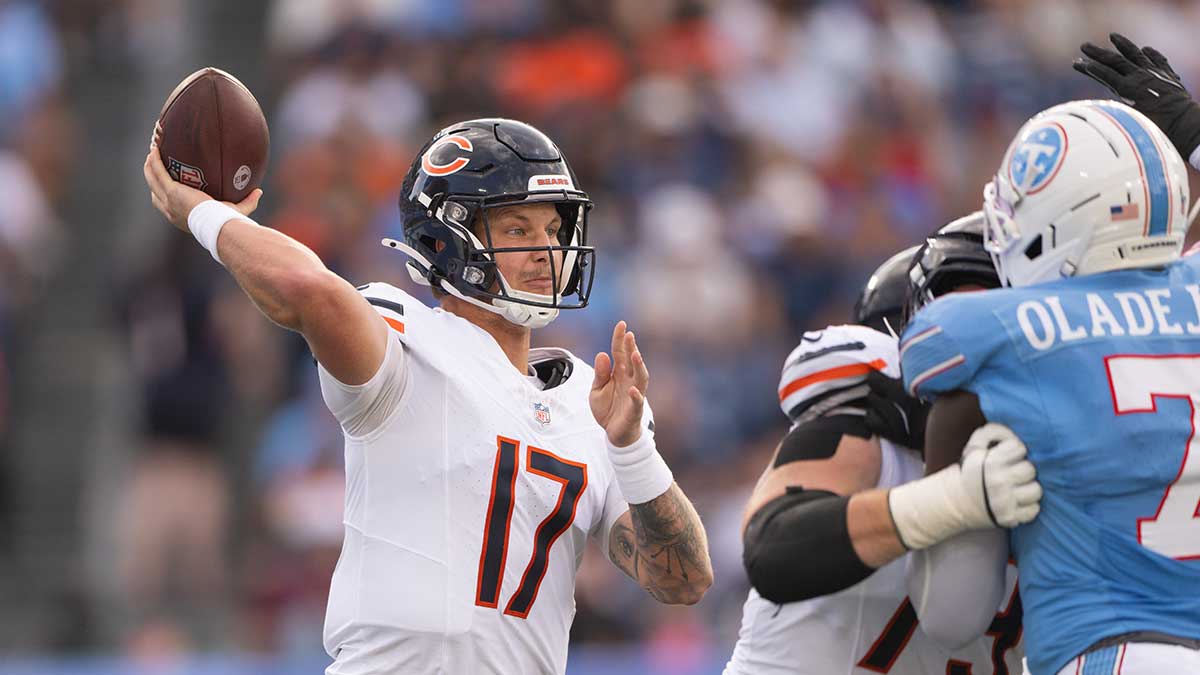
Bagent has spent a significant portion of his NFL career proving that he belongs in the league, despite entering as an undrafted free agent from Division II Shepherd University in 2023. His development has been closely monitored by Chicago's coaching staff, with Johnson frequently praising his preparation, intelligence, and understanding of offensive concepts. These qualities have helped him become a respected figure within the organization, even as Williams has emerged as the clear centerpiece of its future.
The Bears showed their confidence in Bagent by signing him to a two-year, $10 million extension in August 2025, which secures his services through the 2027 season. This agreement initially provided Chicago with a relatively affordable backup quarterback during a crucial period for Williams’ development, but the situation has presented an interesting decision for General Manager Poles, especially after other teams expressed interest in acquiring Bagent during the offseason.
The 26-year-old received another chance to showcase his abilities when Williams suffered a hamstring injury earlier this season. In Week 4 against the New York Jets, Bagent completed 25 of 34 passes for 268 yards, leading Chicago to a 23-12 victory. Although he threw one interception and did not record a passing touchdown, his ability to manage the offense and sustain drives provided valuable evidence of his readiness to contribute in significant games. His subsequent performance against Green Bay was much less encouraging, as he completed 12 of 21 passes for 87 yards and threw two interceptions in a 31-7 defeat, and these inconsistent performances highlighted the limitations in his development while providing potential suitors with recent evidence to evaluate his capabilities.
Throughout his appearances this season, Bagent has shown enough command of an NFL offense to remain a viable option for teams seeking quarterback competition. Chicago has benefited from his growth, but the increasing importance of draft capital and the presence of another experienced quarterback make reconsidering his future a worthwhile endeavor.
Case Keenum gives the Bears another option behind Caleb Williams
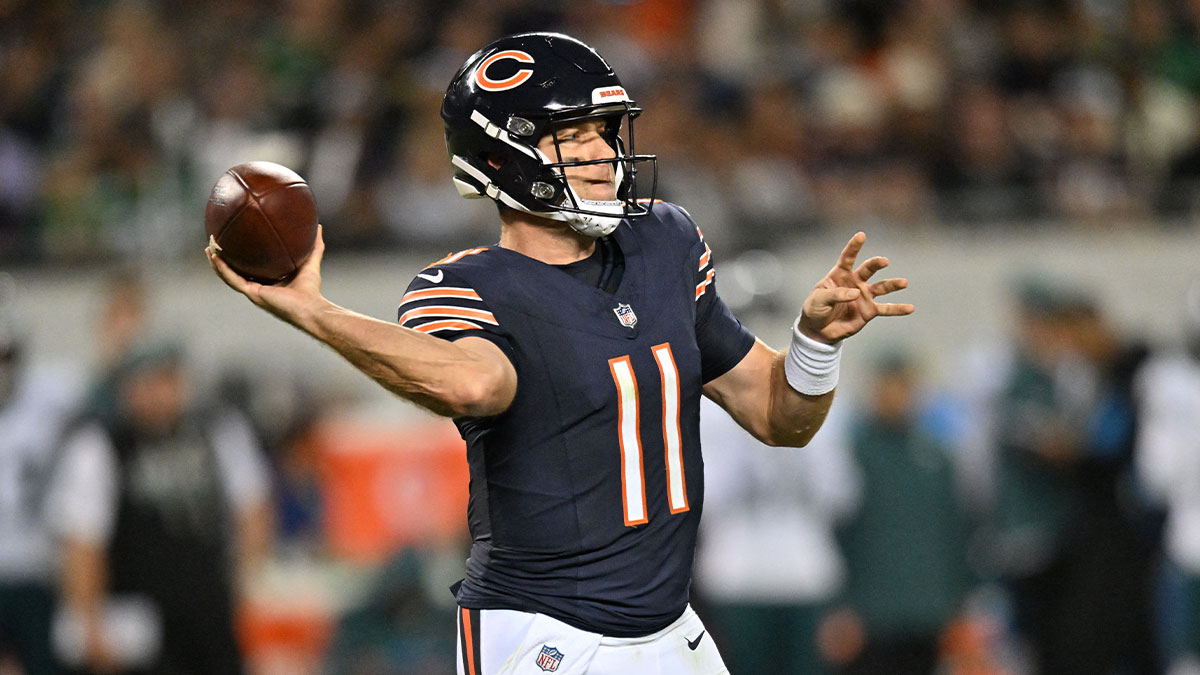
Trading a reliable backup quarterback carries significant risks for a team with playoff aspirations, especially after Williams missed time earlier this season. Chicago has seen firsthand how quickly an injury can disrupt its offensive plans, making the quality of the backup position more than just a routine roster consideration.
To address this concern, the Bears retained Case Keenum on a two-year contract during the offseason, ensuring that the coaching staff had another experienced option available if either Williams or Bagent were to become unavailable. Keenum justified this investment during Chicago's Week 3 victory over Philadelphia, stepping into the starting role and helping the Bears defeat the Eagles 27-7. His performance showed that the offense could remain functional with a veteran quarterback capable of processing defensive looks and efficiently distributing the football within Johnson's system.
The coaching staff has since utilized both reserve quarterbacks during Williams' absence, gaining a clearer understanding of the strengths and limitations each brings to the offense. Keenum's extensive NFL experience offers a level of stability that could make a potential trade involving Bagent easier to consider, and the veteran has started games for several franchises and has experience adapting to different offensive systems, making him a practical short-term replacement behind a healthy starter.
However, Chicago would sacrifice some developmental upside by moving Bagent, whose age and familiarity with Johnson's system distinguish him from the older reserve, as this decision becomes more reasonable when considering the organization's intent to build around Williams in the coming seasons. With their franchise quarterback established, the Bears could benefit from leveraging another team's interest in Bagent to acquire resources that address positions where meaningful playing time is still available.
Article Continues BelowChicago should capitalize on a market that values quarterback depth
The NFL's demand for competent quarterback play creates opportunities for teams that are fortunate enough to have multiple players capable of starting games. The Chicago Bears have already received trade inquiries about quarterback Tyson Bagent, with General Manager Ryan Poles acknowledging during the offseason that other teams were interested in his services. Poles also noted that evaluating these offers can be challenging because developing a reliable backup requires significant time and resources, but this perspective may change as the trade deadline in November approaches. Teams dealing with injuries, inconsistent quarterback performances, or uncertainty about their long-term plans may find Bagent appealing due to his age, affordable contract, and familiarity with offensive coordinator Luke Getsy’s system.
Bagent's prior experience as a starter provides interested teams with more evidence to assess him compared to an inexperienced developmental prospect. Additionally, a team searching for a potential starter might value the remaining control of his contract, which allows Bagent to compete for a larger role in 2027 without the immediate pressure of renegotiations, and when engaging in trade discussions, Chicago should recognize that Bagent’s value cannot be solely measured by his recent passing statistics. The quarterback market often rewards organizations willing to invest in players who have demonstrated the necessary preparation and technical skills to run an NFL offense, even if their on-field opportunities have been limited.
A potential trade could help Chicago address more urgent roster needs
The Bears' improved record has opened up an opportunity to approach the trade deadline with greater ambition, although recent injuries have complicated their personnel planning. With Kmet sidelined, Colston Loveland and rookie Sam Roush will need to take on additional responsibilities at tight end, which may force Johnson to adjust the frequency of formations that utilize multiple tight ends, as defensive injuries have also impacted the rotation. Dayo Odeyingbo is on injured reserve, and several other players are dealing with availability issues. These developments provide valid reasons for conserving resources that could strengthen the roster before the postseason.
They have shown a willingness to reshape the team through trades, including the offseason departure of DJ Moore to Buffalo and the acquisition of extra draft capital. Another well-structured deal could offer flexibility without disrupting the core group responsible for Chicago's positive start. Williams' recent performances have bolstered the organization's confidence in its offensive strategy, while the emergence of younger players has created opportunities to build a more complete roster around him.