








.jpeg)











3 reasons why Pakistan is struggling to play in England

Pakistan are facing a difficult start to their three-Test series against England, with the first Test under way at Headingley, Leeds, from August 20, 2026. The visitors came into the series after a 1-1 draw in a two-match Test series away to the West Indies earlier in August 2026.
Several factors have combined to make life difficult for the touring side in English conditions. Here are three key reasons why Pakistan are finding it hard to compete in England.
3. Babar Azam ruled out of the first Test with a hand injury
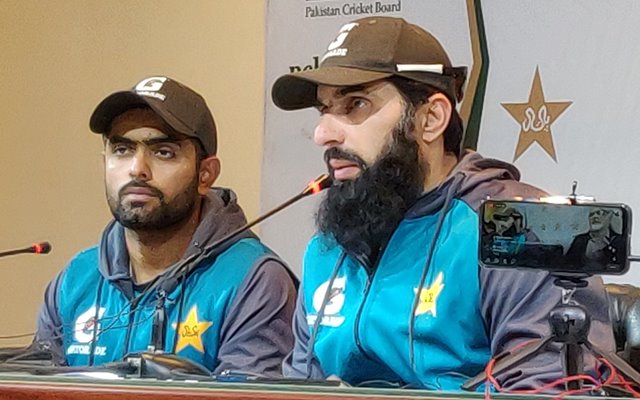
Babar Azam, Pakistan's first-choice batter and captain, was ruled out of the first Test at Headingley after suffering a right-hand injury during the warm-up match against a Professional County Club Select XI at Beckenham, Kent. He was struck by a rising delivery from England Under-19 bowler Manny Lumsden and retired hurt on 5 in the first innings of that fixture. The Pakistan Cricket Board described the decision to rest him as a precautionary measure.
The injury to the right hand is the same hand Babar had hurt during Pakistan's tour of the West Indies earlier in August 2026. He batted briefly in Headingley nets on August 18, 2026, but was not passed fit to play, with the medical team clearing him only of a broken middle finger. Salman Ali Agha was named as replacement captain, while Abdullah Shafique was drafted into the XI at number four, Babar's usual slot, having scored an unbeaten 160 in the first innings against the West Indies. Babar's absence is a significant blow to Pakistan's bid for their first Test series win in England in 30 years. He is undoubtedly the most technically solid batter in the tourists' line-up.
2. Minimal exposure to English county cricket
Pakistani players have had minimal exposure to English county and franchise cricket in England, which limits their familiarity with the seaming and swinging conditions that English pitches offer. This lack of regular experience in the county circuit means most Pakistan batters arrive without the match practice needed to handle the movement that English bowlers generate.
The warm-up match at Beckenham offered an early sign of this challenge. Pakistan's squad was bowled out for 238 in reply to the PCC Select XI's 305, with England off-spinner Shoaib Bashir taking 4-76 and 17-year-old Manny Lumsden claiming 2-24. Struggling against county-level opposition in the warm-up underlined how unfamiliar these conditions remain for several members of the touring party.
1. Slow and flat pitches at home leave batters underprepared
Pitches in Pakistan have traditionally been slow and flat, offering little lateral movement or sharp bounce. These surfaces do not test a batter's technique against seam or swing to the same degree that English pitches do, leaving Pakistani batters underprepared when they arrive in England.
Also Read: AB de Villiers questions Pakistan's pace attack following average show in Headingley Test
When batters spend the bulk of their domestic cricket on such surfaces, they can develop habits that work well at home but become liabilities abroad. The contrast between Pakistani pitches and the lively Headingley surface, where England won the toss and opted to field first, is stark. This technical gap has been a recurring theme in Pakistan's tours of England and remains one of the core reasons the side finds it difficult to adapt quickly.
What's Your Reaction?
 Like
0
Like
0
 Dislike
0
Dislike
0
 Love
0
Love
0
 Funny
0
Funny
0
 Angry
0
Angry
0
 Sad
0
Sad
0
 Wow
0
Wow
0


-(1).jpeg)