


-(1).jpeg)
-(1).jpeg)

Why Grizzlies must offer Jaylen Wells over $50 million this summer
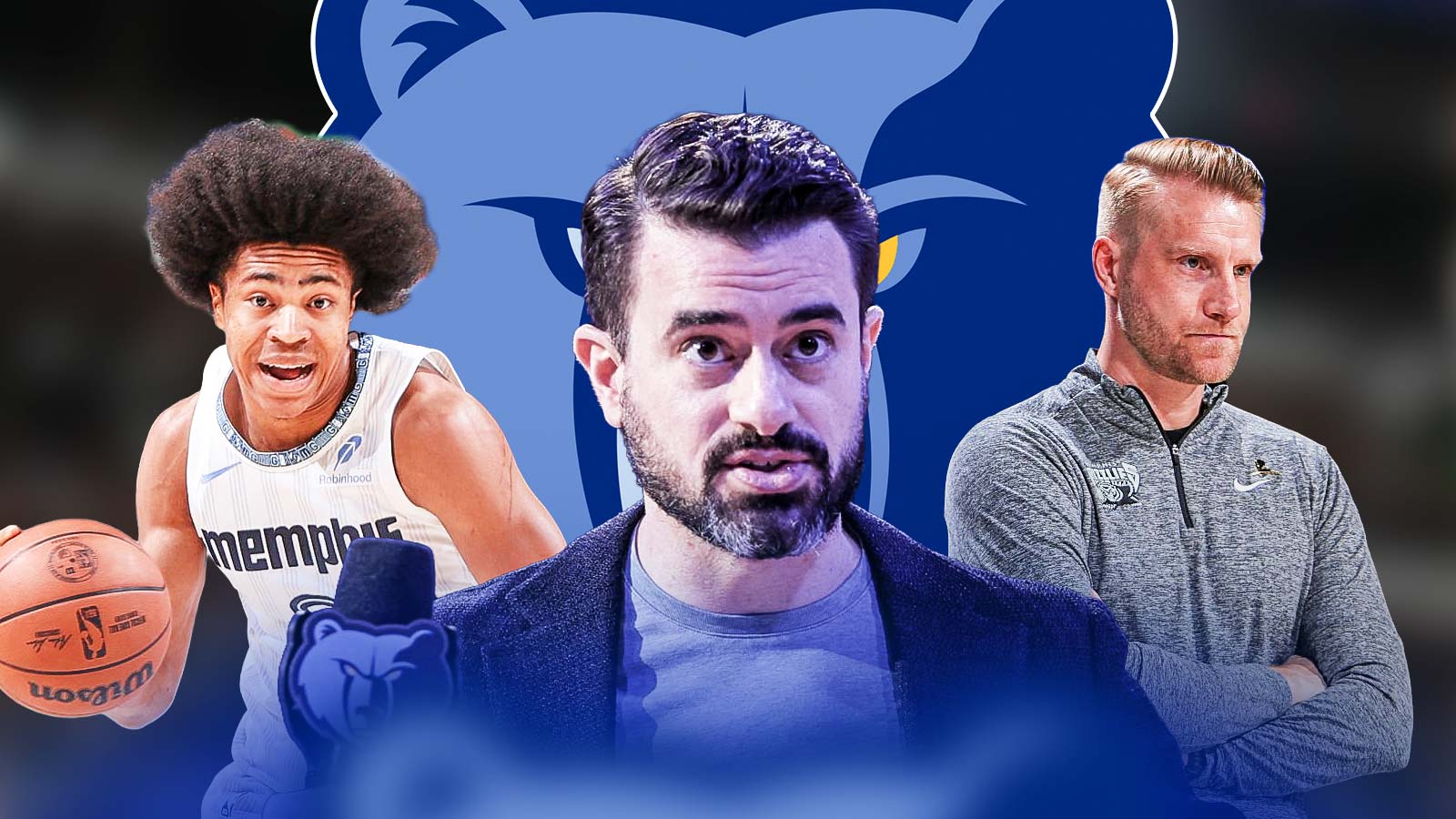
There is a particular kind of regret that haunts NBA front offices, and it is not of overpaying a star. It is the regret of a cheap, foundational player walking into a bidding war that could have been avoided. The Memphis Grizzlies are sitting on exactly that sort of asset, a second-round pick who plays like a lottery gem, and the smart move is to remove the suspense this summer. Essentially, EVP Zach Kleiman should offer Jaylen Wells over $50 million before the rest of the league gets a reminder on the 21-year-old’s true value.
The “3-and-D” tag gets stapled onto any wing who can’t create offense, regardless of whether the shooting or the defending actually holds up. Wells is the rare player who earns it honestly and can set the table for others. There was no sophomore slump for the Sonoma State (D2) alum. Wells started all 69 available games, averaging 12.5 points, 3.2 rebounds, and 1.6 assists while shooting 43.1% from the floor and 35.3% from three on more than five attempts a night.
Those numbers are nearly identical to the volume and efficiency posted to earn 2024-25 All-Rookie First Team honors. Two straight years at the same clip from distance isn’t a fluke; it’s a baseline. And a 39th pick who has already established a reliable NBA floor as a starter is, by any reasonable accounting, one of the best value contracts in basketball.
The defense needs no qualifier at all. At 6-foot-7 with the frame and instincts to guard multiple positions, Wells is the kind of perimeter defender a coach can deploy against the opponent’s best wing or ball-handler without flinching. He is heady, engaged, and physical at the point of attack. In an era where defensive versatility on the perimeter is the scarcest resource in the sport, the Grizzlies stumbled some in the second round.
That is not a player you let test the open market, especially not when someone has to defend Shai Gilgeous-Alexander or Dylan Harper in the postseason. If the Grizzlies intend to contend during their next competitive window, they are going to have to win games against the best perimeter scorers of this generation. The conference is organizing itself around elite guard play, and the path to a title runs straight through it.
Gilgeous-Alexander is the engine of an Oklahoma City juggernaut that has set the NBA MVP standard out West. There is no scheme that “solves” SGA; the most you can hope for is a long, disciplined defender who makes every possession a grind and forces the ball out of his hands. Then look at what San Antonio is building. Dylan Harper.
Pairing Harper with Victor Wembanyama to power the Spurs deep into the postseason and posting the kind of numbers that signal a decade of trouble for everyone else. A 6-foot-5 lead guard with that pedigree, attached to a generational big, is the exact matchup that decides Western playoff series for the foreseeable future.
Should Memphis ever break through to the Finals, the reward on the other side may well be Jalen Brunson or Tyrese Haliburton, the most relentless half-court shot-makers in the East. Tuomas Iisalo cannot game-plan around all three of those players. Almost no one can. Coaches will need a human answer.
Well, Jaylen Wells is the closest thing to Jimmy Butler that will ever call Memphis home, and he is only 22. The franchise’s ability to compete with the conference’s contenders will depend, in no small part, on having a perimeter stopper signed through the window. Letting that player reach restricted free agency, where the price climbs and a rival can dictate terms with an offer sheet, would be a self-inflicted wound.
Considering the injuries, fluke or not, the cost of certainty is always cheapest before a player’s value is fully public. But at least Wells would lock in the money. Taking that route converts a looming negotiation into a settled, team-friendly number that keeps a culture builder happy.
Wait, and the franchise risks paying more in a market that will see a rejuvenated, featured version of Wells next season. There is a wave of young talent being developed, with Zach Edey, Cedric Coward, and the 2026 NBA Draft’s third overall pick forming the new foundation. Someone will have to lead by example and be responsible for getting buckets next season.
Wells is the connective tissue in that plan. The two-way wing steps up to the toughest defensive assignments every night. Players who do that job, shoot a respectable percentage, and cost a fraction of their overall production are how mid-market teams build sustainable contenders. The frequent chapel attendee is also a great locker room glue guy. You don’t find them often. When you do, you keep them.
Grizzlies gauging true value
A responsible front office should say the quiet part out loud before signing the check. There are real risks here. Wells ended his second season with surgery to stabilize a tendon avulsion fracture in his right great toe, and while he’s expected to make a full recovery, foot injuries for athletes who rely on lateral quickness are worth watching.
The shooting, too, has a ceiling question. Hitting 35% from three makes Wells a credible floor-spacer, but nudging that figure into the 37-to-39% range is what would erase any lingering doubt about his fit as a long-term starter. And there is a philosophical objection that a team should not hand out near-max money to a player whose ceiling is “high-end role player” rather than star.
Each of those concerns is fair, and each is also why the timing matters, not why the deal is wrong. The toe is a reason to structure protections, not to walk away. The shooting is a bet on a 22-year-old who has already shown two years of consistency and room to grow. And the “only a role player” critique misunderstands the math: the value isn’t in Wells becoming a star, it’s in locking a starting-caliber two-way wing into a contract that looks like a bargain the moment the cap rises, and the market reprices defense.
So, the downside is a fair contract for a useful player. The upside is the cornerstone of a defense built to survive the guards who will define the next four years of the West. Memphis does not need Jaylen Wells to be an All-Star. It needs him to be the best version of a long, switchable, reliable wing who can take on Gilgeous-Alexander, Harper, and Brunson when it matters most.
That’ll be around the next time Wells is up for a third NBA contract. Until then, to steal a line from Teddy KGB, pay the former second-round pick from the D2 ranks his money. The Grizzlies will need his smile and scrappiness more than ever over the next three seasons.
The post Why Grizzlies must offer Jaylen Wells over $50 million this summer appeared first on ClutchPoints.
What's Your Reaction?
 Like
0
Like
0
 Dislike
0
Dislike
0
 Love
0
Love
0
 Funny
0
Funny
0
 Angry
0
Angry
0
 Sad
0
Sad
0
 Wow
0
Wow
0