







Colin Kaepernick isn’t letting Jay-Z rewrite the record
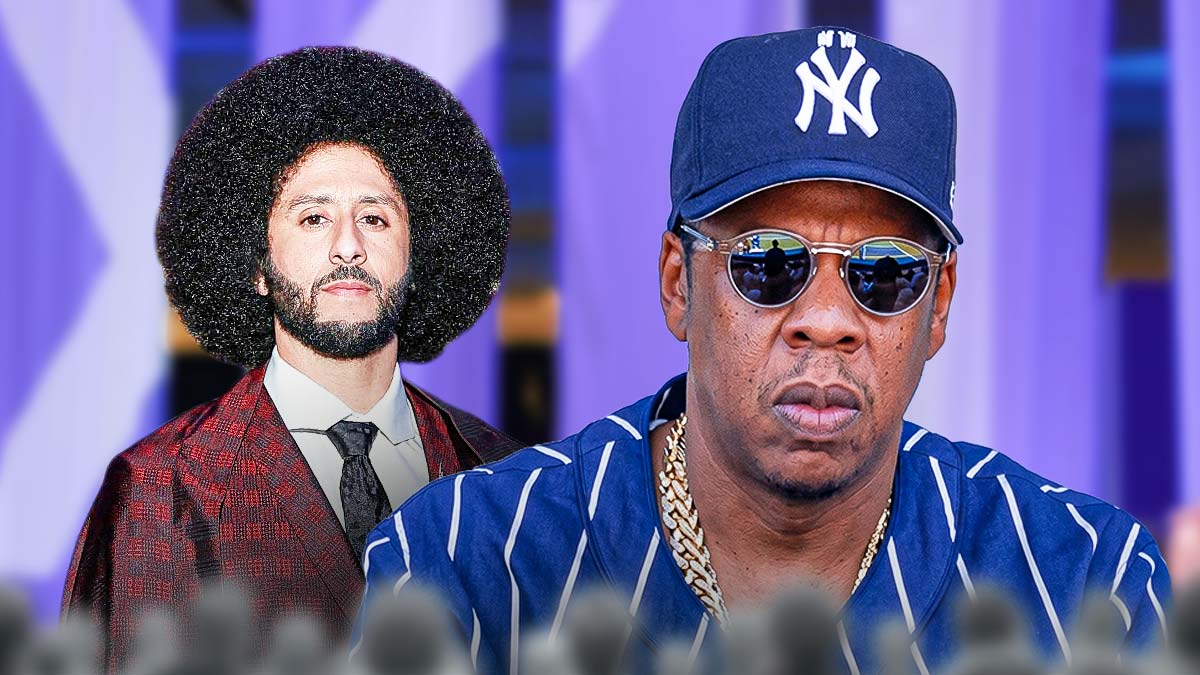
Jay-Z once stood among Colin Kaepernick’s most visible celebrity allies. Now, Kaepernick sees the rapper as another powerful figure trying to revise the meaning of a choice that still follows him.
That history gives their growing feud more weight than a routine exchange between famous men. During a July concert, Jay-Z criticized Kaepernick while defending himself against backlash over his Target partnership. The retailer has faced a boycott from Black consumers since retreating from its DEI commitments.
“Buddy took a check, I ain’t even mad at him, but along with that check you have to sign a non-disparagement,” Jay-Z rapped, referring to Kaepernick’s 2019 settlement with the NFL. “I’m the one [the NFL] can’t control.”
El freestyle completo de JAŸ-Z de la primera noche en el Yankee Stadium, donde menciona su controversia con Target, Colin Kaepernick y máspic.twitter.com/0IJV7CbOzV
— AlejandroPogU (@AlejandroPogU2) July 11, 2026
Kaepernick told NBC News that claim was false. He said his settlement did not include such an agreement. More importantly, he challenged the image Jay-Z constructed: one man supposedly silenced by a payout, the other too independent for the league to contain.
Jay-Z’s old support makes his reversal harder to ignore
In 2017, Jay-Z dedicated “The Story of O.J.” to Kaepernick and later wore his jersey during a “Saturday Night Live” appearance. On the 2018 song “Apes—,” he boasted about refusing the Super Bowl because the league needed him more than he needed it.
Then came the pivot.
Roc Nation entered a partnership with the NFL in 2019, taking responsibility for the Super Bowl halftime show while also working with the league on social justice projects. Jay-Z defended the agreement by declaring that society had advanced beyond the kneeling phase and needed action.
That argument allowed the NFL to treat Kaepernick’s protest like a completed awareness campaign. Yet Kaepernick remained outside the league, while the institution he accused of shutting him out gained a culturally credible partner.
Kaepernick wrote in his memoir, “The Perilous Fight,” that Jay-Z informed him of the deal only after both sides had finalized it. His response cut directly to the danger of that arrangement.
“You’re the music guy to them,” Kaepernick recalled telling him. “They quite literally need a Black face—and have said as much.”
Jay-Z could argue that working inside the system created an opportunity to produce tangible results. But that does not erase the central contradiction. He once amplified Kaepernick’s resistance, then helped the NFL declare that resistance outdated.
Kaepernick’s Target decision strengthens his case
The Target controversy makes this dispute especially damaging for Jay-Z because Kaepernick has chosen the cleaner position.
Jay-Z plans to offer a retailer-exclusive edition of “Reasonable Doubt” through Target, despite the boycott that followed the company’s DEI rollback. Kaepernick, meanwhile, will keep his memoir out of the chain’s stores, even though that choice could reduce his sales. His tour will instead involve the National Association of Black Bookstores.
Kaepernick accepted money to resolve a collusion case against the NFL. Jay-Z entered business with that same league. If accepting a settlement compromises a person’s independence, partnering with the institution under accusation deserves at least as much scrutiny.
Kaepernick understands what Jay-Z’s line attempted to do. It shifted the conversation away from Target, the boycott and Jay-Z’s own decisions. It placed Kaepernick back on trial instead.
The ‘reputational recovery’ charge lands
Kaepernick’s strongest response did not concern the factual correction about his settlement. It concerned motive.
“I understand why he’s trying to do reputational recovery. I get it,” Kaepernick said. “I don’t agree with the actions, but I’m also not gonna respond to everything that’s said about me, because I also believe the actions and the work that I do will speak for themselves.”
That phrase, “reputational recovery,” captures the entire conflict. Kaepernick believes the criticism Jay-Z received after aligning with the NFL never truly disappeared. Seven years later, the rapper still feels compelled to argue that he remained the uncontrollable one.
Kaepernick called that impulse evidence of a “guilty conscience.” Whether guilt actually drives Jay-Z remains something only Jay-Z can answer. Still, his decision to resurrect Kaepernick while facing a separate boycott invites the interpretation.
Jay-Z did not need to mention him. Kaepernick had not publicly attacked Jay-Z. Yet when criticism mounted over Target, Jay-Z reached backward and presented Kaepernick as compromised.
That is not the posture of someone who has comfortably moved beyond the controversy. It resembles someone still fighting for ownership of the story.
Kaepernick’s answer works because he refuses to let a clever lyric erase the record. Jay-Z can call himself uncontrollable, but his NFL partnership remains. He can spotlight Kaepernick’s settlement, but the alleged restriction at the center of his jab did not exist. He can frame his corporate alliances as action, but Kaepernick can point to a present-day financial sacrifice in support of the Target boycott.
The feud ultimately asks a larger question: Who gets to define loyalty to a cause after the cameras move on?
Jay-Z has influence, money and access to major institutions. Kaepernick has maintained a position that cost him access to one. When Jay-Z tries to turn that sacrifice into a punchline, Kaepernick has every right to question whose reputation actually needs saving.
The post Colin Kaepernick isn’t letting Jay-Z rewrite the record appeared first on ClutchPoints.
What's Your Reaction?
 Like
0
Like
0
 Dislike
0
Dislike
0
 Love
0
Love
0
 Funny
0
Funny
0
 Angry
0
Angry
0
 Sad
0
Sad
0
 Wow
0
Wow
0