
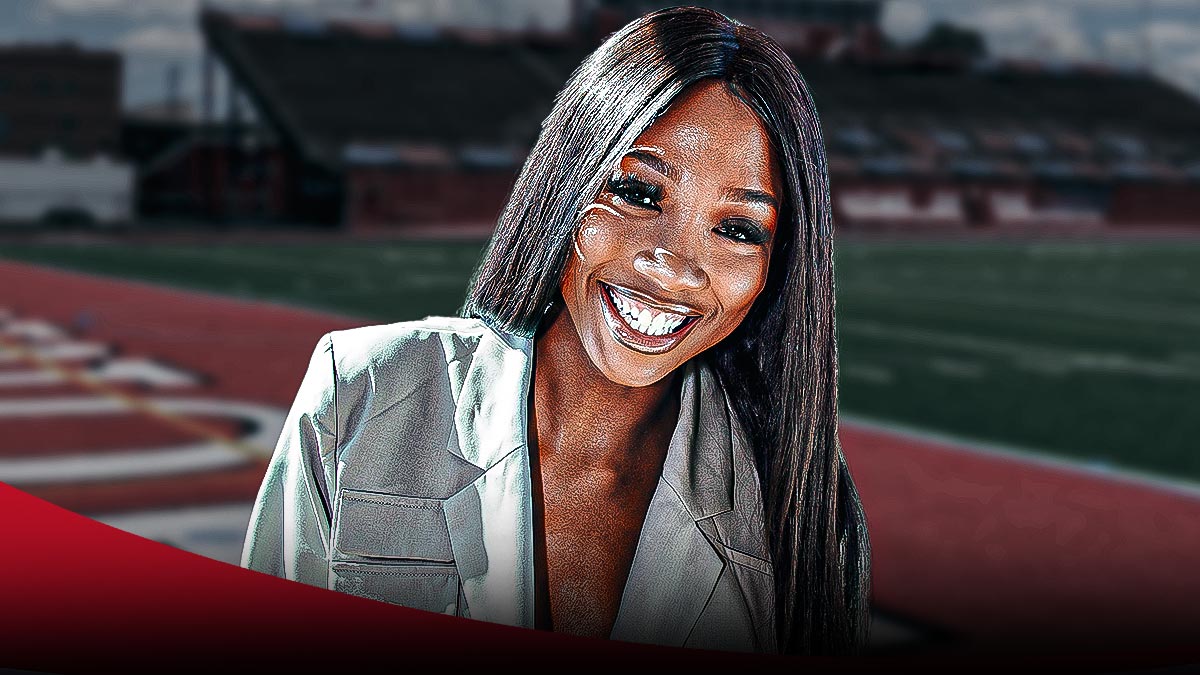
Before becoming a familiar voice in entertainment media, Loren Lorosa was a student at Delaware State University, where she discovered firsthand the culture, community, and opportunities that make historically Black colleges and universities unique.
Now a media personality on The Breakfast Club, LoRosa reflects on her time at the HBCU and how her college experience shaped her personal and professional journey. Her story highlights HBCUs' lasting influence and how those experiences continue to resonate long after graduation.
In an interview with the Grio's, Natasha S. Alford, LoRosa, opened up about initially questioning whether an HBCU was the right path for her, the mentors who helped her discover her talent for producing, and the importance of being surrounded by Black excellence.
Attending Delaware State University was not always part of LoRosa's plan. In fact, attending an HBCU was never something she initially envisioned for herself. She simply knew she wanted more out of life and was determined to build a successful future. At one point, she even considered moving to New York to attend a fashion institute or New York University.
However, her experience at Delaware State introduced her to something she hadn't anticipated: the power of being surrounded by a community of ambitious Black students who shared her drive to succeed.
“I'm not the exception. This is normal. There are a lot of Black young people who are great and want to be great. We just don't have the microphones we deserve to have yet,” LoRosa told the Grio's Natasha S. Alford.
For many students, HBCUs provide much more than an education. They offer a space for self-discovery, cultural connection, and a deeper understanding of Black history and identity. For LoRosa, Delaware State helped broaden her perspective on Black excellence and showed her what it meant to be surrounded by other young Black people with ambitions similar to her own.
But not everyone initially understood her decision to attend the Dover institution.
Although her mother supported her creative interests, she had reservations about whether attending an HBCU would provide the same professional opportunities as a larger university in a major city. Those concerns reflected a broader misconception that HBCUs cannot offer students the resources, connections, and experiences needed to build successful careers.
“When I first went to an HBCU, there were people telling me, ‘You're never going to get a good job.' Honestly, even my mom, in the beginning, didn't mean any harm; she just didn't know. From what she understood, go to the big city, go to the big school, and you would be better off,” LoRosa said.
Her experience at Delaware State would ultimately challenge those assumptions.
Like many HBCU alumni, LoRosa credits her college experience with helping lay the foundation for her professional success. Throughout her career, she has worked with major media outlets, including Cosmopolitan, TMZ, and The Breakfast Club. Along the way, the relationships and mentorship opportunities connected to her HBCU experience helped her navigate the entertainment industry.
Article Continues BelowOne of those connections was Kara Barnett, a fellow Delaware State alumna whom LoRosa met while working on America's Next Top Model. Their relationship developed into a mentorship that helped LoRosa access professional opportunities and gain experience that would become valuable steppingstones in her career.
For LoRosa, those connections demonstrate the importance of the HBCU network, where relationships formed through a shared educational experience can continue opening doors long after students leave campus.
Beyond professional opportunities, LoRosa's time at Delaware State also helped shape how she viewed herself and her place in the world. Being surrounded by other talented and driven Black students reinforced the idea that Black excellence was not an exception but something she could witness every day.
That realization continues to influence how she approaches her work in media, particularly as someone with a platform to amplify stories and perspectives that have not always received mainstream attention.
“The platform and the microphone we have now are so important for people to know that we're here,” LoRosa said. “We are multifaceted. We are successful. We don't need to be told we are articulate because, yeah, we are. Being on that [Delaware State] campus that first week, I just remember looking up and feeling like, ‘Oh, this is why the world needs me.'”