
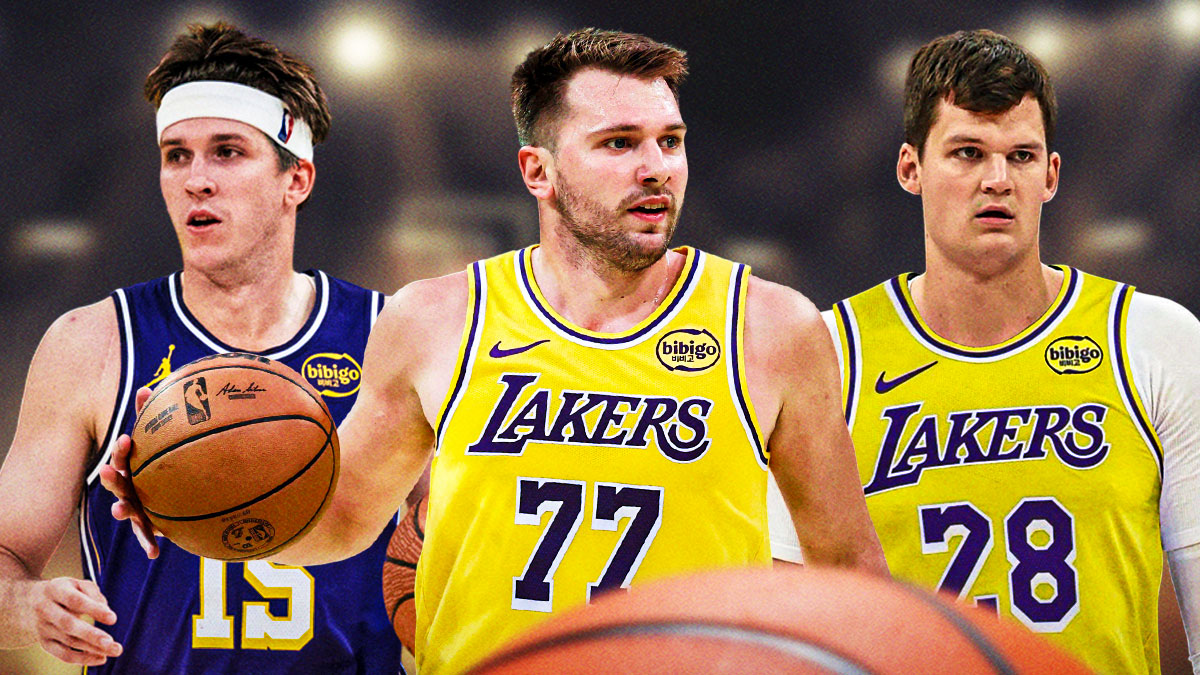
The Los Angeles Lakers have enough offensive talent to make the playoffs uncomfortable for almost anyone. Their problem is that championship opponents will be just as comfortable attacking them.
Luka Doncic and Austin Reaves give Los Angeles an elite offensive foundation. The pair combined for 56.8 points per game last season, the NBA’s highest-scoring duo, and the Lakers went 30-11 when both played. But their new-look supporting cast still leaves a question unresolved: Who consistently stops the ball?
That weakness, unreliable perimeter defense, is the flaw most likely to end the Lakers’ 2027 championship pursuit. Walker Kessler can strengthen the back line. He cannot erase every breakdown in front of him.
The Lakers still lack a dependable defensive starting point
Los Angeles reshaped its roster around Doncic and Reaves, adding Kessler, Quentin Grimes, Collin Sexton and other rotation options. Marcus Smart’s departure, however, removed an experienced defensive presence from a team already searching for answers.
The concern is not simply that Doncic and Reaves are offensive-minded guards. It is the difficulty of constructing a reliable defensive lineup around both without compromising the spacing that makes their partnership dangerous.
Opposing teams do not have to attack the Lakers’ strongest defender. They can involve a vulnerable guard in a screen, force a switch or create a rotation that leaves someone recovering rather than dictating.
The point-of-attack defense is a recurring concern among rival teams. Grimes is a candidate to handle those assignments, while Matisse Thybulle, Ziaire Williams and others are expected to apply pressure higher up the floor.
Those are potential solutions, not established answers. The Lakers need someone who can consistently navigate screens and contain penetration without demanding constant help.
Until that player emerges, their defense begins every possession with an uncomfortable margin for error.
Walker Kessler cannot solve every breakdown
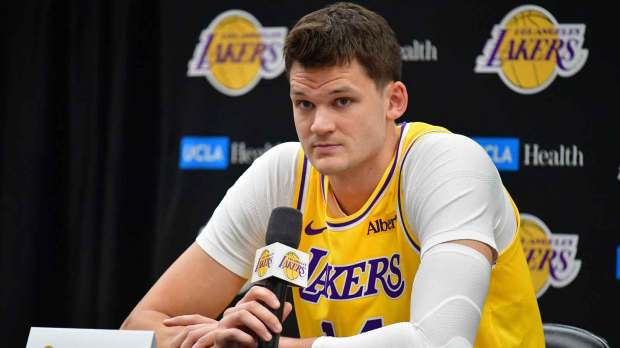
Kessler’s arrival addresses a legitimate need. His rim protection gives Los Angeles a defensive anchor and makes aggressive perimeter pressure more plausible. Early preseason analysis noted how the Lakers’ activity improved when defenders could funnel opponents toward him.
But there is a difference between supporting a defense and carrying one.
When a ball-handler repeatedly gets into the paint, the center must choose between contesting the drive and staying connected to his assignment. Help from the weak side creates another opening. One lost matchup can become several difficult decisions.
Playoff offenses will keep testing those decisions. They can also pull Kessler away from the basket through screening actions, reducing the protection the Lakers depend on.
His minutes on the bench present another concern, and whether Los Angeles could survive defensively without him, given the limitations elsewhere in the rotation.
That is too much responsibility for one player. Championship-caliber defense requires layers, not a single emergency barrier.
Article Continues BelowPreseason pressure is promising, but playoff proof is missing
JJ Redick deserves credit for confronting the problem.
The Lakers unveiled aggressive full-court pressure in their preseason opener, with Williams, Thybulle, Adou Thiero and Grimes among the players challenging ball-handlers early. Los Angeles beat Sacramento 127-103 while showcasing a more disruptive identity.
That approach can disrupt opponents and shorten the time available to organize an attack. It cannot be treated as proof that the underlying weakness has disappeared.
Over a playoff series, opponents adjust. The Lakers will need disciplined half-court possessions after their initial pressure is beaten, and dependable combinations when their stars share the floor.
Their offense gives them a chance in almost any matchup. Unless their perimeter defense becomes equally trustworthy, it will keep them short of a championship.