
Soccer times are well and truly changing, and nowhere is that more apparent than in the job national team head coaches are faced with. Before, coaches selected the best players available, and that was it, but now the job is different. On top of that, head coaches must now spearhead the process of identifying the best young prospects from around the globe who could eventually represent their national team. This task has become increasingly complex, as coaches now have to navigate the eligibility of second and third-generation immigrants, as well as players who have spent little or no time playing in their country of origin. This makes talent identification, and ultimately deciding who can represent a nation, more challenging than ever. Additionally, it creates something that seems like a hidden transfer window for international soccer, when player movement is front and center,
In the past, the national teams' player pools were much more static, even if divisions were present, even within the same family. We had some concrete examples, such as the Boateng brothers, who opted to represent two different national teams. While Jerome represented Germany from 2009 to 2018, winning the 2014 FIFA World Cup, his brother Kevin-Prince chose to play for Ghana, as they both grew up in Berlin, Germany. The brothers were eligible for different national teams through their family background, with their mother being German and their father Ghanaian, and made different decisions. This was mainly how it worked back then: you played for who you played for, and occasionally you had a choice to make, but it was very much the exception to the rule. But, as the society we live in evolved and changed, the national teams had to adapt.
The French and the German national teams are widely considered the ones that worked most aggressively in this direction over the past decades. For instance, the German national team integrated the second generation of Turkish immigrants. A notable example is Mesut Ozil, who represented Germany from 2009 until 2018, when he retired from international football following significant backlash over a picture of him and teammate Ilkay Gundoğan meeting Turkish President Recep Tayyip Erdogan. Both players were part of Germany's squad at the 2018 World Cup, where the defending champions were eliminated in the group stage. As it often happens in these situations, it became a political topic in the country, and both players were widely criticised.
Switzerland, perhaps more than any other team, came to rely heavily on second-generation immigrants and built one of the most consistent national teams around Europe with a team built with this mindset. Other countries were much more conservative about relying on the second generation of immigrants in the national teams, but at one point they were all forced to shift their approach, as is happening right now across most of the nations in the world.
The hidden transfer window
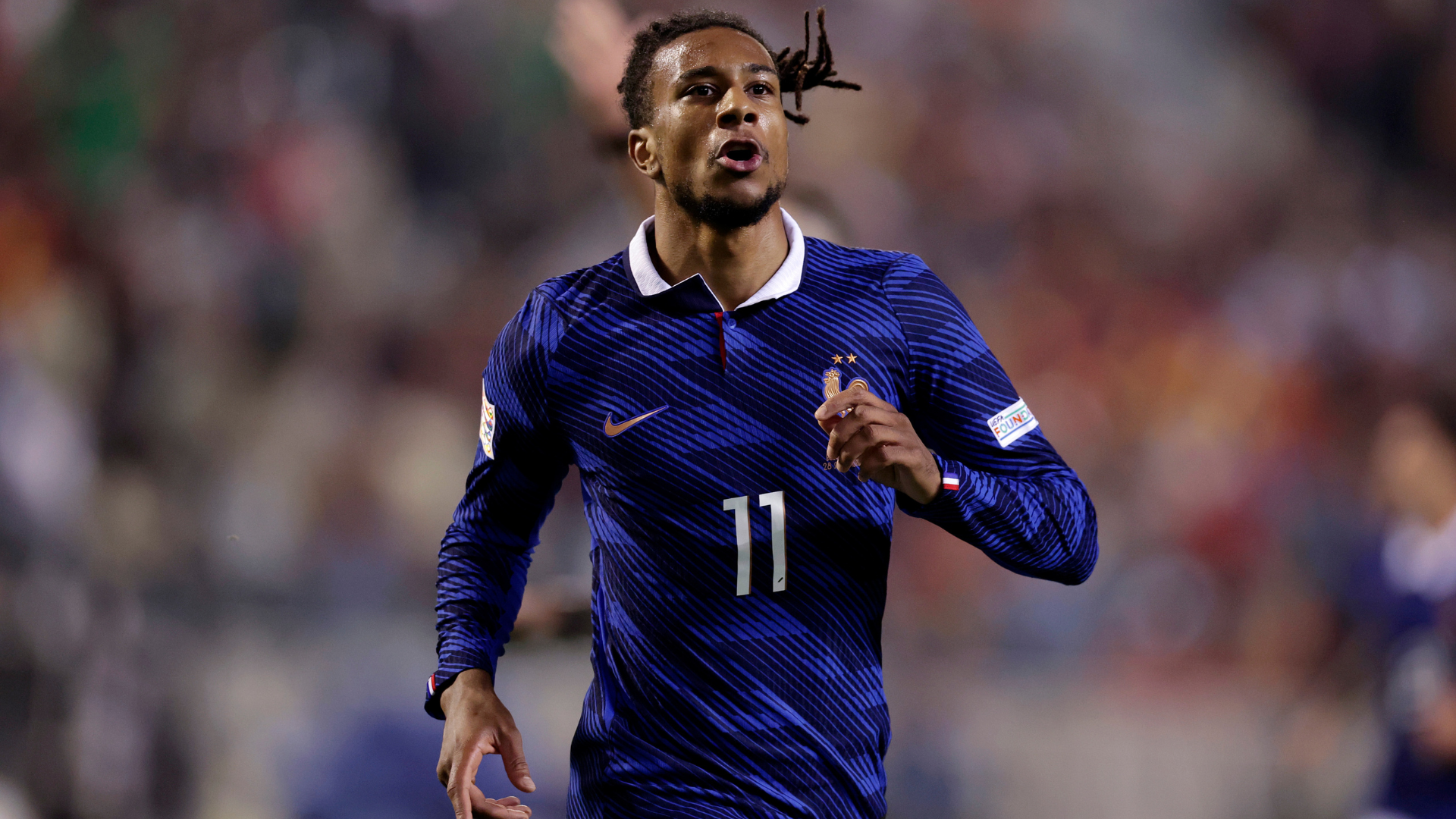
France has long focused on this area, actively seeking to identify and develop the best young talents eligible to represent the national team. One example that stands out is Michael Olise, who was born in England to a Nigerian father and a French-Algerian mother. Despite living and playing in England his whole life, he has represented the French national team since he was 18 years old, making his debut for the first team in 2024, and playing in the 2026 World Cup under Didier Deschamps. This is an example of how the national teams are now working to find their best players on a daily basis.
Italy have perhaps been a nation resistant to this approach but even they are starting to lean into looking for talent wherever they can find it, and the current coach Roberto Mancini has tried to speed up the process. When he was in charge of the Italian national team for the first time he called Mateo Retegui, an Argentinian striker with Italian roots, as many South Americans players in that region do. Retegui was 'discovered' by Mancini himself, and he later joined Genoa before going to Atalanta, where he scored 25 goals in 36 goals before joining Al-Qadisiya in the summer 2025. The decision of Mancini to call up Retegui also became a political topic, and just recently established new rules for Italian citizenship by descent were established, as it is now strictly limited to the first two generations (parents or grandparents born in Italy), meaning great-grandchildren no longer automatically get the right to ask for Italian citizenship.
Recently, Mancini rejoined the Italian national team beginning his second stint as manager, raising more internal debate in the country after making his first calls. Alessandro Romano, who previosuly played with the Swiss national team, received his first call alongside Issa Doumbia, Eddy Kouadio and Mohamed Ali Zoma, preventing other national teams from potentially calling them in the future.
However, there was an interesting example of how this hidden interntional transfer window works now: Mancini also tried to call up Nicolò Tresoldi, the Italian-born striker who plays for Club Brugge. However, the player decided to wait before making a decision on his international future. Tresoldi is currently part of the Germany Under-21 squad and plans to play at the 2027 European Under-21 Championship before deciding whether to represent Italy or Germany at senior level. He has lived in Germany since 2014 and obtained German citizenship in 2022.
The new German national team coach Jurgen Klopp announced he's yet to make a decision: "It doesn't mean that he has decided against Germany. Or against Italy. We don't want to put any pressure on the players. It's a delicate matter and we will respect whatever decision he makes without rushing him." This is exactly how international soccer has changed in the last years. Now, players have more options and can choose the national team that best fits their ambitions, development, coaching staff and tactical system. Managers and federations have a bigger task not only to call and select the players but also to convince some of them to represent their national team. Yes, times have changed.
Add CBS Sports on Google