
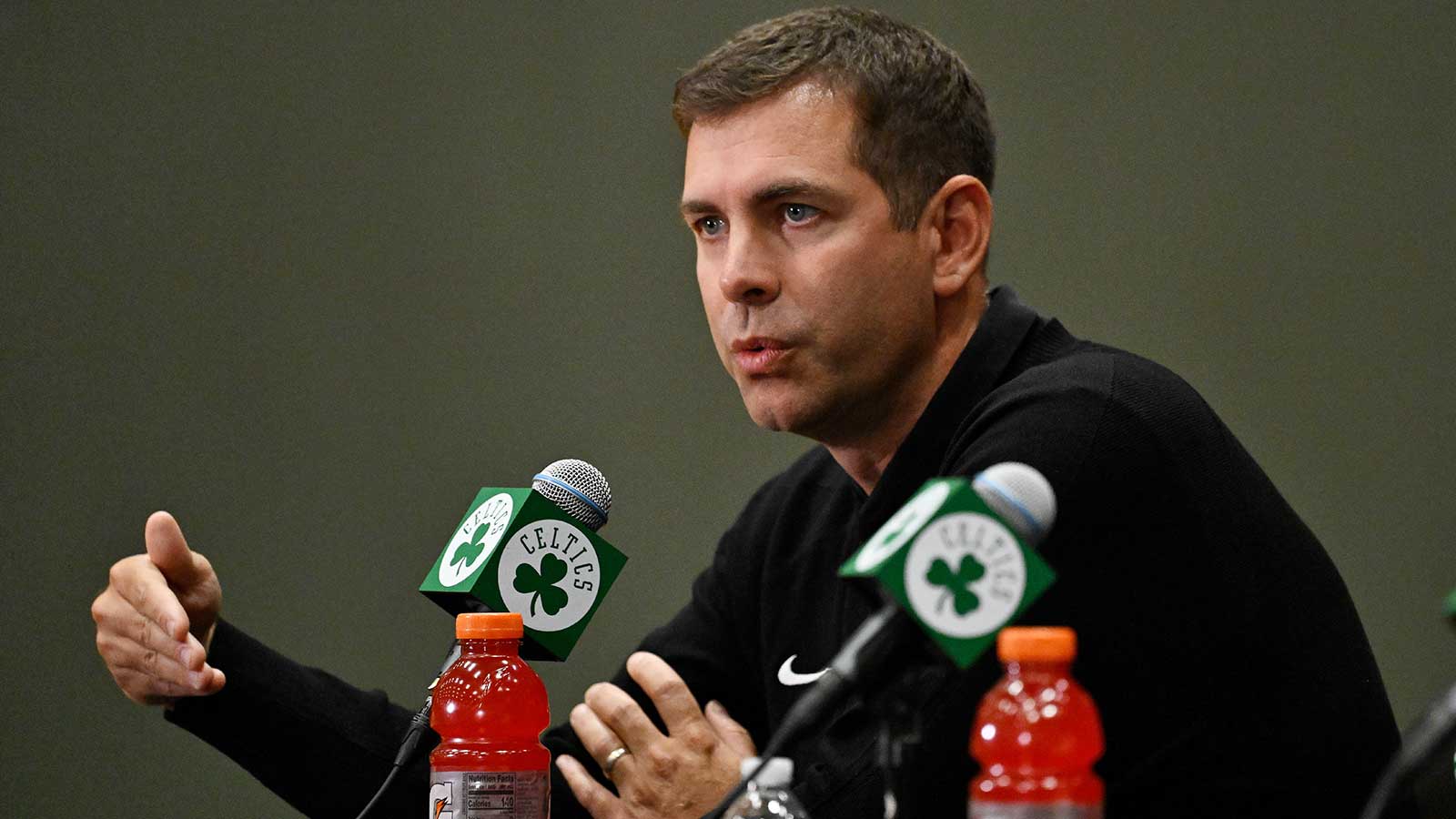
A number of Boston Celtics fans can be forgiven for still scratching their heads after Jaylen Brown was traded to the Philadelphia 76ers. The 76ers acquired Brown in exchange for Paul George, two first-round picks, two second-round picks, and there has been no dearth of backlash since the trade happened.
However, thankfully for Brad Stevens, who has been at the franchise for 13 long years, he has no qualms dealing with the criticism. Speaking to SiriusXM, Stevens revealed how he has grown immune to the backlash through his career.
“This is the part where I am glad I am 50 and not 30,” he said. “Fortunately or unfortunately I have been under the public eye for a long time and you are just kind of used to the reaction, good or bad, and at the end of the day you just have to do what you think is the best for the organization and it’s not always going to be the popular thing and it may be right, and it may be wrong. Who knows, right?”
“This is the part where I'm glad I'm 50, and not 30.” 🤣🤣
Brad Stevens shares how he dealt with the backlash following the Jaylen Brown trade.
Hear Brad’s full interview with @TheFrankIsola & @Scalabrine 🔊 https://t.co/XvyIdd1opR pic.twitter.com/bveOA5Rlgp
— SiriusXM NBA Radio (@SiriusXMNBA) September 22, 2026
Stevens went on to credit Brown’s decade-long stay at the franchise, but claimed that Boston simply wanted to ensure they are able to build for the future in a sustainable manner.
Article Continues Below“But I think that ultimately, you know we were really lucky, we had Jaylen Brown here for 10 years and 10 years is a long run in the NBA,” he said. “And we are just trying to sustain this now so we can be sustainably in the next move forward.”
Boston had already determined it would not offer Brown a two-year, $140 million extension. Had the Celtics extended him, Brown would have remained under contract for five additional years, with the extension beginning in 2029.
At that point, Brown would have been earning more than $70 million annually, and the Celtics elected to move him before the situation became more complicated. Brown and Jayson Tatum together would have accounted for roughly 70% of the team's salary cap.
In that sense, the Celtics were merely doing what they needed to do in order to remain competitive both in the present and the future, and are now focused on proceeding with Tatum as the sole franchise cornerstone.