

The Houston Astros can no longer treat October failure as a temporary setback. After finishing 81-81, winning the American League West on the final day and getting swept at home by the Chicago White Sox, Houston must accept that its championship-era formula has expired.
The Astros lost the Wild Card Series by matching 6-3 and 7-3 scores, extending their home postseason losing streak to nine games. They have not won a playoff game since 2023, while their regular-season win total has declined four straight years.
Houston has enough star power to avoid a teardown. Yordan Alvarez, Jose Altuve, Carlos Correa and Jeremy Peña can anchor a competitive lineup.
Change the entire leadership structure
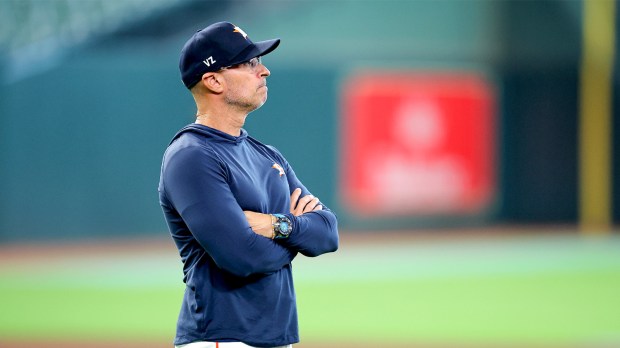
The first radical move should be a complete reset of Houston’s baseball operations department, including hiring a president with full authority and replacing manager Joe Espada.
Owner Jim Crane dismissed general manager Dana Brown in August, leaving a small group of executives to run the club down the stretch. Espada is not under contract for 2027 and Houston’s last two playoff appearances ended with home Wild Card sweeps.
Espada was not solely responsible for the Astros’ problems. Injuries forced Houston to use a franchise-record 18 starting pitchers, and the club recovered from a 20-31 start to win the division.
Still, this organization needs more than a new dugout voice. It needs one baseball executive empowered to choose the manager, modernize player development and determine which veterans belong in the next competitive cycle.
Houston’s thin farm system makes that urgency obvious. MLB Pipeline ranked the Astros’ system 29th for the fifth consecutive update, although Kevin Alvarez and Xavier Neyens gave the organization two Top 100 prospects for the first time since 2019.
The Astros cannot rebuild organizational depth if ownership continues making short-term decisions without a clear chain of command. A new president should hire a manager comfortable playing younger players, managing workloads and demanding accountability.
Trade veterans and aggressively retool
Article Continues Below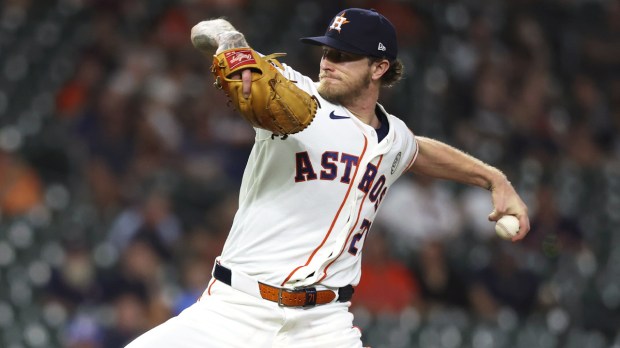
The second radical change should be abandoning the idea that every recognizable veteran must remain because of Houston’s past success. The Astros should listen on nearly everyone outside Alvarez, Peña and Hunter Brown, targeting young starters, athletic position players and upper-level prospects.
That could mean moving reliever Josh Hader if another contender will absorb most of the two years remaining on his five-year, $95 million contract. Houston should also explore markets for Christian Walker, Isaac Paredes or Correa if a deal creates payroll flexibility and returns controllable talent.
This is not a recommendation to dump productive players for salary relief. Houston’s expensive roster finished at .500, posted a 4.50 team ERA and lacked enough depth to survive injuries without exhausting the bullpen.
The rotation is the clearest priority. Astros starters carried a 4.97 ERA in early September, ranked 28th in MLB and forced the bullpen into repeated high-leverage work. That weakness surfaced in the elimination game when Brown recorded only two outs, allowed four runs and left Houston chasing the game immediately.
The offense also needs more athleticism and consistency around Alvarez. Houston hit 226 home runs, but ranked 30th with only 50 stolen bases and finished 19th in batting average at .242. In Game 2, its comeback consisted of three solo homers before the lineup went hitless after the fifth inning.
Trading veterans would be uncomfortable, especially for a franchise that reached seven consecutive AL Championship Series from 2017 through 2023. However, an 81-win division title should not convince Houston that it remains one addition away.
The Astros do not need a scorched-earth rebuild, but they must stop protecting the past. Installing independent baseball leadership and converting selected veterans into younger, controllable talent would give Houston a chance to build its next contender before the current core loses its value.