
















10 tips for filling out your 2026 March Madness bracket


The 2026 field of 68 is official, which means that at some point between now and early Thursday afternoon, you’re probably going to be asked to fill out a bracket. It’s always a daunting task, and the fear of embarrassing yourself in front of friends, family or colleagues who you didn’t care for much to begin with can be unnerving
Thankfully, we’re here to help with 10 bracket tips you can ride to an admirable finish in your bracket challenge.
1. Believe in at least one power conference underachiever
One of the longest active March Madness streaks that isn’t discussed enough is that a “power six” conference team seeded 8th or worse has reached the Sweet 16 in every NCAA tournament since 2008. John Calipari and 10th-seeded Arkansas kept that streak alive with their run to the second weekend a year ago.
Teams that fit that description this year:
Clemson (8)
Georgia (8)
Villanova (8)
Ohio State (8)
TCU (9)
Iowa (9)
Central Florida (10)
Texas A&M (10)
Missouri (10)
SMU (11)
Texas (11)
NC State (11)
You may hate all these teams, but history says at least one of them is going to be one of the last 16 squads standing.
2. Don’t feel bad about picking a No. 1 seed to win it all
Even if you’re not going with the overall No. 1 seed, don’t let anybody shame you for picking a top seed to cut down the nets. Since seeding the field began, No. 1 seeds have won more national titles (27) than all other seeds combined (18).
A No. 1 seed has won seven of the last eight national titles, eight of the last 10, and ten of the last 13.
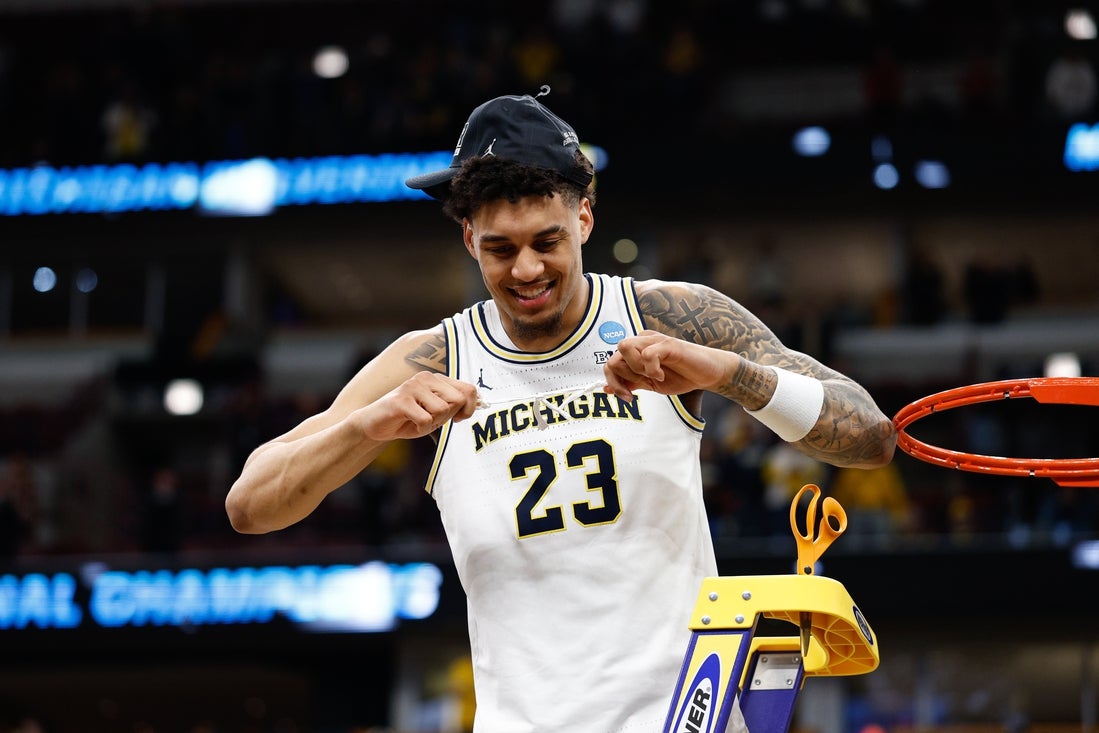
With this year’s top line seeming to be especially stellar, you’re probably on the right page if you’re picking between Duke, Michigan, Arizona and Florida to cut down the nets.
3. Believe in at least one “First Four” team
Even though the “First Four” — those four games typically played in Dayton on Tuesday and Wednesday featuring the lowest-seeded four teams in the field and the last four at-large teams to get in — has been fairly controversial and often mocked since its inception in 2011, a team coming out of Dayton has won at least one game in the tournament’s “main draw” in every year but two since the First Four became a thing. The only two times it hasn’t happened are 2019 and last year (I blame the controversial UNC at-large selection).
Overall, the First Four has produced a total of 22 victories in the “main draw” of the tournament, five Sweet 16 squads, and two Final Four teams.
Believe in Texas, NC State, Miami of Ohio or SMU to get the job done for you in at least one game in the tournament’s main draw.
4. Don’t pick a No. 5 seed to win it all
You probably weren’t anyway, but just in case you were thinking about it, don’t. Every seed line from 1-8 has produced at least one national champion besides the 5-seed line.
No. 5 seeds have made it to the title game four times, including three seasons ago with San Diego State, but have never been able to be the last team standing.
My most sincere apologies to Vanderbilt, St. John’s, Texas Tech and Wisconsin.
5. Pick at least one 12 seed to win in the first round
The 12/5 upset has a reputation for a reason.
In 34 of the last 40 years, at least one 12 seed has advanced out of the first round of the tournament. Over the last 17 years, 12 seeds actually own a highly respectable overall record of 29-39 against five seeds.
Even in last year’s chalkiest NCAA Tournament of all-time, we managed to get multiple 12/5 upsets with Colorado State taking out Memphis and McNeese State upsetting Clemson. UC San Diego also pushed Michigan to the brink.
The 5-seed line is stronger this season, but the 12-seeds are no slouch.
Akron is playing in the Big Dance for a third straight year and has been beaten just once since Jan. 3. McNeese State also has a strong recent pedigree and is coming off a dominant run in conference play. Northern Iowa comes from a conference in the Missouri Valley that has historically produced a lot of teams that have had success in these situations. And then High Point has the third highest-scoring offense in the entire country.
History says at least one of these teams is winning this week.
6. Don’t automatically move all four No. 2 seeds to the second weekend
In 25 of the last 28 years, at least one No. 2 seed has been knocked out of the tournament before the Sweet 16. Last year, as the other top 2-seeds were rolling to victories, it was St. John’s that slipped up and fell to Arkansas in the second round.
Straying from the chalk is always scary, especially before the second weekend and especially in a season where the top teams are as strong as this group appears to be, but you need to conquer that fear in at least one region.
7. Conference championships typically matter
In the history of the NCAA tournament, there have only been five national champions (who participated in a conference tournament) that didn’t first win either their league’s regular season or postseason title. Villanova in 1985, Kansas in 1988, Connecticut in 2014, Duke in 2015 and UConn in 2023 are the only exceptions.
This doesn’t bode well for Iowa State or Houston, who earned top two seeds despite seeing Arizona claim both the Big 12’s regular season and tournament titles.
8. Gonzaga and Kansas are (usually) early locks
Since 2008, there is just one team that has appeared in every single NCAA tournament without losing a single first round game: Gonzaga. Kansas also held that distinction before last season’s first round loss to Arkansas in a 7/10 matchup. The Zags also lost a crazy streak of their own, as their narrow second round loss to eventual national runner-up Houston snapped a streak of nine consecutive Sweet 16 appearances.
You don’t have to put them in the Final Four, you don’t even have to send them to a regional final, but the Zags and the Jayhawks typically take care of business on opening weekend.
9. Having one “crazy” Final Four pick usually isn’t so crazy
Sure it’s scary to take one team that could easily lose in the first round and advance it all the way to the Final Four, but it also might be the key to winning your bracket pool. Every single Final Four but two since 2012 has featured at least one team seeded No. 7 or worse. Four of the last five tournaments and five of the last seven have had at least one team seeded No. 8 or worse in the Final Four. Since 2011, a grand total of 13 teams seeded seventh or worse have crashed the season’s final weekend.
A year ago, yes, we had four No. 1 seeds squaring off in the national semifinals, but the year before that it was 11th-seeded NC State going crazy and making a run to the season’s last weekend.
The only two recent seasons in which a 7-seed or worse hasn’t made a Final Four were last year and 2019, and even then, you had a 5-seed crashing the party.
Again, it’s scary, especially in a year like this, but the key to standing out this month could be to take the three teams you like the most to the Final Four, and then maybe throw a dart in the region where you feel like the top seeds are the most vulnerable.
10. Be mindful of the Big Ten/West Coast drought
One of the longest-running debates in college basketball is when a team from the West Coast or the Big Ten will win its next national title. It has reached a fever pitch the last few seasons with the Big Ten consistently appearing to be one of the two best conference in the sport and a resurgent West Coast producing multiple national title contenders.
A team from the Big Ten team hasn’t won it all since Michigan State in 2000, and a West Coast squad hasn’t cut down the nets since Arizona stunned Kentucky in 1997.
Could Michigan, Arizona, Purdue, Gonzaga, Iowa State, Michigan State or Illinois change all this? Sure, but if you believe in 25+ year trends, it might be better to look somewhere else when you’re choosing who is going to be the last team standing.
What's Your Reaction?
 Like
0
Like
0
 Dislike
0
Dislike
0
 Love
0
Love
0
 Funny
0
Funny
0
 Angry
0
Angry
0
 Sad
0
Sad
0
 Wow
0
Wow
0