





The NBA’s 12 best rookies this season, ranked, including 2026 Rookie of the Year pick


The 2025 NBA Draft always had more to offer than just the grand prize at the top of the class in Cooper Flagg. Flagg was the runaway No. 1 pick throughout his one-and-done season at Duke, but a strong group of prospects emerged behind him led by college teammate Kon Knueppel, Baylor guard VJ Edgecombe, and Rutgers star Dylan Harper.
This year’s rookie class didn’t just live up to the hype, it exceeded it. There were impact first-year players all over the league, and while Flagg was spectacular for the Dallas Mavericks, he may not even win NBA Rookie of the Year.
Another talented NBA Draft class is coming down the pipe right now, and the success of the current rookie class should only make teams more desperate for lottery luck. Remember: a lot can change in a year. My rookie rankings from last season would look completely different now if I re-ranked the 2024 class. Let’s rank the NBA’s best rookies for the 2025-26 season based on their first-year impact.
12. Hugo Gonzalez, F, Boston Celtics
Gonzalez wasn’t expected to be an immediate contributor after barely playing at Real Madrid when the Celtics took him with the No. 28 overall pick. Instead, he looks like another hidden gem for Brad Stevens. Gonzalez has the potential to become one of the best wing defenders in the league with a strong 225-pound frame and 6’11 wingspan, and he’s already graded out in the 91st percentile of defensive EPM in his rookie year. The Celtics outscored teams by nearly 14 points per 100 possessions when he was on the floor, good for a monstrous +7.2 net-rating. There could be some noise in the plus/minus stats, but Gonzalez’s physical tools, motor, and high-IQ gives him a strong defensive floor while his offense continues to develop.
11. Collin Murray-Boyles, F, Toronto Raptors
Murray-Boyles had the traits of a future All-Defensive team selection entering the draft, and he already made a big impact on that end for a winning team in his rookie year. CMB racked up deflections, steals, and blocks for the Raptors this year, and showed his sharp instincts as a help defender who consistently knew how to plug a leak in the team structure. His three-point shot looked better than expected in a small sample at 34 percent, but significantly increasing his volume from deep is the next step. Even if Murray-Boyles never becomes a plus shooter, he still adds offensive value with his playmaking in the middle of the floor and his offensive rebounding. Finishing with a +3.1% rTS (true shooting relative to league average) is an encouraging sign not just for his scoring efficiency, but also for his overall feel. Toronto found a keeper with the No. 9 overall pick.
10. Jeremiah Fears, G, New Orleans Pelicans
Fears graded out poorly in the impact stats with a -4 net-rating dragging him down. That shouldn’t surprise anyone for one of the youngest rookies in the class, and it shouldn’t be too discouraging yet either. Fears’ blend of speed and elite ball handling ability is what future stars are made of, and hex put it on display with a few 20+ point scoring outbursts every month. He’s not yet an efficient scorer with -5.4 rTS% and still struggles with his turnovers, but the flashes of star-level guard production were there in spurts. He finished in the 100th percentile of rim attempts league-wide, burning defenders to the cup even if he couldn’t always finish. Adding more strength and gaining more experience will help Fears learn how to harvest all of his gifts. He won’t turn 20 years old until the start of next season, and there’s on reason to rush his development just yet. If Fears can keep improving from the baseline he established this year, New Orleans should have its point guard of the future.

9. Derik Queen, F, New Orleans Pelicans
Queen was a divisive prospect coming out of Maryland because his elite strengths also came with some alarming weaknesses, and both were on display during an up-and-down rookie year with New Orleans. Let’s focus on the positives first: Queen’s jumbo creation looked fantastic at times in creating scoring chances for himself and his teammates. His handle and footwork are both impressive for his size, and he showed an ability to both get to the free throw line and make his foul shots. Defenders bounce off Queen on his drives to the rim, and he’s at his best when he’s diming up teammates with rim assists or kick outs to three. The other side of the floor is more of an issue. New Orleans allowed a 121.6 defensive rating with Queen on the floor, and a 115.5 defensive rating with him on the bench, which is the difference between No. 30 and No. 20 in the league. That’s not all Queen’s fault, of course, and the Pelicans’ context didn’t exactly set him up for success. Still, improving as a shooter and defender would go a long way to making Queen more of an impactful player in the long run.
8. Ryan Kalkbrenner, C, Charlotte Hornets
Kalkbrenner has been an instant contributor for a winning team as a rookie, which is a big success for any second-round pick. The Hornets knew they were getting a stout defensive big man after he won four Big East Defensive Player of the Year awards in college, and the 7’1 center has indeed been able to provide quality rim protection in drop coverage all season. Would you believe that he also finished second in the entire league in field goal percentage among players who played at least 500 minutes? Kalkbrenner shot nearly 75 percent, which is impressive even if almost every shot was assisted. His upside is more limited than many of his peers, but he knows his role and executes it well. That’s solid for the No. 34 overall pick.
7. Maxime Raynaud, C, Sacramento Kings
Raynaud immediately looks like a steal for the Kings with the No. 42 overall pick. After a four-year career at Stanford, the 7’1 big man has been a productive scorer from day one whose offensive value should only continue to climb as his playmaking and outside shooting develops with better team context and more experience. Raynaud put up 22.5 points per 100 possessions by finishing well at the rim (73.4 percent) and being one of the league’s most effective players from the short mid-range area, which shows his touch on floaters. He only shot 28 percent from three after being much better than that in college, and I’d expect him to be a better outside shooter going forward as he adjusts to the NBA line. His 7.5 percent assist rate undersells his passing ability, too, and that should also pop going forward when he gets some better teammates. Defense is a big issue for Raynaud and certainly undercuts his overall value, but his offensive skill is worth celebrating, especially for a mid-second round pick.
6. Ace Bailey, F, Utah Jazz
Bailey did exactly what any team would want out of their 19-year-old rookie by continuing to look more comfortable as his minutes increased throughout the season. He’s had some huge scoring games in the second half of the season by stressing opposing defenses as an off-ball gunner with the size and touch to splash shots all over the floor. Bailey’s three-point volume was encouraging by taking 45 percent of his field goal attempts from deep, and his touch (35 percent three-point percentage) should only improve in time. His physical tools as a bouncy 6’9 wing allow him to add an element of shot-blocking and offensive rebounding from the perimeter, too. His passing is still pretty minimal and his scoring efficiency fell 4.2 points below league average, but the outline of a deadly off-ball scorer has been there, and that’s an encouraging sign for year two.
5. Cedric Coward, F, Memphis Grizzlies
Coward was close to playing for Duke this season before getting strong intel back at the combine and eventually turning into a lottery pick. His rise from D3 Willamette to an instant impact rookie is one of the most inspiring stories in basketball. The 6’7 wing immediately showed he could be a plus defensively and on the glass, gobbling up boards and contesting shots with his ridiculous 7’2 wingspan. His length and strength were always a good bet to translate, but his scoring punch (24.5 points per 100 possessions) and connective passing both exceeded expectations. His rim finishing is already super impressive, and his outside shooting will only get better over time. He looks like a long-term starter on the wing for Memphis.

4. Dylan Harper, G, San Antonio Spurs
Harper is the rare No. 2 overall pick to land on a legitimate championship contender, and he’s found ways to contribute off the bench during San Antonio’s rise around Victor Wembanyama. He’s a demon going to the rim and already has a lot of finishing craft when he gets in close. He’s a good facilitator too who ranks in the 96th percentile of potential assists (15.3 per 100 possessions) while also doing a great job limiting live-ball turnovers. Harper is going to be a good defender in time too as a big guard who hustles for loose balls, hits the glass, and uses his size to overwhelm smaller ball handlers. He’s in a perfect position to thrive next to Wembanyama long-term even if he does feel a little redundant on the current roster. Harper will slowly grow into Wemby’s top sidekick, and they’re going to be a brilliant pairing for years to come.
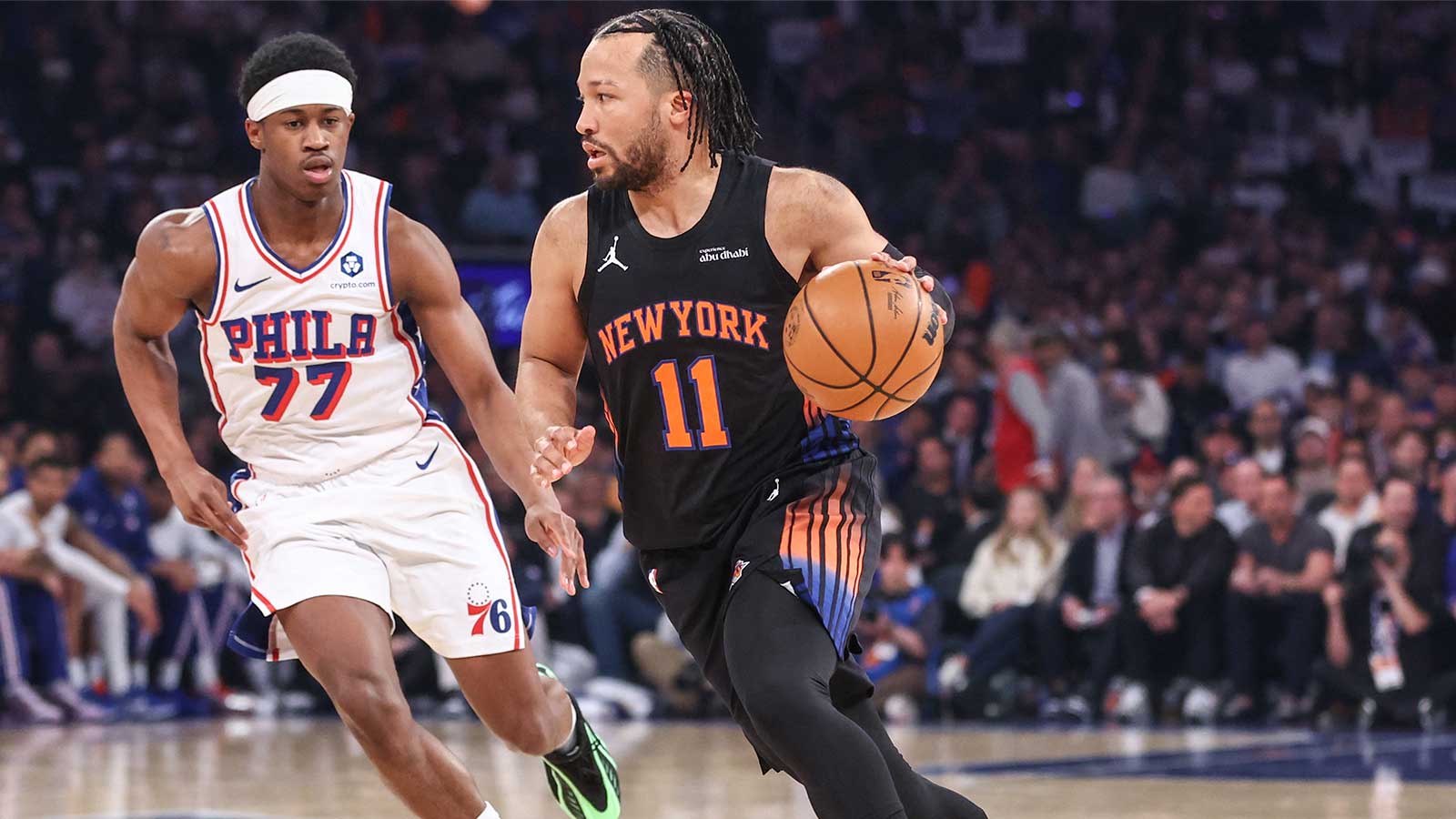
3. VJ Edgecombe, G, Philadelphia 76ers
Edgecombe’s athleticism, motor, and willingness to get up threes has made him a staple in Philly’s lineups since opening night. The 6’4 guard leverages his top-tier explosiveness on both ends. Defensively, Edgecombe has been stockpiling steals and blocks all year, and he also hits the defensive glass well for a guard while flying in for loose balls whenever he gets a chance. His open court scoring has already been excellent with 67.6 percent true shooting in transition, and his three ball is already at a respectable 35.7 percent. The rim finishing woes Edgecombe showed in college have stuck with him into the NBA, but he has the tools to get better there once he learns more craft. There are plenty of different outcomes for him from here, but it’s fantastic that he can already play a winning role for a solid playoff team.
2. Cooper Flagg, F, Dallas Mavericks
Flagg lived up to the hype in his rookie year and continued to affirm that he’ll become a superstar eventually. As the youngest player in the NBA this season, Flagg took on point guard duties early in the season and still acquitted himself well despite a heavy creation burden. He’s going to be a phenomenal scorer in time, and putting up 29.8 points per 100 possessions as a super young rookie proves that even if he was slightly below league average in his scoring efficiency. His playmaking is going to be one of his strongest skills, and his ability to avoid live ball turnovers is proof that he’s cut out for the point-forward role. Flagg’s shooting will be better than his 29 percent three-point stroke in time. He also has way more upside defensively than he showed this year, where he looked solid but not spectacular while handling a huge offensive load. I’d like to see the Mavs get more ball handling around Flagg and allow him to use more of his energy on the defensive end, where he once looked elite. He’s still going No. 1 in any redraft, but an incredible year from his college teammates means he shouldn’t win Rookie of the Year.
1. Kon Knueppel, G, Charlotte Hornets
Kon Knueppel has been the best rookie in the NBA this season, and he deserves to win the 2026 NBA Rookie of the Year award. The No. 4 overall pick has been a deadly offensive weapon, and it has fueled Charlotte’s rise into becoming the Eastern Conference’s team of the future. Knueppel leads the NBA in three-point makes this season while knocking down 43 percent of his looks from behind the arc. He’s already one of the most dangerous screeners in the game, using his big body to free up ball handlers, then darting behind the line for quick pick-and-pop jumpers. Knueppel is more than just a shooter: he’s a smart ball mover, an active participant on the glass, and a smart team defender who knows where to be. Posting +6 rTS% and being a key part of the NBA’s best five-man lineup is almost unthinkable for a rookie. It was going to take a historic season to keep Flagg away from the Rookie of the Year award, and Knueppel delivered it.
What's Your Reaction?
 Like
0
Like
0
 Dislike
0
Dislike
0
 Love
0
Love
0
 Funny
0
Funny
0
 Angry
0
Angry
0
 Sad
0
Sad
0
 Wow
0
Wow
0