





Rams player in danger of losing starting job to rookie after 2026 NFL Draft
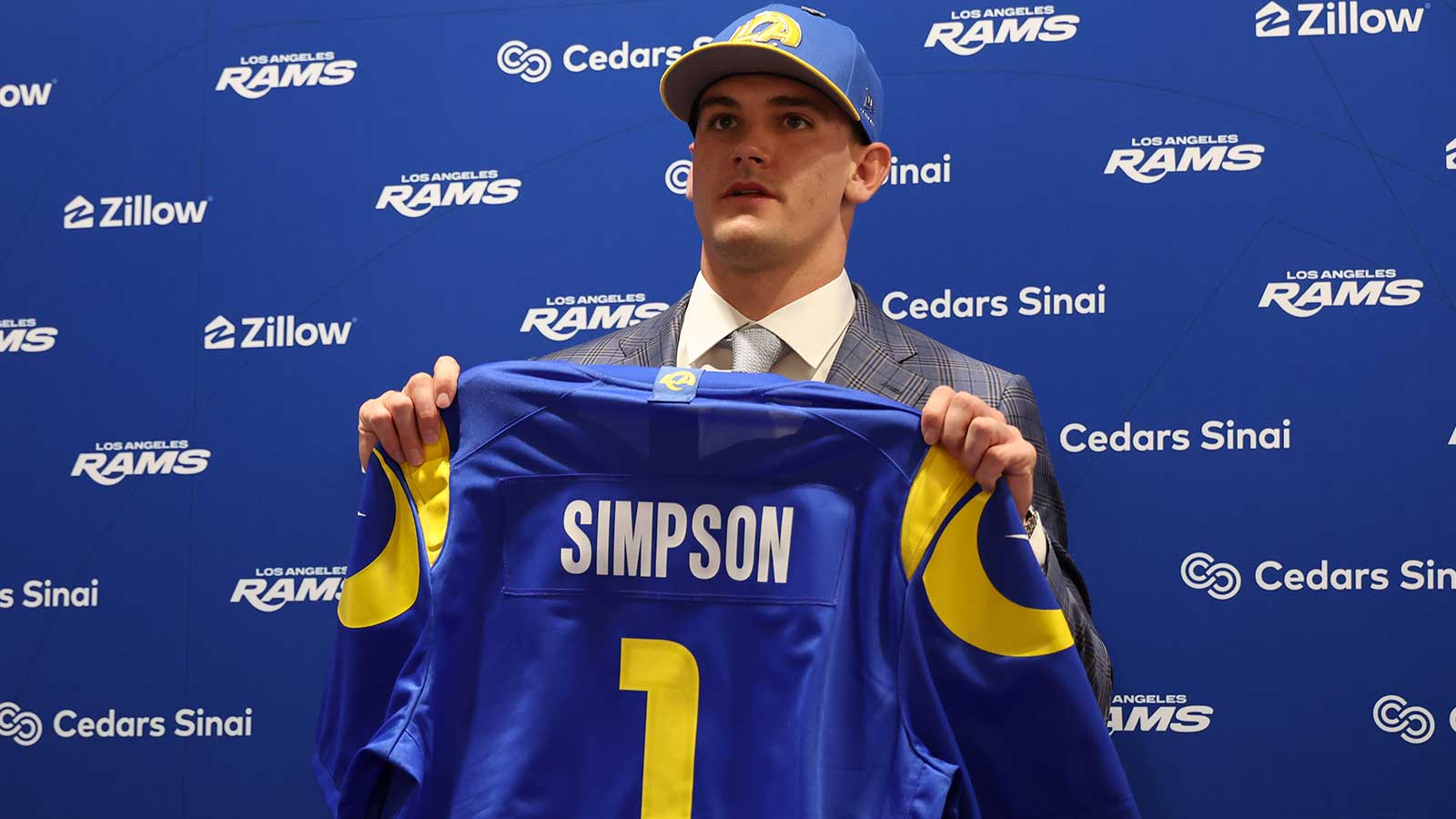
Los Angeles drafted a quarterback for the future, which has immediately shifted the narrative surrounding Matthew Stafford’s role with the team. Ty Simpson was selected with the 13th pick after a standout season at Alabama, where he threw for 3,567 passing yards, accounted for 30 total touchdowns, and recorded only five interceptions.
Sean McVay defended the decision, stating it was a strategic move for both the short and long term, rather than a direct challenge to a team that is still focused on winning now.
Byron Young also supported the pick, emphasizing the trust within the locker room, despite concerns from college coaches about Simpson’s readiness for NFL games.
At the start, the player under pressure is Stafford, and not because the depth chart has changed, as Simpson is not expected to start in Week 1, but because Stafford remains the team’s starting quarterback.
Any serious evaluation of the Rams’ 2026 season begins with him, and ourlads currently lists Stafford at the top of the quarterback depth chart, with Simpson behind him and Stetson Bennett further down.
This reflects the current reality: a rookie with limited starting experience isn’t going to walk into McVay’s complex offense and immediately replace a reigning MVP unless something dramatically changes during camp or the season.
Pressure still exists in the roster
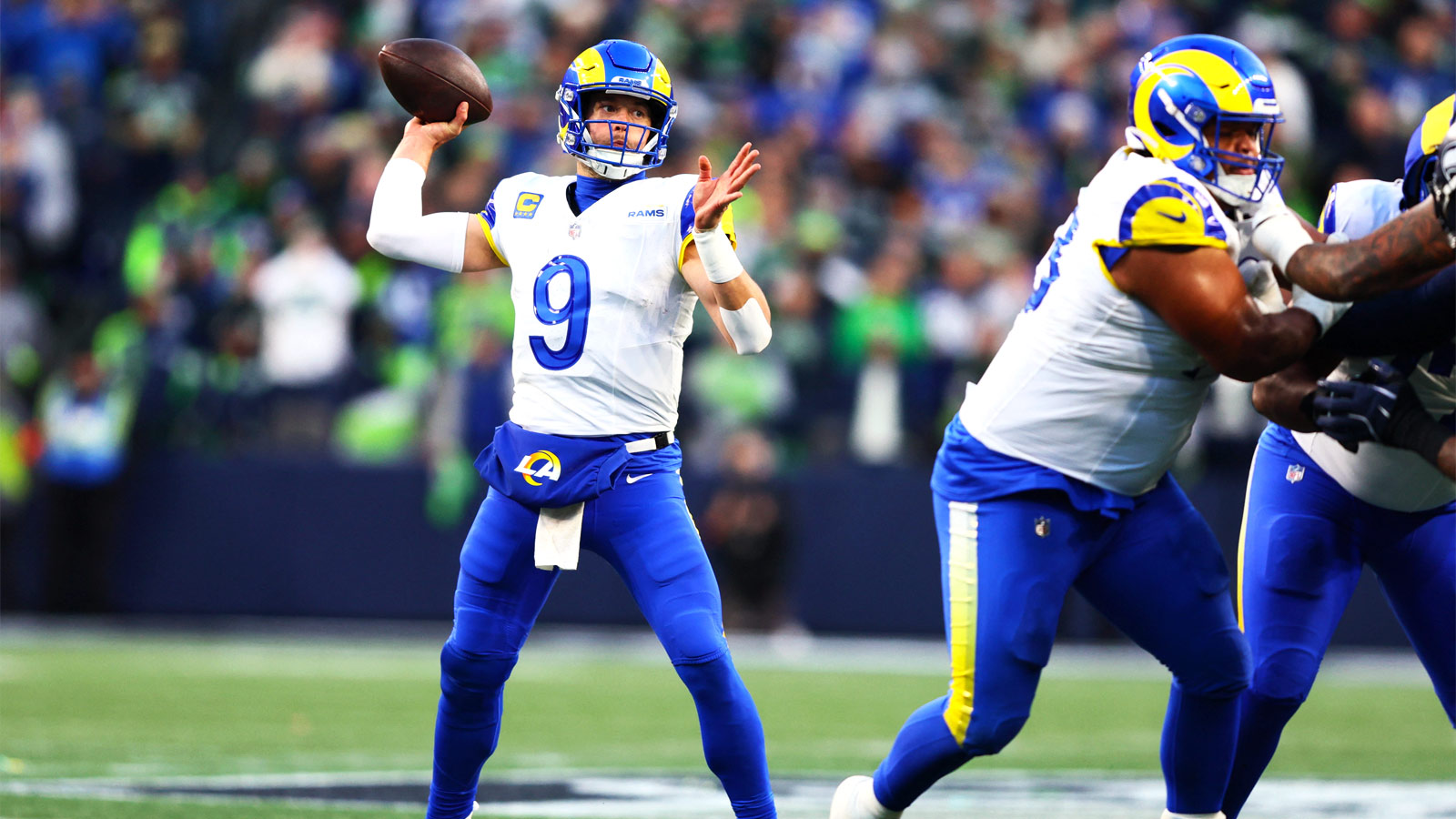
Stafford knows well what it means to draft a first-round quarterback.
Front offices typically do not select a passer with the 13th pick unless they believe a transition is already underway, regardless of what everyone claims publicly.
A later-round developmental player might be viewed as simply depth, but a mid-first-round quarterback is seen as part of the franchise’s future the moment he is selected.
Simpson may spend most or all of his rookie year learning, yet his presence inevitably alters discussions surrounding Stafford’s health, contract, performance, and retirement timeline.
His position is strong but no longer without competition, and his case remains clear that he’s coming off an MVP season and led the NFL last year with 4,707 passing yards and 46 touchdown passes, as noted by Sharp Football Analysis.
He also achieved a career-high touchdown rate of 7.7 percent, while McVay adapted the offense to utilize more under-center formations than any quarterback in the league.
These statistics do not suggest that he should be replaced based on performance; they indicate a star quarterback still excelling within a system designed for him.
This makes the Simpson selection unusual, which is why it has garnered so much attention.
It is easy to understand a team selecting a quarterback high after their starter struggles, but choosing one after their starter has won MVP requires a different justification. McVay emphasized that no rookie, regardless of position, guarantees a Super Bowl win and that the organization had to think about both the current roster and its future.
While this explanation makes sense from a team-building perspective, it also underlines an essential point: the Rams did not draft Simpson merely as insurance, but they drafted him with an eye toward a potential successor.
Stafford can delay that succession for a while, with his arm strength, strategic thinking, and chemistry with McVay still providing the offense with its most effective approach.
Simpson’s early role will likely be less demanding, focused on meetings, preseason work, scout-team reps, and learning a system that requires a quarterback to manage complexities beyond typical college settings.
The pressure increases if the season starts on a shaky note.
Stafford doesn’t need to perform poorly for the conversation to shift, and a few missed games, a struggling offense, or a playoff race that starts to slip could prompt discussions about when the transition should take place.
This is how these situations usually unfold, because the veteran retains his job. After all, he has deserved it, while the rookie gradually becomes the answer to each uncomfortable question.
How much longer can Stafford maintain this level? What if the offense requires a different kind of movement?
None of these questions was prevalent in the same way before the draft.
Simpson’s timeline depends on how fast he earns trust
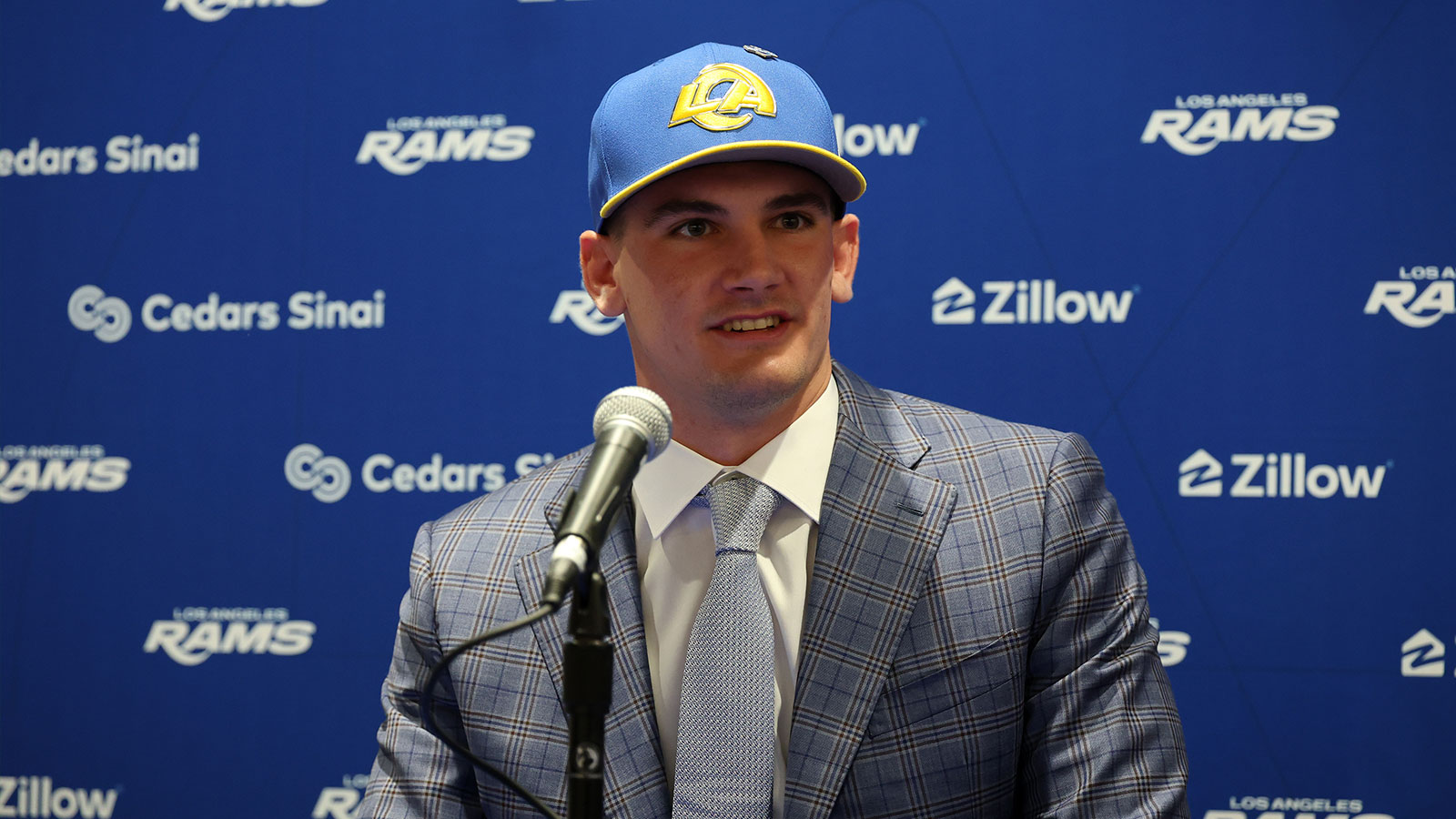
The criticism from SEC coaches should not be overlooked.
In Adam Rittenberg’s confidential draft report, one defensive coordinator expressed surprise at how high Simpson was selected, noting that previous Alabama quarterbacks were more challenging to prepare for.
Some coaches questioned whether he is ready to start right away, while others acknowledged that the fit makes sense because Simpson can sit behind Stafford and develop within McVay’s system.
This mixed evaluation is precisely why Stafford is not facing an immediate threat of being benched, and it is that Simpson requires time to develop.
He is not a four-year college starter entering the league with thousands of live reps and every answer already tested.
Instead, he possesses intriguing traits, production from his one season as a starter, and enough football intelligence to convince them that the potential was worth the draft pick.
The first-round label does not automatically prepare him to run the Rams’ offense.
The challenge for Stafford is that Simpson doesn’t need to be ready at first. A rookie quarterback can progress without starting a game, and a strong preseason performance can boost internal confidence, while practice success against the first-team defense can change coaching conversations.
Improvement in areas like protection checks, timing throws, and red-zone execution can make the rookie feel more viable, and once the coaches recognize that the offense can function under Simpson, Stafford’s job security will hinge on his ability to maintain elite performance and stay healthy.
That sets a higher standard than most veteran starters face, and while the Rams can publicly state that Simpson is there to learn, they might privately believe that he provides leverage as time moves on.
Stafford has earned respect, but as age becomes a factor, every quarterback evaluation turns into a week-to-week assessment, and when a young, first-round passer is waiting in the wings, even normal slumps from a veteran become magnified.
Another aspect of the situation is that the Rams are not in a rebuilding phase, which benefits Stafford in the short term.
FOX Sports’ post-draft coverage indicated that Simpson is not expected to play meaningful snaps this season unless unforeseen circumstances arise, which aligns with the team’s current contention.
The organization still believes in the talent already on the field, and Simpson’s selection was a move focused on the future within a team that is currently competitive.
This dynamic, in the end, can also become precarious because a rookie quarterback on a struggling team will eventually play because the season demands solutions.
Conversely, a rookie quarterback on a good team remains on the sidelines because the veteran offers the best chance for success, and Stafford currently benefits from this latter situation.
However, if injuries or inconsistency alter the team’s direction, Simpson shifts from being a luxury option to an alternative that is already integrated into the roster.
No other Rams veteran faces the same level of rookie pressure as Stafford, and a young defender might earn rotational snaps, a receiver could break into specific packages, and a lineman could vie for a role, but the quarterback position is unique because one player holds control over the entire offense.
All this situation in Los Angeles makes Stafford the Rams player most at risk of losing his starting job to a rookie after the 2026 NFL Draft, even though that risk is less about the start of the season and more about when the Rams decide that the future has arrived.
The post Rams player in danger of losing starting job to rookie after 2026 NFL Draft appeared first on ClutchPoints.
What's Your Reaction?
 Like
0
Like
0
 Dislike
0
Dislike
0
 Love
0
Love
0
 Funny
0
Funny
0
 Angry
0
Angry
0
 Sad
0
Sad
0
 Wow
0
Wow
0