







.jpeg)



NFL rule change on trading future draft picks could bring on superteams and sustained losing


The NFL might feel like it’s in a pre-draft lull, but March is a critically important time for the future of football. Wednesday marked the deadline for teams to submit proposed rule changes to be discussed at the NFL owner’s meeting late this month, where they can either be codified into the league rules — or tabled for further discussion in May.
Inside of these proposals is one from the Cleveland Browns, which could have a devastating impact on the NFL.
The Browns want to change NFL trade rules to allow teams to trade draft picks up to five years in advance, increasing the trade limit from three. It may seem like a small shift, but if passed, it could have a profound impact on the competitive balance of the league, tanking, and potentially the advent of true “super teams” in football.
Up to this point there have been two limiting factors on a team’s ability to amass star talent on one team: Salary cap space, and draft capital. Cap circumvention techniques have largely rendered the first roadblock moot, with creative accounting allowing all 32 teams to structure contracts with future guaranteed money in such a way that the NFL’s salary cap has become a soft cap, assuming a team is willing to risk its future.
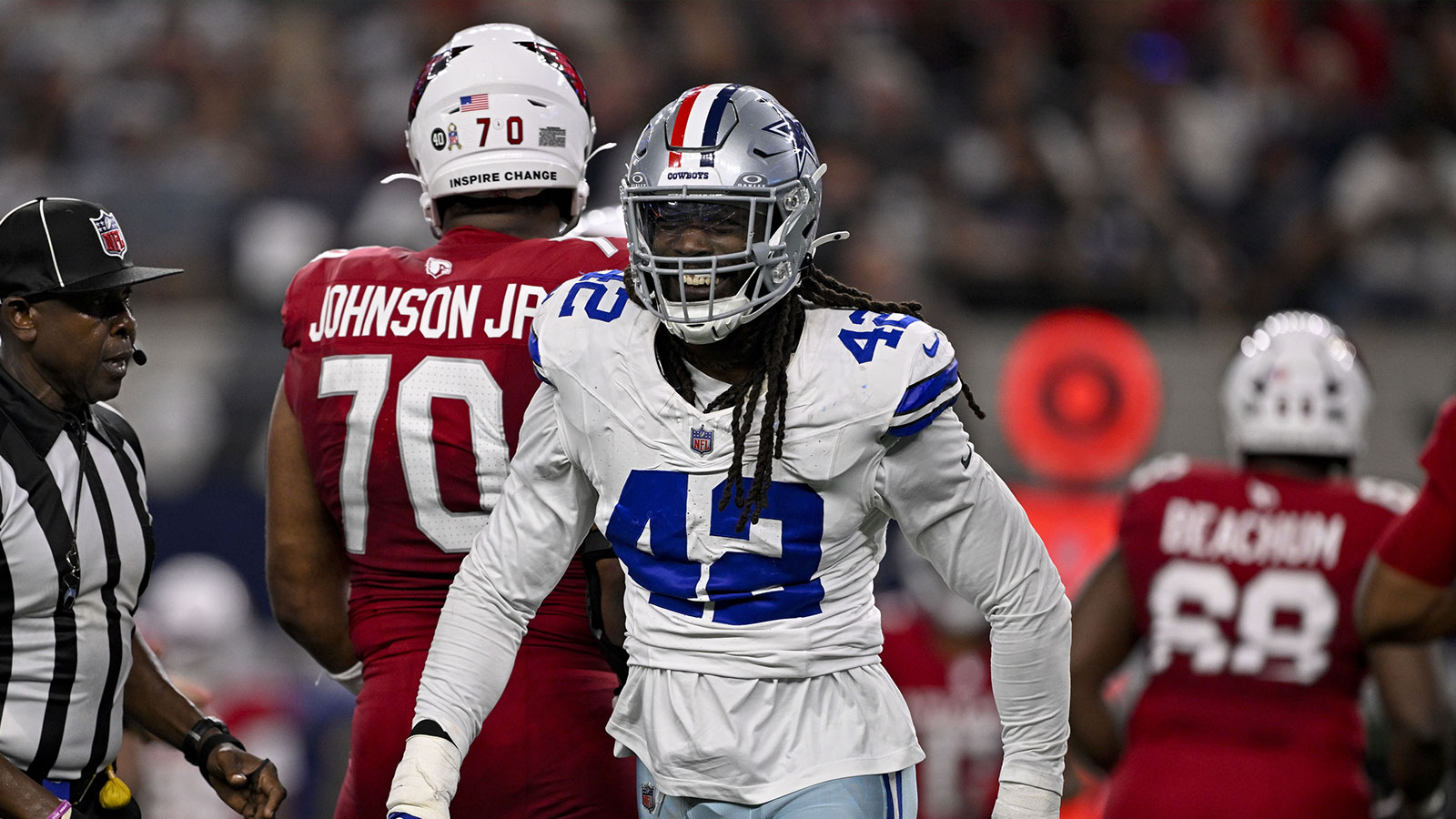
A perfect example of this is the Dallas Cowboys this year. Ahead of free agency the Cowboys reworked the contracts of Dak Prescott and CeeDee Lamb, the two most expensive players on their roster — which resulted in Prescott having $36.8M of his deal converted to a bonus, reducing his cap figure by $30.56M, with a similar tactic being used with Lamb to reduce his figure by $18.6M. Every team makes moves like this, with the downside being that eventually the bill comes due. If the financial can is continually kicked down the road then an organization winds up in a mammoth dead cap hole if players retire, or their performance drops off a cliff. It’s a gamble with the belief that the NFL salary cap will continue to rise, allowing to pay for these contract restuctures on the back end — though it doesn’t always pay off, as the New Orleans Saints proved last year.
The second roadblock to forming super teams has been impossible to overcome up to this point: The draft picks. With teams only having three years of future picks to trade, it means teams can only reasonably expect to acquire one star player at a time who is worth multiple first-round picks, with additional smaller moves needed to round out the roster — should they decide to go the trade route to try and secure a Super Bowl. It might seem hyperbolic to use the term “super team,” which is fair because of the mammoth roster size of NFL teams, but in this case we’re talking specifically about amassing numerous star players on one team via trade rather than building players through the draft.
It might seem like a fairly small move to push out draft picks trades from three to five years, but across the 32 teams NFL it would have a profound effect. Here’s why:
No. 1: The gap between the NFL’s haves, and have-nots would broaden exponentially
The NFL’s greatest trait is parity across the league. There’s a reason it’s so difficult to win multiple Super Bowls in a row, because forming an elite roster is difficult enough, but 31 other teams are all able to get better as well. The best organizations are able to build home-grown talent through the draft, and supplement that with strategic trades and free agency acquisitions to fill gaps.
When you broaden the trade landscape by two years you’re effectively increasing player movement by 66%. Every team in the league will immediately have a window opened which gives them 96 picks of high-value draft capitals (first, second and third round picks for all 32 teams), leading to an effective arms race.
If you’re a team that already believes you’re on the cusp of winning a Super Bowl, then why not spend that newly gained capital to find clear upgrades through the trade market? Similarly, if you’re a team that knows you can’t contend, now there’s a bigger market to shop the valuable players on the team. This leads into the second point …
No. 2: It would usher in an unprecedented era of tanking
Tanking is a massive issue in any sport with a draft, but the NFL has been somewhat insulated from tanking in part because there’s only so bad a team can get while still reaching the league’s salary floor in 17 games.
There’s clearly a reason the Browns were the ones who asked for this five-year provision: They want to tank. This was the organization rumored to be seeking three first-round picks in a trade for Myles Crosby, which no team would willingly do because it would use all their future top draft capital. It only stands to reason that one of the motivating factors for the Browns to want this change is to inflate the trade market to make trading three firsts a new-normal when it comes to star players, which ranks among their other brilliant ideas like signing Deshaun Watson to a fully guaranteed contract.
If all 32 teams have additional picks to trade there will be several desperate GMs to use all that capital to acquire talent, leading to an arms race — and as a result there will be a race to the bottom for tanking teams who play a new game of balancing being above the NFL’s salary floor, while also losing as many games as possible to make their own draft pick as high as possible.
No. 3: It’s terrible for fans
At some point there has to be an impetus for teams to try to get better and stop promising fans that things will get better in the future. This is a core issue several fanbases in the NBA and NHL have with teams languishing at the bottom of the standings year after year, occasionally hitting on a draft pick and then flipping them for more picks down the road.
The bill needs to come due. Fans spend too much money and invest too much energy in the NFL to suffer through abysmal teams for a sustained period. The only silver lining if you’re a fan of a team like the Browns is that you get to witness history on occasion, like Myles Garrett setting the sack record.
That record would have been hollow had Garrett been traded to the Cowboys or Eagles, or any number of competing teams that already sell out their stadiums. There has to consistently be pressure on teams to improve, and extending the draft pick trade window to five years only gives horrible owners and GMs more excuses to “expect success in the future,” citing the assets they’ve amassed.
Sending away valuable players in 2026 for a draft pick in 2031 is a lifetime away when it comes to football. This proposal could have far-reaching effects beyond those mentioned here, and it would make the NFL a worse place as a result. This measure really can’t pass, because it would damage football in a way we haven’t seen in years.
What's Your Reaction?
 Like
0
Like
0
 Dislike
0
Dislike
0
 Love
0
Love
0
 Funny
0
Funny
0
 Angry
0
Angry
0
 Sad
0
Sad
0
 Wow
0
Wow
0