

-(1).jpeg)
-(1).jpeg)


NFL Draft’s 10 biggest busts in history


It’s time to dive into a list nobody wants to see their team on. An NFL Draft bust can happen due to a variety of factors: Sometimes it’s completely botching the process and selecting a player with mammoth red flags, perhaps it’s due to drafting out of desperation which leads to a wasted pick, or on occasion you might take the right player, but select them at the wrong time for a franchise — causing them to bust for one team, then have success elsewhere due to a better fit.
For a draft bust to be truly legendary, there needs to be a mixture of high stakes and the lowest possible return. It also helps if by selecting the player your team missed out on a generational, transformative talent. There will be no shortage of these stories on the list either.
No. 10: Charles Rodgers, WR — No. 2 overall, Detroit Lions (2003)
Everything pointed to Charles Rodgers being an absolute stud in the NFL, and being College Football’s top receiver from Michigan State, going to the Lions — well, it felt like a dream. Instead everything turned into a nightmare, with Rodgers breaking his clavicle during his rookie year which began a downward spiral.
Allowed to leave the team to rehab from his injury, demons from Rodgers’ past swallowed him whole. Off-field concerns prior to the draft dominated the rest of his short-lived NFL career, as Rodgers was suspended three times for violating the NFL’s substance abuse policy in two years. He was cut in 2006 giving the Lions 440 total receiving yards.
The player taken one spot after him: Hall of Fame receiver Andre Johnson.
No. 9: Trey Lance, QB — No. 3 overall, San Francisco 49ers (2021)
To this day I refuse to believe the 49ers traded up with the intention of taking Trey Lance in the 2021 NFL Draft. I think something happened in that draft room where a contingent of people wanted Mac Jones, with another side saying that Jones was too low ceiling and they had to roll the dice on Lance.
Nothing about Trey Lance’s skillset upon entering the NFL said he was going to be a good Kyle Shanahan quarterback. A big-arm, small school improviser who needed a couple of seasons to learn the NFL game didn’t vibe with the “win now” mode the Niners were in when they looked for a QB upgrade. Of course they totally got bailed out by finding Brock Purdy, but that doesn’t change what a monumental bust taking Trey Lance was.
San Francisco gave up No. 12, a 1st in 2o22, a 3rd in 2022, and a 1st in 2023 to move up and get Lance, who was later sent away for a 4th round pick two years later.
No. 8: Ki-Jana Carter, RB — No.1 overall, Cincinnati Bengals (1995)
It’s not often you have a draft pick who was so bad that they threw shade on an entire football program, but Ki-Jana Carter is a huge part of the Penn State NFL Draft stigma that lasted the better part of two decades. An absolute phenom for the Nittany Lions, Carter turned into a pumpkin the second he arrived in the NFL — going from amassing over 1,500 yards and 23 touchdowns on 7.8 yards-per-carry, to getting hurt, then taking four years to reach 700 rushing yards.
Four Hall of Fame players were taken after Carter in the first round of 1995 (Tony Boselli, Warren Sapp, Ty Law, and Derrick Brooks). The team also passed on Steve McNair and Joey Galloway. It was a legendarily bad pick that kept Penn State away from the top pick for YEARS and turned the school into a meme.
No. 7: Rich Campbell, QB — No. 6 overall, Green Bay Packers (1981)
It was a different world when it came to picking quarterbacks back in 1981. In short: Nobody had any idea what the hell they were doing. The Packers took Campbell with the No. 6 overall pick, and the coaching staff hated him. Despite being a successful QB at Cal, it became immediately clear that Campbell didn’t have the arm strength to be an NFL quarterback and was extremely limited in the pocket.
Campbell did not start a SINGLE GAME for the Packers. In four years he only appeared seven times, and logged 386 yards passing, 3 TDs and 9 INTs on his resume.
No. 6: Ryan Leaf, QB — No. 2 overall, San Diego Chargers (1998)
A lot of great bust lists will have Ryan Leaf near the top, but I’m here to explain why he’s simply not the absolute WORST. Leaf is given hell because of what he’s not: Namely Peyton Manning, who was taken one pick earlier. While there’s no doubt Leaf was a bust, he’s still not close to the worst QB on this list — as we’ll get to in a little bit.
Leaf was abysmal in his rookie season, then got hurt, and we never saw what he could have done in the league. The size, timing, and arm were there — he just went to the wrong place, at the wrong time, and being compared to Peyton Manning made for impossible levels of pressure.
No. 5: Tony Mandarich, OT — No. 2 overall, Green Bay Packers (1989)
What happens when your entire college resume is fake? This list is littered with missed evaluations, but the Packers truly had no way of knowing that Tony Mandarich was one of the biggest fakes in draft history.
Mandarich made a career for himself at Michigan State by completely obliterating everyone in his path. It looked like a God playing against mortals, and that was because Mandarich was on an immense amount of steroids for his entire college career. He had to quit his cheating regimen upon entering the NFL due to fears of getting caught, and it became immediately apparent that Mandarich had almost no skills to play professional football.
What makes this pick hurt so, so much more is that immediately after Mandarich we had three of the greatest NFL players of all time picked immediately after him: Barry Sanders, Derrick Thomas, and Deion Sanders.
No. 4: Akili Smith, QB — No. 3 overall, Cincinnati Bengals (1999)
This is what happens when desperation for a position takes over the draft process entirely. Akili Smith had really good final season at Oregon, but he was still the third-best QB prospect in 1999 behind Tim Couch (lol) and Donovan McNabb. Smith was ass from the second he stepped on the field. There were physical traits, but he had no work ethic, and was entirely engineered to be a high draft pick, not a successful NFL player.
Akili Smith was difficult to coach, couldn’t read the field, made bad decisions, and had horrible accuracy. There was essentially nothing he did well, and it hurts so, so much more with the information that Mike Ditka and the New Orleans Saints offered the Bengals NINE DRAFT PICKS to move up from No. 12 to No. 3 so they could get Ricky Williams.
The Bengals were so sold on Smith that they gave up two years of compensation for him, and he provided them with nothing.
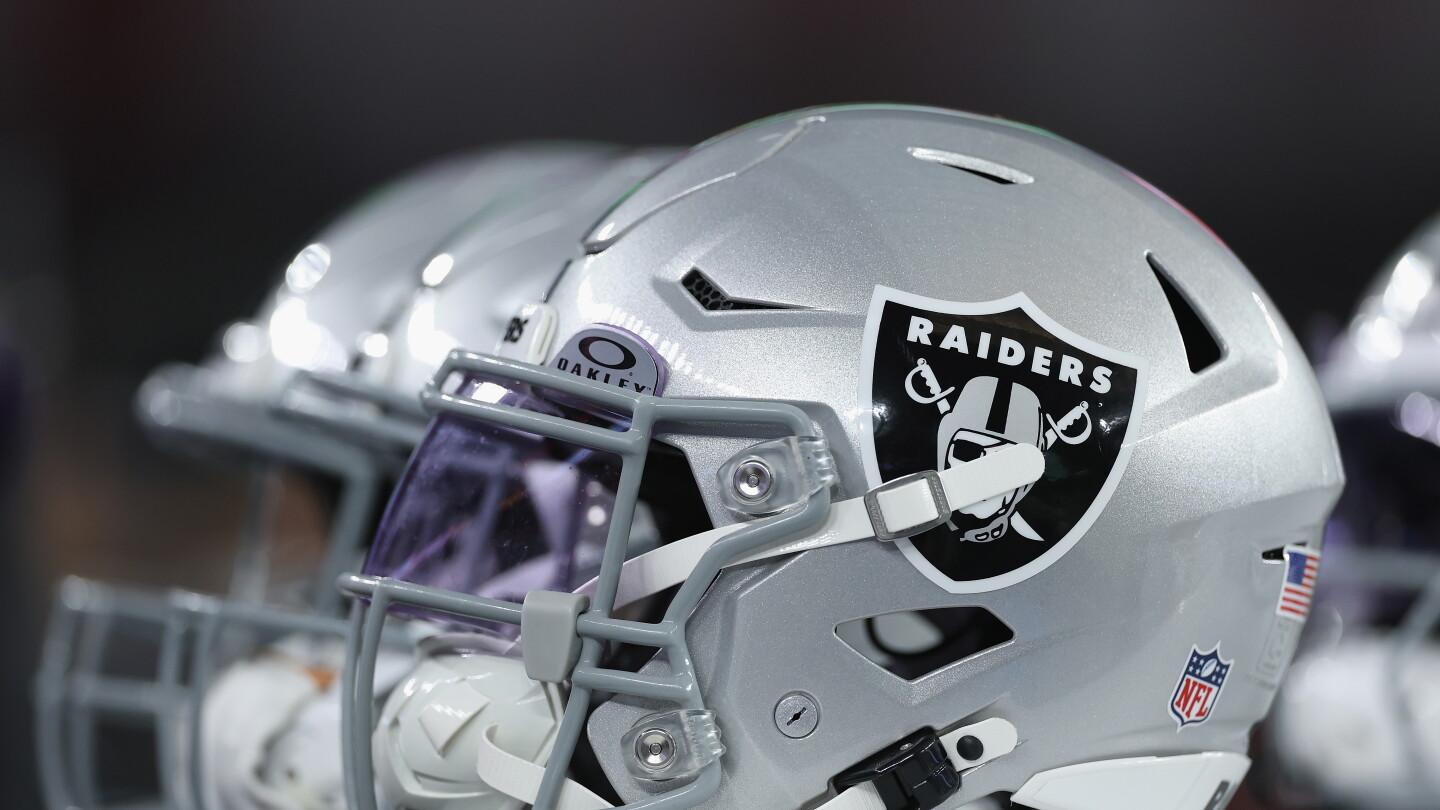
No. 3: Robert Gallery, OT — No. 2 overall, Oakland Raiders (2004)
Robert Gallery is fairly unique on this list that everyone thought this was a home run pick. Gallery was a completely dominant 6-7, 325 tackle with ideal size, great technique, and a pedigree at Iowa that seemed to indicate that he could compete against top talent.
When he hit the league, everything just went up in smoke. Gallery struggled against speed rushers, which were in favor league-wide, and couldn’t handle any NFL pass rush moves off the edge. He had limited success after being moved inside to guard, but that never made up for the bust he was.
There’s an alternate multiverse where the Raiders take Philip Rivers at No. 2 and avoid making the biggest bust in NFL history, who we’ll talk about in a moment.
No. 2: Art Schlichter, QB — No. 4 overall, Baltimore Colts (1982)
Here’s someone you rarely ever see mentioned in bust lists, but hoo boy does Art Schlichter belong.
We’ve established that QB evaluation in the early 1980s was already bad, but Schlichter was on a whole other level. He was overblown because of an Ohio State offense engineered specifically to his skills and was utterly unable to pivot to learning a new offense. When he arrived at Colts camp Schlichter was out of shape, he had a bad work ethic, and despite being the No. 4 overall pick he lost the starting job to Colts 4th round pick at QB Mike Pagel.
Schlichter blew his entire rookie salary on gambling, falling deep into addiction, betting on basketball. He was out of the league in four years with 3 TDs and 11 INTs — with just over 1,000 yards passing and 45% completion.
No. 1: Jamarcus Russell, QB — No. 1 overall, Oakland Raiders (2007)
Then there was one. Statistically there have been much worse quarterbacks, but by 2007 teams should have had a better idea how to evaluate quarterbacks. Russell had red flags all over him, yet Oakland felt the need to take him because of his physical skillset and desperation at quarterback.
Russell was a bad worker, he didn’t study enough and was a liability every time he was on the field. This was made so much worse by the fact that Calvin Johnson and Joe Thomas were taken right after Russell.
There are so many pivot points that can change a team’s future, but if we just look at the picks the Raiders ended up making they could have had Philip Rivers in 2004, and Joe Thomas in 2007. Instead they got Gallery and Russell.
What's Your Reaction?
 Like
0
Like
0
 Dislike
0
Dislike
0
 Love
0
Love
0
 Funny
0
Funny
0
 Angry
0
Angry
0
 Sad
0
Sad
0
 Wow
0
Wow
0