


-(1).jpeg)
-(2).jpeg)


Exclusive: Broncos head physician reveals reason behind disturbing youth sports injuries
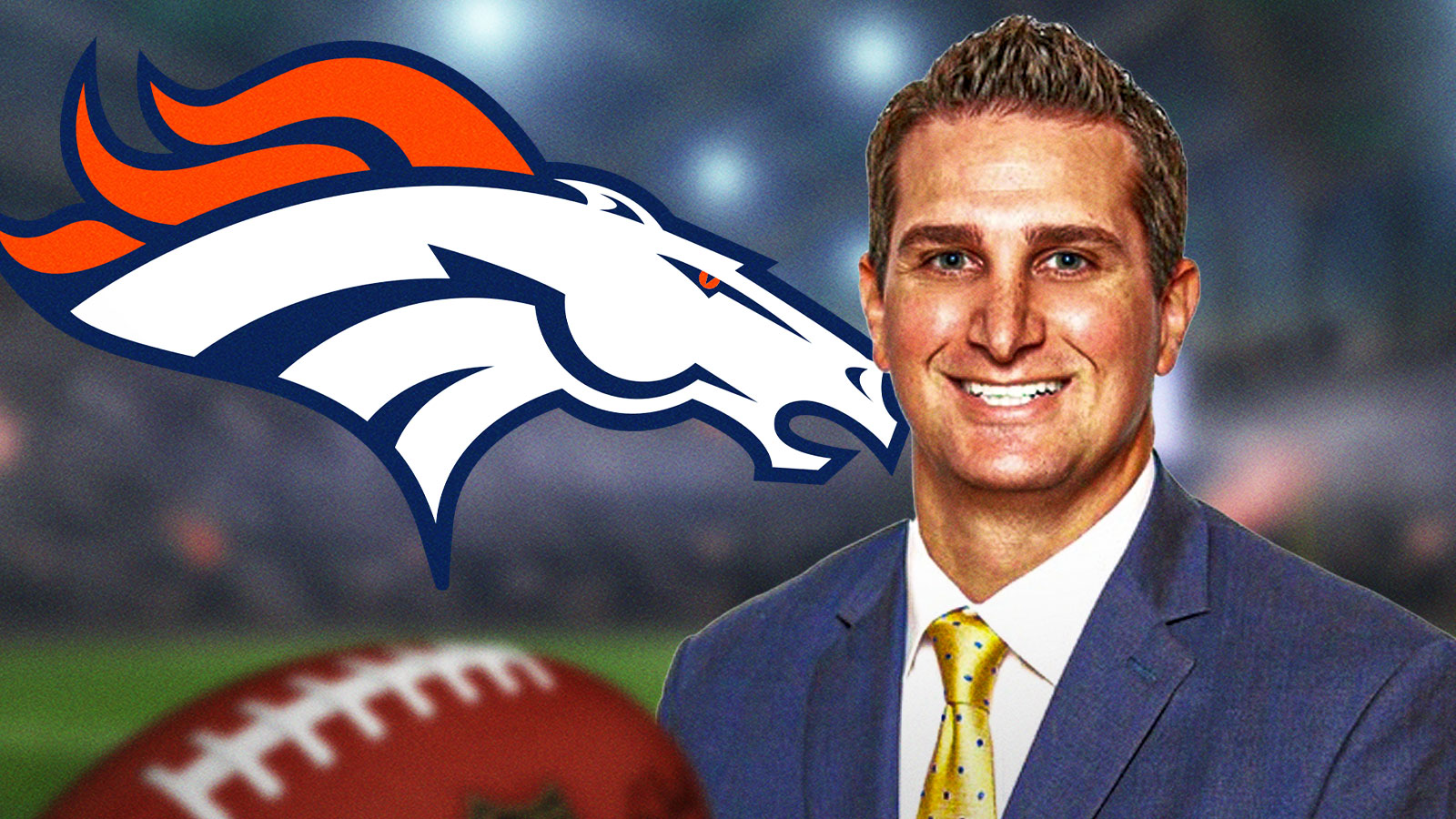
It’s one thing for professional athletes to sustain major injuries like torn elbow and knee ligaments, but Denver Broncos Medical Director and Head Team Physician Dr. Karim Meijer is sick of it happening to kids. The business of youth sports has grown, which has caused more ailments.
Children in the United States are playing sports at the highest rate since 2015, per the Aspen Institute. Additionally, more than 27 million youth ages six to 17 either played organized sports or took lessons in a sport outside of school in 2023.
There’s nothing wrong with more kids playing sports, but it’s a different story when they play the same one year-round. Athletes in the aforementioned age range are regularly playing 1.63 sports on average, down from two-plus a decade ago, per the Sports and Fitness Industry Association. Meanwhile, 1.5 million children went to the emergency room for sports-related injuries in 2024, per the National Safety Council.
Playing the same sport full-time for years causes stress on certain body parts. NBA Commissioner Adam Silver mentioned at the 2025 NBA Draft that a panel of experts concluded that single-sport specialization among athletes aged 10-19 is one of the biggest reasons for the recent rise in Achilles injuries among players in the league, per ESPN. Minnesota Timberwolves guard Donte DiVincenzo, Indiana Pacers guard Tyrese Haliburton and Boston Celtics forward Jayson Tatum have all had season-ending Achilles injuries since last year alone.
Meijer wants kids to play multiple sports so that they don’t overuse the same body parts, a sentiment shared by US Sports Camps Vice President Seth Roberts during an exclusive interview with ClutchPoints in March. However, Meijer explained that parents are pushing their kids to specialize in one sport in pursuit of college scholarships and NIL deals, a practice enabled by for-profit youth sports businesses. That market is now worth over $40 billion, per the New York Times.
The orthopedic surgeon and sports medicine specialist went into detail on the topic in an interview with ClutchPoints on Friday.
Dr. Karim Meijer Q&A
Joshua Valdez: When did you start seeing this uptick among ACL and Tommy John [UCL]-type injuries among kids?
Dr. Meijer: I think it’s just been a slow rise. It’s almost like that old science experiment where you put the frog in the hot water, and you turn the water up one degree, and it just boils and boils. And then at some point, the frog has no idea and it dies. Every year, it’s just kind of gone up. I think it’s just the prevalence of youth sports. It’s ubiquitous nationwide, 24/7, 365. There are no seasons. When I grew up, seven-on-seven football was just coming around in the summers. But you went from football season to basketball to baseball or to track. It cycled; you didn’t do basketball year-round. You didn’t do soccer year-round. You didn’t do baseball year-round. Now there’s the opportunity for kids to play one sport year-round. It just doesn’t end.
It’s so available because if you’re the business person running these organizations, your business can’t be seasonal. Their business model doesn’t really match up with what’s healthy or right or the best for the kid. Some of our pro athletes, like in basketball, we don’t demand some of the things that they’re doing. But you got kids playing six games in a weekend in a basketball tournament…It’s not like you would have your NBA player playing six games in a weekend.
Joshua Valdez: So you feel like the uptick in injuries coincides with the evolution of the youth sports business model?
Dr. Meijer: Yeah. The youth sports industrial complex, whatever you want to call it. But it’s a mega business. All you need to do is get more kids…They have more opportunities to play, and you’re just going to have a higher chance of injuries. That’s basically what happens, because it’s not like kids have to try out to make a team. You want to play, you’re going to play. They’re not getting cut, because these businesses need your money. There’s a team for everybody. There’s a sport for everybody. You can play year-round, and then there’s NIL and professionalisation now, and college scholarship drive and all this stuff. That’s the holy grail for parents, which is weird because think about how much money and time that they spend doing this. You can just fund a 529 and every one of your kids has a college scholarship…It is a crazy business.
And then look, I have to deal with it. I have three kids. I have a son going into high school. I have twins who are going into seventh grade. They all play sports. So I have an older son who plays football and baseball. I have a twin son who plays football, basketball and baseball. His twin sister is all about volleyball. So like, even in my own household with my wife, who’s not in medicine. It’s almost like we have our own little experiment in the house because I’m the proponent of multi-sport, don’t do the same sport year-round. Try different things. Let your body adapt to different movements and patterns and not repetitive things. And yet my daughter just wants to play volleyball, and my wife is like, “Well, we’re just going to specialize her in that.” And it’s hard to have this conversation with your wife when you’re like, “That’s not the best thing. We should have our daughter do different things.” But that’s how it’s playing out in my own household.
I have a twin boy and a twin girl. They’re twins on parallel paths, one multi-sport, one single-sport. Who knows what’s going to happen?
Joshua Valdez: It also helps with your work, right? You’re testing the theory with your own family.
Dr. Meijer: Yeah. My wife is kind of like the average parent out there. She’s the one who’s taking my daughter there and then listening to the team. And then we have this volleyball tryout, and then this performance thing, and then we go to this league and they just finished their volleyball season, and now she’s going to beach volleyball. There’s always something that they’re stacking. And it almost sucks the families in; they feel like they have to keep up with that one sport.
With my other son, I’m like, “We’re going to skip football practice because we’re in baseball season.” And he loves basketball. If I did not make him play multiple sports, he would play basketball year-round. That’s his best and favorite sport, but he’s pretty darn good at baseball and football. So I’m like, “You’ve got to just stay involved in different sports so you don’t burn yourself out.”
Think about basketball. More explosive, more jumpy, a lot more patellar tendon [usage]. Achilles tendon, a lot more of that. [There could be] growth plate issues at that age. But if I put him in baseball, you’re not sprinting, running, jumping. Now you’re throwing more. Now we’re doing more batting. It’s totally different physical maneuvers. And then if I get him to football, he plays wide receiver and safety. As a wide receiver, you’re running but it’s different coordination. You’re catching balls as a safety. You’re reading and reacting. You’re doing different movement patterns than baseball or basketball requires.
Also, from the mental side, you want him to stay fresh so that he’s still passionate when basketball comes around. If you play basketball year-round, you may get tired of it. If you love a certain dessert and you make that dessert every night, you might lose excitement.
Joshua Valdez: Do you recommend any specific multi-sport journeys? Or is it just about playing more than one sport?
Dr. Meijer: No [regarding a specific multi-sport journey]. For example, let’s talk about it the other way. Let’s say you’re a kid who plays one sport. If you just tell me the sport you play and you’re going to play that year-round, I can literally put a list together of all the injuries you’re going to be most susceptible to based on your sport.
I got two fourteen-year-olds I saw last week in the clinic who played year-round volleyball. They have terrible shoulder dysfunction because all they do is hit [the ball with their hands]. So when all you do is hit, they have a protracted shoulder that drops down, and discomfort like crazy in the shoulder. They can’t play in their weekend tournaments. Their shoulder blades are all out of whack. If you have them stand up and let’s say they have a sports bra or something on, and you watch their movements and you turn them around and watch their shoulder blade, they have what’s called scapular dyskinesia. That means abnormal movement of the scapula, because all they’re doing is this repetitive action all day, every day. That can lead to rotator cuff issues, labral issues, and other problems that they’re going to have when they get that amount of shoulder dysfunction.
The baseball kid throws year-round. It’s another overhead sport. But shoulder and Tommy John issues involve the growth plate…I just watched a kid who played year-round baseball. He is in my clinic now because in the Saturday tournament, he tried to throw one from third base, but he basically popped his growth plate off. So this kid’s season is done. You have to put a screw in it, which means the growth plate is going to shut down. So you’re going to close that. If this kid still has growth remaining, which he does, [that area] won’t grow anymore. He’ll have growth in other parts of the elbow.
Now fast-forward. This kid thinks he’s the next superstar at seventeen or eighteen years old. What if he now tears the ligament? Or what if a team is looking at him and they’re like, “Man, he already has elbow problems, but there are 499 other youth athletes or high school athletes that are better with no elbow problems.”
Colleges have tried to get a hold of me to ask about the medical status of a high school recruit. I had a girl signing a college scholarship who tore her ACL in volleyball, her right knee. The team was trying to get information on the right knee. And I’m telling the family, “They don’t need that. Because of HIPAA, I don’t need to tell the school anything about your medical information. If they gave you a scholarship, they should own up to it. They gave it to you.” They tried to put in a contingency that if she tore her other ACL, they wouldn’t honor her scholarship.
Joshua Valdez: Have you and other NFL team doctors taken steps to help solve these youth sports issues?
Dr. Meijer: Yeah. I agree with Dr. James Andrew. He’s the one who trained me…He started the STOP program, about stopping trauma in youth sports. People have touted that…But the problem is the money, and this industrial complex of youth sports is here. We’re just this tiny voice; they don’t listen to us.
Look, I’m in a microcosm…I’m sitting in my own house with my own daughter and wife…I’m like, “She probably shouldn’t have played this much volleyball because when you’re eight, nine, 10, 11, 12 years old, you kind of get away with some things.” You do start seeing some injuries at that age…You know, I’ve had sixth- and seventh-graders tearing their ACLs. But once they get to 13, 14, 15, they start getting bigger, stronger, faster. They don’t get away with the things little kids get away with. They just don’t, and you start seeing those problems.
I’ll give you another example. Yesterday in the clinic, I had a guy, a 6-foot-7 [former year-round] basketball player locally in town. When he was 15, he took a direct blow to the front of his knee. It shut his growth plate down, so the front of his knee stopped growing. The back of the knee was growing on one leg. So now the kid has about a two-centimeter leg length discrepancy…He tolerated it through high school…More problems in college, and now his knee has deteriorated. He’s had two cartilage surgeries…He’s 24 and out of college. He can’t even sit at his desk job as a financial advisor. And he’s in my clinic now to try and deconstruct all the problems.
So my hip partner, myself, and my foot and ankle partner are planning a multi-stage surgery to regrow his leg. It’s called bone transport. We’re going to try and get him his two centimetres back that he lost. His kneecap is in a horrible position now because the growth plate shut down. So now I have to shift his entire kneecap up almost a centimeter-and-a-half to put it in the normal position. And because of that, he developed some hip arthritis because his entire left lower leg and gait are totally out of whack. So now you’ve got a 24-year-old kid who started as a 10-year-old boy thinking that basketball was life. Playing year-round, the opportunity for injury is just higher. So that’s what parents don’t see.
I see the whole spectrum of people at different time points throughout their entire sports journey. I see the aspiring 10-year-old, the 14-year-old prodigy, the 17-year-old whose parents pushed them like crazy. I see the 20-something-year-old college athlete. I see the NFL player. I see the retired NFL player. I take care of the NFL post-retirement program. I see the entire spectrum from start to finish of all types of athletes.
Joshua Valdez: Based on your experience, do NFL players have better injury luck when they grew up playing multiple sports?
Dr. Meijer: Working in the NFL with those athletes, if you talk to them, most of them were multi-sport athletes. I will tell you that the majority were so good athletically. You use the word multi-sport. And when I’m saying multi-sport, I’m really talking about multifunctional movement patterns being athletic in different ways. You know, it’s not burning out your body one way.
So with basketball for example, I’ll talk about Achilles tendon ruptures. Now, why do you see the rise in that? Think about what the farmers did back in the day when they grew crops. You never grew the crops on the same field, on the same soil year-round. You alternated seasons, right? You let that dirt get nutrients again and revitalize, and you move the crop to another field and you circle it back around maybe two seasons later. Conceptually, it’s kind of the same thing with the body.
Achilles ruptures are not just going up in the NBA. They’re going up in the general population. So where does that start? So take your kid who’s 14-15 years old on the AAU [American Athletic Union] circuit. AAU and all that stuff blew up in the 2000s and 2010s. The generation of people you’re seeing in the NBA now are those AAU babies. So in the 198os and ’90s when I grew up, that wasn’t a thing. So now you take these 10, 12, 13, 14-year-olds. They’re on the AAU circuit and they’re getting Sever’s disease, which is the growth plate burst on the Achilles. Then they get some little injuries to their Achilles and micro-tears. When you tear an Achilles and have micro soreness, discomfort, or tendonitis, you’re getting little tears in the collagen of your Achilles tendon. When that tears, it never regrows. Normal Type One collagen that your Achilles tendon starts with. It becomes a Type Three collagen. It’s a disorganized collagen matrix. That’s not normal collagen.
So now you do this over and over for years, and then you get to the NBA. Now the NBA game has changed. Back in the day, if you scored 100 points in the game, that was kind of crazy…The game has changed now, it’s more spacing, explosiveness and higher scoring. You’ve got bigger, stronger, faster guys. The kids from the AAU circuit have wear and tear on their Achilles tendon already before they get to the NBA. So the mileage is there…Now you’ve got year-round basketball, international play, 82-game schedule. You’ve got the fatigue on these guys. They get home at two or three in the morning, they go to bed, and they’re waking up late.
Then there’s this load management paradox. It’s a problem because tendons need a constant, appropriately applied force to stay healthy. They don’t need start, stop, start, stop. If you drive a car and you punch it to go 100 miles an hour and let go and punch it and go 100 again, it’s a bad idea. If you’re going 60 and then you hit it, that’s okay. The body can deal with that. There’s a question on what the appropriate load management is. Do you shut the guys down? Is that truly what they need, or do they need an appropriate load? And then the question what does that look like? Is it best to have minute restrictions during the game or more load management days? They’re actually having some applied tendon force. They’re just not sprinting or running in basketball. But there’s an applied force to the tendon.
Then you add the risk factors to it. Let’s say you get a calf strain. You don’t heal that with normal muscle or tendon; you get fibrosis. It gets stiffer. So if that gets stiffer, the kinetic chain in the back of your leg gets tighter. Your Achilles will not tolerate that. Then there are knee injuries. Let’s say you had someone like me do a meniscal surgery on you when you were 16, and you lost a little bit of knee motion or developed a little bit of arthritis. So if your knee can’t fully extend, you can’t fully stretch your posterior chain. You’ll never fully stretch your calf. When you make that explosive dorsiflexed movement to take someone off a dribble, your Achilles is going to pop because you don’t have the normal elasticity from the back of the knee all the way to the heel. You’re going to be high-risk.
If you sprained your ankle over and over again, you may have created some ankle spurs. We see it all the time in guys…The ankle can’t move back to normal because you jammed the front of the ankle again. You can’t move it back…So it’s a multi-factorial problem. That to me is not surprising,
The post Exclusive: Broncos head physician reveals reason behind disturbing youth sports injuries appeared first on ClutchPoints.
What's Your Reaction?
 Like
0
Like
0
 Dislike
0
Dislike
0
 Love
0
Love
0
 Funny
0
Funny
0
 Angry
0
Angry
0
 Sad
0
Sad
0
 Wow
0
Wow
0