






Dylan Harper is easy fix to Victor Wembanyama, Spurs’ NBA Finals Game 1 disastrous finish
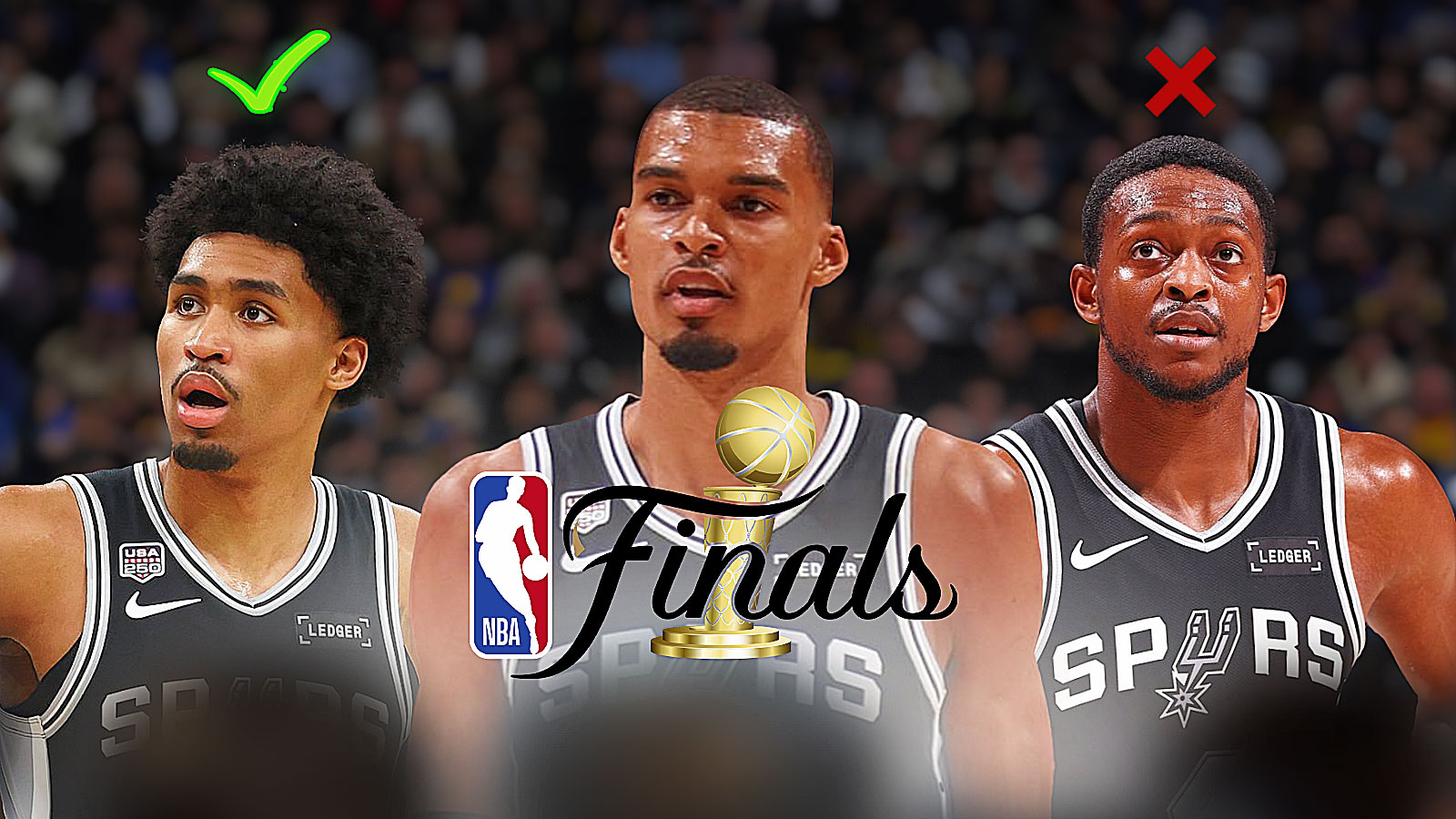
Even though the New York Knicks came away with a statement win on the road in Game 1 of the 2026 NBA Finals, coming back from a 14-point deficit in the third quarter, the San Antonio Spurs handed the game over on a silver platter.
When you look at this game through and through, rewatching what went wrong with the Spurs in the second half, the clearest answer is that overall experience on New York’s side outweighed the new pressure the young team in San Antonio is experiencing for the first time.
Victor Wembanyama struggled all night to assert himself offensively, despite finishing with 26 points, and the Knicks, specifically Karl-Anthony Towns, deserve a lot of credit for their intensity and attention to detail against the Spurs star.
However, down the stretch run of the game in the fourth quarter, head coach Mitch Johnson and the Spurs hurt themselves and sealed their fate due to rotations.
Rookie guard Dylan Harper was fantastic in the first quarter, coming off the bench and supplying the Spurs with endless energy on both ends of the court en route to scoring 10 points. At halftime, he had 12 points, six rebounds, and one assist in roughly 15 minutes off the bench, making a clear difference in the Spurs’ 56-48 lead at the break.
He became the youngest player in Finals history to score at least 10 points in a game, and his 10 points in the first quarter were the most by a rookie in the first quarter of an NBA Finals game in the play-by-play era (since the 1998 Finals). Harper was rolling, and he figured to hold a much larger role in the second half.
In the third quarter, Harper played his usual minutes coming off the bench for De’Aaron Fox, who has been dealing with a right high ankle sprain, and he continued attacking gaps in the Knicks’ defense off the dribble. He ended a key 7-0 run by the Knicks with about four minutes to go in the quarter with a sweet-looking drive down the baseline and reverse finish at the rim.
At 16 points, Harper was having himself a game and looking like he would hold a key role heading into the final quarter. Well, that did not happen for some odd reason, as Harper only saw three minutes of action in the final quarter, recording a turnover and a rebound.
Johnson subbed Devin Vassell in for Harper at the 4:04 mark, which makes sense since Vassell’s defense was needed on the wing, but Fox remained in the game despite not giving the Spurs anything all game.
Fox finished Game 1 of the NBA Finals with seven points in 38 minutes, shooting 3-of-13 from the floor and 0-of-4 from 3-point range, and not once was he able to attack off the dribble because of his ankle injury clearly still hurting him.
Between Fox’s ineffectiveness and the Spurs’ reliance on Wembanyama to do everything, the Knicks chiseled away at San Antonio’s lead before taking control of the game and not looking back. The Knicks stole Game 1 of this NBA Finals series on the road, and a lot went wrong for the Spurs.
And while you can point a lot of fingers at a few different things, Harper’s clear success against the Knicks through the first 36 minutes of this game was ignored in the fourth quarter. As a result, this put too much pressure on Wembanyama to make all the plays in a game he struggled in from the very start.
Victor Wembanyama “hero ball” won’t work
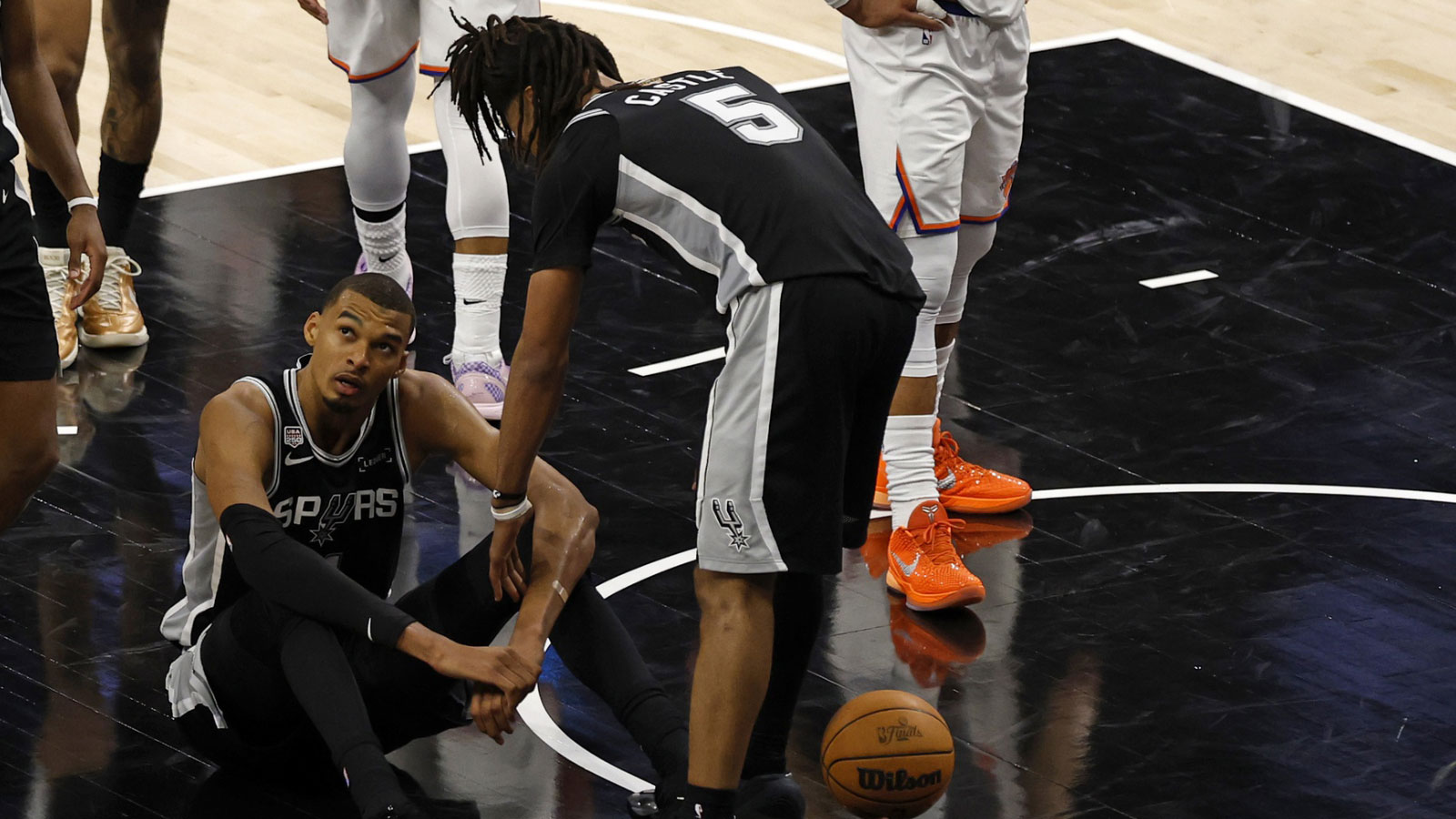
Karl-Anthony Towns, who is oftentimes picked on defensively due to getting in foul trouble against more aggressive big men, deserves his flowers for what he did against Victor Wembanyama in Game 1 of the 2026 NBA Finals.
All night long, Towns forced Wembanyama into tough shots all over the court, and in the fourth quarter, he prevented the Spurs’ star from getting downhill and to his spots in the mid-range area.
Tough jumpers were the tale of the fourth quarter for the Spurs’ offense, and Towns had his fingerprints all over this.
But it’s not like the Spurs helped themselves in any way. Specifically, the Spurs did nothing but rely on Wembanyama for the final stretch of this game when things weren’t going their way.
The idea of “hero ball” barely ever works, especially in the NBA Finals.
Certain players, like Wembanyama, have the ability to take over games late and deliver for their team. Ask the Knicks and Jalen Brunson how this worked for them in Game 1. But the fact of the matter is that Brunson wasn’t playing hero ball and doing everything for the Knicks.
Although Brunson went on multiple scoring runs by himself to put the Knicks out in front, as well as hitting clutch shots in the final minutes to extend his team’s lead, his success was a joint effort in the two-man game. Whether it was Mitchell Robinson or someone else, the Knicks consistently put Brunson in advantageous matchups with their screeners, which essentially took Wembanyama out of the picture defensively.
There was one play in particular that stood out with 6:10 left in the game, where Robinson set the screen, immediately sealed off Wembanyama, and he essentially cut off the Spurs’ big man from being able to even contest the easy layup opportunity.
13 in the 4th quarter.
30 for the game.JALEN BRUNSON STEERS NEW YORK TO VICTORY IN GAME 1
pic.twitter.com/rvHkihKBAC
— NBA (@NBA) June 4, 2026
Brunson, who overall didn’t have a good game, was fantastic when he slowed things down and simply played his game in the final 12 minutes. The same cannot be said for Wembanyama, who was rushed and was attempting to do everything for the Spurs down the stretch.
Through the first three quarters of the game, San Antonio looked great in terms of changing tempos, moving the ball around, and not having to rely on Wembanyama, who did not shoot the ball well, as their only scorer.
So, why did this change in the fourth quarter?
After Devin Vassell’s tip layup with 7:38 to go in the game, with the game tied at 86, the Spurs scored just nine points the rest of the game, shooting just 2-of-11. Wembanyama made both of these shots, and he scored eight of the team’s nine total points over the last seven minutes and 30 seconds of the game.
In this span, the Spurs did not move the ball well, and they had five turnovers. Wembanyama found himself as the team’s only playmaker and essentially acted as the lead guard for the Spurs’ offense at the top of the arc. This team was too predictable, and all the pressure put on Wemby’s shoulders was too much.
The idea that Wembanyama would carry the team down the stretch after struggling all game long was doomed to fail from the very start, especially with Johnson deciding to bench Harper in the fourth.
Winning in the NBA Finals is all about playing in the moment and going with what is working. Fox is a great player, as is Stephon Castle, but neither was impactful throughout the fourth quarter of Game 1. Benching Harper, who was putting pressure on the Knicks’ defense as arguably the Spurs’ best offensive weapon all night, played a major role in San Antonio’s demise.
Wembanyama is at his best offensively when the Spurs’ guards are attacking, and he’s able to take advantage of pin-down opportunities. He is not an isolation player who will simply take over games in one-on-one opportunities, yet that is what the Spurs wanted him to be. The main reason why Towns was doing a great job defensively is that Wemby tired himself out, and the Knicks’ big man kept him on the perimeter.
Having Harper on the court would’ve solved a lot of these problems for Wembanyama and the Spurs simply because he wouldn’t have always needed to have the ball in his hands. With Harper being able to attack and create offense for the Spurs, Wemby could’ve taken advantage of Towns in the low post or even at the elbow, where he is known for doing most of his damage.
It just made no sense for Harper to be on the bench in this situation, especially with Fox making no impact.
De’Aaron Fox’s injury was apparent in Game 1
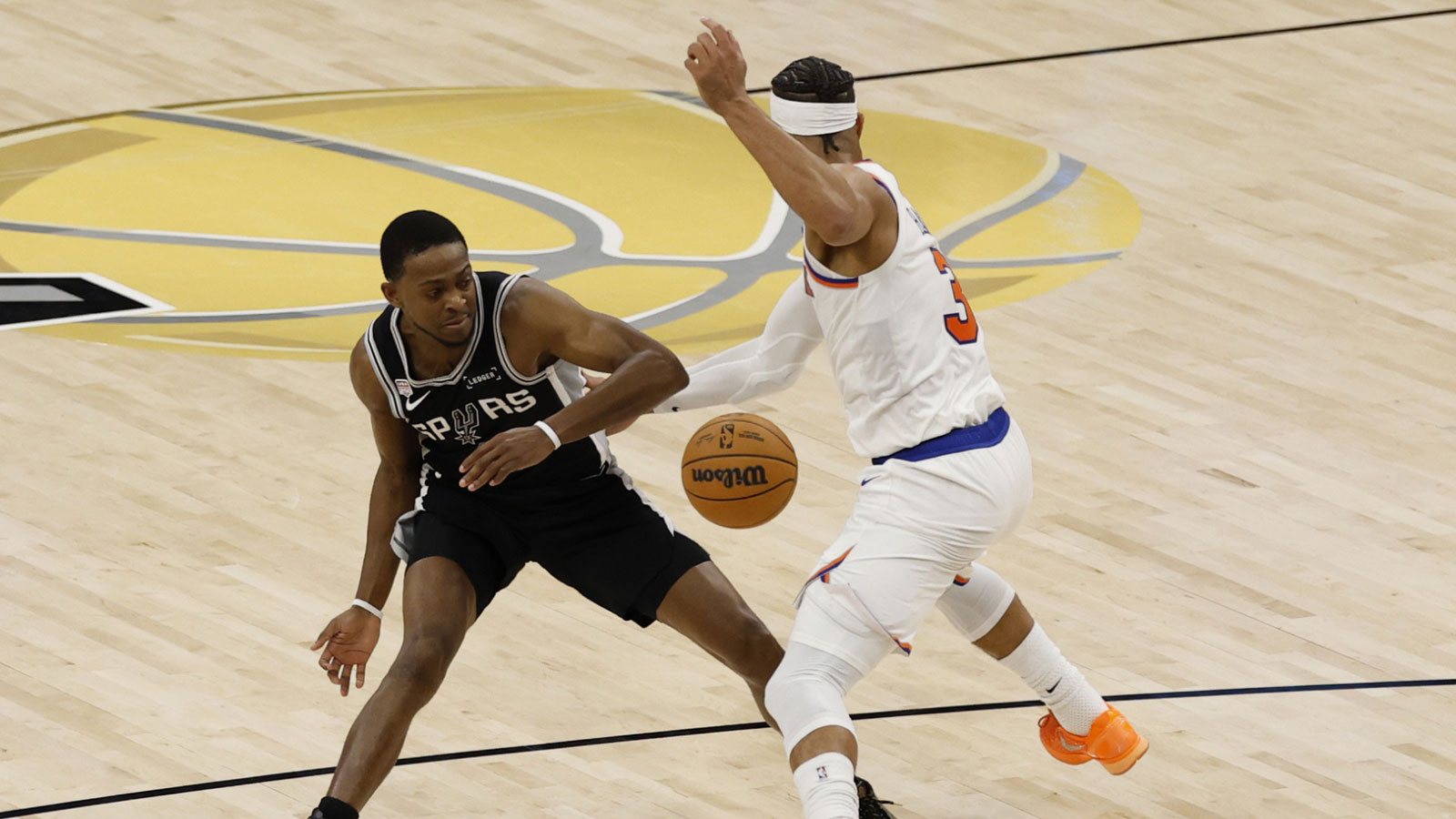
Fox played 11 of the 12 fourth-quarter minutes for the Spurs. After entering the fourth quarter with seven points, Fox finished the game with seven points, shooting 0-of-2 from the floor in the final 12 minutes of play.
The 28-year-old also had two very costly turnovers and picked up three fouls in the final quarter.
Essentially, Fox did nothing of value to close out the game, and yet Johnson still stuck with him instead of going back to Harper. Changing up rotations and lineups is tough for head coaches to do, especially on the biggest stage in the NBA Finals. But Johnson let his inexperience in these big moments show by sticking with Fox over Harper to end the game.
Looking at the second half as a whole, Fox had just three points in about 20 minutes. At no point was he making a difference on offense or defense, yet he remained on the court taking up space when Harper could’ve been out there getting the ball out of Wembanyama’s hands so he didn’t need to do everything.
Aside from his clear shotmaking abilities, Harper would’ve made a difference as a rebounder on both sides of the ball. The bottom line is that Harper should’ve been in the game, and heading into Game 2, Johnson and his staff will very likely take this into account.
As good as Fox can be at helping run the Spurs’ offense, it was clear that his ankle was not right and he preferred to play passive against the Knicks.
Expect to see Fox’s role change in Game 2 of this NBA Finals series, especially if his shooting struggles persist and Harper again asserts himself against a Knicks defense he was able to find the holes in as a primary ball handler.
No matter what, Johnson and the Spurs will need to roll with what is working in the games rather than what their original game plan is or what worked during the regular season. This series is all about winning four games for a title and playing those who are putting your team in the best position to do so.
Harper played that role in Game 1, and the Spurs failed to recognize this in the fourth quarter, leading to them falling into an early 0-1 series deficit.
The post Dylan Harper is easy fix to Victor Wembanyama, Spurs’ NBA Finals Game 1 disastrous finish appeared first on ClutchPoints.
What's Your Reaction?
 Like
0
Like
0
 Dislike
0
Dislike
0
 Love
0
Love
0
 Funny
0
Funny
0
 Angry
0
Angry
0
 Sad
0
Sad
0
 Wow
0
Wow
0