









Can Colston Loveland be TE1 in fantasy football? Full 2026 outlook for star Bears pass-catcher

The tight end position is supposed to be predictable. A handful of established stars dominate the top of the fantasy football board. Colston Loveland is threatening to blow that formula apart. The Chicago Bears tight end exploded down the stretch in 2025. He seized a massive role in Ben Johnson’s offense and carried that momentum directly into the postseason. Suddenly, the question entering 2026 is whether he can become the most productive tight end in all of fantasy football. That is a dramatically high bar, particularly with Brock Bowers and Trey McBride standing in his way. Yet Loveland has an increasingly compelling argument. If the Bears make good on the signs from the second half of last season, Loveland’s fourth- or fifth-round fantasy price could look like an outright bargain by December.
Chicago’s emerging weapon
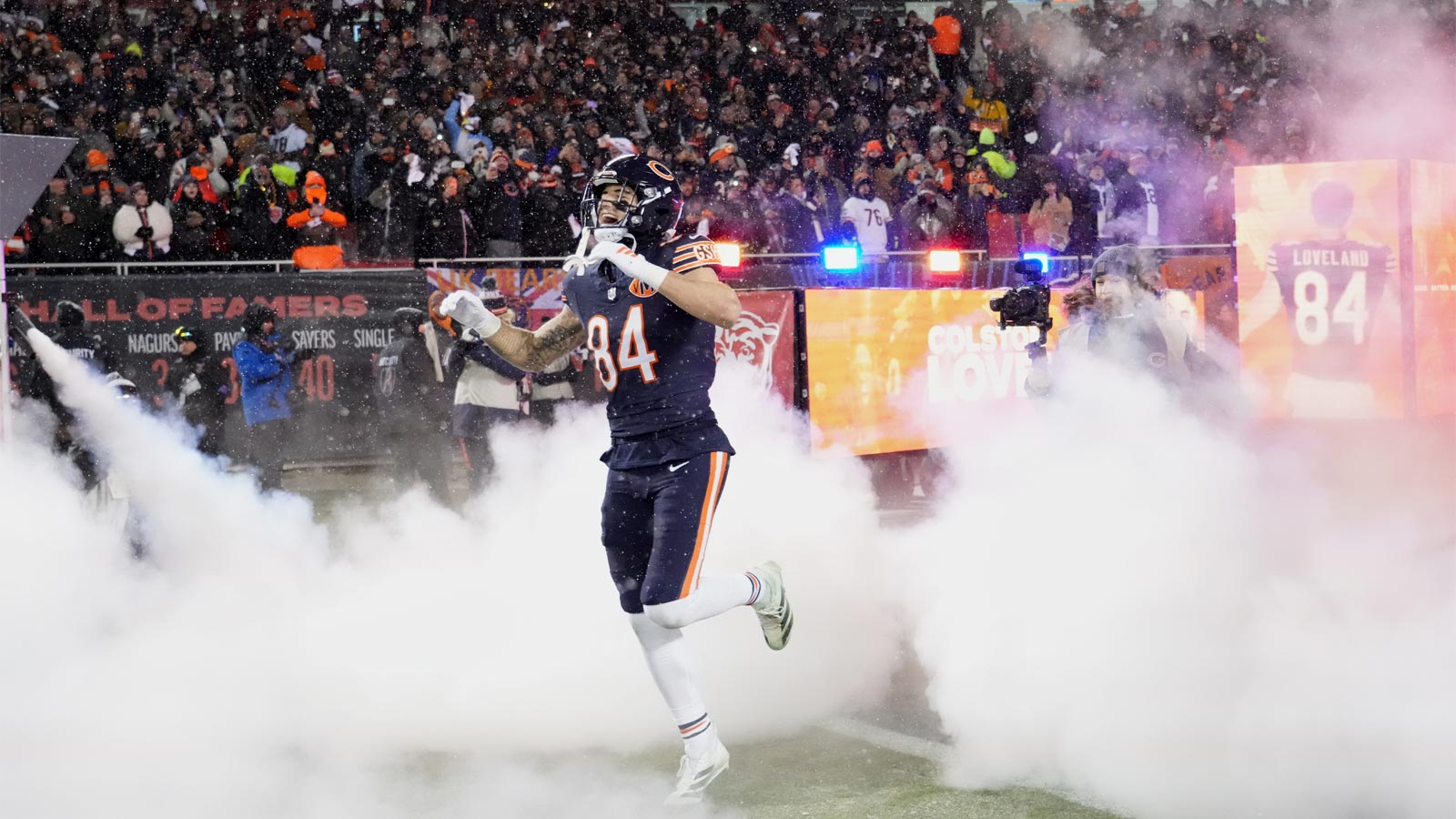
Loveland’s NFL journey began with enormous expectations when he was selected in the 2025 NFL Draft. Chicago viewed him as a movable chess piece capable of creating matchup problems throughout Johnson’s offense. Loveland finished his first NFL season with 58 receptions for 713 yards and six touchdowns.
The most important part of his development, however, came late. After operating within a crowded offensive structure early in the campaign, Loveland’s role expanded dramatically as the season progressed. By the postseason, he had become one of the most dangerous weapons in Chicago’s passing game. He caught 12 passes for 193 yards across two playoff contests, including a spectacular 137-yard performance against Green Bay.
That postseason surge was a glimpse of what happens when Chicago gives Loveland the keys.
2025’s breakout production
Loveland’s final TE12 ranking in half-PPR formats does not tell the real story of his 2025 fantasy season. The counting statistics were respectable, but his late-season usage was the revelation. Once Johnson expanded his responsibilities, Loveland’s fantasy football production followed. The difference between an ordinary fantasy tight end and a potential league-winning one often comes down to opportunity. Loveland eventually received it, and his performance immediately responded.
His versatility makes the opportunity particularly dangerous for opposing defenses. Chicago can align him inline, flex him into the slot or send him vertically through the seam. Then there is the red zone.
Loveland finished 2025 with six regular-season touchdowns. That demonstrated that his fantasy value does not depend exclusively on accumulating receptions and yardage. Give him enough opportunities near the goal line and his physical profile gives him a realistic path toward double-digit scores.
2026 volume projection
Projection models have Loveland around 78 receptions on 110 targets for 918 yards and seven touchdowns in 2026. Those numbers would already represent a significant step forward from his rookie production.
However, they may actually undersell his ceiling. Johnson’s system has consistently created opportunities for tight ends to become major pieces of the passing attack. More importantly, the Bears enter 2026 without DJ Moore. That creates a substantial target vacuum that needs to be redistributed across the offense.
Luther Burden III and Rome Odunze will absorb opportunities. Loveland, though, has already shown that he can operate as a primary target rather than simply another complementary weapon. That makes a 22-to-25 percent target share a realistic ceiling if his role continues expanding. At 110-plus targets, Loveland has enough volume to perhaps approach 1,000 yards. If his touchdown rate climbs from six scores toward eight, nine or even 10, the entire fantasy equation changes.
Caleb Williams as the final piece
The other major variable is Williams. The Bears’ quarterback is entering another season in Johnson’s system. That continuity matters enormously for Loveland. Quarterbacks who become more comfortable within an offense generally process coverage faster, anticipate route breaks better and distribute the ball more confidently. That should benefit a tight end whose value is built around finding space in the intermediate areas.
Loveland needs Williams to consistently recognize the matchup advantages Chicago is creating. When defenses devote extra attention to the perimeter, Loveland can attack the middle. When linebackers step forward against play-action, he can threaten the seam. That interconnectedness is what makes the Bears’ passing game so intriguing from a fantasy football perspective.
Draft price reflects upside
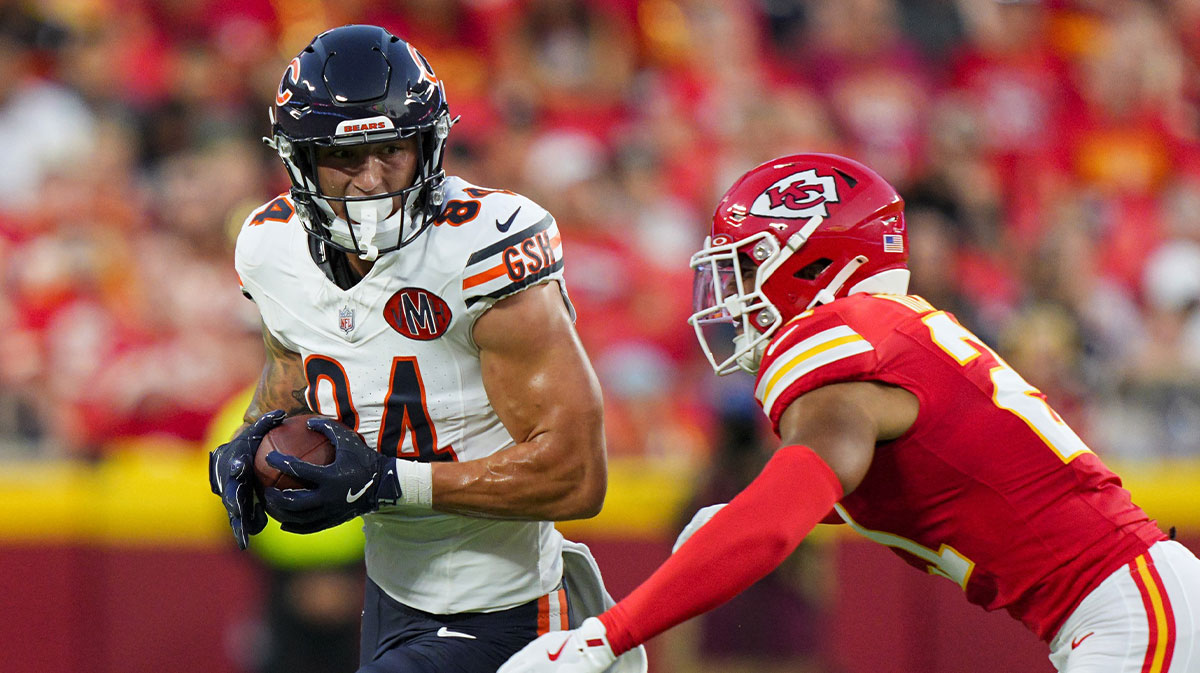
NFL’s 2026 fantasy rankings place Loveland second among tight ends. He is behind only Brock Bowers and ahead of even Trey McBride. His current draft cost generally sits around the fourth round. That makes him considerably more expensive than the late-round tight end fliers fantasy football managers are accustomed to targeting.
Still, this is an important distinction: Loveland is no longer being drafted purely on potential. He has already shown the production. The question is whether he can sustain it.
That makes his current price aggressive, but not unreasonable. A 78-catch, 918-yard season with seven touchdowns would make him a strong fantasy starter. A true breakout into 90-plus catches, 1,000-plus yards and double-digit touchdowns could make him the position’s No. 1 player.
The post Can Colston Loveland be TE1 in fantasy football? Full 2026 outlook for star Bears pass-catcher appeared first on ClutchPoints.
What's Your Reaction?
 Like
0
Like
0
 Dislike
0
Dislike
0
 Love
0
Love
0
 Funny
0
Funny
0
 Angry
0
Angry
0
 Sad
0
Sad
0
 Wow
0
Wow
0