

.jpeg)
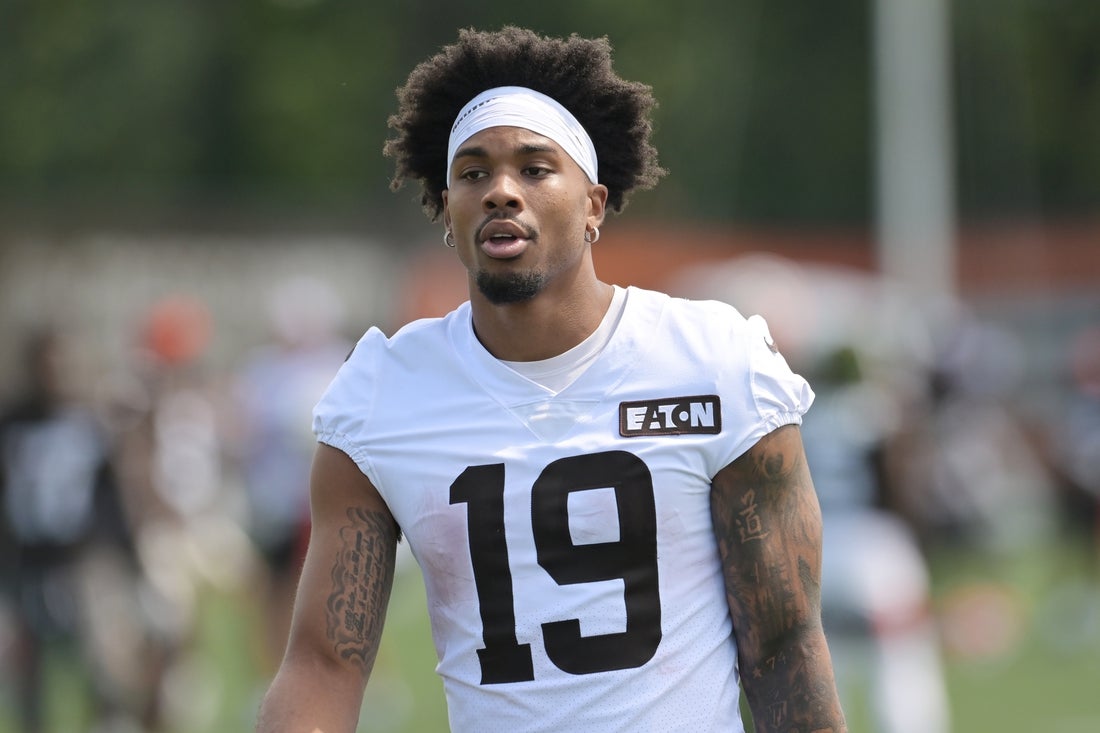



Buccaneers’ bold predictions in 2026 NFL Draft

Change tends to sharpen a draft, and Tampa Bay cannot afford to act as if it’s business as usual after Mike Evans’ departure. While the team still has valuable players and its offense remains structured enough to function, the familiar shape of the passing game has changed. That is why Oregon tight end Kenyon Sadiq has emerged as a significant talking point for the Buccaneers.
The team’s recent mock draft roundup indicated that two analysts projected Sadiq to be selected at No. 15, while others leaned toward emphasizing defensive line help, and it highlights the current state of the draft as it approaches.
Tampa Bay faces a choice between replacing a unique offensive stress point or reinforcing a defense that still requires improvement up front.
At the same time, Todd Bowles has emphasized that the team needs additional support at cornerback, and the recent one-year contract with Chase Lucas seems to serve more as a depth addition than a comprehensive solution. That situation adds an intriguing element to Tampa Bay’s upcoming draft.
And this is where the bold predictions for the draft class truly begin.
It would be easy to say the Buccaneers should take the best defender available, as that would seem responsible post-free agency. Similarly, it would be simple to suggest replacing Evans with the closest available pass catcher and calling the offense fixed.
However, neither approach addresses the real tension at play, and Tampa Bay’s initial decision is about whether the front office believes that one offensive mismatch player is more valuable than a solid defender available in a draft that still features quality edge and defensive tackle options.
There is a much more nuanced question, and it is crucial because they will be selecting in an area of the draft where teams must often choose between a more straightforward need and a rarer skill set.
The Buccaneers will draft Kenyon Sadiq if he is available at No. 15
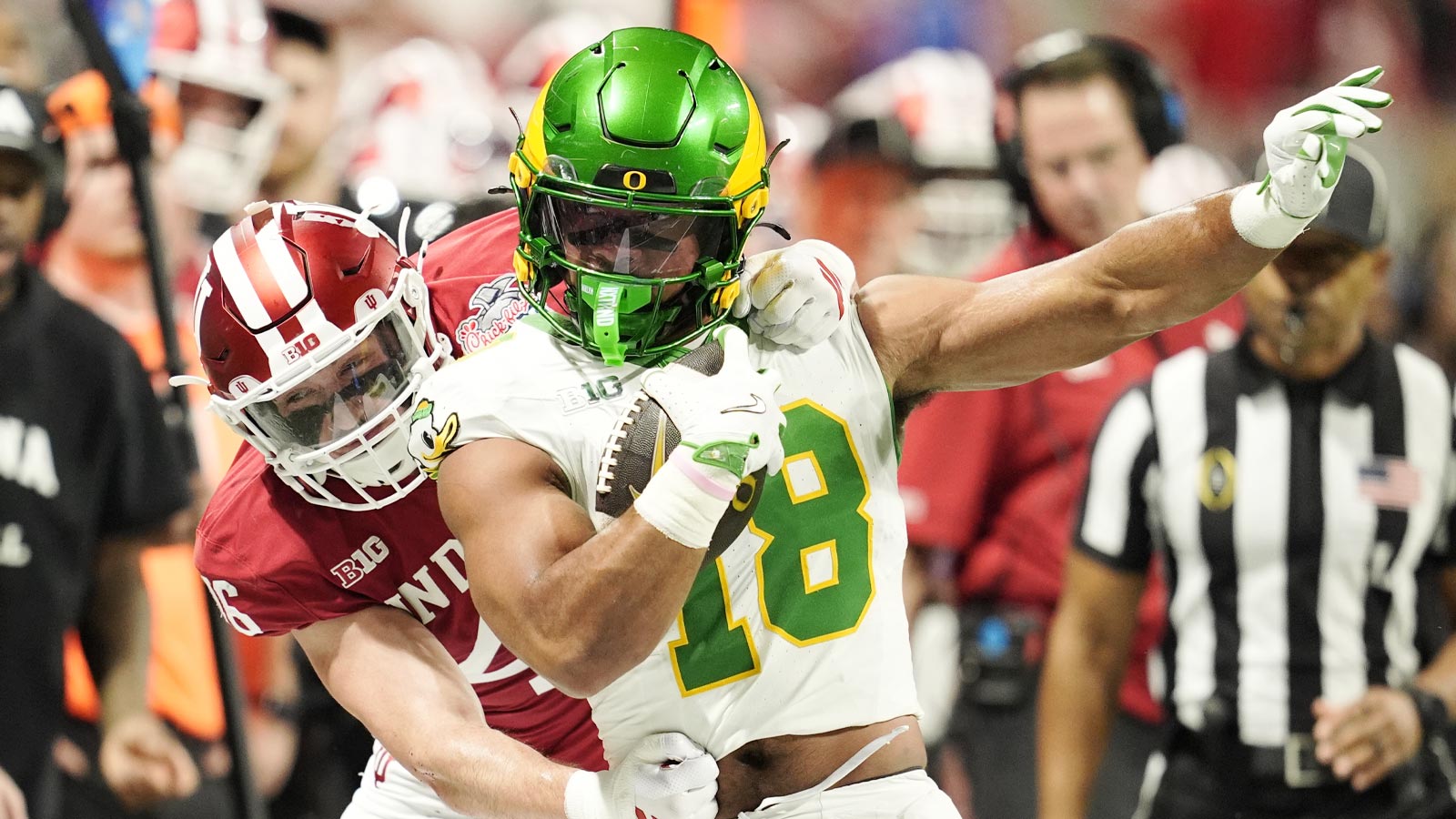
That is the clearest bold prediction for the draft, and it reflects how the board has developed over time, as Sadiq has not been frequently linked to Tampa Bay by chance.
The Bucs’ official draft roundup highlighted two recent mock drafts predicting he would be selected by Tampa Bay, one from PFF and another from The Athletic.
The language used in those analyses is significant because Jordan Plocher at PFF argued that Sadiq’s athleticism would be too enticing for the Buccaneers to overlook. Meanwhile, The Athletic framed him as an offensive weapon that the team currently lacks, someone who could help replace Evans and create more opportunities for everyone in the offense.
And the key point is that Tampa Bay requires a new stress point.
Evans was impactful because defenses had to account for his size, catch radius, and his role as a reliable target when plays broke down, and while Sadiq might not literally replace what Evans brought, he could recreate the discomfort he caused for defenses.
With a 4.39-second forty-yard dash time at tight end size and impressive vertical leap displayed at the combine, Sadiq can line up in various spots, forcing more challenging matchups than a typical tight end would. Tampa Bay would be drafting him to restore lost pressure in a new form.
This consideration happens because the best response after losing a foundational receiver is often not to seek a smaller replica, and the better approach is to alter the offensive angles and present defenses with new challenges.
Sadiq offers Tampa Bay that possibility in a way that a standard wide receiver or in-line tight end would not, as he also fits within the current draft class landscape.
By the time the draft reaches the middle of the first round, teams often find themselves choosing between a very good player for the trenches and an offensive piece that provides something fewer teams can access later. In Tampa Bay’s scenario, they will opt for the mismatch player and trust they can address defensive needs in the subsequent rounds.
This type of decision teams make when their offense has lost a key element, and the coaching staff recognizes that they cannot simply adjust around the absence indefinitely.
The first-round pick will not be a cornerback
The bold prediction may be the least popular because selecting a cornerback is often seen as justifiable. Tampa Bay has added defensive depth, and the need for more players in the secondary is real. However, the Bucs won’t use their No. 15 pick on that position, and recent reports surrounding this pick indicate why.
The strongest public connections for Tampa Bay at No. 15 involve defensive linemen, and Chad Reuter linked the Bucs to Florida defensive tackle Caleb Banks, while Pete Prisco mentioned Auburn edge rusher Keldric Faulk, and Jaime Eisner highlighted Texas A&M edge rusher Cashius Howell, signaling that the market is recognizing where the draft board and Tampa Bay’s roster naturally align.
While cornerback remains a need, it does not carry the same weight for a first-round pick at this moment, and selecting a corner at No. 15 would feel more like a reaction to current issues rather than a strategic decision.
Although it would address a visible offseason concern, it wouldn’t fundamentally alter the roster, and that’s why Sadiq and the potential front-seven players are more intriguing, because they can replace a unique offensive pressure point or add quality to a defensive line that impacts the overall performance of the team.
The distinction is vital with Todd Bowles still coaching, as defenses tend to improve more quickly when the front can create problems independently.
Corners benefit from improved pressure more than pass rushers gain from stronger corner play, and while this isn’t a hard and fast rule, it’s a useful guideline when the draft board is unclea, as a team faced with the choice between an edge defender with real developmental upside, a defensive tackle who can stabilize the middle, and a corner whose appeal is primarily filling a recent gap often finds that the first two options yield more value.
Therefore, while the secondary still needs attention, Tampa Bay won’t spend its premium pick there because a smarter approach would be to add either a front-seven player or a unique offensive talent that the roster currently lacks.
The first two days of the draft will likely focus on defense after the opening round
If Sadiq is selected in the first round, Tampa Bay will spend the next two days balancing its draft class, and if Sadiq isn’t available and the Bucs begin with a defensive pick, they will continue to prioritize defense early on. Either way, the front office is unlikely to leave without at least one new contributor for the front seven.
The same reports that highlighted Sadiq also specified that the strongest defensive links to the pick are Banks, Faulk, and Howell, and while these players vary in type, they share a common theme: Tampa Bay’s draft board indicates that the front seven is still a work in progress.
And that’s why the draft class will veer into a purely offense-focused response to the departure of Mike Evans, and even if Sadiq is chosen first, the next two days are likely to skew back toward defensive needs.
Defensive line and edge rushers make too much sense in this draft range to overlook, as a favorable outcome for them would be to exit the first two days with one player who alters the offense’s dynamics and one defender who enhances the line of scrimmage, and it would absolutely create a more effective draft class than simply selecting a solid corner early and hoping to fill the rest of the needs through a positional tally.
But the point here is that they don’t need to address every visible concern in precise order, as teams can get into trouble when they draft based on a checklist rather than assessing their actual roster needs.
The smarter strategy is to identify what the team lacks that will be hardest to replace later, and right now, that need revolves around either a mismatch offensive player like Sadiq or more quality in the front seven, and this is why these positions frequently appear in mock drafts and why the actual draft class will probably reflect the same priorities.
The post Buccaneers’ bold predictions in 2026 NFL Draft appeared first on ClutchPoints.
What's Your Reaction?
 Like
0
Like
0
 Dislike
0
Dislike
0
 Love
0
Love
0
 Funny
0
Funny
0
 Angry
0
Angry
0
 Sad
0
Sad
0
 Wow
0
Wow
0