
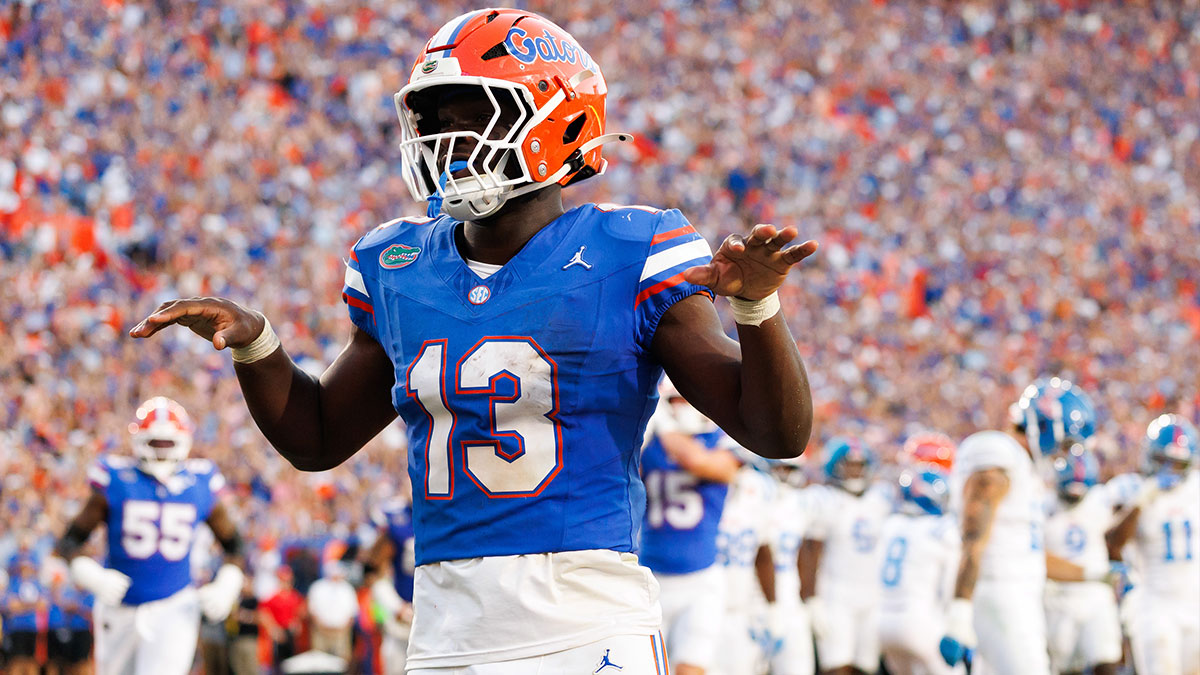
Overall, 43 running backs have won the Heisman Trophy, combining for a total of 44 wins. It was very common early on in the award for a running back to win the Heisman. Jay Berwanger won the first Heisman Trophy in 1935, and running backs won ten of the first 14 awards. Even into the 1990s, it was common for running backs to win the award. Rashaan Salaam, Eddie George, Ricky Williams, and Ron Dayne won four Heisman Trophies for the position in six years. Still, the award has become much more of a quarterback award in recent years. Since 2000, just three running backs have won the award: Reggie Bush (2005), Mark Ingram Jr. (2009), and Derrick Henry (2015). Florida running back Jadan Baugh was a contender for the Heisman this year.
Baugh was putting on a stellar season through the first four weeks. In his first four games, he ran the ball 83 times for 600 yards with 11 touchdowns. Still, the game against Missouri was a complete disaster for Baugh. He ran the ball 12 times for just 13 yards. Meanwhile, he hauled in three receptions for 17 yards. With the horrible performance, Baugh saw his odds of winning the Heisman plummet. Baugh entered the weekend at +150 to win the award, but now is at +8400. While betting odds do not determine how voters will react, it is a warning sign that Baugh's Heisman campaign is now over.
Running backs must be flawless to win the award
Baugh was on track for that perfect season that would have won him the award. He was on a better pace than the three running backs who previously had won the award. Bush had run for 491 yards with six touchdowns, while Henry had 422 yards with six scores, and Ingram had 347 yards and four touchdowns. Still, none of them had the dud of a game that Baugh had.
The worst game of the season for Bush came against Washington on the road in Week 7 of the 2005 season. In that game, he ran for just 51 yards. While that is more than what Baugh had, there also were some other major differences. First, USC won the game 51-24, while Florida got destroyed by Missouri, 45-17. Bush also scored in that game on the ground, and he also returned a punt 84 yards for a touchdown. Bush did not make a massive impact on the ground, but he made an impact on the game, something Baugh did not do.
Derrick Henry never really had the clunker game in his Heisman campaign at Alabama. His lowest amount of rushing yards came in Week 4 against Louisiana-Monroe. In that game, he ran for 52 yards and a touchdown. Still, Alabama dominated the game, and Henry did not see as much action as normal. Henry also scored a touchdown in every game that year, while having four games over 200 yards on the ground.
Mark Ingram did have one horrible game. It also came at one of the worst times as well. In the final game of the regular season, against rival Auburn. The Alabama running back ran the ball 16 times in the game, for just 30 yards. Further, he had three receptions for 21 yards and one incomplete pass attempt. Ingram did not score in the game either. Alabama won the game, and unlike this year, Ingram was still the best option.
Article Continues BelowA crowded field of competitors
In 2009, when Mark Ingram won the award, there was no other dominant option to take the award. Ingram had run for 1,542 yards and 15 touchdowns while also having three receiving touchdowns. Toby Gerhart likely should have won the award. He ran for 1,630 yards before voting happened, with 26 touchdowns. He also had a passing touchdown. Gerhart had the better season individually, but Stanford was 8-4 and not competing for a national championship, like Ingram. Further, this was before nearly every game was available to watch on streaming. Because Gerhart was playing on the West Coast, many people did not see him, with Stanford not being on national TV. This likely cost him some votes, as Ingram won the closest Heisman vote. Colt McCoy ended up getting third that year as the quarterback of Texas, but did not have a year that set him apart.
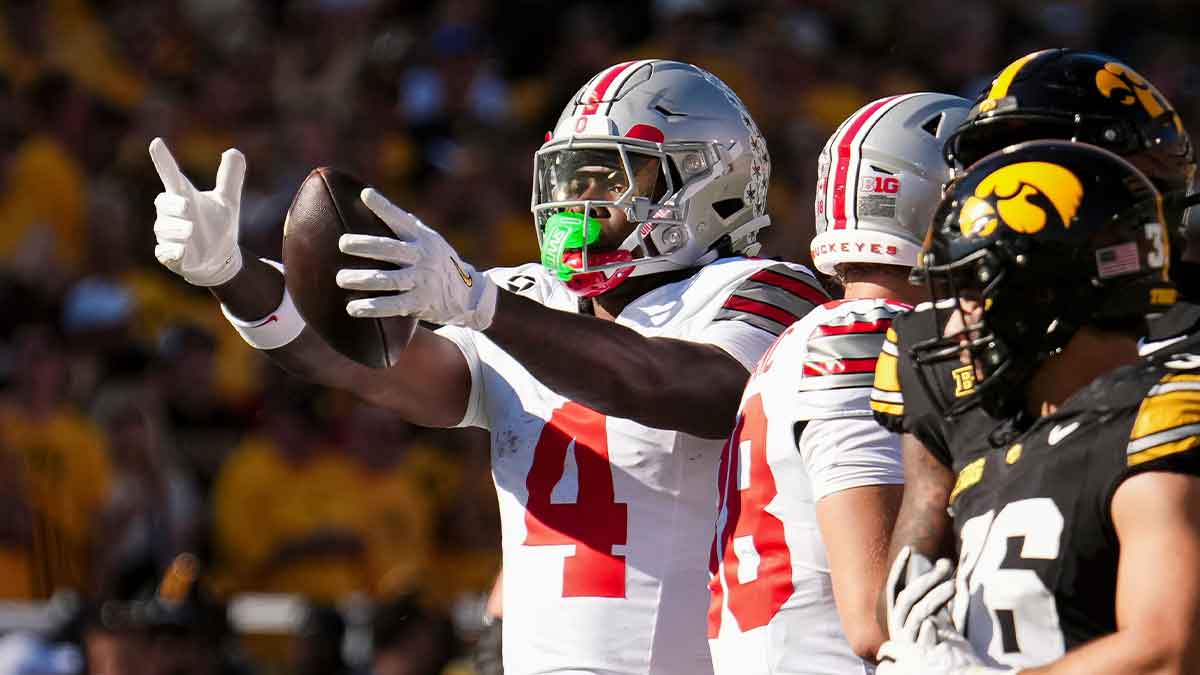
Now, every game can be streamed, and every player's highlights, plus full games, are easily accessible. This year, there are too many other options who are consistently in front of the eyes of voters. To begin with, there is Jeremiah Smith from Ohio State. Smith has been dominant this year, leading the nation with 823 receiving yards. He also leads the country with 44 receptions, while every defender on the field knows the ball is going his way. Further, Smith is tied with Jesse Legree of Oregon State for the most touchdowns this year with nine.
Also, unlike in 2009, there are plenty of big-name quarterbacks who could take the award. Darian Mensah at Miami has thrown for 1,438 yards and 15 touchdowns without an interception. He leads the nation in passer rating among passers who have more than 50 attempts. There is also CJ Carr from Notre Dame, Julian Sayin from Ohio State, and Trinidad Chambliss from Ole Miss, who are all having big years on teams contending for a title. With so many options, and the fact that Baugh is no longer having an extraordinary year, his chances to win the Heisman are over.