
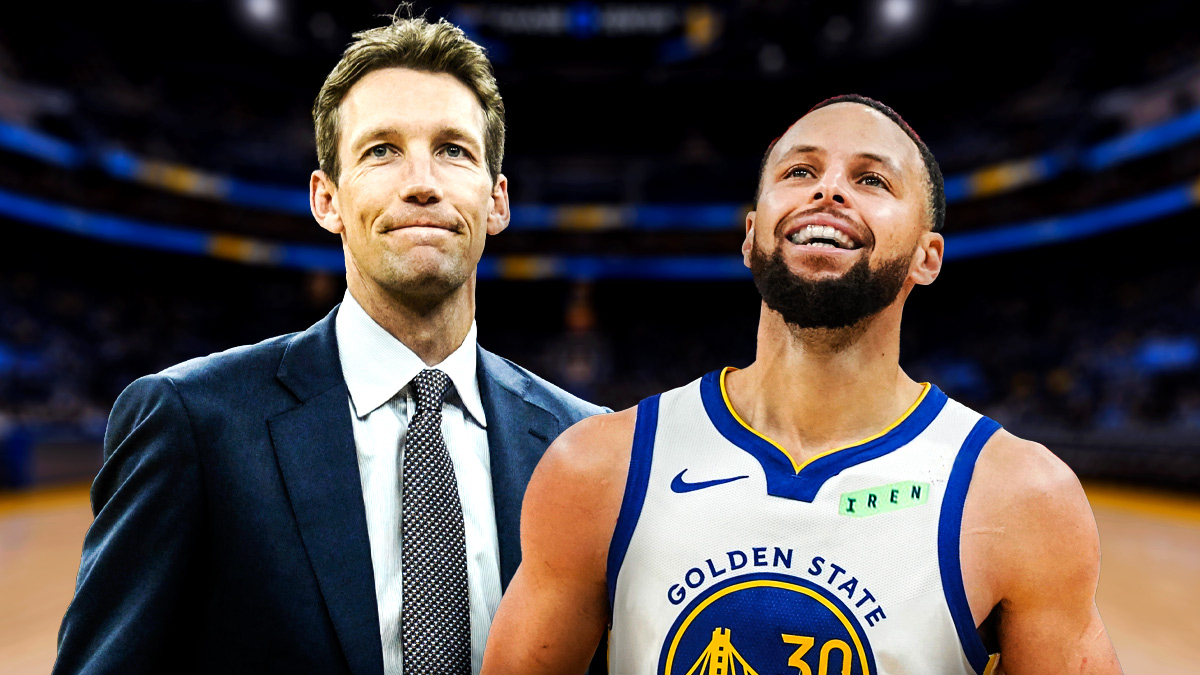
SAN FRANCISCO – While uncertainty around Stephen Curry's future with the Golden State Warriors was as thick and persistent as the San Francisco fog this past summer, general manager Mike Dunleavy Jr. never doubted the transformational franchise superstar would end his tenure in the Bay.
“I lost zero sleep over that,” Dunleavy said Monday morning at Warriors media day regarding if he worried Curry could set himself to leave Golden State by not signing a contract extension. “He's a guy that's committed to the organization. He wants to be here. He believes in our ability to put together a great team. I've lost sleep on a lot of things. That is not one of them.”
Curry put ink to paper to back his commitment, signing a two-year, $116-million extension, with a player option in the second year, which could feasibly keep him with the Warriors till 2029, when he would enter his 20th season with the franchise.
Dunleavy said the Warriors provided Curry several different financial options, giving the future hall of famer the onus to choose whatever path he desired.
“We showed him our books and what it looks like and this and that and the whole thing,” Dunleavy explained, saying that he would never ask Curry to take less money. “I think Steph's biggest thing is, allow me to understand. What are we thinking? How are we doing this? So we went through that with him, enabled him some time to give it thought and think about it, and then we came back with this concept that made a ton of sense.”
What makes sense about this deal, beyond retaining the man who fills the arena and juices jersey sales, are the team-building possibilities it provides the Golden State. With Curry taking $10 million less annually, the Warriors have a little more flexibility heading into the 2027-28 season with the ability to have north of $60 million available in cap space to pursue a high-level free agent. And while Dunleavy did not provide specifics as to how the Warriors will use that added flexibility, he emphasized that Curry signed the deal that he did with Golden State because he wants to win.
“We found a middle ground where he was incredibly generous in taking this deal, where he's taking less money to help the team out because, as Steph goes, he's as competitive as there is,” Dunleavy said. “He wants to win. He's put us in a position where it gives us a little bit more flexibility to do that. So I think the middle ground was signing him up to be able to almost ensure that he'll finish his career here while also keeping some flexibility, keeping some optionality on it, and we've done that.”
Stephen Curry on inking the extension
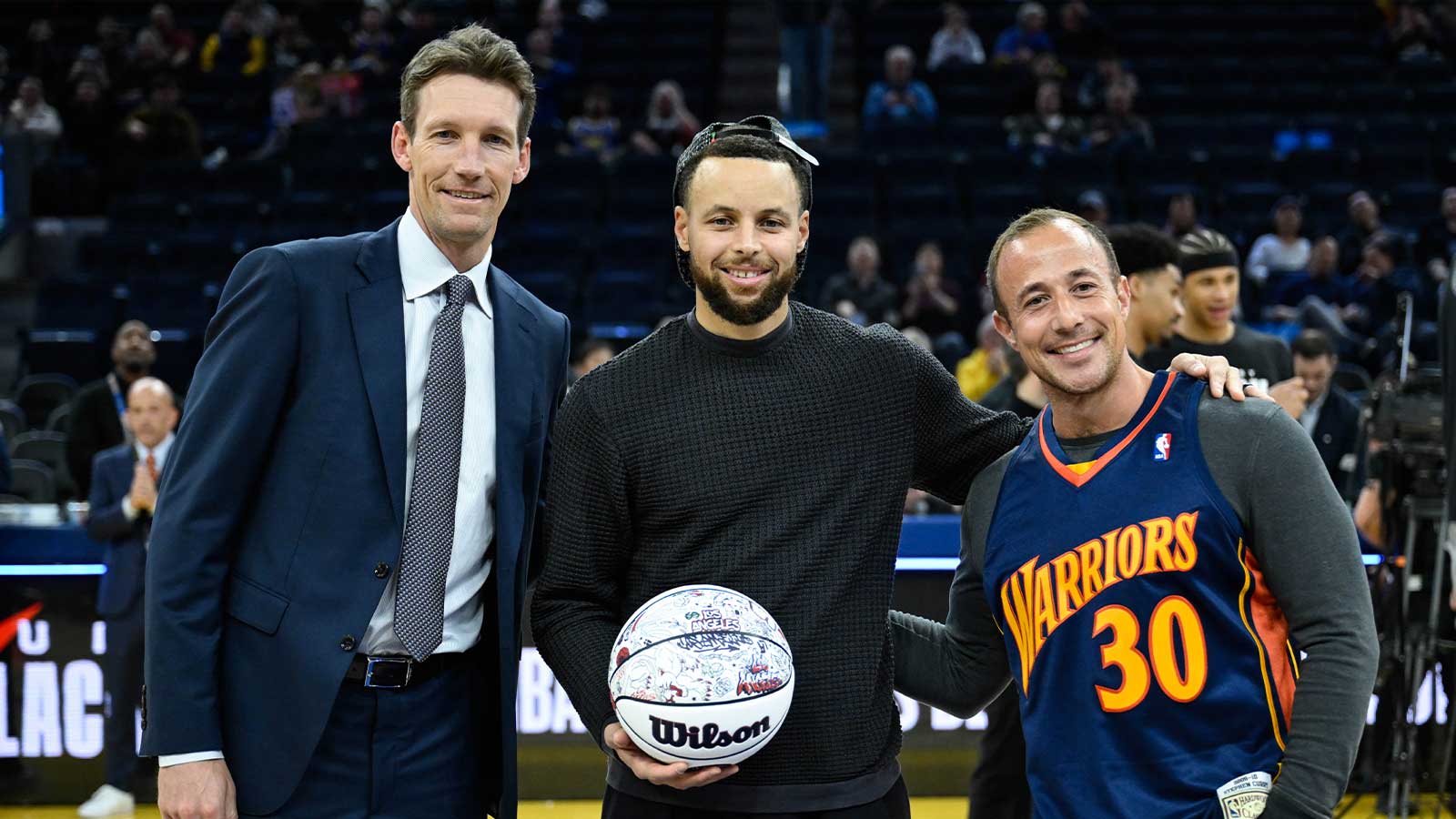
For Curry, the choice to return was always a no-brainer, as finishing his career in Golden State has remained a significant factor in his end-of-career decision-making. But Curry reiterated what playing for the Bay Area means to him and the place where he built his legacy.
Article Continues Below“This is home; this is what we've built,” Curry said at media day. “This is a community that I've played in front of my entire career, and being able to finish the story the right way is a big part of what I can control, thankfully, and hopefully health-wise as well. I know the short list of guys that have been able to do it, but reimagining what that looks like with the level that I feel like I can play at down the stretch of my career and being open to even what this training camp looks like of different ways to approach the game to sustain it as long as I can.”
But as for why he landed on the structure of extension, a one-plus-one player option on the back end, the point guard left it up in the air for people to come to their own conclusions.
“I think we're all smart people in this room,” Curry said. “You can kind of read the tea leaves on why it's designed the way that it is, for sure.”
Typically, players use one-plus-one deals to maintain their own flexibility regarding free agency. Before leaving for the Philadelphia Sixers, LeBron James signed multiple one-plus-one deals with the Los Angeles Lakers, which, in that specific situation, kept pressure on Rob Pelinka and the front office to make moves in accordance with his personal championship window. As for Curry, no reporting or indication points to him doing something similar to the Warriors right now. But the implied threat of declining his player option in 2028 certainly doesn't rule it out.
But for now, and most likely forever, Curry is more than content with staying in Golden State, in the palace that he built.
Steph Curry on why it was important for him to stay with the Warriors.
“There's a pride of representing you know the Bay, representing this franchise that when I stepped foot here in '09 and what we've all been able to accomplish… I want to do right by that.” pic.twitter.com/Y3uaHWTbDJ
— Kenzo Fukuda (@kenzofuku) September 28, 2026
“There's a pride in representing the Bay, representing this franchise that, when I stepped foot here in '09 and what we've all been able to accomplish — this isn't just a me thing, this is a we — I want to do right by that. It's always been an importance for me, and going into this contract decision that was front of mind, for sure.”