
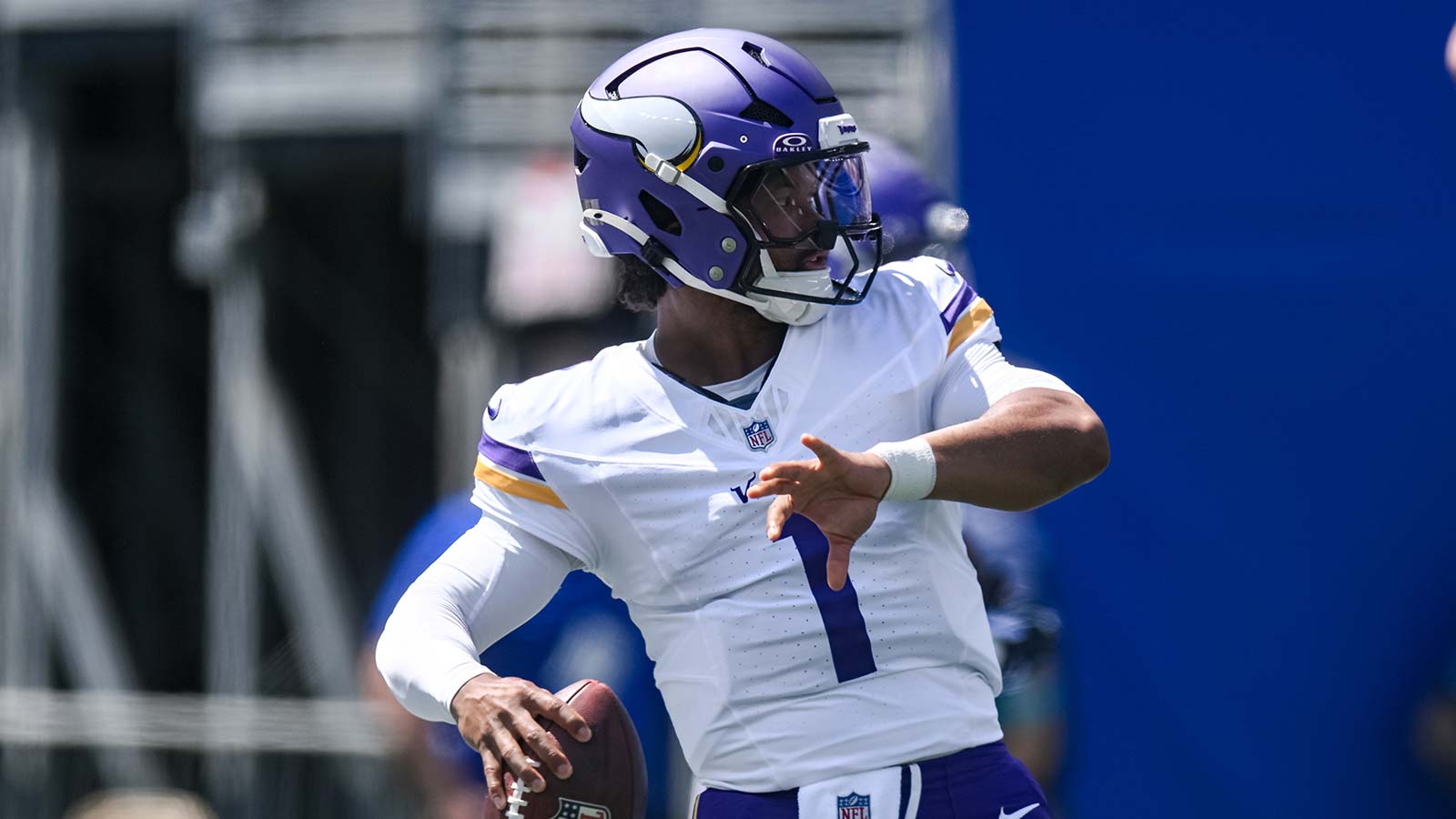
A few days ago, Justin Jefferson provided the defining moment in the Minnesota Vikings' 23-13 victory over the New Orleans Saints, making a spectacular touchdown catch despite three defenders closing in on him in the end zone. This incredible play capped off another productive afternoon for Jefferson and helped the Vikings head into their Week 6 bye with a record of 5-0, maintaining one of the most surprising undefeated starts in the league.
Additionally, there has been some attention surrounding Jauan Jennings, who has had minimal involvement in the offense since joining from San Francisco during the offseason. With only two receptions for nine yards on five targets through five games, he has already sparked trade speculation, including the potential for a reunion with the 49ers. However, neither of these storylines represents the most critical issue that Minnesota needs to address during their week off.
The Vikings have struggled this season by making their offense more challenging than necessary, often undermining productive drives with turnovers, penalties, procedural mistakes, and poor execution near the goal line. While their 5-0 record has made it easier to overlook these shortcomings, the defense has repeatedly covered for them. Relying on this strategy is not a sustainable approach for the remainder of the season.
Minnesota needs to finish more of its drives
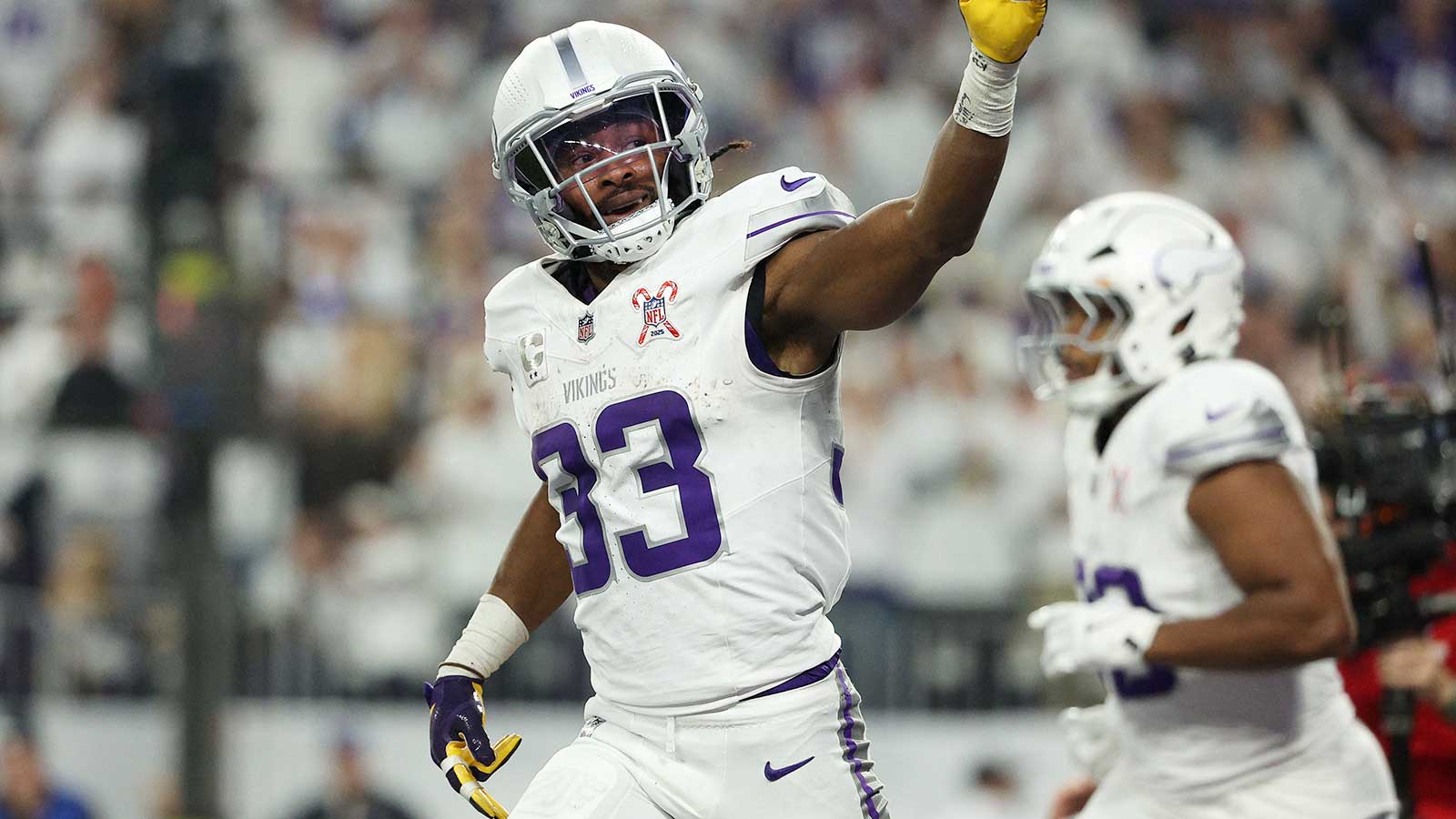
Sunday's victory over New Orleans showcased one of the most complete offensive performances that Minnesota has delivered this season, making the missed opportunities even more significant.
The Vikings recorded season highs in total offense, time of possession, and third-down efficiency. Kyler Murray completed 24 of 30 passes for 229 yards without throwing an interception. Aaron Jones surpassed 100 rushing yards, and Justin Jefferson returned to the lineup, quickly making a major impact. Minnesota controlled the ball for nearly 40 minutes. Such impressive statistics typically indicate a game that should have been decided well before the final quarter, but the Vikings repeatedly left themselves vulnerable by failing to convert promising drives into touchdowns. Two red-zone fumbles were particularly damaging, including one that New Orleans returned 87 yards for a defensive score. Additionally, penalties and other mistakes disrupted possessions that had reached favorable scoring positions.
Will Reichard once again played a crucial role in helping Minnesota navigate these missed opportunities, but his heavy workload has highlighted broader issues within the offense. Through five games, Reichard has converted 15 field goals without a miss, which is an impressive personal achievement but also underscores how often Minnesota has reached scoring range without finishing drives in the end zone. The Vikings have scored only nine offensive touchdowns during this span, indicating a heavy reliance on Reichard to salvage possessions that could have generated significantly more points.
Field goals are not inherently problematic, especially when there is a reliable kicker available, but balance is essential. They cannot expect to settle for three points every time its offense reaches the opponent's side of the field, particularly as the schedule becomes more challenging and opposing offenses begin to apply greater pressure on Brian Flores' defense.
The bye creates the right moment to clean up the details
The encouraging aspect for Minnesota is that a dramatic overhaul of the offense is not necessary. Murray demonstrated against New Orleans that the offense can operate efficiently when the timing is right, and the structure around him is more organized. He completed his first 12 passes, utilized his legs to extend plays, and distributed the ball to 10 different receivers. Additionally, the running game finally provided the kind of support needed to prevent defenses from focusing solely on the quarterback.
These developments give Kevin O'Connell plenty to build on during the bye week, but the next step must focus on converting sustained possessions into more touchdowns. Injuries and lineup changes have undoubtedly complicated this process. Christian Darrisaw missed the Saints game, Donovan Jackson has also been unavailable, Jordan Addison did not play in Week 5, T.J. Hockenson exited after the opening series, and Jordan Mason has missed time as well. Moreover, Murray is working within O'Connell's system for the first time, which naturally involves an adjustment period.
This context helps explain some of the inconsistency, but it does not fully account for the repeated pre-snap penalties, illegal formations, holding calls, and rushed sequences that have interrupted otherwise productive drives. These mistakes are less about talent and more about organization.
When Minnesota is forced to use timeouts because the play call arrives late, when the offense reaches the line with the play clock running low, or when a successful gain is negated by a preventable penalty, the Vikings make things more difficult for themselves before the defense even has a chance to impact the play. The bye week provides O'Connell and his staff an opportunity to analyze these patterns without the pressure of preparing for another opponent.
Kyler Murray's improvement should change the focus
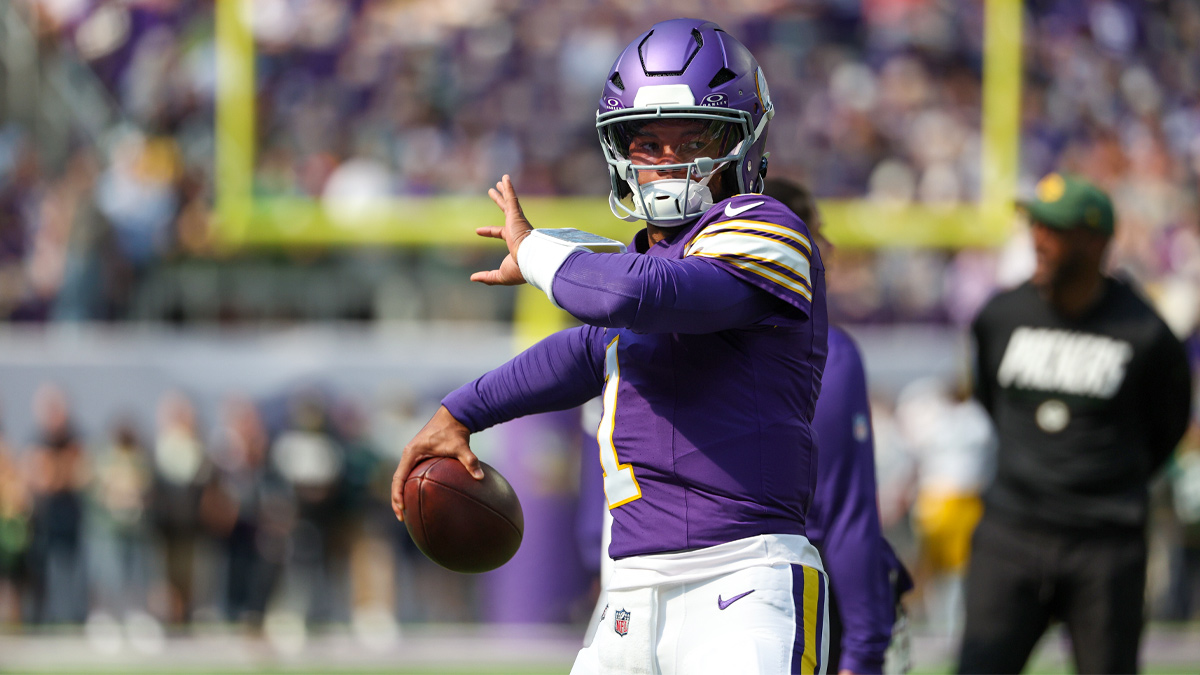
The quarterback faced a significant amount of criticism during Minnesota's shaky offensive start, especially after the Vikings struggled to surpass 250 total yards in three of their first four games, but Week 5 provided evidence that discussions could begin to shift.
Instead of relying solely on Murray to address every issue from the pocket, Minnesota utilized his mobility more effectively, which helped extend several drives. His ability to rush added another dimension for the defense to consider, while the touchdown pass to Jefferson demonstrated the benefits of combining Murray's mobility with one of the league's most dangerous receivers.
Article Continues BelowTherefore, the focus during the bye week should shift from questioning whether Murray can run the offense to exploring how Minnesota can simplify the process for him. Enhancing communication by getting play calls in earlier, reducing unnecessary complexity in certain situations, and allowing the offense to get to the line with more time on the clock could improve both Murray's decision-making and the overall communication among the players.
These adjustments may seem minor compared to personnel changes or major scheme alterations, but they can significantly impact whether a promising drive results in a touchdown or falters due to a procedural error. For an offense that finally showed signs of rhythm in New Orleans, a cleaner operation may be more crucial than introducing new elements.
The defense cannot cover every mistake forever
Flores' defense has made the offensive inconsistency easier to tolerate, as it rarely allows opponents to dictate the flow of the game. On Sunday, New Orleans finished with only 142 total yards and nine first downs, while a quarterback who averaged over 300 passing yards per game was held to under 100 yards. Minnesota generated pressure, forced turnovers, and effectively prevented the opposing offense from finding any rhythm.
This defensive dominance has been the foundation of the Vikings' undefeated start, but it also creates a temptation to overlook offensive inefficiencies, as the consequences have not been severe so far. However, this approach becomes riskier over a full season. The first five opponents of Minnesota have combined for only five offensive touchdowns, a defensive pace that is unlikely to remain sustainable through injuries, tougher opponents, and the typical fluctuations of an NFL season. At some point, the Vikings will face a game where the defense allows 27 or 30 points, and the offense will need to respond without relying on Reichard to rescue stalled possessions. In such situations, the difference between a field goal and a touchdown becomes critical.
The most encouraging aspect of Minnesota's 5-0 start is that the Vikings understand who they are. Their defense can control games, special teams have been reliable, and Murray is starting to show that the offense can become more efficient as he grows more comfortable in O'Connell's system. The bye week should therefore focus less on searching for a new identity and more on eliminating the mistakes that prevent that identity from functioning at its highest level.