
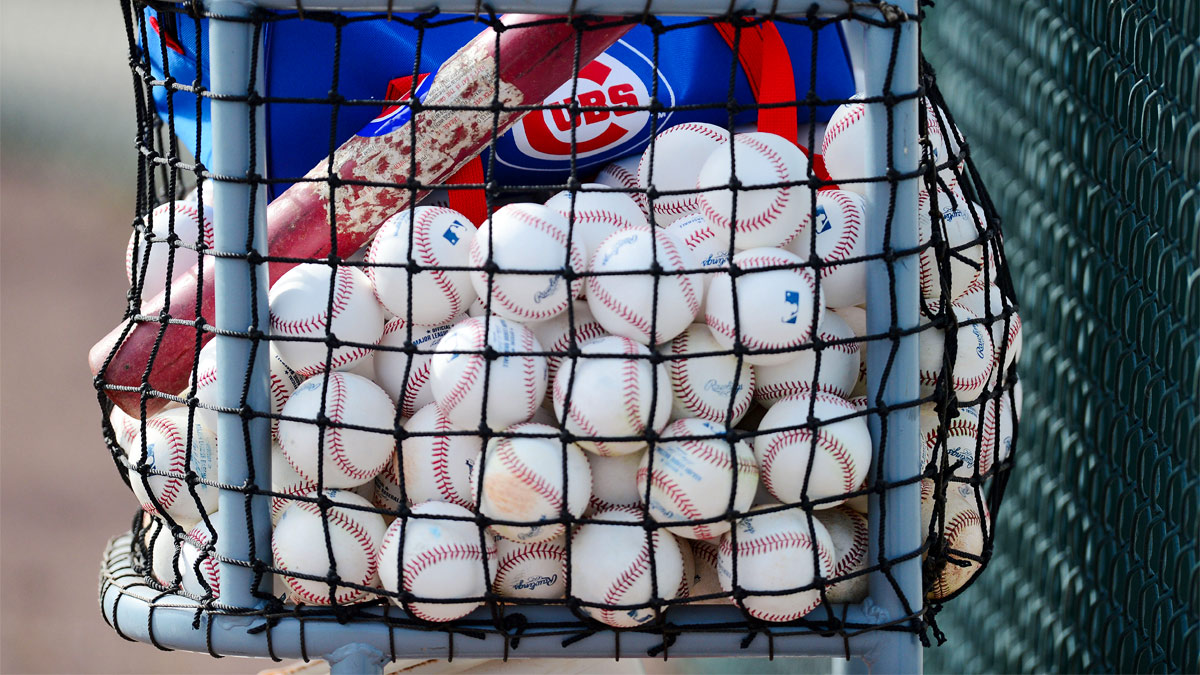
The Chicago Cubs hired Craig Counsell to turn a promising roster into a postseason contender. After a swift playoff exit, the executive responsible for building that roster deserves the most heat.
Jed Hoyer should lose his job.
The San Diego Padres outscored the Cubs 12-1 in a National League Wild Card Series sweep. The Cubs managed to collect only eight hits, with Nico Hoerner’s ninth-inning double Wednesday providing their first and only extra-base hit. Baseball’s highest-scoring regular-season offense disappeared when the season depended on it.
Those failures belong to the hitters, too. No pitching acquisition could have guaranteed survival with one run of support. But the sweep demands scrutiny of a larger problem that predates two miserable nights at Petco Park.
Six seasons into Hoyer’s tenure as president of baseball operations, the Cubs still entered the postseason without an unmistakable first choice to lead their rotation. Their pitching plans required too many contingencies for a franchise with championship ambitions.
That responsibility belongs above the dugout.
Chicago’s pitching scramble exposed the problem
Matthew Boyd started the opener for the second consecutive postseason. He surrendered home runs to Fernando Tatis Jr., Manny Machado, and Xander Bogaerts, allowing four runs in four innings during an 8-0 defeat.
Boyd deserves more respect than becoming the symbol of everything wrong with Chicago. He helped the Cubs reach the playoffs. The relevant question is why Hoyer’s roster still depended on him to establish control of a playoff series.
Across the field, Michael King carried a no-hitter into the seventh inning. San Diego could dictate the game with its starter. The Cubs needed their lineup to rescue one.
Kevin Gausman followed in Game 2 and allowed three runs in 3 1/3 innings. His acquisition was defensible. He had posted a 2.93 ERA during Toronto’s 2025 postseason run, giving Chicago legitimate reasons to value his experience.
The criticism is what surrounded that move.
The Cubs acquired David Peterson in June, then added Gausman and Clay Holmes at the deadline. Edward Cabrera, their major offseason rotation acquisition, finished with a 5.96 ERA in 80 innings.
Injuries forced adjustments. Losing Cade Horton for the season and operating without a healthy Justin Steele would challenge any executive. Hoyer cannot reasonably be expected to prevent elbow injuries.
He can be expected to build an organization capable of absorbing setbacks without repeatedly reconstructing its pitching staff during a pennant race. By year six, that expectation is fair.
The Padres bullpen then delivered 5 2/3 scoreless innings in the clincher. The Cubs had assembled offensive firepower, but the Padres possessed the pitching to silence it.
Article Continues BelowHoyer’s extension cannot settle the accountability question
Hoyer received a multiyear extension in July 2025. That agreement should require ownership to explain its continued confidence, rather than end the discussion.
There is a credible defense of his work. The Cubs won 92 games and a playoff series in 2025. They won 89 this season. Pete Crow-Armstrong became a 40-40 player, and Hoyer assembled an offense that led the majors in scoring.
Those accomplishments deserve acknowledgment. They also establish that Chicago has enough talent to demand more from its pitching infrastructure.
The Milwaukee Brewers finished 14 games ahead of the Cubs this season. Hoyer has completed six full seasons leading baseball operations without a division championship or an NLCS appearance. A productive rebuild must eventually produce a team that sets the division’s standard.
Tom Ricketts shares responsibility. Ownership determines the resources available and ultimately decides what qualifies as success. Replacing Hoyer while preserving the same expectations would accomplish little.
Still, ownership’s role does not erase Hoyer’s decisions. The Cubs committed five years and $175 million to Alex Bregman. Investing in an excellent hitter was reasonable. Building a sufficiently complete contender remained the larger obligation.
Counsell should face scrutiny for his own choices. But dismissing him would leave the executive responsible for acquiring and developing the pitching in charge of another attempt to fix it.
The next baseball operations leader should prioritize an established frontline starter, dependable late-inning relief, and a development system that supplies sustainable pitching depth. Those priorities require ownership’s financial backing and patience beyond one transaction.
No executive can purchase a guaranteed postseason win. The standard is whether the organization has built the strongest possible foundation for repeated opportunities.
The Cubs have a valuable core worth protecting. They should entrust its remaining opportunities to leadership with a different plan for completing the roster. Keeping that core competitive requires better answers before the next postseason arrives.
Hoyer’s extension makes a dismissal expensive. Another offseason without meaningful change could cost the Cubs considerably more.