
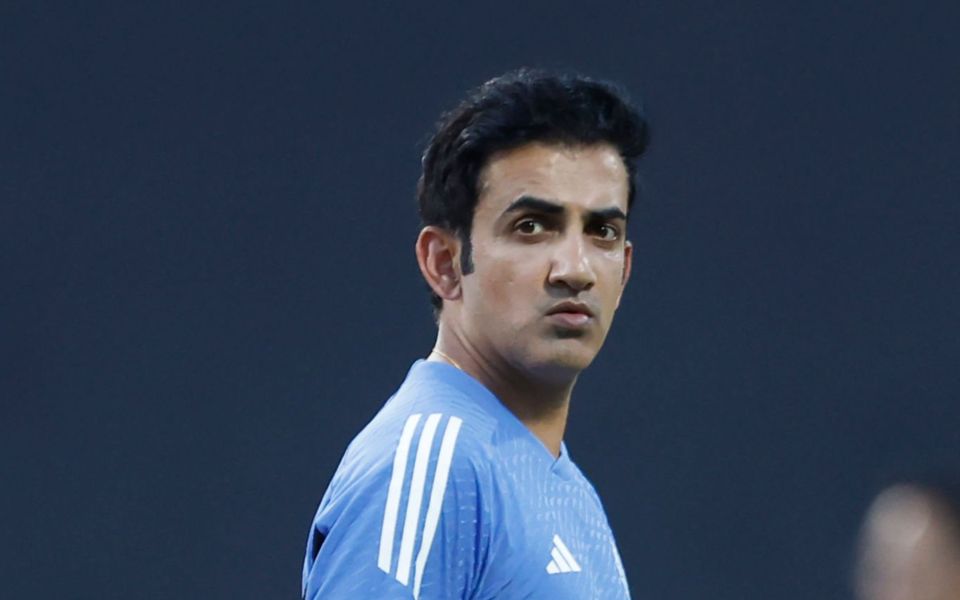
India's head coach emphasises Test cricket's centrality while managing player workload across formats ahead of New Zealand tour.
India's head coach Gautam Gambhir has opened up about the importance of Test cricket and the necessity of managing player workload across the international calendar. The West Indies series marks the start of India's preparations for the 2027 World Cup, with the team navigating an increasingly crowded schedule that spans multiple formats. Gambhir's comments come as India prepares for a multi-format tour of New Zealand featuring 12 matches across formats, where the transition between white-ball and red-ball cricket will test the team's preparation strategy.
The tight scheduling presents a significant challenge for the Indian management. The first Test in Wellington is set to begin on November 19, merely 72 hours after the fifth and final ODI concludes in Tauranga. This compressed timeline has prompted Gambhir to consider resting senior batters from select ODI matches to allow proper preparation for the two-Test assignment. Players potentially benefiting from a break include captain Shubman Gill, KL Rahul and Yashasvi Jaiswal, while workload considerations also apply to Jasprit Bumrah, Mohammed Siraj, Ravindra Jadeja and Nitish Reddy.
"Often for Test match preparation, you will have to give your batters a break as well from white-ball to move into Test cricket, because coming from T20 to one-day cricket is easy," Gambhir said.
Why batters need a break before Test cricket
Gambhir acknowledged the ideal scenario for any coach involves having as many players as possible competing across all three formats. However, he recognised that the modern international calendar makes this increasingly difficult to achieve. The head coach explained that the scarcity of true three-format players stems from the necessity of rotating squad members across different formats.
"Look, ideally for any coach it is very important that as many players play all three formats, the better it is, because continuity in international cricket is very important," Gambhir said on JioStar.
The challenge of three-format players
Gambhir stressed that despite the desire to maintain consistency, the reality of contemporary cricket demands strategic player rotation. Both pace bowlers and spinners require careful management to ensure they remain fresh and available for all formats. The head coach emphasised that this rotation is not a choice but a necessity in the modern game.
"So, as much as the coach wants, as much as the selectors want, whatever they do, you will have very few three-format players in the coming times, because you will have to keep rotating your players, whether they are spin bowlers or fast bowlers," Gambhir added.
Gambhir articulated his philosophy on what defines a strong cricketing nation, placing Test cricket at the foundation of international success. He rejected the notion that dominance in T20 cricket alone could establish a team as a cricketing powerhouse. The head coach's conviction about red-ball cricket's primacy reflects his approach to building India's long-term competitive structure.
Test cricket remains India's priority
"When you are getting the new guys in, obviously (you are) trying to make them feel how important Test cricket is, because I'm a very big believer that a strong Test cricketing nation is a strong cricketing nation.“It's not the other way around. I've never believed that a strong T20 cricket nation is a strong cricketing nation. So red-ball still remains our priority," Gambhir said.
Gambhir's tenure as India's head coach has delivered success in white-ball formats, with the team winning the ICC Champions Trophy and the T20 World Cup. However, India has also experienced Test-series defeats against New Zealand and South Africa at home, highlighting the challenges in maintaining consistency across all formats. The coach acknowledged the ups and downs inherent in his role, stating that managing a team of this stature involves navigating both success and failure.
"I think I've had my own share of ups and downs, I think I've had my own failures and success. But again, I've always believed that when you take up that kind of a responsibility, there will always be ups and downs," Gambhir concluded.