
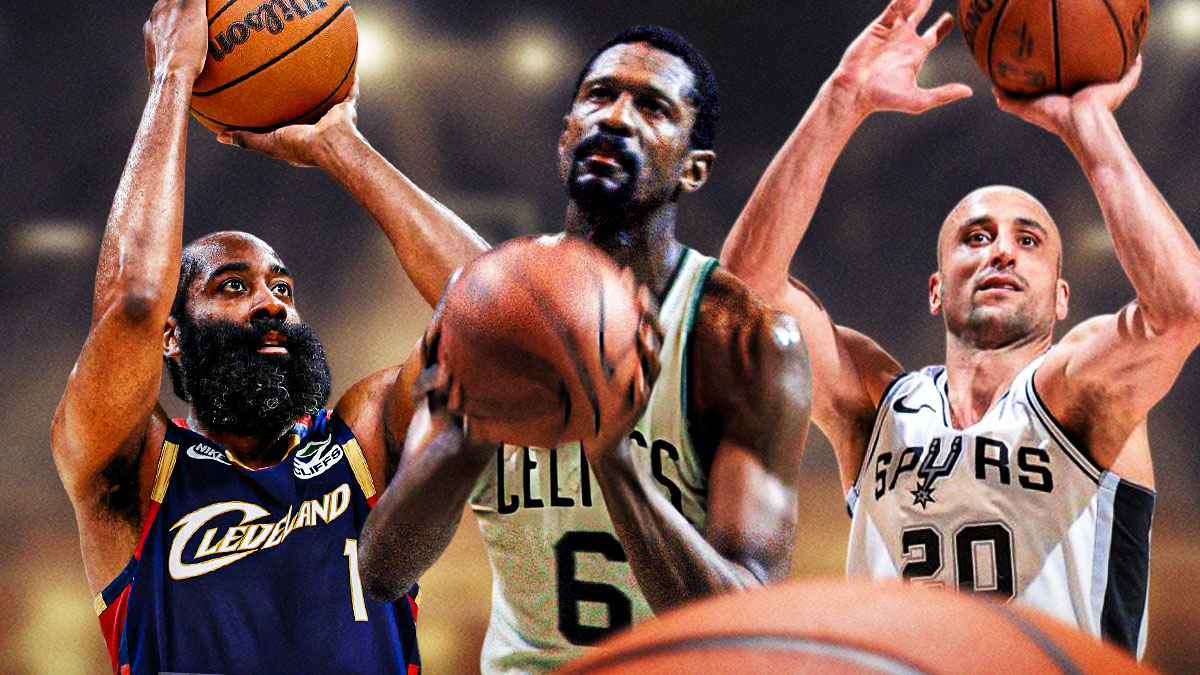
A lot stands out about NBA players. They are some of the tallest people in the world, often standing near or above 7-feet tall. Plus, hoopers have a claim as the best athletes among all sports figures. They combine elite jumping abilities and athletic traits with soft touch, smooth movement skills, and a highly graceful approach.
NBA players are such specimens that fans can grow numb to just how gifted and different they are. What never gets old on the hardwood is seeing a lefty, though. Left-handed players stick out like a sore thumb on the basketball court, but not in a bad way. Some of the best players in NBA history shot with their goofy hand.
An all-time great lefty, former number one pick Ben Simmons, tore his achilles tendon just days before the start of the 2026-27 season. The three-time All-Star has had a bizarre career in which he has struggled mightily with injuries and shooting, but he also revolutionized the game as a jumbo facilitator who could play lock down defense. Fans were excited to see how his comeback attempt would pan out, but his Sacramento Kings tenure was stopped before it had a chance to get going. Simmons' injury makes right now a great time to look at the 20 best left-handed players in NBA history. The former number one pick just missed the cut, as the following lefties had extremely standout careers.
20. Damon Stoudamire
Damon Stoudamire burst onto the scene early in his career. He averaged 19.0 points per game en route to a Rookie of the Year title before surpassing the 20-point-per-game threshold as a sophomore for the Toronto Raptors. It looked like the 5-foot-10 lefty had the makings of a superstar.
However, Stoudamire requested a trade during his third season, and he was never as dominant after leaving Toronto. While Stoudamire would prove to be just good and not great, he still finished his career with 10 seasons in which he had double-digit scoring figures. Stoudamire was a burst of energy who could score from anywhere on the court, and he neither let his leftiness nor his height hold him back.
19. DeAndre Jordan
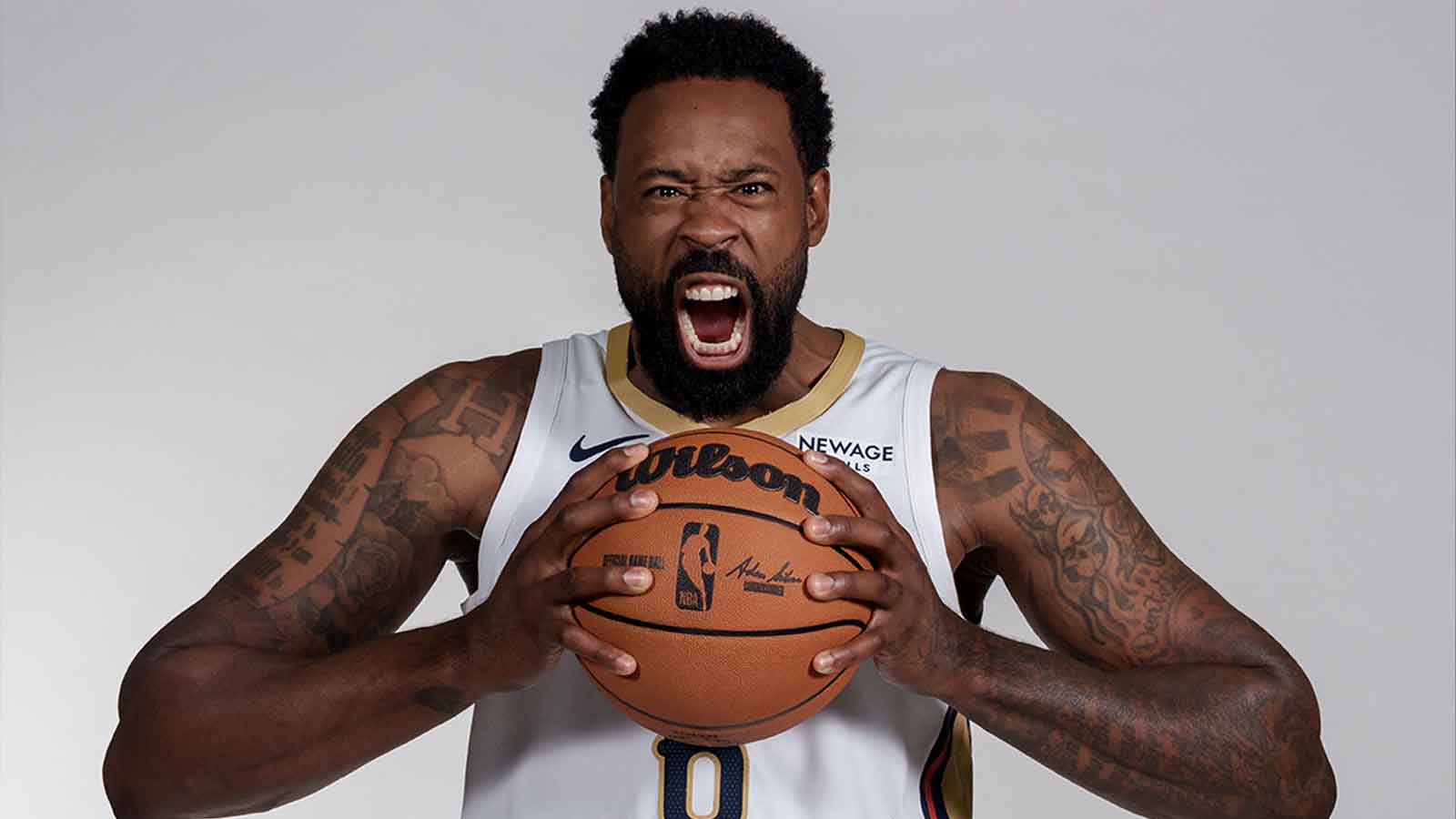
Fans watching a game featuring DeAndre Jordan might not even notice that he was left-handed. That is because he rarely shoots the ball. Well, that is unless the hack-a-Jordan strategy was implemented, where opponents forced Jordan to the free throw line with the expectation that he was going to miss his shots due to a nasty shooting form.
Unless he was being fouled, Jordan spent most of his time slamming home dunks, instead. The one-time All-Star is one of the best dunkers in NBA history. He and former teammate Blake Griffin would catch and finish alley-oops from Chris Paul for the “Lob City” Los Angeles Clippers during the 2010s.
Jordan used his size and leaping ability for more than just dunks. He is also a two-time rebounding leader. At age 38, Jordan is still hanging around the league, as his leadership has extended his career even as his aerial game has regressed. The player who led the NBA in 2-point field goal percentage five straight times from 2012 through 2017 is now a player-coach of sorts for the New Orleans Pelicans.
18. Isaiah Thomas
Jordan is 6-foot-11, 280 pounds. Not all NBA players have to be a mountain of a man. Isaiah Thomas thrived as one of the smallest players in NBA history. The 5-foot-9 point guard just so happened to be a lefty, too. The Mr. Irrelevant draft pick in the 2011 NBA Draft went on to defy the odds of his height and his draft status to have an uber successful career.
Thomas made two All-Star games and was an All-NBA Second Team member in 2017. That season with the Boston Celtics will never be forgotten, as Thomas averaged 28.9 points per game while taking the rock inside amongst the trees. The undersized guard was incredibly crafty and played with his heart on his sleeve.
He was the ultimate competitor, but ultimately, the downsides of being undersized resulted in Thomas becoming a journeyman. Thomas ended up having 16 different stints for various NBA and G-League teams. The supreme underdog was on top of the basketball world for a while, though.
17. Lamar Odom
Lamar Odom famously married a Kardashian after a month of dating. He was also a stud left-handed basketball player who won two championships for the most popular team in the NBA, the Los Angeles Lakers. Odom's game stood out for more reasons than his dating life or handiness, though.
He had a unique skill set and was a pioneer for the point forward position. Despite being 6-foot-10 and listed as a power forward, Odom could operate as a pseudo guard. His handle and playmaking were advanced, despite his height, and he was always looking to make a highlight play.
Odom's creativity worked. He stuffed the stat sheet with career averages of 13.3 points, 8.4 rebounds, and 3.7 assists. Odom also earned a Sixth Man of the Year title. Had he played in a later era, his numbers would have likely been even greater.
16. Michael Redd
Michael Redd and his left-handed catapulting jumper made the All-Star Game in his fourth season. Somehow, he was never given the accolade again, but it wasn't for lack of trying. Redd averaged above 21 points per game in six straight seasons from 2003 to 2009, with his scoring average climaxing at 26.7 points per game in 2006-07.
Redd was a sniper from 3-point land and went down as one of the best players in Milwaukee Bucks history. He averaged 19.0 points per game for his 12-year career.
15. Mike Conley
For a long-time, Mike Conley held the title in the eyes of many as the best player without an All-Star nod to his name. Perhaps it was lefty bias, perhaps it was just a testament to the guard depth in the Western Conference that Conley has spent his entire career in, but the point guard wasn't named an All-Star until his age 33 season.
Long before adding much-deserved hardware to his trophy case, Conley had proven himself as a gritty player, reliable offensive creator, and willing defender. In fact, Conley has been so reliable that he is about to suit up for his age-39 season, as he will go out east for the first time and provide leadership to the Boston Celtics.
While Conley is a left-handed shooter, ironically, arguably his best move is a right-handed floater. Still, he deserves his place here amongst lefty greats.
14. Lenny Wilkens
Lenny Wilkens is a forgotten legend and one of the most unheralded superstars in NBA history. He was a nine-time All-Star who finished as high as second in MVP voting. The St. Louis Hawks/Seattle SuperSonics star combined playmaking brilliance with advanced scoring, and he did it as a lefty.
Wilkens averaged 16.5 points and 6.7 assists for his career. He was above the 9.0-assist-per-game mark three straight seasons and even led the league in that regard in 1969-70. Wilkens would go on to become a legendary head coach.
13. Chris Mullin
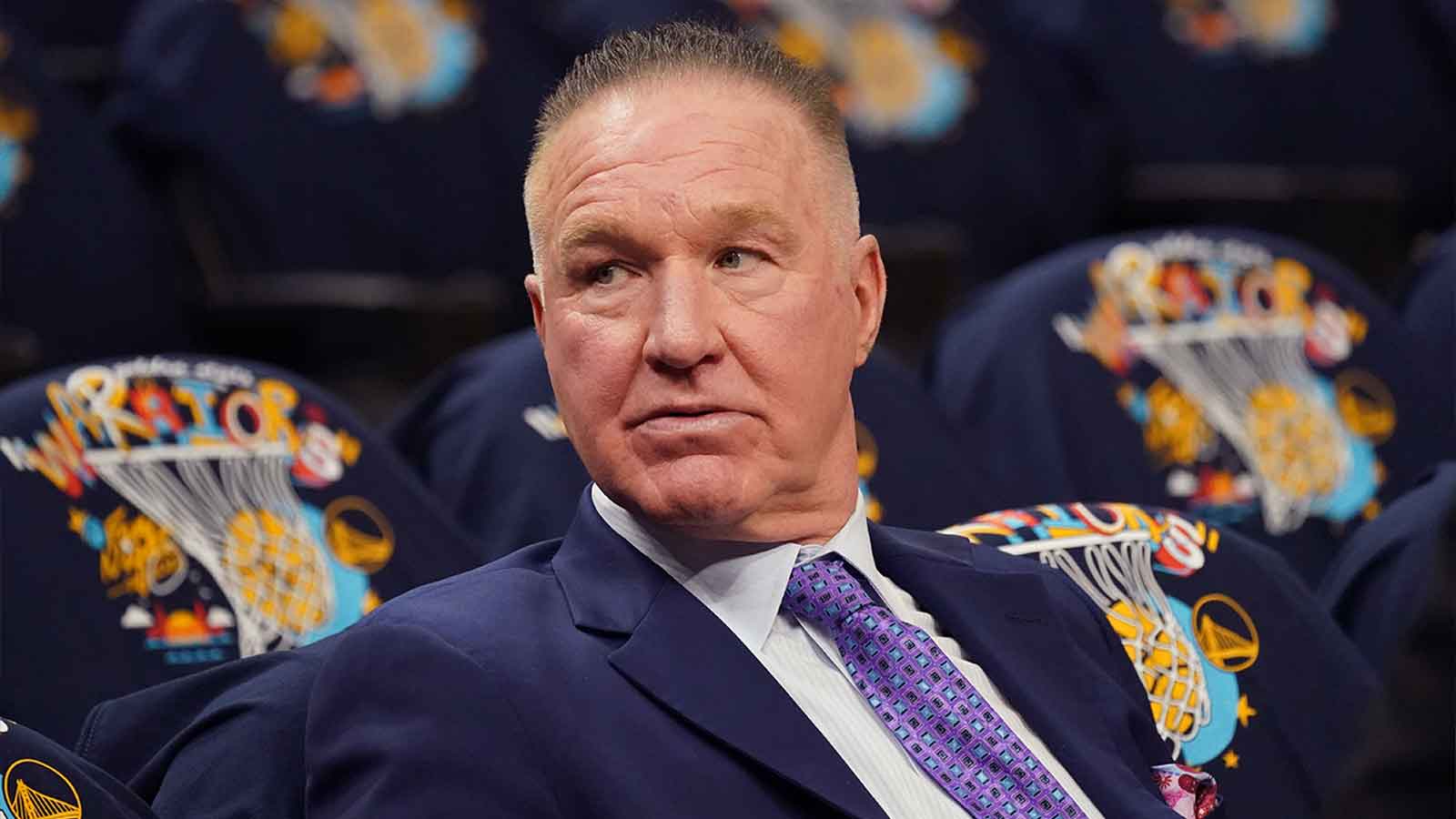
When it comes to a pretty lefty jump shot, Chris Mullin is the southpaw who likely first comes to mind. Mullin's stroke was pure, evidenced by his 38.4% clip from deep during an era when 3-point volume wasn't yet popularized. His mid-range was pretty potent, too.
Mullin was a part of the”Run TMC” Golden State Warriors and found success later in his career as a role player for Reggie Miller's contending Indiana Pacers teams. With a flat top haircut to boot, the aesthetics surrounding this lefty were iconic, and he was a pretty great player, too.
12. Gail Goodrich
Gail Goodrich was a lefty who was one of the best scorers of the '70s. The five-time All-Star averaged 18.6 points per game for his career, which included multiple seasons above the 25-point threshold. Notably, Goodrich averaged 23.8 points per game in the playoffs of a 1971-72 run to championship triumph with the Los Angeles Lakers.
Goodrich left for the New Orleans Jazz in 1976, and free agency rules of the time forced the Jazz to give the Lakers a 1979 first-round pick. That pick just so happened to turn into the number one pick that became Magic Johnson.
11. Manu Ginobili
Manu Ginobili is known for a lot of things. The Argentinian is known for popularizing the Euro-step. He is known for having a case as arguably the greatest sixth man ever. He is known for being a key part of the San Antonio Spurs dynasty. And he is known for his long locks that eventually turned into a bald look.
On top of all of that, Ginobili is known for being left-handed. Ginobili had a flair for the dramatic, as he regularly made highlight plays. His scoring and passing flare catered perfectly to the Spurs, whom he won four championships with. The 2008 Sixth Man of the Year only started 349 of his 1,057 career games, but that wasn't because he wasn't starting caliber. In fact, Ginobili was a star.
10. Billy Cunningham
Billy Cunningham was called the Kangaroo Kid because of his bounciness. The southpaw started his career as the sixth man for a championship-winning Philadelphia 76ers team before developing into a perennial MVP threat. While he never did win that award in the NBA, he was named the ABA MVP during a two year hiatus in that league during the middle of his career.
The double-double machine's career was unfortunately cut short because of a knee injury, but he was a beast during his playing days and would go on to have a successful coaching career.
9. Dave Cowens
The Boston Celtics have a record 18 NBA championships. A lot of that came during the '60s, when a player much higher on this list was leading the way. However, another lefty carried the winning ways into the '70s. Dave Cowens won championships in 1974 and 1976.
He'd won the MVP award and a Rookie of the Year title before that, too. Now, Cowens' numbers aren't quite as impressive as most MVP winners. He only twice surpassed the 20-point-per-game threshold, and never by more than a half of a point. That has resulted in him becoming one of the most forgotten MVPs ever, but he was an MVP nonetheless.
8. Bob Lanier
Bob Lanier's left hand was very noticeable. Whether he was scoring down low with lefty hook shots and dunks or sending shots away with his left-handed block, Lanier was always impacting the game with his dominant hand. The center for the Detroit Pistons and Milwaukee Bucks averaged 20.1 points and 10.1 rebounds per game for his career.
He was an eight-time All-Star who would be much more appreciated if his teams found more success in the win column. To have your jersey retired by two different NBA teams is quite an impressive feat.
7. Chris Bosh
Chris Bosh is in the news again because Jalen Hurts of the NFL just had his season ended because of blood clotting. That issue is what prematurely ended Bosh's NBA career. He still had plenty of time to build quite the resume for himself, though. The number four pick in the 2003 NBA Draft, one of the best draft classes ever, immediately made a name for himself with the Toronto Raptors.
He was a stretch four who could shoot from outside despite being nearly 7-feet tall. That doesn't mean he couldn't bang down low and finish with intensity, though. Bosh would eventually join the Miami Heat as one-third of the most famous big three ever. The Heat didn't deliver on their promise of not three, not four, not five championships, but two Larry O'Brien Trophies isn't half bad. Bosh was an 11-time All-Star with career averages of 19.2 points and 8.5 rebounds per game.
6. Nate Archibald
Known to vintage fans as “Tiny,” the 6-foot-1 point guard wasn't the tallest, but boy did he have some tall game to go with his stature. The afro-wearing Archibald exemplified what a New York City point guard was all about back in his day — brash, unafraid, and ruthless as a scorer and playmaker — a complete destroyer of the hardwood. Those words are usually associated with big men that play above the rim, but do watch some clips of Tiny and you will quickly see the ferocity he approached the game with.
Archie put up 16,481 points, 6,476 assists, 2,046 rebounds, and 719 steals (which could have been more if they started counting on his rookie year in 1970. His career was cut short due to an Achilles injury right at the apex of his venture in the league and he was never the same since.
Archibald missed the latter part of the 1976-77 season as well as the entire 1977-78 campaign with this injury, only to see his 20.5-point average nearly folded in half upon his return to the court in 1978-79 with 11 points per game at age 30.
Despite being slowed down by his injury, Tiny won a championship with the Boston Celtics later in his career, rounding up his resume after winning the scoring crown in 1973 (34 points per game) along with winning the All-Star Game MVP in 1981. The same year that Archibald led the league in scoring, he was also the assists leader.
5. Artis Gilmore
After establishing himself as arguably the best collegiate rebounder ever, Artis Gilmore opted to play for the ABA's Kentucky Colonels. He won an MVP award and made five All-Star teams in that league before the NBA-ABA merger sent him to Chicago. For the Bulls and Spurs, the 7-foot-2 center made six All-Star teams.
Gilmore was a four-time ABA rebounds leader and two-time ABA blocks leader. His interior presence was just as fierce in the NBA. When fans think of the Bulls, Michael Jordan is obviously the name that comes to mind, but Gilmore was one of the best players in franchise history, too.
Article Continues Below4. Willis Reed
Willis “The Captain” Reed is mostly known by this generation for his iconic moment in Game 7 of the 1970 NBA Finals, as he took the court despite having a severe thigh injury, a torn muscle that had previously kept him out of Game 6, rendering him unlikely to play in Game 7.
Reed warmed up with the team, inspiring the home crowd at Madison Square Garden to roar with applause as he prepared to make a start. He scored the New York Knicks' first two field goals on his first two shot attempts, which would be his only points of the game through 27 minutes. Known journalist Howard Cosell told Reed on national television a phrase that is still engraved in the memories of many: “You exemplify the very best that the human spirit can offer.”
Yet Reed was much more than his legendary moment, a former Rookie of the Year, NBA MVP, two-time champion and two-time Finals MVP among the long cornucopia of accolades to his name.
Reed had his career cut short due to injuries, but he was a dominant player nonetheless. It's a true shame his career numbers: 12,183 points, 8,414 rebounds, and 1,186 assists, weren't boosted by blocks and steals — which would only start to be recorded in his last season (1973-74).
3. James Harden
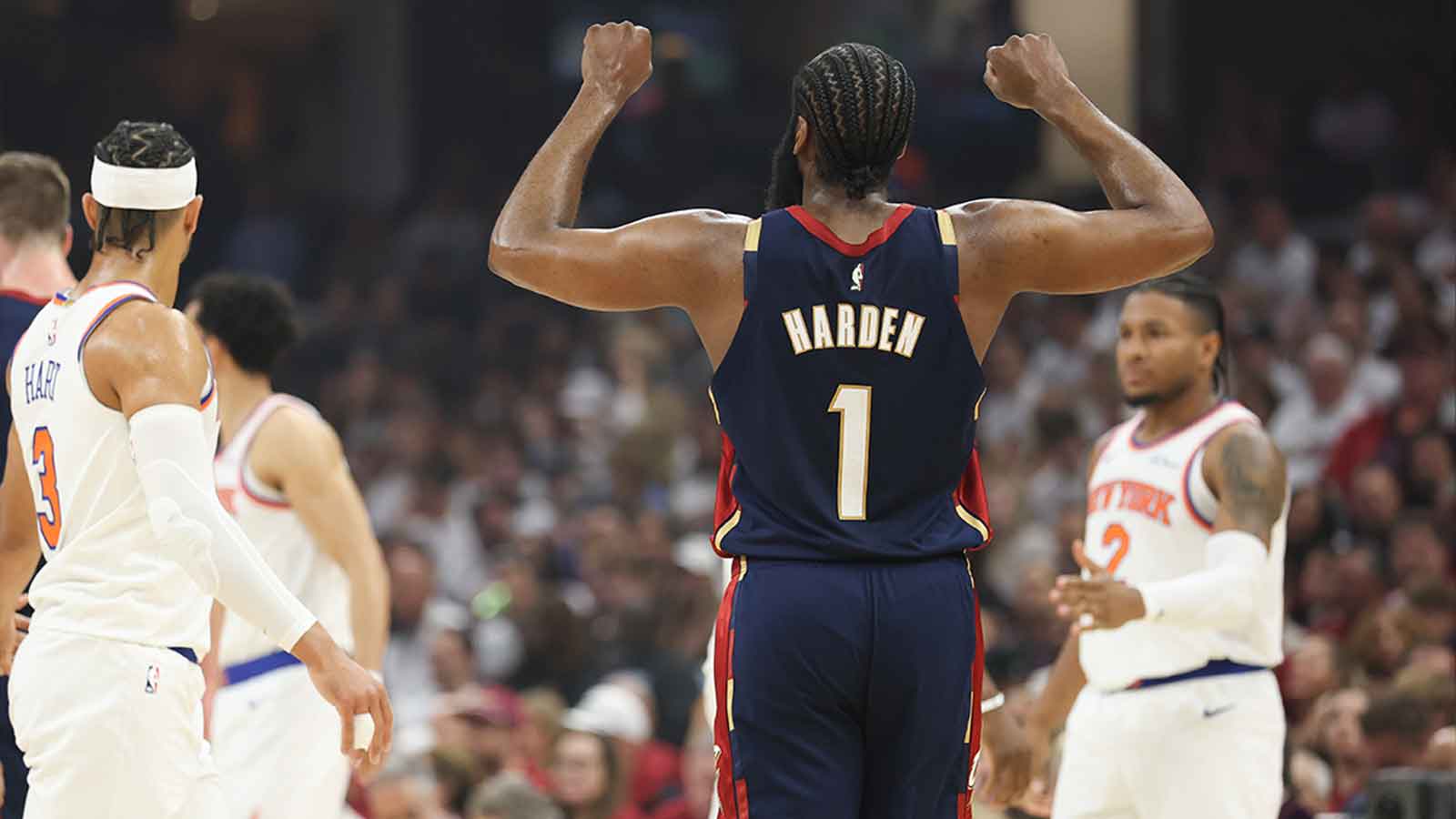
James Harden continues to climb up all-time lists, especially this one of the best left-handed NBA players ever. A former NBA MVP and multi-finalist for the award, and now a three-time scoring champion, The Beard is inching his way among some of the titan left-handed players of the sport. Harden has the best scoring average in a season of any lefty in league history, surpassing the record set by Nate Archibald in 1973. In fact, his 36.1-point-per-game mark is the best of any lefty or righty, besides those named Jordan or Chamberlain.
The Beard has yet to win a championship, unlike many of the other members of this list. Postseason shortcomings are the one thing that hold Harden's resume back. Even so, on top of the scoring, Harden is a generational passer who has twice led the NBA in assists, too.
2. David Robinson
David “The Admiral” Robinson was the result of an era dominated by the development of big men as the driving force of several franchises. At a time where big men had started to evolve as more than “dump-it-down guys,” Robinson was a swift, skilled big with a feathery-smooth lefty jumper that separated him from others of his class.
He was a former Rookie of the Year, Defensive Player of the Year, the 1994-95 NBA MVP, and a two-time champion (1999, 2003). He led the NBA in Player Efficiency Rating three times and finished among the top-10 in the category in 11 of his 14 seasons.
Many have accused him of being a class guy and not having the killer instinct that other greats have been characterized for, but does anyone remember the savagery that occurred in the season finale of the 1993–94 season?
Robinson was locked in a duel for the NBA scoring title with Shaquille O'Neal of the Orlando Magic, so he proceeded to score a career-high 71 points (breaking George Gervin's single-game franchise record of 63 points) against the Los Angeles Clippers to win it by a landslide after Shaq only mustered 32 points. Robinson averaged a career-high 29.8 points per game that season, along with 10.7 rebounds, another career-high in 4.8 assists, and 3.3 blocks per game.
The Hall of Famer put up 20,790 points, 10,497 rebounds, 2,441 assists, 2,954 blocks, and 1,388 steals per game throughout his 14-year career, a true menace at both ends of the floor and a pillar of what the San Antonio Spurs would become even a decade after he retired.
1. Bill Russell
Who can compare to the Lord of the Rings himself? Russell is not only a perennial winner, a notable social activist, and the most successful player-coach in the history of professional sports, but also a lefty.
Russell wasn't breaking through the scoring charts (only averaged 15.1 points per game for his career), but he was dominating the glass in ways only right-handed rival Wilt Chamberlain could back in the day. His average of 22.5 rebounds per game was only second to The Stilt during his playing days, but no one defended the paint more ruthlessly than the Louisiana native — making it a shame that blocks were not a recorded statistic until the 1973-74 season, four years after he retired from playing the game.
Russell has more rings (11) than he can place on his fingers, and he was part of a Boston Celtics tradition that rings true to this day. “The House that Russ built” was very much a testament to the consistency of his play during the Celtics' golden era of basketball, as the 85-year-old once put together 10 straight years averaging 21 or more rebounds per game, two seasons shy of his rival and good friend Chamberlain.
The longtime Celtics legend put up 14,522 points, 21,620 rebounds and 4,100 assists throughout his 13-year career, making him among the most-admired Hall of Famers and surely the most-respected lefty in the history of the game.