
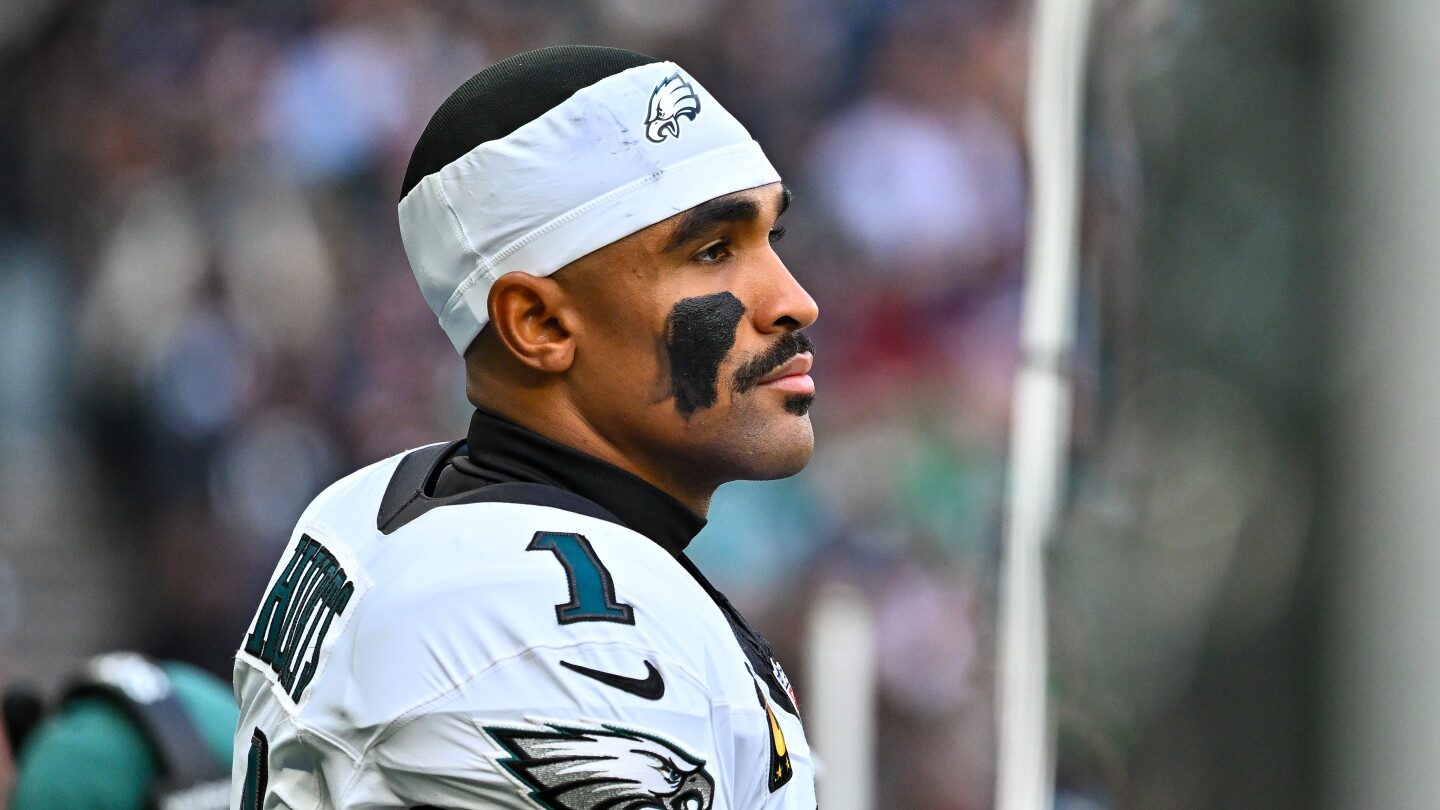
To no surprise, the NFL won’t be taking any action against the Eagles for its handling of the Jalen Hurts blood clot prior to Hurts playing in Week 5.
While the league has yet to issue a statement to that effect (or to make anyone available for questioning by reporters on the issue), an unnamed source told Jonathan Jones of The Athletic that the NFL has concluded the situation “was handled appropriately” by the team.
It’s not a surprise because the Eagles have said, and the league has confirmed, that the team “remained in communication” with the NFL throughout the process. That’s the best way to avoid league scrutiny; the Eagles involved the league in the various decisions that were made.
Jones also reports that Dr. Allen Sills, the NFL’s chief medical officer, worked with the Premier League’s chief medical officer to have Hurts evaluated at the Cleveland Clinic in London on the evening of Saturday, October 10. The unnamed source told Jones that the team, the staff, the doctors, and Hurts determined he could play the next day against the Jaguars at Tottenham Hotspur Stadium.
Jones also reiterates the claim, which surfaced after multiple reports claimed Hurts was advised not to sleep, that Hurts “returned to the team hotel around 2:45 a.m. local time Sunday and slept until about 10 a.m.,” and that he “took a nap” at the stadium before the game.
The unnamed source also repeats (as the NFL told PFT last week) that the team did not violate the injury reporting rules by, for example, failing to downgrade Hurts to “questionable” the moment his availability was, you know, in question or by failing to disclose that his “calf” injury was in reality a blood clot.
Again, the league’s position isn’t a surprise. The NFL and the Eagles were and are in lockstep on this issue, which based on the evidence that has been disclosed to date calls into question a lingering cultural reality that healthcare for players seems to be more about checking the boxes required to allow a player to “be available” to play and less about treating the player like any patient who would show up with a problem that requires diagnosis, treatment, and recommended steps to ensure a full and successful return to health, with all other considerations taking a back seat.
Much more should be demanded of the league and its teams on issues like this. So far, however, the NFL Players Association has been conspicuously silent. Many details remain unavailable. Reports from established “insiders” have painted a picture that has been confusing at times, downright bizarre at others.
From the question of whether the league and its teams are truly providing meaningful healthcare to player-patients to the question of whether the league and its teams are creating even more inside information that could be misused for betting purposes (while the millions who are constantly bombarded with gambling ads are kept in the dark regarding the truth as to a player’s health), the Hurts case raises very real questions that, with the passing of time, the playing of more regular-season games, and the inevitable emergence of the next story that attracts the media’s attention, will fade away and never be adequately answered.