
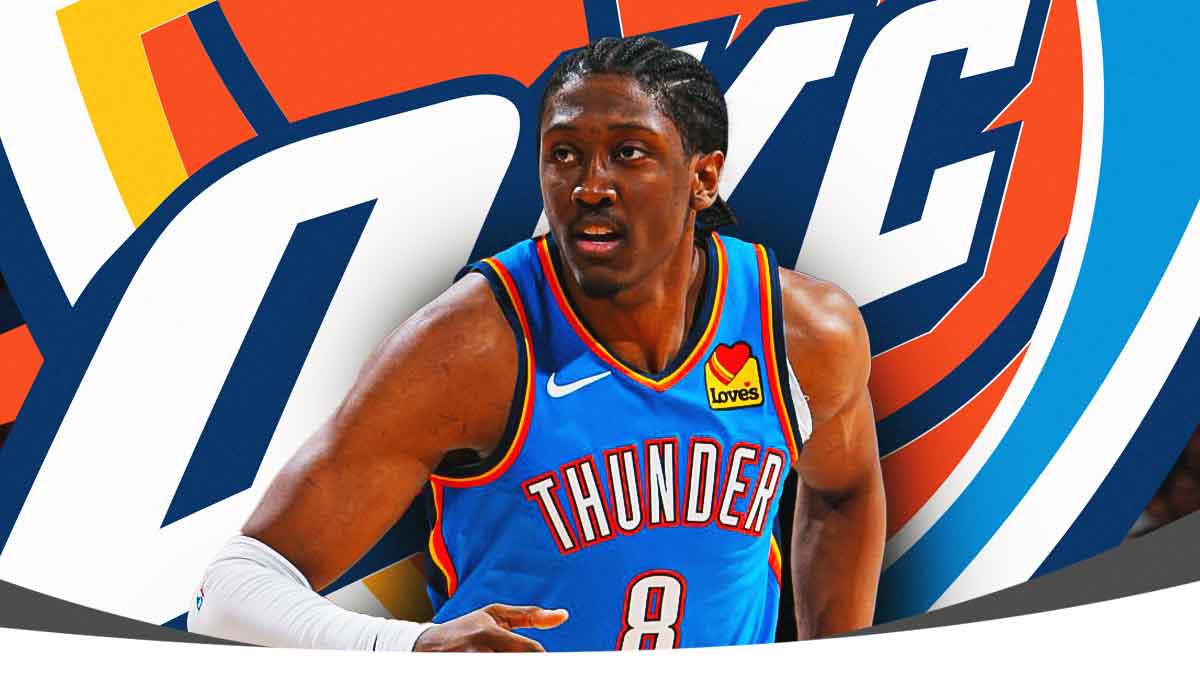
Jalen Williams does not need a prediction about his basketball future right now. He needs surgery, support, and the opportunity to recover without a deadline hanging over every step.
Still, the frightening scene from Oklahoma City’s victory over the Clippers does not have to become the defining image of his career. Paul George, Shaun Livingston, and Alonzo Mourning each gave basketball a reason to reconsider what a devastating medical setback could mean.
Their stories offer perspective, not a promise. Williams has his own recovery ahead.
General manager Sam Presti announced Monday that Williams had fractured his fibula and dislocated his left ankle. Surgery will determine more about his return timetable. Until then, any declaration about when he will play again gets ahead of the information available.
Jalen Williams may be out for the entire season after suffering a brutal ankle sprain.
📉 The ankle ligament bent outwards, which is a terrible sign of a multi-malleolus fracture, which could take between 6-12 months to heal.
One of the worst looking injuries I have ever seen. pic.twitter.com/00mh75fmsT
— BallersCulture (@BallersCultureX) October 26, 2026
What Oklahoma City already knows hurts enough. Williams collided with Kris Dunn near the basket late in Sunday’s game, landed awkwardly, and needed a stretcher. Fans called out his name as he left.
Shai Gilgeous-Alexander captured the immediate feeling: “I just feel bad for him. Nothing more than that.”
Before discussing standings or replacements, that response deserves room.
Paul George showed that a comeback can reach beyond a return
Williams had already endured a season of interruptions. Wrist and hamstring problems limited him to 33 appearances during the 2025-26 regular season, followed by five postseason games. Oklahoma City eventually fell to San Antonio in the conference finals.
That history makes this latest injury especially difficult to process. Another recovery now stands between Williams and the chance to establish some continuity.
George’s experience offers one powerful counterweight to the fear that follows such a moment.
During an August 2014 USA Basketball scrimmage, George broke both bones in his lower right leg after landing against the basket support. He returned to Indiana’s lineup during that same season, appearing six times.
The more meaningful part came afterward. George earned additional All-Star selections and eventually finished among the top three in MVP voting.
His story did not end with proving he could put on a uniform again. He returned to a level that allowed people to discuss his basketball instead of constantly revisiting his injury.
That distinction matters for Williams. Getting back onto the floor would represent an important milestone. Having the opportunity to compete without every conversation beginning with Sunday’s fall would mean something else entirely.
George demonstrates that such a future can exist. He cannot supply Williams with a schedule for reaching it.
Shaun Livingston and Alonzo Mourning expanded the meaning of recovery
Livingston offers a different lesson: A meaningful comeback does not require a player to recreate every detail of his earlier game.
His 2007 knee injury damaged multiple ligaments and brought a lengthy absence, Betus reports. Reconstruction procedures and rehabilitation followed. So did a difficult stretch across several teams.
Eventually, Livingston developed a style built around patience, positioning, and his midrange touch. Golden State found considerable value in that version of him. He helped the Warriors secure three titles.
The achievement went beyond surviving an injury. Livingston built a role that mattered on championship teams.
None of that suggests Williams will need to change his game. His surgery has not yet supplied a return timeline, much less a basis for predicting how he will play. Livingston’s career simply shows why an early, frightened assessment cannot account for every possibility ahead.
Mourning’s challenge involved a different kind of medical crisis. Kidney disease ultimately led to a transplant, followed by an NBA return and a championship with Miami in 2006.
His experience should not become a convenient comparison between unrelated conditions. Its relevance lies in the broader point: The worst medical chapter of an athlete’s career does not necessarily dictate the final basketball chapter.
Article Continues BelowThese players reached success through different circumstances. Together, they offer reasons to leave Williams’ future open.
Oklahoma City can believe without putting Williams on a clock
The Thunder face another absence alongside Williams’. Cason Wallace needs an operation for a torn left shoulder labrum, and his return timetable also remains undetermined, per BleacherReport.
Those losses create immediate basketball problems. They also make Presti’s distinction between positivity and optimism useful. Acknowledging the difficulty does not require abandoning belief in either player.
Gilgeous-Alexander expressed that belief directly about Williams: “But he’s not gone forever, he’ll be back better than ever and we know it.”
That is a teammate offering support. It should not become a standard Williams must meet for people to consider his recovery successful.
He does not owe anyone a faster return because George managed one. He does not need a championship like Livingston or Mourning to give his rehabilitation meaning.
For now, the next step is surgery. Oklahoma City can handle its competitive questions while giving Williams the patience his situation demands.
He can become basketball’s next great comeback. The strongest reason to believe that is the history of players who found meaningful basketball beyond devastating setbacks, while following very different paths to get there.