
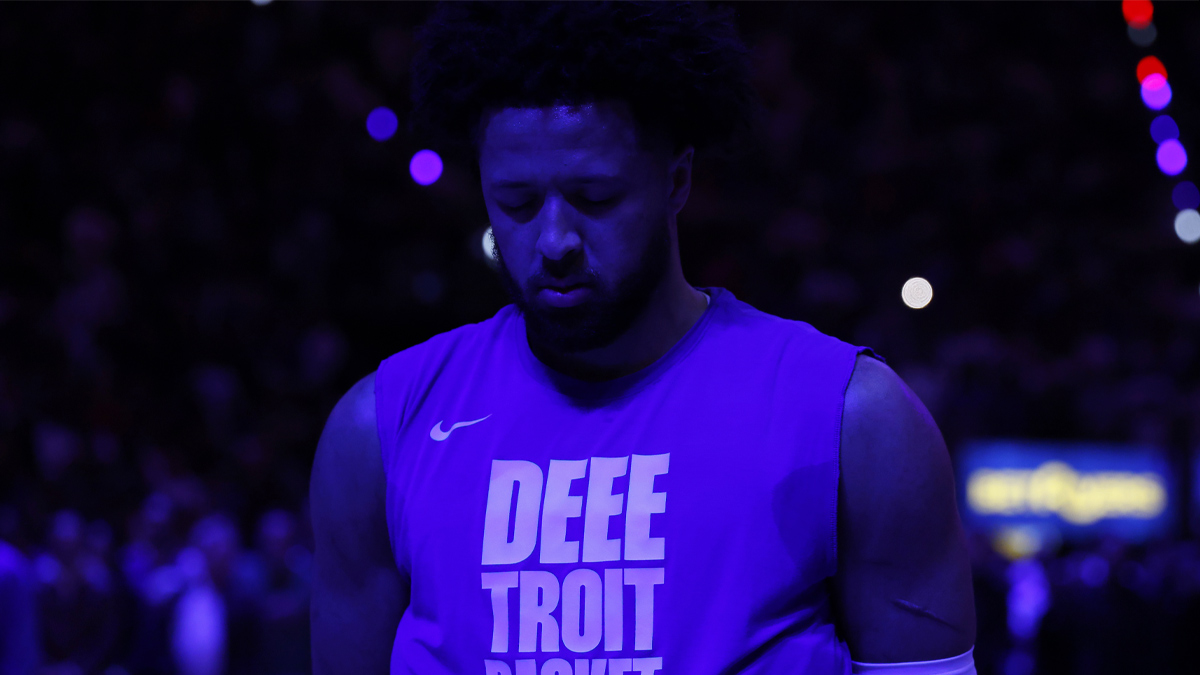
After an active offseason, the Detroit Pistons are getting ready to return to the court for NBA preseason action. Their first matchup kicks off Monday night against the Phoenix Suns at Little Caesars Arena. The makeup of this Pistons team has changed after some major moves. However, the team's core and identity remain the same under the leadership of President of Basketball Operations Trajan Langdon and head coach J.B. Bickerstaff.
Wins and losses do not hold the ultimate validation for preseason basketball. Still, the Pistons will have plenty of takeaways from these exhibition matchups. To continue Detroit's winning ways, they will need to figure out certain aspects as soon as the preseason.
How much will Jalen Duren play?
The highlight of the Pistons' offseason was the contract negotiations to retain restricted free agent Jalen Duren. After months of discussion and reporting, both sides finally came to an agreement to keep Duren in Detroit for five years at $200 million.
Duren has not participated in training camp yet since signing his new deal. Bickerstaff has confirmed they plan on easing their All-Star center back into the fold. It would be surprising if Duren played against the Suns, considering how little he has been on the floor with the team so far. Duren did confirm he was independently training and staying in shape during negotiations. He even showed up to the Sunday press conference in good condition for the season.
Detroit's previous leadership of forward Tobias Harris and center Isaiah Stewart has been removed. Harris signed to join the San Antonio Spurs in free agency, and Stewart was traded to the Memphis Grizzlies. The Pistons will be leaning heavily on their franchise big man considering the offseason changes. His growth will have to fill in the void for both Harris and Stewart sooner rather than later.
Will we see offensive growth from Ausar Thompson and Ron Holland?
Secondary scoring is an ongoing area the Pistons have been looking to improve. The franchise was not able to add a co-star via free agency to play next to franchise point guard Cade Cunningham. Because of that, Detroit will have to lean on the internal offensive growth of its young wings, Ausar Thompson and Ron Holland.
In the healthiest season of his career, Thompson established himself as one of the best defenders in basketball. Thompson earned his first All-NBA Defensive First Team selection along with two Defensive Player of the Month awards.
His defensive prowess was a major reason for the five-year, $155 million extension he signed this offseason. Now, Detroit needs him to evolve offensively to help the team. The Pistons need more primary and secondary creators to help take pressure off of Cunningham. Thompson has flashed the ability to create off-ball and bring the ball up the floor to set up the offense. Detroit will need more from him by looking for his own shots, creating looks for others, shooting from the perimeter more confidently, and showing greater confidence from the free-throw line.
Holland has been one of the most important spark plug players for the Pistons since his rookie season. He was not featured often in the postseason, averaging only 6.4 minutes in the playoffs last season.
Both players continue to work through practice with shooting coach Fred Vinson. There was also footage of Holland even working through offensive moves with Cunningham. The preseason should be a great stage for Holland and Thompson to work on those offensive deficiencies.
Article Continues BelowHow will new spacing and shooting look around Cade Cunningham?
One of the Pistons' biggest offseason priorities was to add more shooting and spacing offensively. Cunningham was one of the best passers in basketball last season, but played in crowded defensive space in the paint during the playoffs. With new shooters added to the roster, Cunningham should have better space to work with in half-court sets.
Detroit brought in multiple shooters like John Collins, Isaiah Joe, and Taurean Prince. Each of these players averaged over 40% from the 3-point range last season, and that production should be able to translate next to Cunningham's playmaking.
They also add better athleticism, which should make it easier for the Pistons to score in transition. Detroit will have more speed at its disposal to add to its fast-break points.
Who will win the backup point guard battle?
This question may not be answered until the preseason, but the time for both players to make their best audition can start now. The emergence of guard Daniss Jenkins was a major storyline for Detroit after he was called up from the Motor City Cruise. He made the most of his time last season, but he has to keep it going and make some needed improvements to stay in rotation.
The Pistons used their first-round selection on guard Ebuka Okorie at pick No. 17. He excelled at Stanford as an explosive guard with a crafty handle, strong finishing at the rim, and useful shooting range.
Okorie and Jenkins will be battling for the majority of minutes at the backup point guard position. They have some similarities in their position as young players. The Pistons like to use depth to their advantage, but they will have to decide who looks best in the preseason.
Cunningham's versatility could give Detroit another advantage, as they could play both young guards together. A 6-foot-7 guard like Cunningham gives him the ability to slide over as a forward and let the other guards run the backcourt. Bickerstaff will have time to experiment with that look and other rotations to see who wins that battle.