
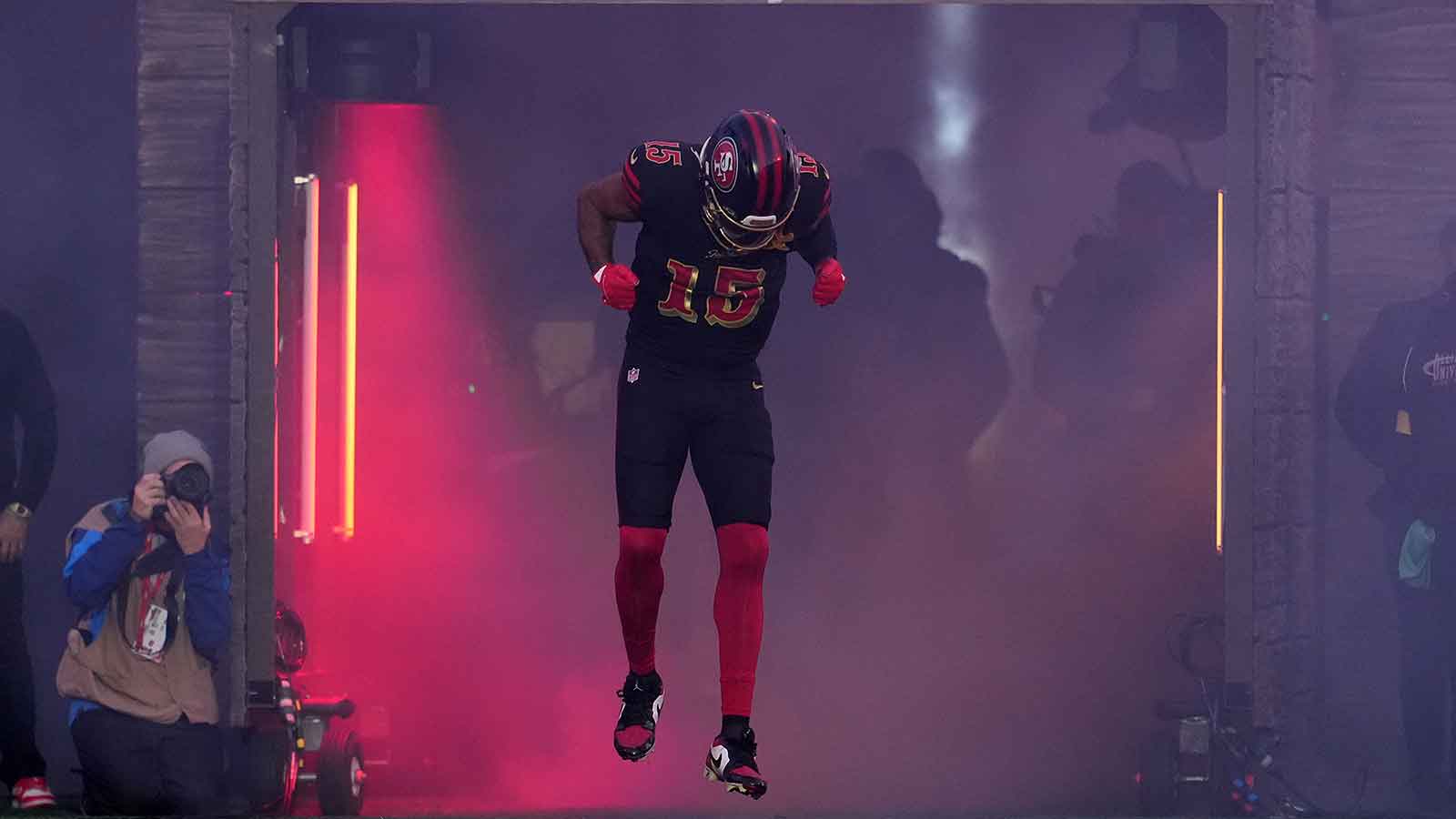
The San Francisco 49ers are approaching the November 10 trade deadline with an unexpected change in priorities. Injuries across the defensive line initially suggested general manager John Lynch would need to pursue another pass rusher, but encouraging performances from younger defenders have eased some of those concerns. The receiving corps has since emerged as a more pressing area to address, particularly with San Francisco carrying a 5-0 record into Week 6.
There is also some encouragement surrounding Christian Kirk, whose practice window opened after a calf injury kept him sidelined through the first five games. He participated on a limited basis during the week and is listed as questionable against Washington, leaving his immediate availability uncertain. This has become increasingly complicated with Deebo Samuel ruled out because of a hamstring injury and Mike Evans managing rib and Achilles problems. San Francisco has enough offensive talent to remain competitive, although additional receiving depth could help preserve the flexibility that makes Kyle Shanahan's system difficult to defend.
Three potential trade targets offer different solutions, with acquisition costs and contractual commitments likely to determine which conversations are worth pursuing.
Jauan Jennings could provide immediate familiarity with Shanahan's offense
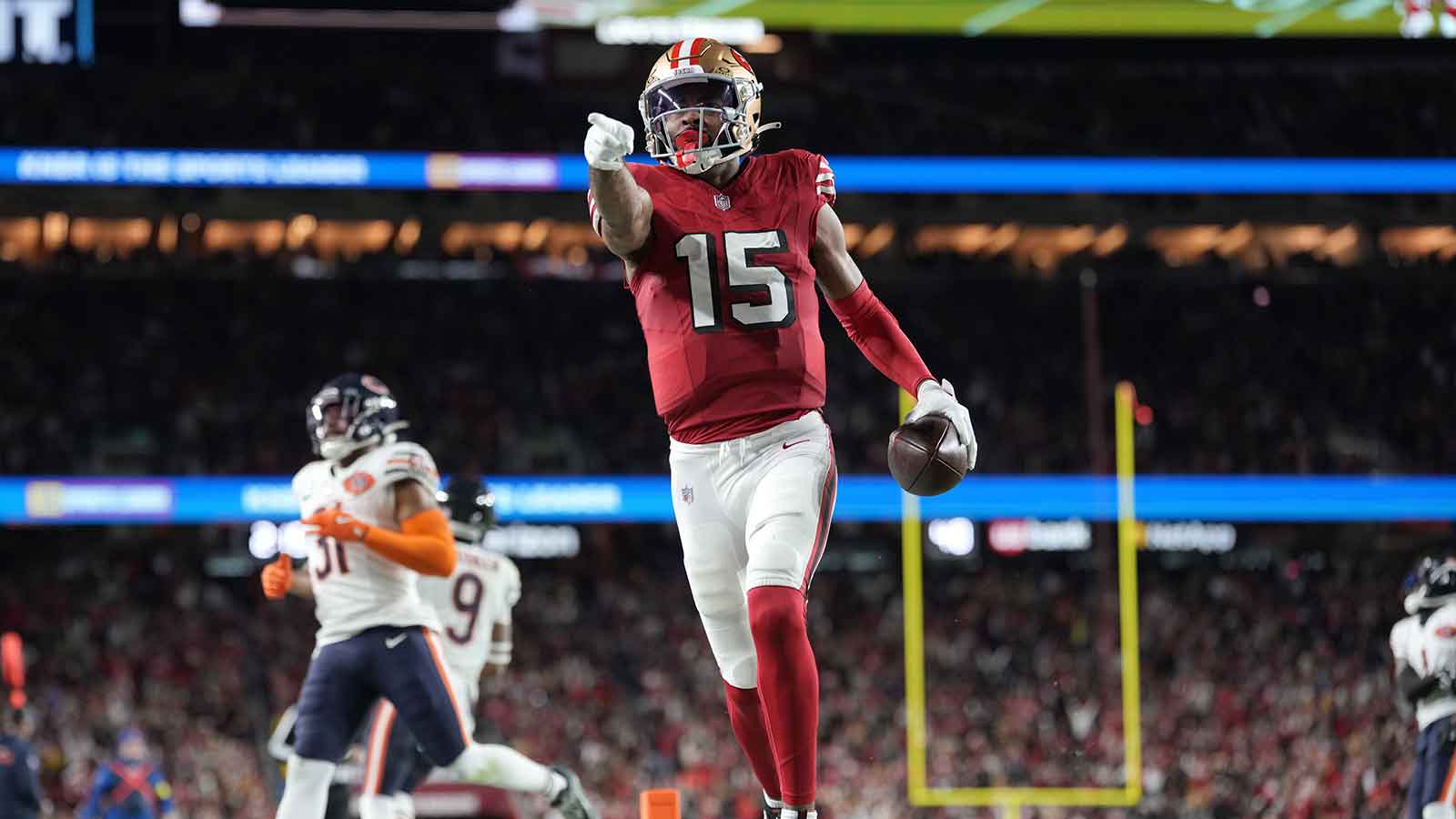
A reunion with Jauan Jennings would offer San Francisco something particularly valuable during an injury crisis: a receiver who already understands the offense.
After spending six seasons with the 49ers, Jennings signed a one-year agreement with Minnesota during the offseason, expecting to contribute alongside Justin Jefferson and Jordan Addison. His involvement has been surprisingly limited despite the Vikings' undefeated start, with only two receptions for nine yards on five targets across four appearances. The lack of production contrasts sharply with his final season in San Francisco, when he recorded 55 receptions for 643 yards and nine touchdowns. His contributions extended beyond receiving statistics, particularly through physical blocking, contested catches, and the ability to create favorable situations on third down.
And yes, those qualities remain relevant to Shanahan's approach. San Francisco depends on receivers who understand how their assignments contribute to the entire offensive design. Route timing, blocking responsibilities, and adjustments against different coverage structures frequently determine whether a play develops as intended, making familiarity especially valuable when a team is dealing with frequent personnel changes.
Jennings would already understand those requirements, reducing the installation process that normally accompanies an October acquisition. His physicality could also provide an immediate complement to the receivers currently available, particularly in situations requiring reliable intermediate targets. Minnesota's limited use of the veteran gives Lynch a legitimate reason to investigate his availability, and the Vikings are 5-0 themselves, though, and their own injuries at receiver may encourage them to preserve experienced depth rather than move a player who could become useful later in the season.
His expiring contract also places a natural limit on the compensation San Francisco should consider. A reunion would make the most sense as an affordable move designed to strengthen the current rotation, with the added benefit of bringing back someone whose previous experience could accelerate his return to meaningful snaps.
Quentin Johnston offers upside beyond the current season
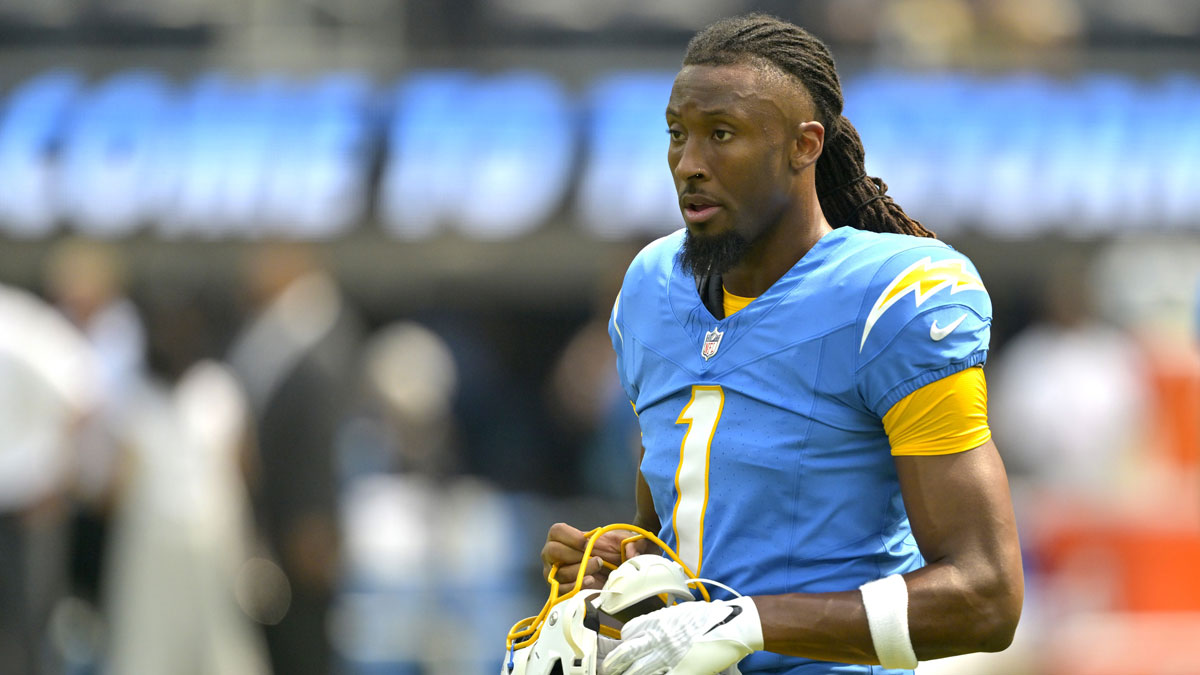
The Chargers' 0-5 start has generated considerable speculation about potential departures, and Quentin Johnston represents a more complicated opportunity for San Francisco. The 25-year-old remains under contract through 2027 after Los Angeles exercised his fifth-year option earlier this year, a decision that guarantees approximately $18 million next season. His physical tools continue to attract attention, although the opening month has provided little evidence of consistent involvement in the Chargers' current passing game.
Through four appearances in 2026, Johnston has caught seven passes for 108 yards without scoring a touchdown, and that limited production makes any significant acquisition cost difficult to justify without a clear belief that a different offensive environment could improve his opportunities. There is enough previous evidence to make the possibility worth exploring. He produced 711 yards and eight touchdowns in 2024 before adding 735 yards and another eight scores last season, demonstrating the ability to generate explosive plays when given a meaningful role.
San Francisco could offer a different environment for those abilities. Shanahan frequently creates favorable receiving opportunities through motion, formation changes, and combinations designed to manipulate coverage. Johnston's size and downfield ability would give the 49ers another option outside the numbers, while his potential after the catch could fit into an offense that regularly asks receivers to produce beyond the initial completion, and this would also extend beyond the injuries currently affecting the roster.
Evans remains productive at 33, but San Francisco will eventually need to evaluate how its receiving group develops over the next several seasons. Adding a younger player with established NFL experience could help address that future without waiting for another offseason, and the financial commitment creates a substantial obstacle. Johnston's guaranteed 2027 salary would make him considerably more expensive than a conventional midseason depth addition, and the Chargers have already demonstrated confidence in his development by exercising the option.
Los Angeles may prefer to retain him through its current struggles rather than sell after a disappointing opening month. San Francisco would need a favorable combination of draft compensation and long-term financial planning to make the investment reasonable, particularly with other positions likely to require attention during the offseason.
Calvin Ridley could bring experience to an injury-hit receiving corps
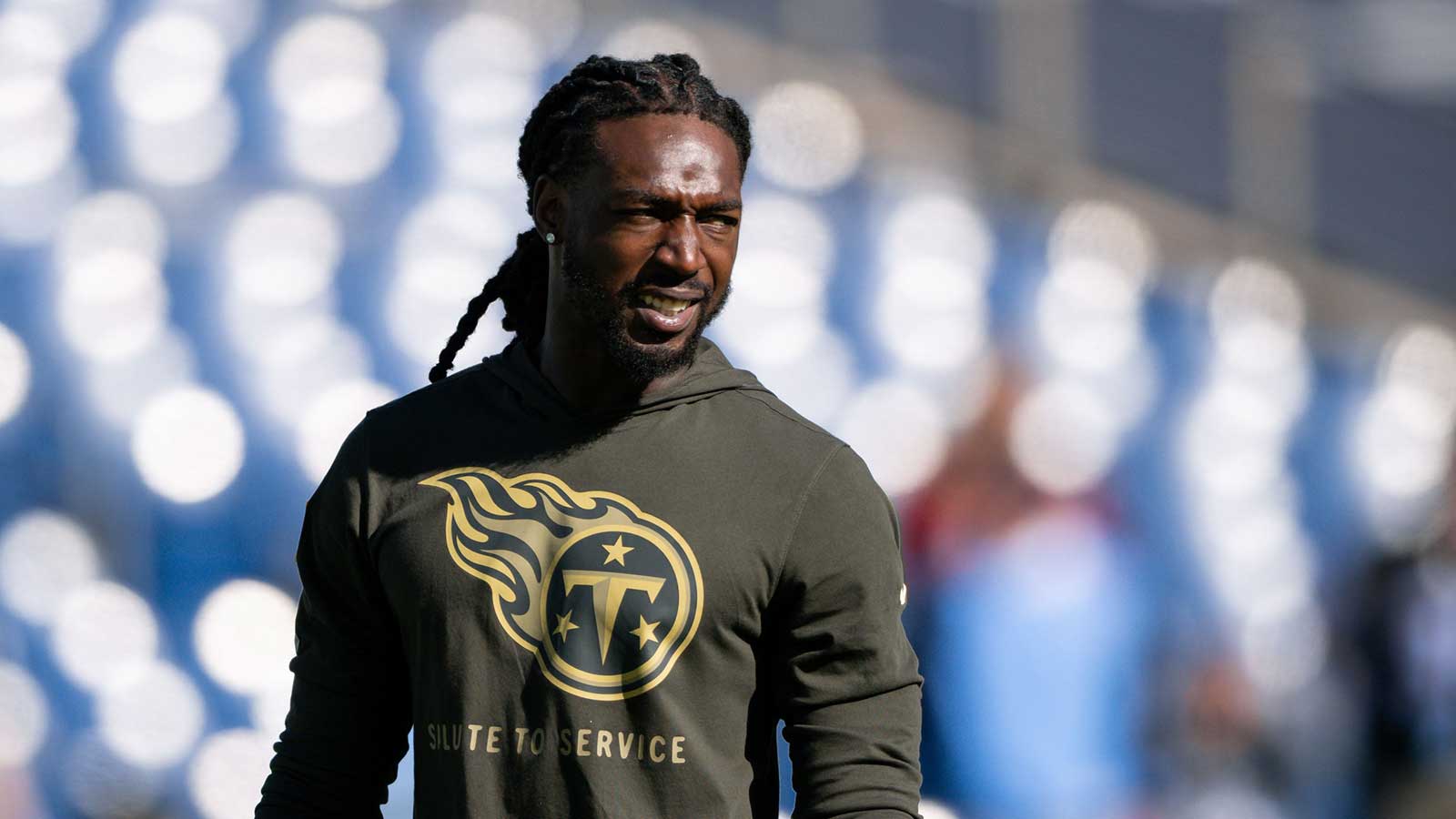
Tennessee's disappointing start presents another possible avenue for Lynch to explore, with Calvin Ridley offering an experienced option whose recent production has been heavily affected by the Titans' offensive struggles. The veteran remains with Tennessee and has appeared in all five games this season, although his involvement has been remarkably limited. He has recorded only five receptions for 81 yards without a touchdown, receiving just eight targets while the Titans have struggled to sustain possessions.
The situation differs considerably from 2024, when Ridley led Tennessee with 64 catches for 1,017 yards. His ability to work across different levels of the field helped him produce another 1,000-yard campaign after achieving the same milestone with Jacksonville the previous season. At 31, his value to San Francisco would come primarily from established route-running experience and the ability to contribute without requiring an extended developmental period.
So, the 49ers have built much of their offensive success around receivers who can recognize defensive adjustments and remain dependable within a passing game that emphasizes timing. Ridley's experience operating both outside and through intermediate routes could give Brock Purdy another established option while the injured receivers work toward full availability. The opportunity would also allow San Francisco to distribute responsibilities more evenly during a difficult stretch of the schedule, reducing the need to push returning players immediately into substantial workloads.
San Francisco's deadline priorities have changed
The defensive line's recent performances have given the 49ers additional flexibility at an important point in the season, because Nick Bosa remains sidelined with knee and calf issues, yet the younger players stepping into larger roles have helped San Francisco maintain its defensive effectiveness, and that emergence of contributors along the front has reduced the immediate pressure to invest significant resources in another pass rusher. The receiving situation has developed in the opposite direction.
Samuel's absence, Kirk's uncertain return, and Evans' ongoing injury concerns have limited the coaching staff's options, particularly when trying to preserve the variety of formations and personnel combinations that Shanahan prefers. San Francisco has already demonstrated its ability to overcome injuries while maintaining an undefeated record, supported by a productive rushing attack and an offense capable of adapting to different opponents. Maintaining that flexibility becomes increasingly difficult when the receiving rotation continues shrinking.
The deadline offers Lynch an opportunity to reinforce that structure before further injuries force more significant adjustments. With the NFC playoff race beginning to take shape, acquiring dependable receiving depth could help preserve the offensive consistency that has contributed to San Francisco's early success.