




-(1).jpeg)







49ers trade grades for 2026 NFL Draft deals with Dolphins, Jets

The San Francisco 49ers didn’t waste much time reshuffling picks on draft night. Their trade grades for their 2026 NFL Draft deals with the Miami Dolphins and New York Jets reveal a front office leaning into precision over panic. In this draft, San Francisco chose substance. They flipped their first-round position into a cluster of high-value selections designed to sustain a championship window. This wasn’t a retreat from Round 1 a reimagining of how to win it.
Loaded but aging contender
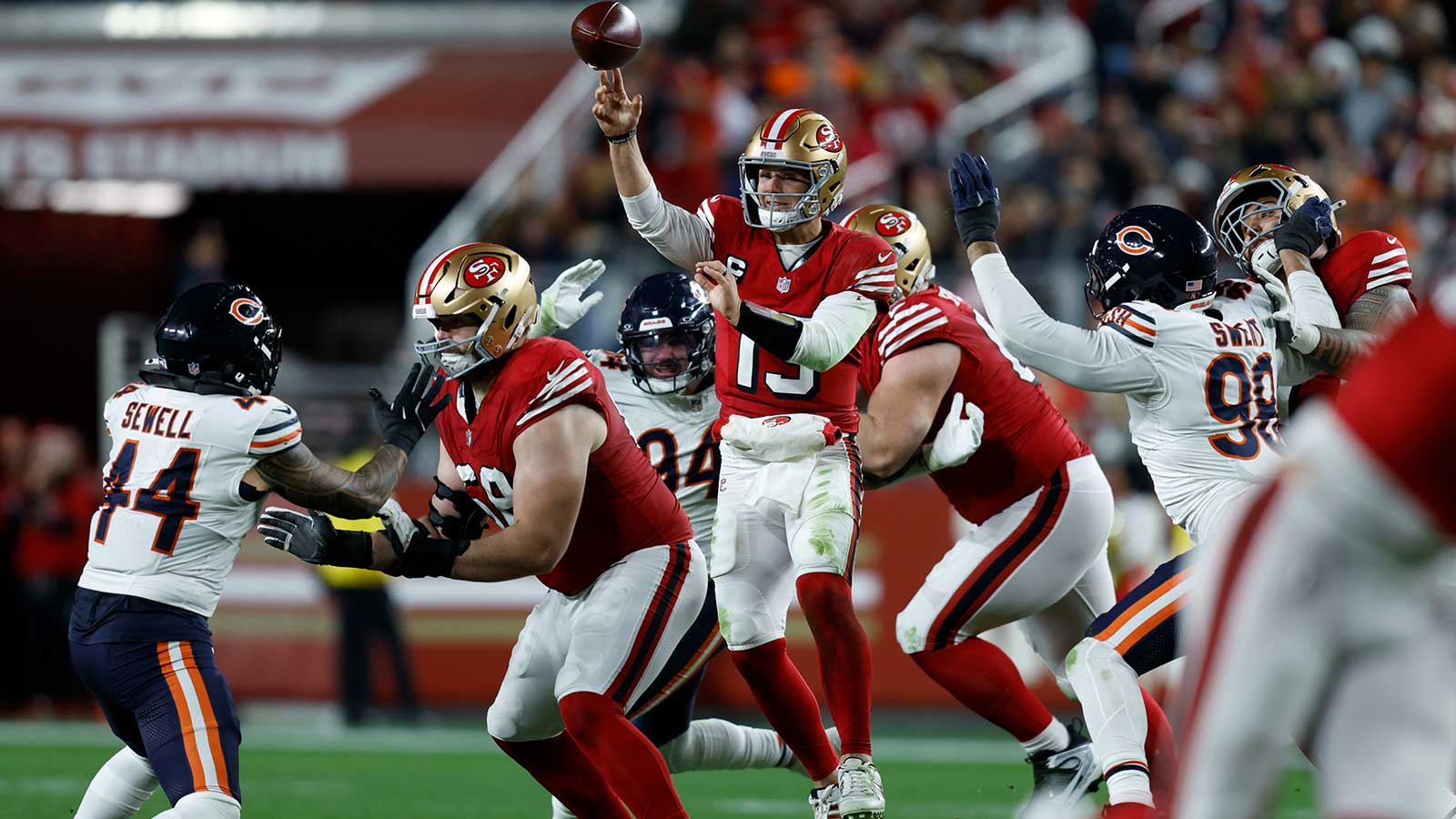
Heading into the 2026 NFL Draft, the 49ers found themselves balancing elite top-end talent with the creeping reality of roster aging and salary cap pressure. The offense remained one of the most potent units in football. It was bolstered further by the addition of Mike Evans. Meanwhile, the signing of Osa Odighizuwa reinforced the defensive interior. Yet beneath that star power were clear areas of concern.
San Francisco needed a disruptive edge presence to complement its existing front. The offensive line, specifically at guard, required reinforcement to maintain protection integrity. They also needed to sustain the run game that drives Kyle Shanahan’s system. Beyond that, long-term answers at safety and offensive tackle loomed large. This was a team in maintenance mode. They were searching for cost-controlled contributors who could step in immediately.
Twenty-seventh pick
Grade: B+
Their first move of the night had San Francisco trading the No. 27 overall pick along with a fourth-round selection (No. 138) to the Miami Dolphins. The Niners slid back just three spots to No. 30 while acquiring a third-round pick at No. 90.
By moving back a mere three positions, Lynch effectively transformed a mid-round asset into a premium top-100 pick. That third-round range is widely regarded as the place where teams routinely uncover starters and high-impact rotational players. Miami used the pick to select cornerback Chris Johnson. Meanwhile, San Francisco remained patient, confident that their target tier would still be available.
The move also revealed something important about the 49ers’ evaluation process. They did not view the talent gap between picks in the late 20s and early 30s as significant. That belief allowed them to extract value without sacrificing positioning. It was a pragmatic, forward-thinking decision that aligned perfectly with their broader strategy. San Francisco focused on accumulating assets and trusting the board.
Second-round upgrade
Grade: A
If the first trade was calculated, the second was transformative.
San Francisco doubled down on its approach by trading the newly acquired No. 30 overall pick to the New York Jets. In return, the 49ers moved down to No. 33, which is the first selection of Day 2. The Niners also picked up an additional fifth-round pick at No. 179. The Jets, eager to secure wide receiver Omar Cooper Jr, paid the premium to jump back into the first round.
By landing at No. 33, San Francisco effectively gained control of the second day of the draft. That first pick of Day 2 allows a team to reset the board, dictate the pace, and often capture players who slipped out of Round 1 unexpectedly. It’s a sweet spot where value and talent intersect.
This marked the first time in the Lynch-Shanahan era that the franchise traded out of the first round on draft night. It has not happened since 1988. That alone underscores the confidence within the organization.
Rooted in depth and sustainability
When the dust settled, the 49ers had turned a single first-round pick into a robust collection of selections across multiple rounds. Their updated draft capital heading into Day 2 reflects a team prioritizing breadth over singularity:
Round 2, No. 33
Round 2, No. 58
Round 3, No. 90
Round 4, No. 127
Round 4, No. 133
Round 4, No. 139
Round 5, No. 179
This shows strategic flexibility. It gives San Francisco the ability to address multiple needs across the roster while maintaining optionality.
It also aligns with the realities of the salary cap. As veteran contracts grow more expensive, the need for cost-controlled contributors becomes paramount. By stockpiling mid-round picks, the 49ers position themselves to replenish the roster with players who can contribute early without commanding premium salaries.
Bigger picture
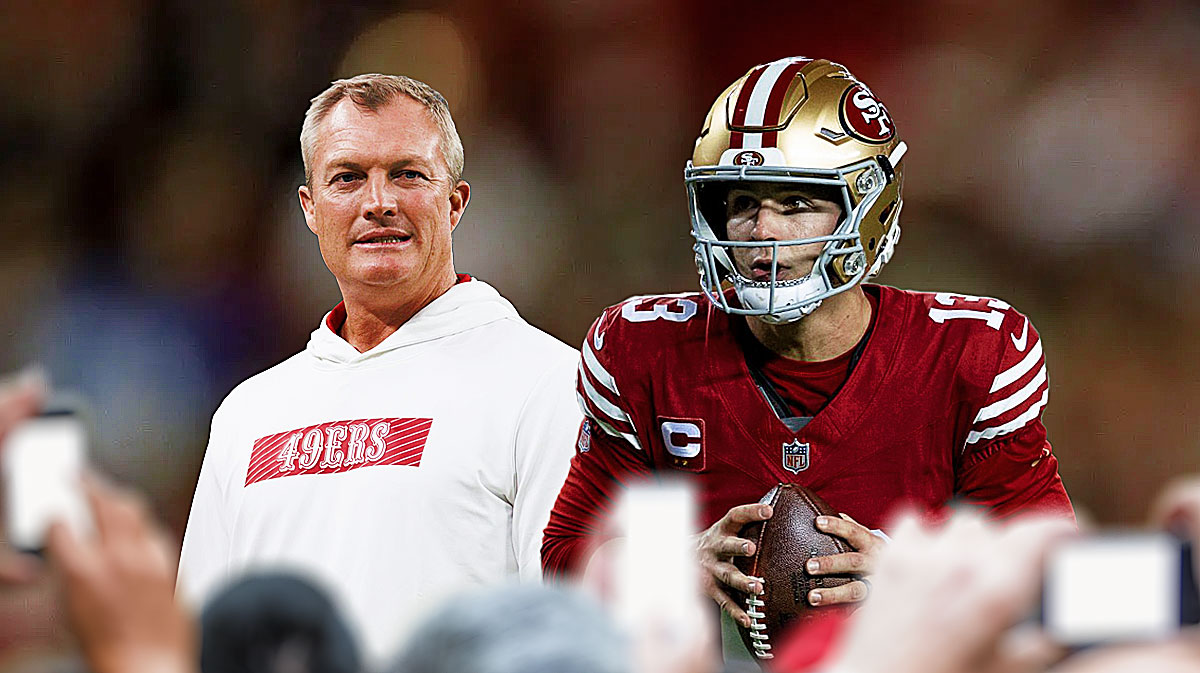
What makes these trades particularly compelling is how they reflect San Francisco’s broader identity. This is a team who recognizes that sustaining success requires constant evolution. Rather than chasing a single marquee name, the 49ers chose to invest in the infrastructure of their roster.
It’s a philosophy that shows how this team trusts in its scouting department, its development system, and its ability to maximize value where others might overlook it. In a draft class where the top tier was limited but the middle rounds were rich with potential, this approach feels both logical and forward-thinking.
The 49ers’ trade grades for their 2026 NFL Draft deal with the Dolphins and Jets tell a clear story. This front office operated with intention and clarity. By flipping their first-round pick into a multi-round arsenal, San Francisco increased control of the draft. This strategy could prove to be the quiet edge that keeps the 49ers in the championship conversation.
The post 49ers trade grades for 2026 NFL Draft deals with Dolphins, Jets appeared first on ClutchPoints.
What's Your Reaction?
 Like
0
Like
0
 Dislike
0
Dislike
0
 Love
0
Love
0
 Funny
0
Funny
0
 Angry
0
Angry
0
 Sad
0
Sad
0
 Wow
0
Wow
0